


More news on this day
Ryanair passengers holidaying in Greece are reporting being left stranded and missing flights home just weeks after the European Union’s new biometric border regime came into force, highlighting how uneven implementation of the system is colliding with peak-season travel.
Get the latest news straight to your inbox!
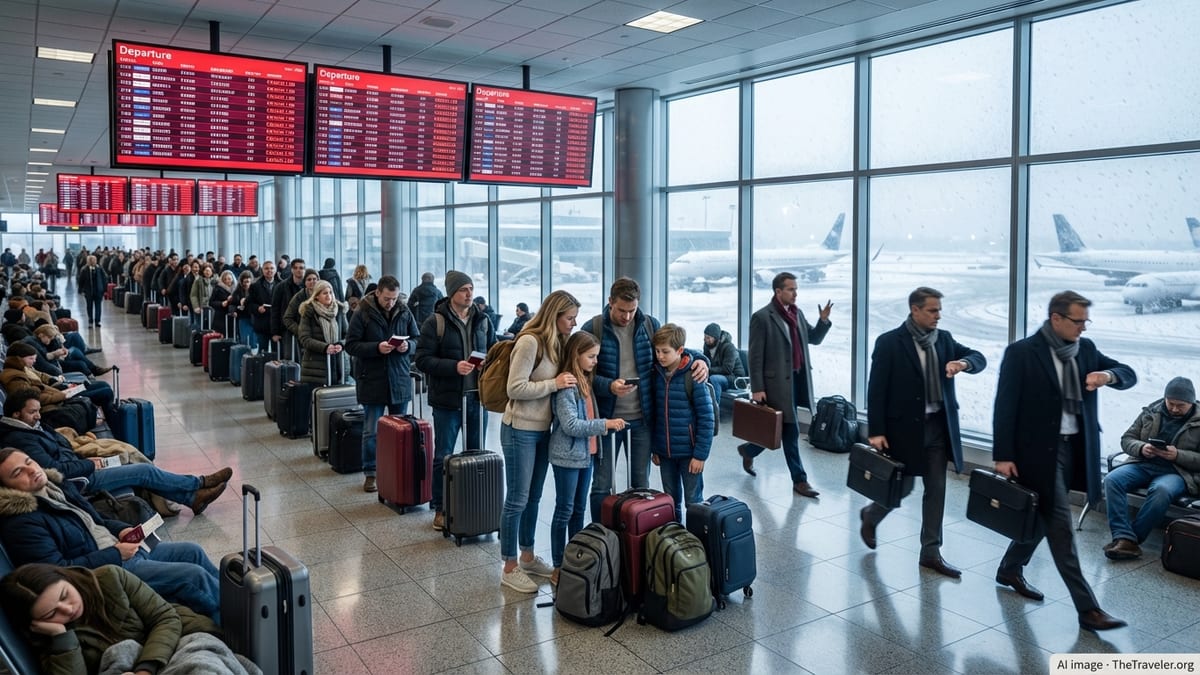
New biometric checks collide with peak holiday traffic
The EU’s Entry/Exit System, fully rolled out in April 2026, replaces manual passport stamping for non-EU nationals with biometric registration, including fingerprints and facial images. The reform is intended to tighten border controls and automate the tracking of entries, exits and overstays across the Schengen area.
Published coverage indicates that the system has already processed tens of millions of movements and identified thousands of overstayers. At the same time, several border posts have struggled with infrastructure, software glitches and staffing, leading to lengthy queues at busy times. Airports and land crossings in Greece, Spain and Italy are among those highlighted for congestion.
In Greece, where tourism is a major pillar of the economy, local reporting describes road and airport bottlenecks as border staff juggle biometric enrolment with high passenger volumes. Observers note that in some locations equipment has been installed but not fully activated, while in others officers intermittently suspend biometric capture in an effort to keep queues moving.
The timing of the rollout, just ahead of the main summer season, is drawing criticism from travel industry groups that had warned of pressure on frontline border posts. They argue that the learning curve for both staff and travellers is now unfolding at the very moment leisure traffic is surging.
Ryanair schedules clash with long border queues
Ryanair, Europe’s largest budget carrier, has kept a firm line on punctuality as the new checks take hold. Publicly available guidance from the airline stresses that flights will not wait for passengers delayed at passport control and that boarding gates close well before scheduled departure, regardless of conditions at border checkpoints.
That stance, combined with the unpredictable pace of biometric processing, is proving costly for some holidaymakers. Recent cases at European airports show large groups of passengers left behind when they failed to clear border control in time, even though they had arrived at terminals hours before departure. While some incidents have been documented in France and Italy, similar patterns are now being reported by travellers heading home from Greek resorts.
Accounts shared on social platforms and travel forums describe queues for non-EU passports backing up into check-in halls, with limited prioritisation for imminent departures. In several instances, travellers say they reached the boarding gate minutes after closure to find their Ryanair aircraft still on stand, only to be refused boarding and instructed to purchase new tickets home.
The carrier maintains that responsibility for passport control lies with border agencies and airport operators. However, for passengers stranded abroad, the distinction between airline and state responsibilities offers little comfort when additional hotel nights, last-minute fares and missed connections begin to mount.
Patchwork implementation in Greece fuels confusion
Reports from Greek border points suggest that the Entry/Exit System is being applied inconsistently from one location to another and even from one shift to the next. At certain land borders, local media have documented officers suspending biometric collection shortly after queues built up, reverting temporarily to traditional passport checks before resuming the new procedures.
At major island and city airports, some non-EU travellers arriving in Greece describe being fully enrolled at dedicated kiosks, while others say they were waved through with only a manual stamp because of time pressure. In departures, passengers have encountered closed or malfunctioning self-service booths, leading to manual processing and further delays.
Greece has publicly indicated that it is seeking flexibility in how the system is applied during the busy summer months, amid concerns about infrastructure readiness. European institutions, by contrast, have underlined that there has been no fresh blanket pause and that participating countries are still expected to collect biometric data in line with the regulations.
This patchwork reality is contributing to confusion among visitors. Some Ryanair customers leaving Greece for other Schengen destinations report being surprised by additional checks on departure, having assumed that once enrolled on arrival they would pass through e-gates with minimal friction.
Travellers caught between EU rules and airline policies
The experiences emerging from Greece highlight a growing tension between the EU’s new border framework and the rigid operating model of low-cost carriers. The Entry/Exit System requires a one-off biometric registration that can take several minutes, particularly when unfamiliar travellers struggle with kiosks or encounter technical issues.
At the same time, Ryanair’s business model is built around tight turnaround times and strict cut-offs at check-in, bag drop and the boarding gate. The airline advises passengers to arrive at airports early, yet many recent accounts involve travellers who say they followed that guidance and still became trapped in bottlenecks at border control while boarding deadlines ticked down.
Consumer advocates point out that EU air passenger rights rules were drafted before large-scale biometric border checks were contemplated and do not explicitly address missed flights caused by third-party systems at the frontier. As things stand, travellers who fail to reach the gate in time because of passport queues are often treated as no-shows, with no automatic right to rerouting or compensation.
The result is a grey area in which passengers, border authorities and airlines can all point to different parts of the travel chain as the source of disruption. For those stuck at Greek airports with invalidated tickets, the practical outcome is the same: unexpected nights in resort towns and expensive one-way bookings home.
What summer holidaymakers to Greece should expect now
With the summer season moving into full swing, travel industry observers expect further flashpoints at Greek gateways serving popular islands and coastal resorts. While some early technical problems with the Entry/Exit System appear to be easing, the combination of high passenger volumes, staggered staff training and variable infrastructure is likely to keep wait times volatile.
Airlines, including Ryanair, are urging customers from non-EU countries to arrive even earlier than usual and to make sure that travel documents, advance passenger information and any visa waivers are in order before reaching the airport. Border officials are likewise encouraging travellers to follow signage carefully, use any available pre-registration points, and keep boarding passes and passports ready to minimise time at kiosks.
For passengers planning trips to Greece from the United Kingdom and other non-Schengen states, experts recommend building in generous buffers around flight times, especially where onward connections are involved. Travel planners note that while not every airport is experiencing problems, unpredictable surges in traffic can turn an otherwise smooth process into a lengthy ordeal.
In the meantime, the experiences of stranded Ryanair passengers are likely to feed the debate over whether the EU’s new border architecture, and the way it has been phased in, adequately reflects the realities of modern mass tourism along the Mediterranean.