


More news on this day
Severe storms sweeping across North Texas on Thursday brought air travel to a crawl at Dallas-area airports, with publicly available data showing more than 800 flights delayed and forecasts warning that disruptive downpours could persist for hours.
Get the latest news straight to your inbox!
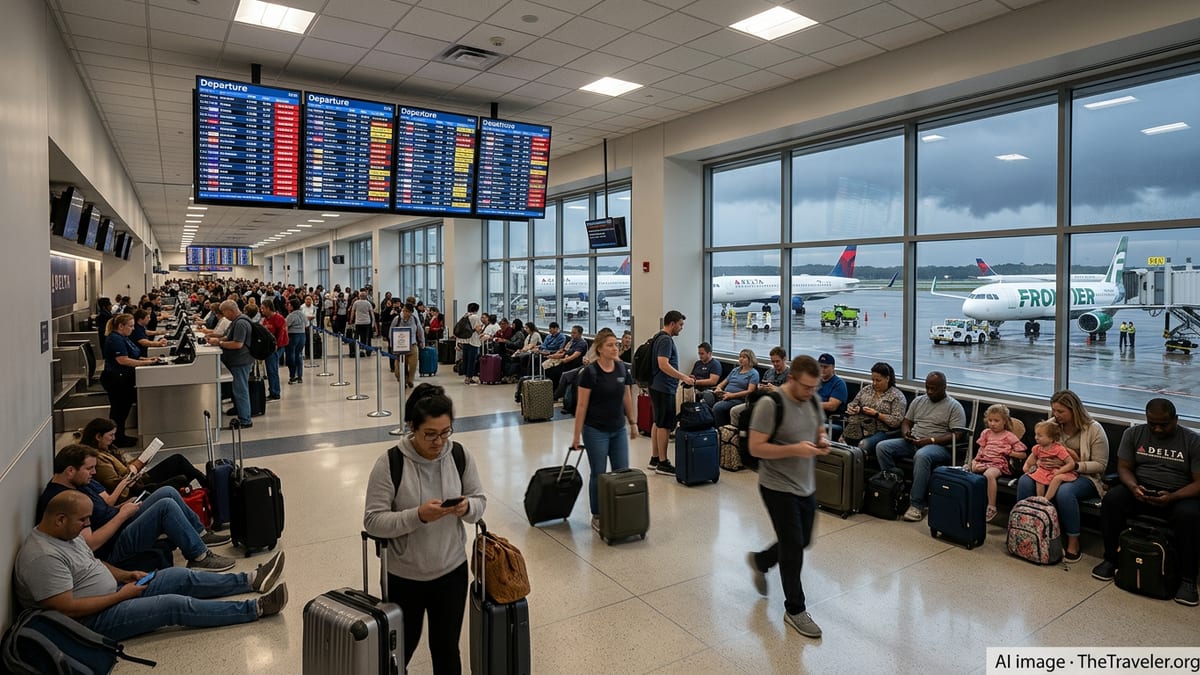
Storm System Dumps Heavy Rain Across North Texas
Weather coverage from multiple outlets indicates that the latest round of disruption is tied to a slow-moving storm system fueled by lingering moisture from Hurricane Polo and warm, humid air off the Gulf of Mexico. Meteorologists describe unusually high levels of atmospheric moisture over the Dallas–Fort Worth region, a combination that has produced torrential rain bands moving repeatedly over the metro area.
Reports from Dallas-area broadcasters on Thursday, October 1, 2026, describe widespread flash flood watches and warnings across Dallas, Tarrant, Denton and Collin counties, with localized flooding on major roadways. Thousands of homes and businesses have temporarily lost power as intense cells pass through, further complicating ground transportation to and from the airports.
The National Weather Service outlook suggests that the most intense rainfall could continue through parts of Thursday afternoon and evening before gradually shifting east. However, forecasters caution that additional showers and embedded thunderstorms may linger, leading to extended periods of low visibility, gusty winds and lightning close to the flight paths serving Dallas–Fort Worth International Airport and Dallas Love Field.
For travelers, the timing of the storms is particularly problematic, overlapping with busy late-morning and afternoon departure banks for both domestic and international services. As a result, even relatively short weather holds have quickly cascaded into sizable delays across airline schedules.
DFW and Love Field Lead U.S. in Delays
Publicly available flight-tracking data on Thursday showed Dallas–Fort Worth International (DFW) and Dallas Love Field (DAL) among the most affected airports in the country. One industry-focused report noted that DFW alone logged more than 800 delayed flights and over 250 cancellations as the storms built over North Texas, placing it at the top of national disruption tables for the day.
Additional coverage from regional outlets indicates that Dallas Love Field, a key base for domestic operations, has also experienced significant schedule impacts. Average departure delays there have reached around half an hour at times, with some flights pushed back considerably longer as ground and air traffic programs adjust to changing conditions in the storm bands.
The Federal Aviation Administration’s real-time traffic management information shows that both major Dallas airports have been subject to a combination of ground stop and ground delay programs during the height of the storms. These measures slow or temporarily halt arrivals and meter departures into already congested airspace, helping maintain safe separation between aircraft in heavy rain and thunderstorms.
Although some reporting indicates that the most stringent restrictions can be scaled back once storm cells move through, residual delays often persist well into the evening. Turnaround times lengthen, aircraft and crews fall out of position, and connecting passengers may miss onward flights, amplifying the effect beyond North Texas.
What Travelers Flying Through Dallas Should Expect
Travel advisories shared by DFW Airport and reported in local media urge passengers to confirm flight status before leaving for the airport, monitor airline apps closely and allow additional time for check-in and security. With intermittent ground stops and extended taxi times at gates and on runways, schedules are subject to rapid change as conditions evolve.
According to publicly available information from the FAA, average arrival delays into DFW during similar storm episodes can approach or exceed an hour, and gate-hold times for departures may rise into the 15- to 45-minute range. Those figures vary by airline and destination, but they give an indication of the scale of disruption travelers may encounter on a day when hundreds of flights are operating off schedule.
Passengers connecting through Dallas are particularly vulnerable to missed onward flights. When a first leg is significantly delayed, rebooking options can be limited because many other services are also operating behind schedule or at capacity. Some travelers may be re-routed through alternative hubs or shifted to next-day departures if evening connections can no longer be met.
On the ground, surface travel may be slowed by heavy rain, road ponding and occasional lane closures on highways leading to the terminals. Rideshare services and airport shuttles can also be affected by traffic backups, so journey times from downtown Dallas or Fort Worth may be longer than usual.
Regional and National Ripple Effects
The concentration of delays at DFW and Love Field is expected to echo well beyond North Texas. As one of the nation’s largest connecting hubs, DFW handles a dense banked schedule of flights linking smaller U.S. cities with major domestic and international destinations. When storms disrupt these waves of activity, aircraft and crews can end up in the wrong place at the wrong time for subsequent segments.
Coverage from national travel and aviation outlets notes that flights into Dallas from cities across the Central and Eastern United States have been held at their origin airports or slowed en route during the worst of the storms. Some departures from secondary airports in Texas and neighboring states have also faced extended delays as airlines adjust operations to the constrained arrival rates into Dallas.
These knock-on effects may be felt at airports far from the immediate weather event. An aircraft that arrives late into Dallas might then operate a transcontinental or international leg several hours behind schedule, pushing delays into the late evening or next day. Airline operations teams can sometimes mitigate this by swapping aircraft or adjusting rotations, but on a day with more than 800 delays, options quickly narrow.
Travelers booked on flights that neither depart from nor land in Dallas may still encounter late arrivals of inbound aircraft or last-minute gate changes if their plane is scheduled to pass through DFW earlier in the day. Monitoring airline notifications and airport information displays becomes essential, even for itineraries that appear to avoid the storm-hit region.
Practical Advice for Passengers Caught in the Disruption
Consumer travel guidance from aviation agencies and passenger rights groups emphasizes preparation and flexibility when severe weather affects major hubs such as Dallas. For those yet to begin their journey, experts recommend confirming that the first segment is operating close to on time before heading to the airport, particularly for early afternoon departures when the storm impacts are peaking.
Airlines typically allow same-day changes or fee waivers when large-scale weather systems trigger formal travel advisories. While individual policies differ, publicly available information shows that carriers often permit customers to switch to alternative flights, travel dates or nearby airports within a prescribed window when a hub like DFW experiences sustained weather disruption.
At the airport, travelers are advised to keep essential items such as medications, chargers and a change of clothes in carry-on bags in case of extended gate holds or unexpected overnight stays. With hundreds of flights operating late, seating areas near power outlets and rebooking desks can become crowded, and food concessions may see long lines during peak delay periods.
Given that forecasts indicate several more hours of unsettled conditions around Dallas, passengers with flexible plans may find it prudent to move trips to later in the weekend or route through alternate hubs where feasible. For those who must travel, closely tracking flight status, checking in as early as possible and responding quickly to rebooking options can help minimize the storm’s impact on their itineraries.