


More news on this day
Israel is launching a wave of repatriation flights from the United Arab Emirates to bring home hundreds of travelers stranded after FlyDubai suspended its Israel services in the wake of a midair cockpit attack on a Dubai to Tel Aviv flight.
Get the latest news straight to your inbox!
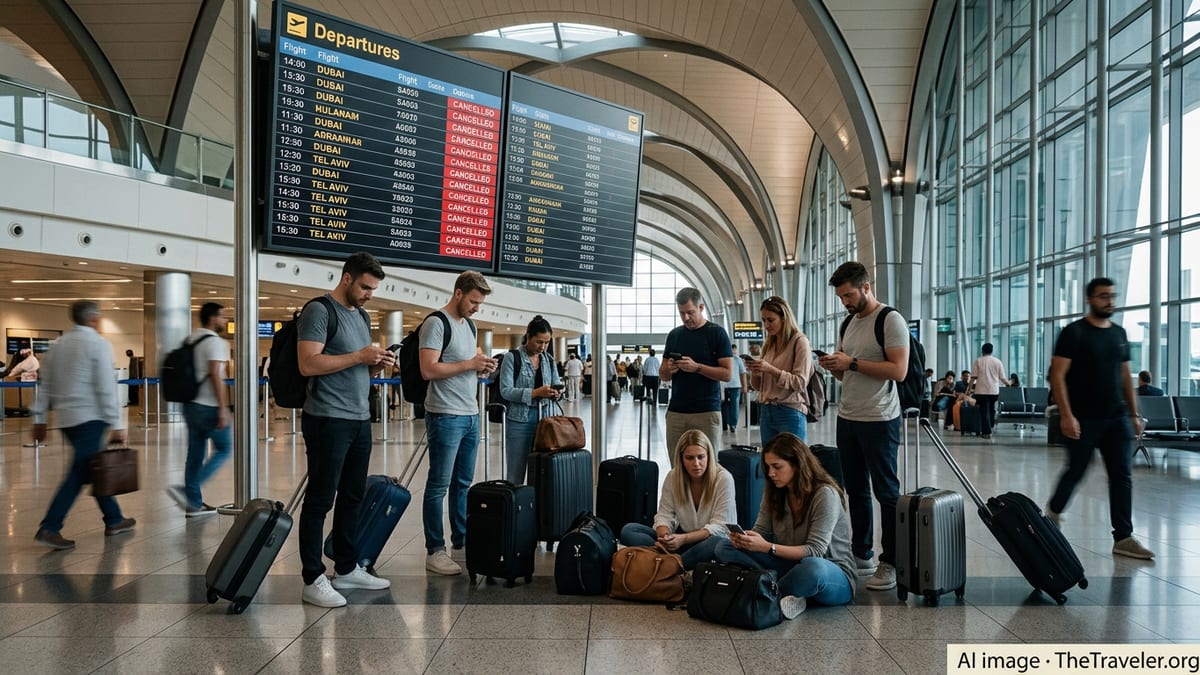
Emergency Flights Begin After Sudden Suspension of Israel Services
Repatriation operations are scheduled to begin on Friday, October 2, with Israeli carriers stepping in to cover routes between Dubai and Tel Aviv that were abruptly halted following the FlyDubai incident earlier in the week. Publicly available information from Israeli aviation authorities and airline statements indicates that commercial operations by FlyDubai between the UAE and Israel have been suspended while investigations continue into the attack on board flight FZ1073.
Coverage by international news agencies and regional outlets reports that Israel has approved one-way rescue flights so that carriers can operate empty aircraft from Tel Aviv to the UAE, pick up stranded passengers, and return them to Ben Gurion Airport. These operations are being framed as a short term solution to clear the backlog of travelers who were booked on now cancelled FlyDubai services.
Reports from Israeli public broadcasters and regional media suggest that several hundred to around 1,800 passengers are directly affected by the suspension of FlyDubai’s Israel routes, primarily leisure and business travelers who flew out during the Jewish holiday period and expected to return on the low cost carrier’s frequent Dubai services. Authorities have indicated that the stranded passengers do not include those who were on board the original FlyDubai flight involved in the incident, as they were already flown onward to Israel on a replacement aircraft.
El Al, Arkia and Israir Step In With One Way Rescue Services
According to published schedules and airline announcements, Israel’s three main carriers on short and medium haul routes, El Al, Arkia and Israir, have been authorized to operate special one way rescue flights from Dubai back to Tel Aviv. The aircraft are expected to depart Ben Gurion Airport without passengers, then load Israel bound travelers at Dubai International Airport before returning.
Details reported in Israeli and regional media indicate that these repatriation flights are being priced and operated as one way segments, with passengers generally required to hold an existing FlyDubai return ticket or booking to qualify for a seat. Information released by local broadcasters suggests that Israel’s Transport Ministry has agreed to partially reimburse the airlines for the cost of flying empty aircraft into the UAE, in recognition of the emergency nature of the operation and the fact that the original tickets were issued by another carrier.
Operational updates published on Friday morning show that departures are focused on the busy Dubai to Tel Aviv corridor, with multiple rotations planned per day as long as demand from stranded passengers continues. Some coverage indicates that the combined capacity of El Al, Arkia and Israir could bring back well over 1,000 passengers per day if aircraft and crew availability allow, which would clear the backlog within several days under stable conditions.
Travelers already in Dubai are being advised, according to airline notices carried by local media, to contact the Israeli carriers or their travel agents in order to be rebooked, and to expect crowding and extended wait times at Dubai International Airport. No similar repatriation flights have been widely reported from Abu Dhabi or other UAE airports so far, which suggests that the focus is on Dubai where most affected passengers are concentrated.
Background: Cockpit Attack on FlyDubai Flight FZ1073
The repatriation effort follows a dramatic in flight emergency on FlyDubai flight FZ1073, which departed Dubai for Tel Aviv on Wednesday, September 30. According to detailed timelines published by international outlets such as the Associated Press and Al Jazeera, a copilot allegedly attacked the captain inside the cockpit, stabbing him and initiating a steep descent that triggered emergency transponder codes, including a hijacking alert.
Reports indicate that the aircraft, a Boeing 737 operating with around 180 passengers and crew, diverted to Tabuk in northwestern Saudi Arabia after the injured captain managed to open the cockpit door and passengers and off duty pilots intervened. Aviation tracking data described in multiple news reports shows a sharp altitude loss before the situation stabilized, and the flight landed safely in Tabuk where passengers disembarked.
A replacement FlyDubai aircraft later carried the passengers onward to Tel Aviv, arriving at Ben Gurion Airport on Thursday, October 1. Published accounts from passengers describe a chaotic scene, with travelers praising the actions of individuals who entered the cockpit and helped regain control of the aircraft. Subsequent coverage by Israeli, Gulf and international outlets notes that investigators from the UAE, Israel, Saudi Arabia and other states are now examining the incident.
Statements highlighted in regional media from senior Israeli figures have described the event as a suspected attempted terrorist attack, while the United Arab Emirates has publicly indicated that it is investigating whether the events on board constitute terrorism under Emirati law. At the same time, official investigations continue to assess the background of the copilot, the security vetting process and the exact sequence of events in the cockpit.
Heightened Security and Legal Investigations in UAE and Israel
Public information released by UAE judicial authorities indicates that the Emirates is treating the incident as a serious criminal case within its jurisdiction, as the FlyDubai aircraft is registered in the country and operates under its flag. Officials have confirmed through statements carried by state aligned media that Emirati law applies to crimes committed on board UAE registered aircraft, even when they are outside national airspace.
Reports from Israeli outlets indicate that security services from Israel have traveled to the UAE to support coordination around passenger screening, airline security procedures and the logistics of the new repatriation flights. Ben Gurion Airport has reportedly introduced enhanced checks for flights arriving from the UAE in response to the cockpit attack, including additional inspection of aircraft and special parking arrangements for affected services.
International aviation analysts cited in coverage by major news organizations suggest that the FlyDubai incident is likely to prompt a wider review of cockpit access procedures, psychological screening for flight crew and cross border security coordination on routes linking Israel with regional hubs. The case is being closely watched because it involves a carrier from the UAE operating a commercially and politically significant route to Israel that was opened only after the normalization agreements signed in 2020.
For passengers currently in the UAE, the main immediate impact is on availability of direct flights to Israel and the added security layers now being implemented. While FlyDubai has not yet provided a public timeline for resuming Israel services, its broader network across the Gulf, Asia and Europe continues to operate, limiting the disruption to routes involving Tel Aviv.
Travel Implications for Future UAE–Israel Routes
The suspension of FlyDubai’s Israel routes and the activation of emergency repatriation flights underline how quickly travel plans between the UAE and Israel can be affected by security events. Prior to the incident, FlyDubai operated multiple daily flights between Dubai and Tel Aviv, providing a key low cost option on a route popular with leisure travelers, business visitors and connecting passengers heading onward via Dubai to Asia and beyond.
Travel industry analysts quoted in regional business media suggest that demand for UAE–Israel travel is unlikely to disappear, but that passengers may temporarily favor flag carriers such as El Al or indirect routings through third countries perceived as more stable until the FlyDubai investigation concludes. At the same time, the rapid approval of repatriation flights is being portrayed as a demonstration of the depth of practical ties between Israel and the UAE since normalization, despite ongoing political sensitivities.
For travelers planning future trips, publicly available information at the time of writing indicates that direct options between Dubai and Tel Aviv may remain limited in the near term. Potential visitors are being encouraged by airlines and travel agents, according to media reports, to monitor carrier advisories closely, check that their contact information is up to date in airline reservations, and consider travel insurance products that cover schedule disruptions due to security incidents.
As investigations in the UAE, Israel and other states proceed, any formal findings on the FlyDubai incident and subsequent security recommendations are expected to shape how airlines schedule and secure flights between the two countries. For now, the priority remains getting stranded passengers home safely on the emergency services that began operating from Dubai to Tel Aviv on Friday.