


More news on this day
Israel is preparing to launch emergency repatriation flights from the United Arab Emirates to bring home passengers stranded after FlyDubai halted services to Tel Aviv in the wake of a midair cockpit attack this week.
Get the latest news straight to your inbox!
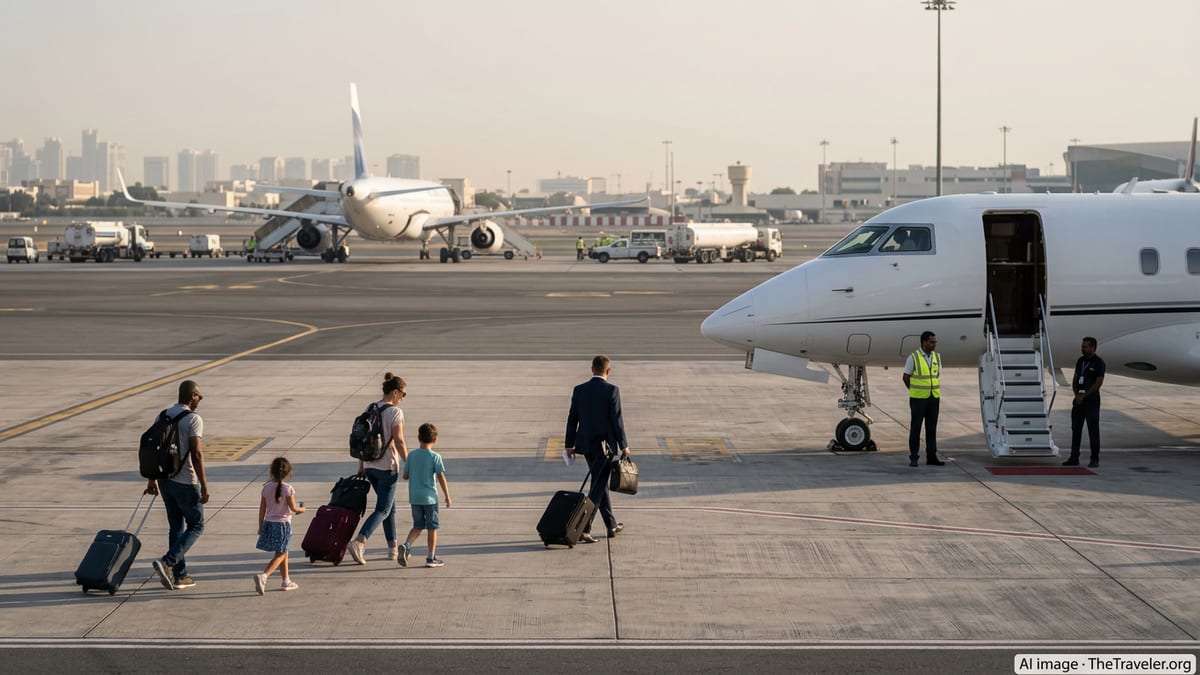
Rescue operations begin after dramatic cockpit incident
According to widely cited news coverage, the decision to organize repatriation flights follows a serious incident on FlyDubai Flight FZ1073 from Dubai to Tel Aviv on Wednesday, September 30, 2026. Publicly available reports describe how the copilot allegedly attacked the captain in the cockpit shortly after the Boeing 737-800 reached cruising altitude, forcing the aircraft into a steep descent before it was stabilized.
Flight tracking data reported in international media indicates that the aircraft dropped from around 33,000 feet to about 17,000 feet in roughly one minute before diverting to Tabuk in northwestern Saudi Arabia for an emergency landing. All 182 people on board, including passengers and crew, were eventually evacuated safely.
Coverage from regional and global outlets notes that investigators in the United Arab Emirates, Israel and Saudi Arabia have opened inquiries into the attack, which some officials in Israel have publicly characterized as a possible attempted terror incident. As of October 2, 2026, no clear motive has been made public, and authorities in the UAE have stated that they are examining whether the incident qualifies as terrorist activity.
The shock of the near disaster and the ongoing investigation prompted FlyDubai to suspend its Israel routes, cutting one of the busiest air links established after the 2020 normalization of relations between Israel and the UAE. The move left many travelers holding unused return tickets and uncertain about how they would get home.
Israeli carriers step in to extract stranded travelers
Following the suspension of FlyDubai services, Israeli carriers have been cleared to mount one-way repatriation flights from the UAE back to Tel Aviv. Reports from Israeli and international media indicate that El Al, Arkia and Israir have been approved to operate special services beginning Friday, October 2, 2026, focused exclusively on flying passengers out of Dubai and other UAE gateways to Ben Gurion Airport.
Information published by Israeli broadcasters and aviation-focused outlets suggests that around 1,700 to 1,800 passengers are expected to be repatriated per day once the operation is fully underway. These numbers reflect travelers who had been due to return on FlyDubai flights that were cancelled after the stabbing incident, and do not include the passengers from the original FZ1073 flight, who were transferred onward to Israel shortly after their diversion to Saudi Arabia.
The repatriation services are described as one-way flights operating from UAE airports back to Tel Aviv, with aircraft flying empty from Israel to the Gulf to collect stranded travelers. According to reports, Israel’s Transport Ministry has authorized the program and arranged financial support to offset the cost of operating empty outbound legs.
Published airline statements reviewed by regional media indicate that each carrier is coordinating closely with airport authorities in Dubai and Abu Dhabi to secure slots and complete additional security reviews before departure. Seats on the rescue flights are being prioritized for passengers holding existing FlyDubai tickets, followed by other Israeli nationals and residents seeking to return.
What affected passengers can expect in the coming days
Public guidance shared by news organizations and airline announcements indicates that passengers currently in the UAE who were booked on FlyDubai services to Israel are being advised to contact their original carrier or travel agency first to confirm eligibility for placement on an Israeli airline repatriation flight. In many cases, FlyDubai tickets are being used as proof of travel, while the actual journey home will be operated by El Al, Arkia or Israir.
Reports suggest that travelers may face short-notice schedule changes as additional flights are added or adjusted in response to demand and operational constraints. Some coverage notes that passengers should be prepared for early-morning or late-night departures from Dubai International Airport, as airlines seek available takeoff and landing slots around existing schedules.
For stranded travelers, accommodation and other on-the-ground arrangements vary depending on original booking conditions and travel insurance coverage. Publicly available information indicates that some passengers have arranged hotel stays independently while awaiting confirmation of their repatriation flight, while others have sought assistance from tour operators or corporate travel departments.
Aviation analysts quoted in international coverage point out that while the airlift is expected to clear the immediate backlog within several days, the lack of clarity around when or whether FlyDubai will resume Israel operations means that travelers planning upcoming trips may need to reroute on other carriers or postpone journeys altogether.
Security scrutiny and regional aviation implications
The cockpit attack has triggered renewed scrutiny of aviation security procedures in the region, including how flight crew are screened and monitored. Industry experts cited in global media note that many regulators require pilots and cabin crew to pass security checks similar to, or more stringent than, those faced by passengers, but practices can vary from one jurisdiction to another.
Analysts observe that investigators are likely to focus on both psychological and security vetting of crew members, access control to the cockpit and the airline’s internal reporting mechanisms for behavioral concerns. The incident has also revived broader discussions about the risks faced by flights operating on politically sensitive routes between Israel and regional hubs.
Since the signing of normalization agreements between Israel and several Arab states in 2020, airlines based in the Gulf have played a significant role in connecting Israel to Asia, Africa and the wider world. FlyDubai, in particular, became a key operator on the Dubai–Tel Aviv route, offering multiple daily frequencies and feeding longer-haul services of its sister carrier Emirates.
With FlyDubai’s Israel flights now suspended pending the outcome of investigations, travel industry observers are watching closely to see how long Israeli carriers can sustain expanded schedules to and from the UAE, especially if heightened security measures add time and cost to each operation. The outcome may influence how other airlines assess their exposure on similar routes.
Travelers weigh future routes between Israel and the Gulf
For leisure and business travelers who have grown accustomed to frequent and relatively affordable flights between Tel Aviv and Dubai since 2020, the sudden disruption serves as a reminder of how quickly geopolitical and security developments can reshape air corridors. Travel agents quoted in regional coverage report a surge in inquiries from customers seeking alternatives through other hubs or preferring nonstop services on Israeli flag carriers.
Some airlines in Europe and the Mediterranean have already adjusted their Israel schedules in recent years in response to regional tensions and changing demand. Industry commentary suggests that the FlyDubai incident may prompt a new round of risk assessments among carriers serving Ben Gurion Airport, particularly on routes that pass over or connect through sensitive airspace.
At the same time, the rapid organization of repatriation flights from the UAE highlights the value of the aviation ties created since formal relations were established between Israel and the Emirates. Observers note that coordination between civil aviation authorities, airports and airlines on both sides has allowed stranded passengers to secure routes home within days rather than weeks.
As investigations continue and repatriation flights ramp up, travelers planning upcoming trips between Israel and Gulf destinations are being encouraged, in publicly available advisories and media coverage, to monitor airline announcements closely, verify that their flights are confirmed and consider flexible booking options in case schedules change again.