


More news on this day
American Airlines is planning a sweeping overhaul of its narrowbody cabins, restoring seatback entertainment screens across the fleet while adding more premium seating as it seeks to reposition itself against domestic rivals that have leaned heavily into in-flight comfort and amenities.
Get the latest news straight to your inbox!
Reversal of a High-Profile Bet on Personal Devices
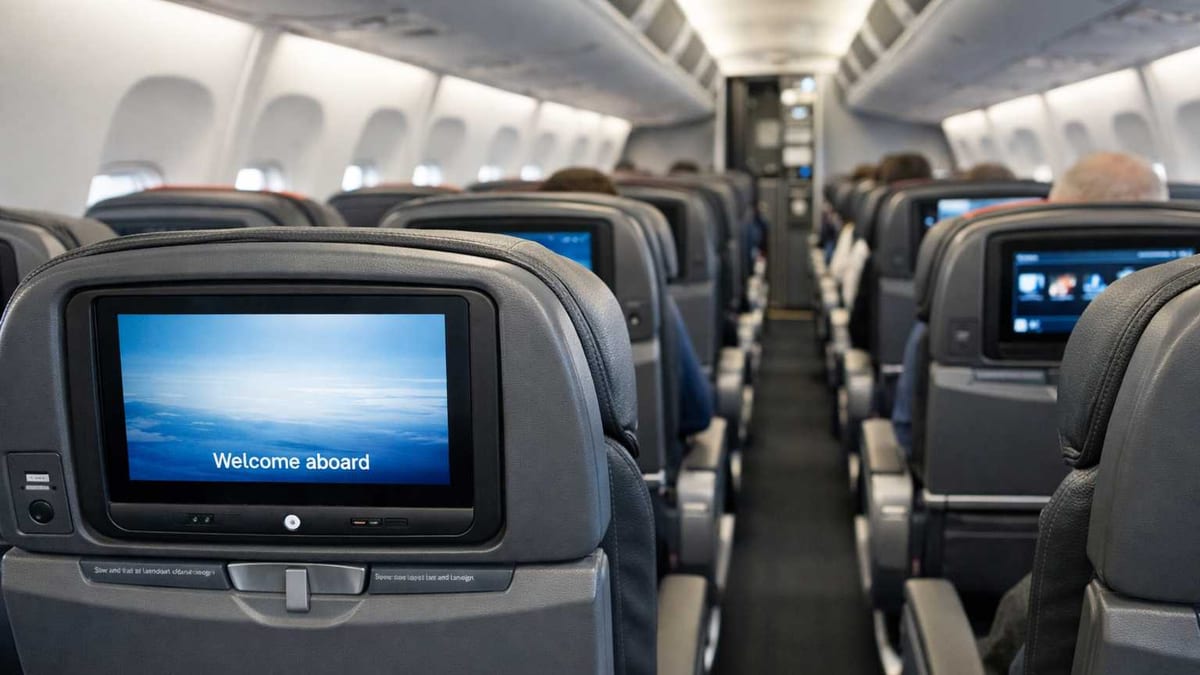
Publicly available information indicates that American intends to return to a feature it spent years moving away from by reintroducing individual seatback entertainment screens on its narrowbody aircraft. The move represents a reversal of the carrier’s earlier strategy that prioritized a bring-your-own-device model relying on passengers’ phones and tablets for streaming content.
Over the past decade, the airline removed screens from most single-aisle jets as part of cost-saving and weight-reduction initiatives. That decision increasingly set American apart from main competitors Delta Air Lines and United Airlines, both of which have invested heavily in modern in-seat systems as a core part of their customer-experience strategies.
Industry coverage has documented growing criticism of American’s approach from frequent travelers who argued that streaming to personal devices, while useful, was not an adequate replacement for a built-in option, particularly on longer domestic routes and for customers without fully charged electronics. The planned return of screens suggests the airline is now aligning more closely with evolving passenger expectations and competitive pressures.
The shift also coincides with broader improvements to in-flight connectivity, including ongoing work to upgrade Wi-Fi and power options. Analysts note that combining high-speed internet with modern embedded displays allows airlines to offer a more integrated, consistent product across aircraft types.
New Screens to Feature Larger Displays and More Power Options
According to recent descriptions in company-facing materials and published reporting, the new American Airlines seatback systems are expected to feature larger, higher-resolution displays than those used in previous generations. References to 4K-capable monitors, expanded entertainment libraries and interactive flight information suggest a technology-forward platform designed to remain viable for many years.
The screens are also understood to include modern connectivity, including USB-C power ports intended to charge personal devices, and wireless audio pairing via Bluetooth to reduce the need for wired headsets. These capabilities echo similar upgrades underway at competing carriers and aim to meet passengers’ growing reliance on their own devices, even when in-seat entertainment is available.
Such specifications position American’s narrowbody cabins closer to the standards increasingly seen on new long-haul aircraft, where large-format seatback displays have become a hallmark of premium branding. Industry observers say having a consistent digital experience on both domestic and international routes is particularly important for corporate travelers who value predictability across their itineraries.
Deployment of the new system is expected to begin with future deliveries of Boeing and Airbus narrowbody aircraft, followed by retrofits of existing jets. While detailed timelines have not been fully outlined in public materials, references to installations beginning later this decade suggest a multiyear program that will gradually expand coverage across the fleet.
Premium Cabin Expansion Targets High-Yield Travelers
Alongside the return of seatback screens, American is preparing to increase the number of premium seats on many narrowbody aircraft. Investor presentations and fleet-planning documents describe a strategy to add more domestic First Class and extra-legroom Main Cabin seats through a combination of new deliveries and interior reconfigurations.
On Airbus A319 and A320 aircraft, retrofit programs are expected to add additional First Class rows while refreshing the overall cabin trim and installing more powered seats. New Boeing 737 variants and incoming Airbus A321neo family aircraft are similarly slated to feature larger premium cabins than earlier versions, with some configurations cited as having two dozen or more First Class seats.
This premium-focused approach aligns with a broader “premiumization” trend across the industry, in which carriers concentrate a greater share of capacity in higher-yield cabins and products such as extra-legroom economy and premium economy. For American, enhancing the number and quality of these seats is seen as a way to capture more business-travel revenue and appeal to leisure passengers willing to pay for additional comfort.
Analysts note that increasing premium seating density can also improve the economics of cabin retrofits that include new entertainment systems, since higher-paying customers are particularly sensitive to perceived quality differences between airlines.
Competitive Pressure From Delta and United
American’s plan comes against a backdrop of intensifying competition on service features among the three largest U.S. network carriers. Delta has already equipped the vast majority of its domestic mainline fleet with seatback entertainment and has emphasized free Wi-Fi and premium cabin upgrades as core selling points. United is in the midst of a large, multi-year narrowbody retrofit that is adding new seats, larger overhead bins and in-seat screens across tens of thousands of seats.
Industry analyses suggest that American’s previous decision to forgo widescale deployment of seatback screens may have weakened its ability to command a fare premium in competitive markets, particularly among customers who fly regularly and compare cabin experiences across airlines. Survey data cited in travel trade publications has consistently shown that reliable entertainment and power options are among the most valued in-flight amenities for North American travelers.
With the new program, American appears to be seeking parity, if not differentiation, in these areas. The combination of expanded premium seating and upgraded entertainment could help the carrier compete more effectively for lucrative corporate contracts and high-frequency flyers on key routes where product differences can sway booking decisions.
Observers also point out that cabin investments are arriving as the airline marks its centennial milestone, a symbolic moment that offers an opportunity to reset perceptions after years of intense focus on cost control and operational simplification.
Implementation Timeline and Customer Impact
While specific aircraft-by-aircraft schedules have not been fully detailed in publicly accessible documents, indications are that American’s narrowbody transformation will take place over several years. New aircraft delivered later this decade are expected to arrive with the upgraded interiors already installed, while existing planes will likely be cycled through retrofit lines as they come due for heavy maintenance.
During the transition, passengers can expect a mix of experiences, with some jets offering the new seatback systems and expanded premium cabins, and others retaining legacy interiors and bring-your-own-device streaming. Travel experts suggest that customers who prioritize seatback entertainment may increasingly look to identify aircraft types and configurations when booking, a behavior already common among frequent flyers on competing carriers.
The scale of the planned changes underscores how central the onboard product has become to airline branding and revenue strategies. For American, the return of seatback screens and the growth of premium seating mark a significant evolution from earlier years, when the emphasis rested more heavily on maximizing seat counts and leaning on personal devices for entertainment.
As the retrofits progress and more aircraft enter service with the new configuration, passenger feedback and load patterns in premium cabins will likely shape future refinements. The initiative positions American to participate more fully in the ongoing race among major U.S. airlines to deliver a higher-end in-flight experience while preserving operational and financial discipline.