


More news on this day
Israel is launching emergency repatriation flights from the United Arab Emirates on Friday, October 2, 2026, to bring home passengers stranded after a violent cockpit attack on a FlyDubai flight led to the suspension of regular air services between the two countries.
Get the latest news straight to your inbox!
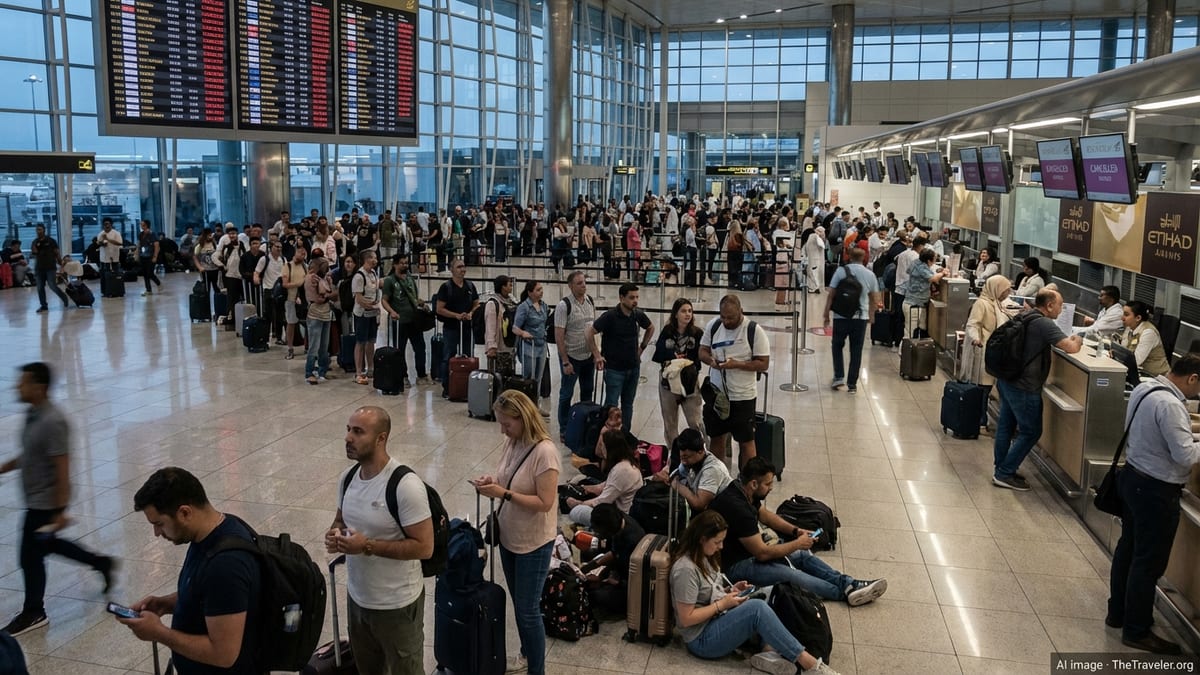
Repatriation operation launched after dramatic midair incident
According to widely circulated agency reports, Israel approved a series of one way rescue flights after FlyDubai suspended services to Tel Aviv in the wake of Wednesday’s attempted attack on Flight FZ1073 from Dubai to Israel. The Boeing 737 made an emergency landing in Saudi Arabia after the copilot allegedly stabbed the captain and put the aircraft into a steep descent with 182 people on board.
Publicly available information indicates that the captain, an Indian national, managed to regain partial control despite serious injuries and was eventually helped by passengers who entered the cockpit and restrained the assailant. The aircraft then diverted to an airport in Saudi Arabia, where passengers later continued to Israel on a replacement jet.
The immediate suspension of commercial flights between the United Arab Emirates and Israel left thousands of travelers facing uncertainty at the start of a busy travel period. Repatriation services approved by Israeli authorities are intended to address an estimated backlog of around 1,800 stranded passengers in the UAE, according to figures published by regional news outlets.
Israeli airlines step in on Dubai and Abu Dhabi routes
Coverage in Israeli and international media shows that Israeli carriers El Al, Arkia and Israir have been cleared to operate special one way flights from the UAE back to Tel Aviv’s Ben Gurion International Airport. These services are focused on bringing Israeli passport holders and other eligible travelers home, and do not at this stage restore the full two way commercial schedule that existed prior to the incident.
Reports indicate that flights are expected to depart from Dubai International Airport and, where demand requires, from Abu Dhabi, with schedules adjusted as the situation develops. Seats are being coordinated through Israeli tour operators and airline call centers, with priority given to passengers whose original return flights were canceled after FlyDubai’s suspension of Israel services.
Based on current public information, these repatriation flights are classified as exceptional operations under Israel’s transportation framework. Fares are generally pegged close to standard economy prices for the route, although some outlets note that individual costs may vary depending on booking channel and the timing of travel changes made earlier in the week.
Ongoing investigations and heightened aviation security scrutiny
The FlyDubai incident has triggered separate investigations in Israel, the United Arab Emirates and Saudi Arabia, focusing on the alleged onboard attack and the sequence of events that caused the aircraft to descend sharply before stabilizing. Published accounts emphasize that the motive of the copilot remains unclear, and authorities in the UAE have publicly acknowledged that they are examining whether the assault could be categorized as terrorist activity.
Specialist commentary in aviation circles notes that the case has drawn renewed attention to internal cockpit security, mental health assessments for flight crew and procedures for responding to in flight emergencies involving members of the operating team rather than outside intruders. Dubai International Airport’s longstanding emphasis on safety and reliability in a volatile region is also under the spotlight as regulators review protocols.
For Israel, the episode has intersected with an already tense regional climate shaped by the ongoing conflict between the United States and Iran. Analysts quoted in open source coverage suggest that any indication of ideological or politically motivated intent in the cockpit attack could have broader implications for air connectivity and tourism flows across the Gulf and Eastern Mediterranean.
Impact on travelers between Israel and the UAE
Before this week’s events, the air corridor between Israel and the UAE had become a busy route for business travelers, religious tourism, leisure visitors and passengers connecting through Dubai to long haul destinations in Asia and the Pacific. Since the signing of normalization agreements between the two countries in 2020, FlyDubai and Israeli airlines have operated multiple daily services on the Dubai–Tel Aviv route, supplemented at times by seasonal and charter capacity.
With FlyDubai flights currently suspended and regular schedules disrupted, travelers holding near term reservations are being advised in public advisories to check directly with their airlines or travel agents and to consider alternative routings via third countries where available. However, the rapid repatriation plan indicates a shared interest in avoiding prolonged disruption for tourists and business visitors already in the UAE when the incident occurred.
For passengers still in Dubai and Abu Dhabi, the primary near term change is the shift from frequent scheduled departures to limited, specially approved return flights operated mainly by Israeli carriers. Travelers may face shorter booking windows, less flexibility on departure times and a need to show documentation proving that they were affected by recent cancellations in order to secure seats on repatriation services.
What travelers should watch in the coming days
As investigations continue, the key variables for travelers are the duration of FlyDubai’s suspension of Israel services and any additional security requirements that may be introduced for flights between the UAE and Tel Aviv. Public statements suggest that both factors will depend on the findings of aviation and security authorities and on coordination between regulators in the countries involved.
Travelers planning future trips on this corridor are likely to see schedule adjustments and equipment changes as airlines assess demand and respond to any new safety guidelines. Published reporting highlights that carriers are under pressure to balance passenger confidence with operational costs, especially if additional cockpit or crew screening measures are mandated.
Until more clarity emerges, the newly announced repatriation flights represent a temporary bridge for those already abroad rather than a full restoration of the pre incident travel landscape. For the broader Middle East travel sector, the FlyDubai attack and its aftermath have become a critical test of crisis response mechanisms, cross border cooperation and the resilience of one of the region’s most important new air links.