


More news on this day
American Airlines is accelerating a multiyear overhaul of its long-haul cabins, joining carriers such as Cathay Pacific in a renewed focus on premium seats as demand from business and high-spending leisure travelers reshapes airline economics.
Get the latest news straight to your inbox!
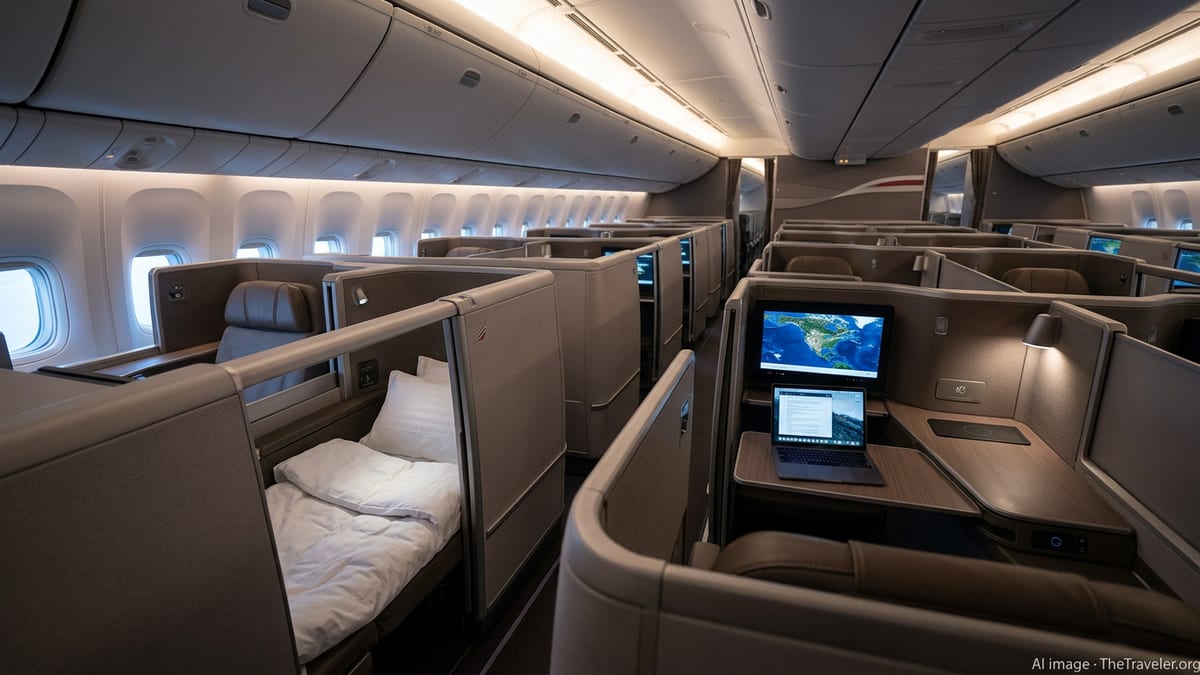
American Bets Big on Flagship Suite Rollout
American Airlines is in the midst of one of its most significant cabin upgrades in years, built around the new Flagship Suite concept on Boeing 787-9s and forthcoming Airbus A321XLR aircraft. Publicly available information indicates that the first 787-9s with the suites have already entered service on routes such as Chicago to Los Angeles and onward to London, with additional deliveries scheduled through the decade as part of an order book of around 30 787-9s and multiple A321XLRs.
The airline has framed Flagship Suite as the centerpiece of a wider premium strategy. Investor materials highlight improved customer satisfaction scores for the new widebody interiors and describe plans to open additional Flagship-branded lounges in Miami and Charlotte, indicating that ground facilities are being upgraded in parallel with the onboard product. The move is designed to reposition American’s long-haul fleet toward higher-yield travelers rather than dense economy layouts.
Alongside the hardware changes, American has begun rolling out new amenity kits, refreshed dining concepts and upgraded in-flight entertainment with 4K seatback screens and extensive connectivity. According to the company’s travel journey and product pages, these enhancements are being deployed not only in Flagship First and Business but also in Premium Economy, reflecting a broader push to differentiate multiple tiers of service on key international and transcontinental routes.
Network updates point to a gradual expansion of Flagship Suite coverage, with more long-haul destinations slated to receive the product as additional aircraft are delivered and retrofits on existing Boeing 777-300ERs progress. For travelers, that means growing opportunities over the next several seasons to experience enclosed suites and more personalized space on routes that once offered a more conventional lie-flat business seat.
Cathay’s Aria Suite Signals an Asia-Pacific Premium Race
Across the Pacific, Cathay Pacific has been steadily rolling out its Aria Suite business class on retrofitted Boeing 777-300ERs, positioning the product as a new flagship for the Hong Kong carrier. Company disclosures put the Aria Suite at the heart of a wider investment program of more than HK$100 billion, covering aircraft, cabins, lounges and digital upgrades as the airline rebuilds its long-haul network.
The Aria Suite features fully flat beds, direct aisle access for every passenger and larger 4K screens, with mood lighting and privacy elements tailored to long-haul travel. According to published coverage on the airline’s official channels, the product has already appeared on select routes from Hong Kong to Sydney and is scheduled to debut on flights to Los Angeles and other North American gateways, reinforcing Cathay’s position in key premium markets.
Cathay’s investor communications describe a pipeline of new seat products spread across several years, including a new first class on its upcoming 777-9 fleet and a next-generation business cabin for Airbus A330s. The Aria Suite is the first visible step in that sequence, and early deployments suggest the airline is prioritizing markets with strong corporate and affluent leisure demand.
For Asia-Pacific travelers, this intensifying focus on premium cabins means more consistency between long-haul and regional services and a gradual retirement of older business-class designs. It also sets a competitive benchmark for rivals that are weighing their own investments in private suites and upgraded soft products.
Premium Cabins Drive a Shift in Airline Economics
The renewed emphasis on cabin overhauls by American, Cathay Pacific and other carriers is closely tied to the changing economics of air travel. Industry research from organizations such as IATA and independent analysts shows that premium-class travel has rebounded faster than economy since 2023, with premium passenger volumes rising markedly as corporate travel recovers and high-end leisure spending remains resilient.
Recent analysis from travel and aviation consultancies indicates that premium cabins now deliver a disproportionate share of passenger revenue relative to their seat count. One widely cited research report estimates that premium cabins accounted for roughly a quarter of global airline passenger revenue in 2024, underlining why airlines are willing to commit substantial capital to retrofit programs and new widebody orders focused on business and premium economy seats.
Consulting studies on premium leisure travel further suggest that travelers who previously flew economy are increasingly willing to pay for extra space, privacy and better dining, particularly on long-haul routes. This shift means that even as corporate contracts remain important, a growing slice of demand for business-class suites and premium economy comes from individuals and families planning once-a-year or once-in-a-lifetime trips.
For airlines, the result is a strategic pivot toward cabins that can reliably command higher yields across both corporate and leisure segments. That helps explain why American’s Flagship Suite program and Cathay’s Aria Suite are accompanied by investments in premium lounges, enhanced catering and digital experiences that extend beyond the seat itself.
Global Carriers Race to Redesign the Front of the Plane
American and Cathay are not alone in reshaping their cabins around premium travelers. Major network carriers across North America, Europe and the Middle East have signaled similar priorities, with several emphasizing in investor presentations that premium ticket revenue is expected to outpace, and in some cases overtake, main-cabin ticket revenue over the coming years.
In the United States, large airlines have been gradually increasing the share of premium seats in their fleets through both aircraft deliveries and retrofits. Reports from industry events and investor days highlight rising numbers of premium economy seats and enhanced business cabins, reflecting a view that high-yield demand will continue to support returns on these upgrades. Internationally focused airlines, especially in the Gulf region, have also reported strong load factors in business and first class, reinforcing the case for sustained investment at the top end of the market.
Cabin redesigns increasingly focus on privacy doors, larger screens, and storage, often blurring the line between traditional business and first class. Some airlines have responded by retiring separate first-class cabins altogether and concentrating resources on a highly differentiated business-class suite, while others, including Cathay, are choosing to maintain or relaunch a distinct first-class product alongside advanced business cabins.
This competitive cycle has created a new standard for long-haul travel in which fully flat beds and direct aisle access are baseline expectations rather than differentiators. As American, Cathay and their peers continue to refit aircraft and refine service, travelers can expect the most visible changes at the front of the aircraft, even as airlines also seek to add modest premium touches in economy and extra-legroom sections.
What Premium Flyers Can Expect in the Coming Years
The wave of premium-focused investment suggests that travelers choosing business class and premium economy will see a steadily improving experience through the late 2020s. For American Airlines customers, that is likely to translate into broader availability of Flagship Suite and enhanced premium economy seats on transatlantic and transpacific routes as additional 787-9s and A321XLRs join the fleet and retrofit schedules progress on older widebodies.
Cathay Pacific passengers can expect more routes to feature the Aria Suite as the 777-300ER program advances and as new-generation aircraft enter the fleet with updated cabins. The airline has already committed, through its own published materials, to launching further premium-seat products over the next several years, signaling that Aria is part of a rolling upgrade rather than a one-off project.
Across the industry, more personalized service, digitally enabled ordering and entertainment, and refined dining are becoming standard components of premium travel. Travelers booking higher cabin classes are also likely to see expanded lounge networks, upgraded ground services and more seamless connections as airlines seek to present a coherent premium journey from check-in to arrival.
At the same time, the focus on premium cabins raises questions about how far airlines can push fares without dampening demand and how they balance investment between the front and back of the aircraft. For now, traffic and revenue trends support the current wave of spending on business suites and premium economy, making it likely that American, Cathay and other major carriers will keep rebuilding cabins around high-yield flyers for years to come.
American Airlines Flagship Suite announcement