


More news on this day
A PSA Airlines-operated American Eagle service from Providence to Washington diverted back to Rhode Island T. F. Green International Airport on August 6 after a reported in-flight issue, according to publicly available flight tracking and incident reports.
Get the latest news straight to your inbox!
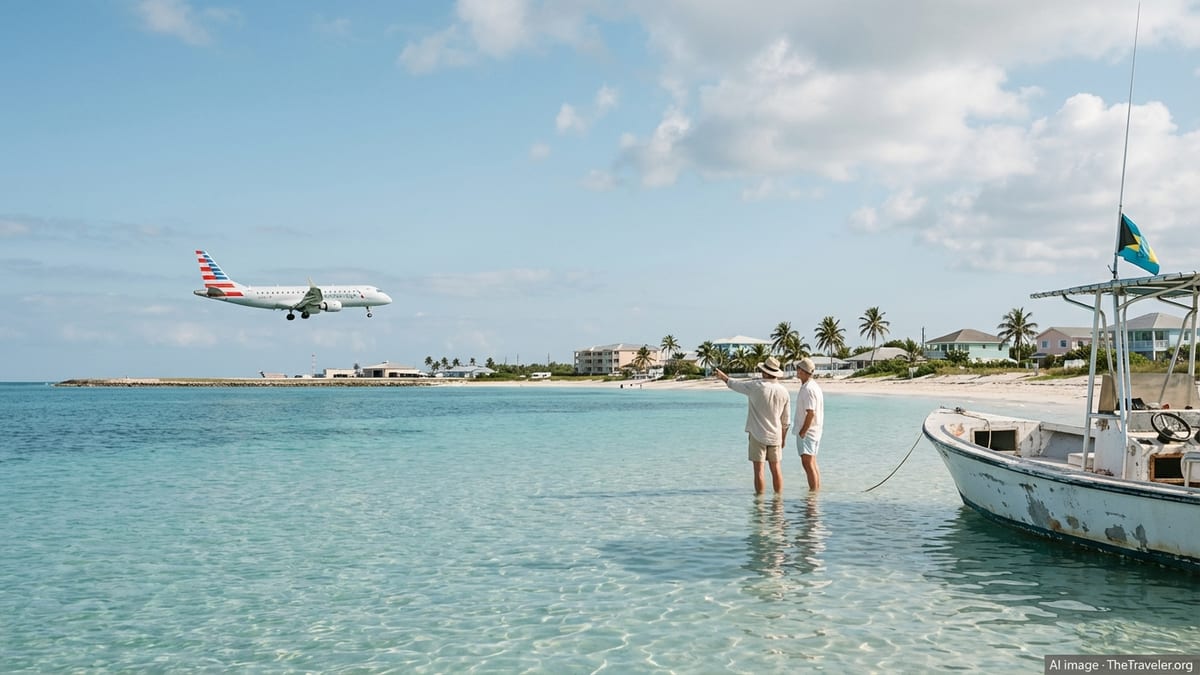
Regional Jet Returns To Departure Airport Shortly After Takeoff
The flight, identified in schedules as American Eagle and operated by PSA Airlines under the code JIA5636, was using a Mitsubishi CRJ-701ER regional jet on the evening of August 6. The aircraft departed Providence on a regularly scheduled service to the Washington, D.C. area before leveling off and turning back toward Rhode Island.
Flight-tracking data reviewed after the event indicate that the jet climbed from T. F. Green International Airport and began its southbound routing before the crew initiated a return to Providence. The aircraft remained in the vicinity of the departure region rather than continuing along its planned route to the Washington terminal area.
The CRJ-701ER, part of a family of regional jets widely used across the United States, is typically configured in a dual-class cabin for American Eagle operations. PSA Airlines, a wholly owned regional operator for American, uses the type extensively on short-haul routes connecting smaller and mid-sized cities with major hubs.
No injuries or structural damage have been publicly reported in connection with the diversion. Available operational information suggests the flight returned under its own power and taxied to the gate after landing.
Operational Diversion Procedures For U.S. Regional Flights
When an airliner experiences a technical concern, an onboard alert, or a cabin-related issue soon after departure, standard operating procedures frequently favor returning to the point of origin if suitable conditions exist there. Industry documentation and safety guidance describe this as a conservative approach that allows ground teams to inspect the aircraft and support passengers using facilities already in place at the departure airport.
Regional carriers such as PSA Airlines operate within American Airlines’ broader network and follow detailed manuals covering diversion decision-making. These materials typically take into account runway length, available maintenance, weather conditions, and air traffic control workload at possible diversion airports.
In the case of flight JIA5636 on August 6, publicly viewable tracking logs show that Providence offered an immediate and operationally straightforward option. The aircraft was already in climb-out from T. F. Green, and the weather in the area, based on routine aviation reports for that date, did not indicate significant storms or visibility issues that would normally complicate a return.
Once a diversion decision is made, regional jet crews coordinate with air traffic control to receive vectors back to the airport, descend in accordance with local procedures, and prepare the cabin for landing. The process can unfold quickly, which often leads to relatively short total airborne times on flights that return to origin.
Impact On Passengers And The Washington–New England Corridor
The diversion of JIA5636 added disruption along a busy air corridor linking New England with the U.S. capital region. The Providence to Washington route serves both business and leisure travelers, including government staff, commuters, and connecting passengers bound for onward international flights.
Passengers on this particular flight would likely have faced rebooking or onward travel adjustments after the aircraft returned to Rhode Island. Published experiences from similar American Eagle events suggest that travelers are typically accommodated on later departures, rerouted through other hubs such as Philadelphia or Charlotte, or offered alternative arrangements depending on seat availability and timing.
Although diversions often generate frustration, aviation safety data emphasize that such returns are one of several layers designed to keep passengers and crew safe. Analysts routinely note that the vast majority of diversions in commercial service end uneventfully, with aircraft either cleared for a subsequent flight after inspection or positioned for more extensive maintenance.
For the Providence airport itself, the diversion would be handled as part of regular operations. As a regional facility serving southern New England, T. F. Green hosts multiple daily regional jet movements, and local ground teams are accustomed to irregular operations such as weather delays and maintenance-driven returns.
CRJ-701ER Fleet Role And Safety Context
The Mitsubishi (formerly Bombardier) CRJ-701ER occupies a key niche in U.S. regional fleets, bridging shorter commuter services and higher-capacity mainline aircraft. Airlines value the type for its range and performance on routes like Providence to Washington, which do not always support larger narrowbody jets.
Studies of U.S. commercial aviation safety show that serious accidents and injuries on scheduled passenger flights remain rare relative to the volume of daily operations. Diverted flights, go-arounds, and precautionary returns are categorized as safety events that demonstrate the layered protections built into modern airline operations, rather than as failures of the system.
Publicly available statistics from federal transportation databases describe diversion as a small percentage of overall flights each year. Regional carriers, including PSA Airlines, contribute to those totals through precautionary returns and weather-related route changes that are often invisible beyond airport departure boards and tracking applications.
In this context, the August 6 diversion of JIA5636 appears consistent with standard practice for a precautionary return. The decision to bring the CRJ-701ER back to Providence, rather than continue toward Washington, aligns with the broader industry pattern of prioritizing rapid access to maintenance and support resources when any in-flight concern arises.
Ongoing Review And Follow-Up After The Event
Following a diversion, airlines typically conduct internal reviews of aircraft performance data, crew reports, and maintenance findings. These processes, outlined in carrier and manufacturer documentation, aim to determine the cause of the event and ensure that any technical or procedural issues are addressed before the aircraft reenters service.
Public sources had not detailed any formal investigation or regulatory action specific to the August 6 diversion at the time of writing. In the absence of such notices, events of this kind are generally treated as routine operational occurrences within an airline’s safety management system.
Travelers using this route in the future are unlikely to notice long-term changes related solely to this diversion. However, incident reviews contribute incrementally to fleet reliability by informing maintenance schedules, software updates, and crew training modules, which together shape how carriers respond to unusual indications or cabin reports.
For passengers and observers tracking the event from afar, the return of American Eagle flight JIA5636 to T. F. Green International Airport underscores how modern commercial aviation favors caution, using diversions and returns to base as a visible sign of conservative risk management in everyday operations.