


More news on this day
A United Airlines flight operating from Nashville to the New York area on 6 August diverted to Allentown, Pennsylvania, after encountering conditions that prevented a routine arrival, according to publicly available flight-tracking and aviation data.
Get the latest news straight to your inbox!
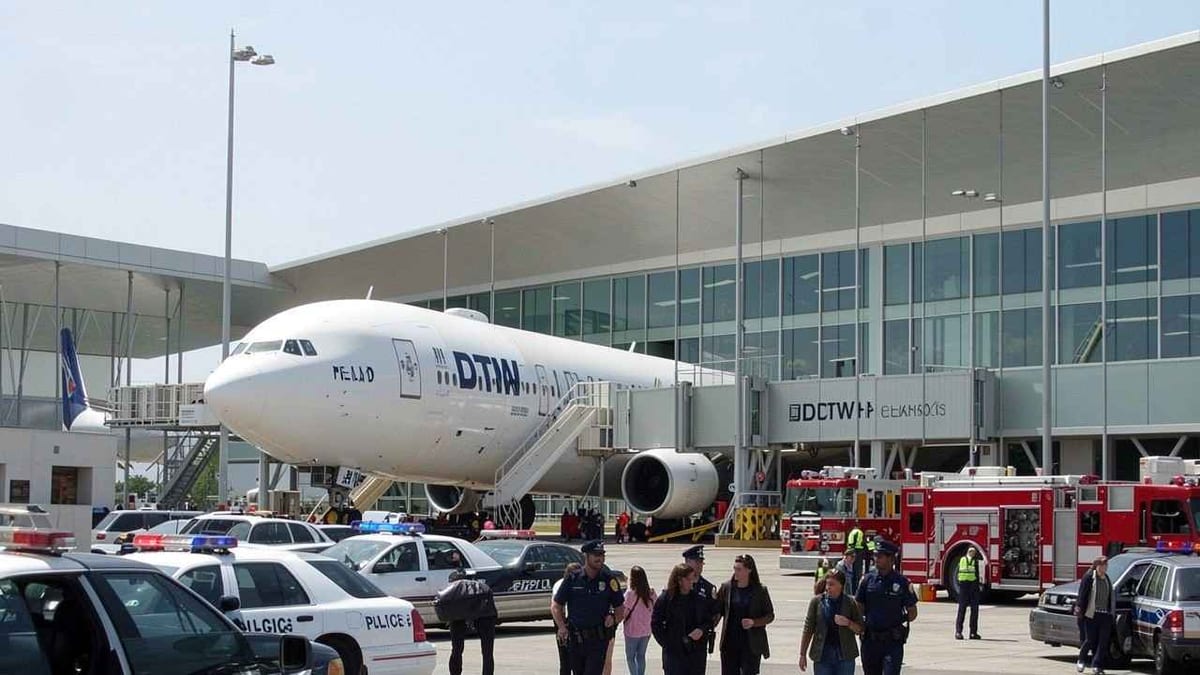
Flight UAL2848 Alters Course En Route to New York
United Air Lines flight UAL2848, a Boeing 737-71Q service, departed Nashville on 6 August on a scheduled route to the New York region before diverting to Lehigh Valley International Airport in Allentown. Flight-tracking information shows the aircraft following its planned path for much of the journey before turning toward eastern Pennsylvania instead of continuing directly to its intended destination.
Data from public tracking platforms indicates that the aircraft descended and landed safely in Allentown after the routing change. There were no immediate indications in open reports of injuries on board, and the aircraft appeared to taxi to the terminal normally after arrival.
Information available as of this week does not point to a single dramatic factor such as a declared in-flight emergency. Instead, the diversion aligns with patterns seen across the New York airspace on 6 August, when several flights altered course or added holding patterns amid challenging operating conditions.
Weather and Airspace Constraints Around New York
Meteorological reports and airline advisories for early August highlight periods of thunderstorms and unsettled weather in the greater New York region, contributing to congestion, ground delays, and rerouting of multiple flights. Travel waivers issued for those dates encouraged passengers to monitor itineraries closely and allowed for some itinerary flexibility when storms affected operations.
When convective weather clusters form near major hubs, air traffic managers often reduce arrival rates in order to maintain safe spacing between aircraft. This can force inbound flights into extended holding patterns or require them to divert to airports with more favorable conditions and available runway capacity.
Allentown, located less than 100 miles from the New York metropolitan area, is one of several airports commonly used as an alternate for flights bound for Newark, LaGuardia, or John F. Kennedy International Airport. On days with significant thunderstorm activity, diversions to such alternates help carriers avoid prolonged holds that can increase fuel burn and create additional operational risk.
Operational Reasons Behind Midflight Diversions
In addition to weather and airspace constraints, operational considerations often influence a decision to divert. Publicly available aviation discussions and tracking records show that airlines may choose to land at an alternate when fuel margins begin to tighten due to extended routing, when runway configurations change, or when a combination of traffic and ground delays would push a flight beyond planned limits.
For narrowbody aircraft such as the Boeing 737-700 series, dispatchers calculate fuel needs based on expected routing plus reserves, alternate options, and potential holding. If en route conditions change significantly, a diversion to a nearby field becomes a routine safety-focused decision rather than an indication of severe technical issues.
In this case, there have been no widely circulated reports pointing to a specific mechanical malfunction on the 737-71Q operating UAL2848. The pattern of the flight and the choice of Allentown as a destination are consistent with precautionary diversions seen across North American operations during periods of intense summer weather and high traffic volume.
Impact on Passengers and Subsequent Travel
Passengers on UAL2848 experienced an unplanned arrival at Allentown instead of the New York airport printed on their tickets, a disruption that can complicate ground transport and onward connections. Public guidance from airlines in similar situations generally emphasizes staying in contact through mobile apps and airport displays to learn whether the aircraft will continue onward or whether travelers will be rebooked.
When a diversion is driven by regional weather and congestion rather than an event confined to a single aircraft, the options for a rapid continuation can vary. At times, the same aircraft may refuel and proceed to the original destination when traffic restrictions ease. In other cases, passengers are moved to ground transport or re-accommodated on later flights from the diversion airport or nearby hubs.
For affected travelers, diversions add uncertainty around missed connections, hotel plans, and time-sensitive commitments. Travel industry observers often recommend that passengers build buffer time into itineraries involving busy hubs during peak summer storm seasons, as even flights that depart on time from origin cities can be significantly affected by downstream conditions.
Growing Scrutiny of Summer Reliability
The diversion of UAL2848 comes at a time when airline performance during summer has drawn increased scrutiny from travelers and aviation watchers. A combination of strong demand, congested airspace, and more frequent episodes of severe weather has led to higher rates of delays, cancellations, and diversions across several major carriers.
United and other airlines have highlighted investments in fleet upgrades, scheduling adjustments, and operational tools aimed at improving resilience when thunderstorms and other disruptions arise. Even with such measures, the highly interconnected nature of hub-and-spoke networks means that localized weather in regions like the northeastern United States can have ripple effects hundreds of miles away.
Incidents such as the Nashville to New York flight diverting to Allentown illustrate how routine safety decisions intersect with passenger expectations in a tightly scheduled travel system. While diversions are designed to keep flights within conservative safety margins, they underscore the practical challenges of maintaining on-time performance in one of the world’s most complex air traffic environments.