


More news on this day
American travelers are being urged to reassess trips to parts of Ecuador as publicly available US government information and recent rights reports highlight a growing risk of kidnapping, extortion and violent crime linked to powerful criminal gangs.
Get the latest news straight to your inbox!
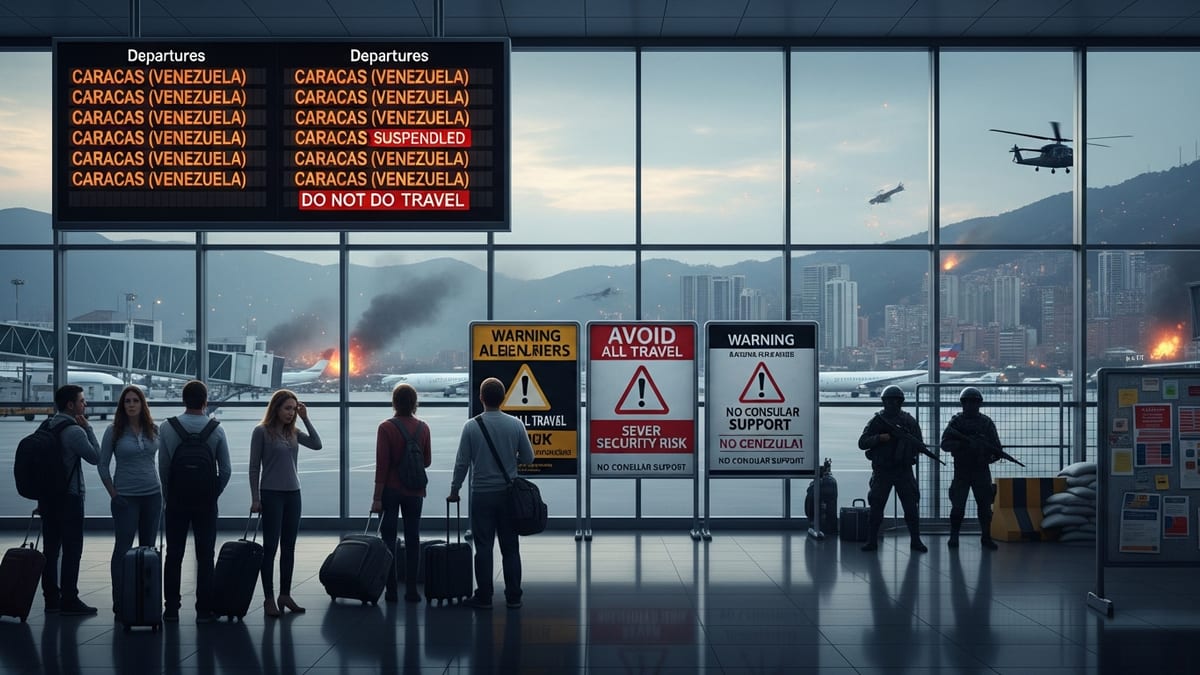
US travel advisory flags heightened risk for Americans
The latest US government travel advisory for Ecuador urges citizens to reconsider travel in parts of the country and avoid others altogether due to crime, unrest, terrorism and kidnapping. Publicly available information notes that US citizens and lawful permanent residents have been among victims of kidnapping and extortion, underscoring that foreigners are not immune to the country’s deteriorating security climate.
The advisory differentiates between regions, with urban centers and coastal provinces facing some of the most severe restrictions. Areas around Guayaquil and other Pacific ports are highlighted as particular flashpoints, reflecting their role as strategic corridors for cocaine shipments to North America and Europe. In some high‑risk zones, US government personnel are restricted from traveling, a measure that often signals elevated concern for private travelers as well.
General US guidance on crime overseas also stresses that kidnapping and express extortion can occur in countries experiencing rapid criminal diversification, and travelers are encouraged to maintain a low profile, vary routines and exercise caution with ride‑hailing apps and informal taxis. For Ecuador, these standard precautions now sit against a backdrop of unusually intense gang activity and shifting criminal tactics.
Gang violence and states of emergency reshape security landscape
Ecuador’s security trajectory has shifted sharply in recent years. Once marketed as one of the safer destinations in the Andean region, the country has seen homicides, kidnappings and extortion rise alongside the entrenchment of local and transnational crime groups. Published human rights reporting describes homicide levels climbing to unprecedented highs and documents an expansion of organized crime operations beyond drug trafficking into extortion, kidnapping for ransom and illegal mining.
In response to a wave of spectacular attacks that included car bombings, assaults on journalists and candidates, and the storming of a television station in Guayaquil, the government has repeatedly relied on states of emergency. In January 2024, authorities declared a nationwide emergency and later an “internal armed conflict,” designating more than twenty gangs as terrorist organizations and deploying the military to reclaim control of prisons and high‑crime districts. Subsequent analysis by conflict‑monitoring groups suggests that military control reduced violence inside some prisons but coincided with an increase in street‑level confrontations and extortion attempts.
Human rights organizations note that between 2019 and 2024, formal complaints of extortion surged more than tenfold and reports of kidnapping for ransom rose sharply as well. Researchers also estimate that in 2025 more than two thirds of Ecuador’s population lived within a short distance of some form of battle, bombing or attack on civilians, signaling how widely the violence has spread beyond a few traditional hotspots.
Kidnapping and extortion tactics increasingly target civilians
Publicly available incident reports and security assessments indicate that criminal groups in Ecuador have diversified their revenue by systematizing extortion and kidnapping, often against ordinary residents and small business owners. In Guayaquil, police recorded a dramatic rise in extortion complaints in early 2024 compared with the previous year, suggesting a shift toward more visible pressure on neighborhoods and commerce. Analysts link this trend to gangs seeking to compensate for disrupted drug routes and to exert social control over territory.
Kidnapping patterns range from short‑term “express” cases aimed at forcing quick cash withdrawals or mobile payments to longer‑term abductions for ransom. Rights organizations report that complaints of kidnapping for ransom grew significantly between 2019 and 2024, reflecting both a higher incidence and increased willingness to report. In many documented cases, victims are targeted after refusing to pay extortion fees or after being identified as having relatives abroad who might be able to send money.
Foreign residents and visitors can be swept into these dynamics, especially in cities where criminal groups monitor financial transactions and social media. Analysts and consular risk assessments emphasize that victims are often selected based on perceived wealth or access to foreign currency rather than nationality alone, which places Americans and other international travelers within a broader pool of attractive targets.
Regional hotspots and implications for tourism
The security picture is uneven across Ecuador, a factor that complicates travel planning. Conflict‑mapping and country‑of‑origin reports consistently identify coastal provinces such as Guayas, Manabí and El Oro, along with parts of Los Ríos, as epicenters of organized crime violence. Guayaquil, the country’s main port and largest city, has been described in recent European travel guidance as one of the most violent cities in the world, with homicide totals surpassing those of some better known hotspots in the hemisphere.
European Union and United Nations reporting emphasize that Ecuador’s location on the Pacific has made it a preferred exit route for cocaine heading to North America and Europe, intensifying competition among gangs for control of ports, highways and river corridors. As territorial disputes have multiplied, local officials, business owners and transport workers have become frequent targets of attacks, generating periodic disruptions to road and air travel as authorities respond with curfews and security sweeps.
For the tourism sector, the contrast between high‑risk enclaves and relatively calmer destinations is increasingly stark. Popular Andean and Amazonian sites continue to attract visitors, but operators now routinely adjust itineraries to avoid certain urban neighborhoods, roads at night and contested coastal areas. Country briefs from several governments advise travelers to use vetted transportation providers, choose accommodation in secured zones and monitor local news for sudden changes, particularly in and around Guayaquil, Esmeraldas and border regions.
What American travelers should watch in the months ahead
Looking ahead, analysts describe Ecuador as locked in a protracted confrontation between state forces and criminal networks. Security cooperation agreements with international partners are expanding, and conflict datasets show some reductions in specific forms of violence, such as clashes inside prisons. At the same time, extortion and targeted attacks in communities remain stubbornly high, and rights organizations warn of the risk that heavy‑handed tactics could drive further abuses or displace crime into new areas.
For American travelers, this means risk levels are likely to remain fluid, varying sharply by province, city and even neighborhood. Public guidance from the United States and other governments stresses the importance of checking the most recent advisories, registering travel when possible and being prepared for curfews, roadblocks or short‑notice flight changes linked to security operations. Travelers considering coastal hubs and overland routes through Guayas and neighboring provinces face some of the greatest uncertainty, particularly if gang disputes flare again.
Specialists in conflict and human rights monitoring also note that economic pressures, including illegal mining and competition over new smuggling corridors, are drawing violence into areas that once felt insulated from the drug trade. This has led to a wider geographic spread of kidnapping and extortion, affecting medium‑sized cities, border crossings and some rural communities. Visitors who previously relied on Ecuador’s reputation as a low‑crime alternative in the Andes now encounter a landscape where risk assessments must be updated much more frequently.
For now, the convergence of gang fragmentation, lucrative criminal markets and evolving state responses means Ecuador’s security situation remains volatile. For Americans and other foreign travelers, thorough preparation, route planning and close attention to official advisories and local reporting have become essential elements of any trip to the country.
US Department of State: Ecuador Travel Advisory
Human Rights Watch: US–Ecuador Security Cooperation Report
ACLED: Ecuador’s Security Operations and Gang Violence
Human Rights Watch: World Report 2025 – Ecuador
Spain Ministry of Foreign Affairs: Ecuador Travel Recommendations