


Airport lounges have evolved from stale sandwiches and soft drinks into destinations in their own right, with craft cocktails, spa-style showers and even Peloton bikes. For many U.S. travelers, the two names that come up most often are American Express Centurion Lounges and the newer Capital One Lounges. Both promise a premium preflight experience, but they differ in important ways. Choosing the right network can shape what your time at the airport looks like for years to come.
Get the latest updates straight to your inbox!
Where You Will Actually Find These Lounges
The most practical question is also the most overlooked: where are these lounges, and do they line up with your real travel patterns? American Express has spent more than a decade building out its Centurion Lounge network. As of mid 2026, there are more than a dozen Centurion Lounges in the United States, including major hubs such as Dallas Fort Worth, Miami, New York LaGuardia, New York JFK (as a Centurion "Studio" concept), Los Angeles, Denver, Seattle, San Francisco, Las Vegas and Philadelphia. American Express has also opened lounges in international gateways like London Heathrow and Hong Kong, and has announced additional locations such as Newark that are expected to come online in 2026.
Capital One is playing catch-up, but it is doing so with high-impact locations. The first Capital One Lounge opened at Dallas Fort Worth in 2021 in Terminal D near Gate D22. Since then, Capital One has added lounges in Denver, Las Vegas, New York JFK and Washington Dulles, with an additional lounge announced for Charlotte. In practice this means that if you fly through Dallas, Denver or Washington Dulles frequently, you now have a realistic choice between a Centurion Lounge and a Capital One Lounge, often in the same terminal complex.
To see how this plays out, imagine a traveler based in Miami who flies often to New York and Mexico City. That flyer would run into Centurion Lounges at Miami and at New York LaGuardia or JFK several times a year, but would not see a Capital One Lounge in Miami at all. By contrast, a Dallas based traveler who routinely connects through DFW to the Mountain West might have both a Centurion Lounge and the Capital One Lounge at DFW in play, plus a Centurion Lounge in Denver but also the Capital One Lounge there. The better program is the one that appears along your own routes, not just the one with the longer location list on paper.
Before you apply for a card to unlock either network, pull up a year of your past flights or look at a year of planned travel. If you rarely touch airports where these brands operate, paying for a premium card just for lounge access will feel like buying a gym membership you never use.
Cards, Access Rules and What It Really Costs
Access is not sold at the door as a standalone membership in either network. Instead, entry is tied to specific credit cards and, in some cases, to a per-visit fee for guests or non-cardholders. For American Express, the main gateway is The Platinum Card from American Express, along with the Business Platinum and the ultra-premium Centurion Card. Holders of these cards can access Centurion Lounges when flying on a same day ticket, and certain Delta co branded reserve cards can access Centurion Lounges when traveling on Delta. Day passes for people without an eligible card are not generally available, so the effective cost is the annual fee of the card, which for the Platinum card is several hundred dollars per year.
Capital One has taken a different tack. The flagship Venture X and Venture X Business cards provide complimentary access to Capital One Lounges for the primary cardholder, often with limited complimentary guest access. Other Capital One cards, such as the Venture and Spark Miles cards, may allow discounted, per-visit access for a modest fee that is typically under 70 dollars per visit, subject to change. In practical terms, a traveler who flies through Dallas Fort Worth a couple of times a year might choose to pay a one time fee at the Capital One Lounge rather than commit to a high annual fee card just to get through the door.
Both issuers have been tightening access to control crowding. American Express has already reduced free guest privileges for many Platinum cardholders and has a three hour rule before scheduled departure, with some adjustments announced for July 2026 that will limit how far in advance of a flight you can enter during long layovers. Capital One has signaled changes too. Internal fact sheets for the JFK lounge indicate that as of February 1, 2026, complimentary guest access for Venture X cardholders depends on meeting certain spending thresholds, and additional guests will often pay a per-person fee. These tweaks matter if, for example, you travel with a spouse and two children. The difference between two complimentary guests and one complimentary guest plus three paid kids can add more than 100 dollars to the cost of every trip.
When you compare these networks, budget both the card annual fee and the realistic cost of bringing your typical travel party into the lounge two or three times a year. That total out-of-pocket figure often makes the choice clearer than the headline promise of "complimentary access" on a brochure.
Food, Drinks and Amenities: What You Actually Get Inside
Once you are inside, the experience diverges in small but meaningful ways. Centurion Lounges are known for sit-down quality hot food served buffet style, a full bar with custom cocktails and decent espresso based coffee. Menus often nod to local flavors, such as Tex-Mex dishes in Dallas or Pacific Northwest seafood touches in Seattle. At peak times, large hotel-style chafing dishes are replenished frequently with items like mushroom rigatoni, braised chicken, soups and roasted vegetables. Desserts and cookies are common, but grab-and-go food is very limited, so the food you enjoy inside usually stays inside.
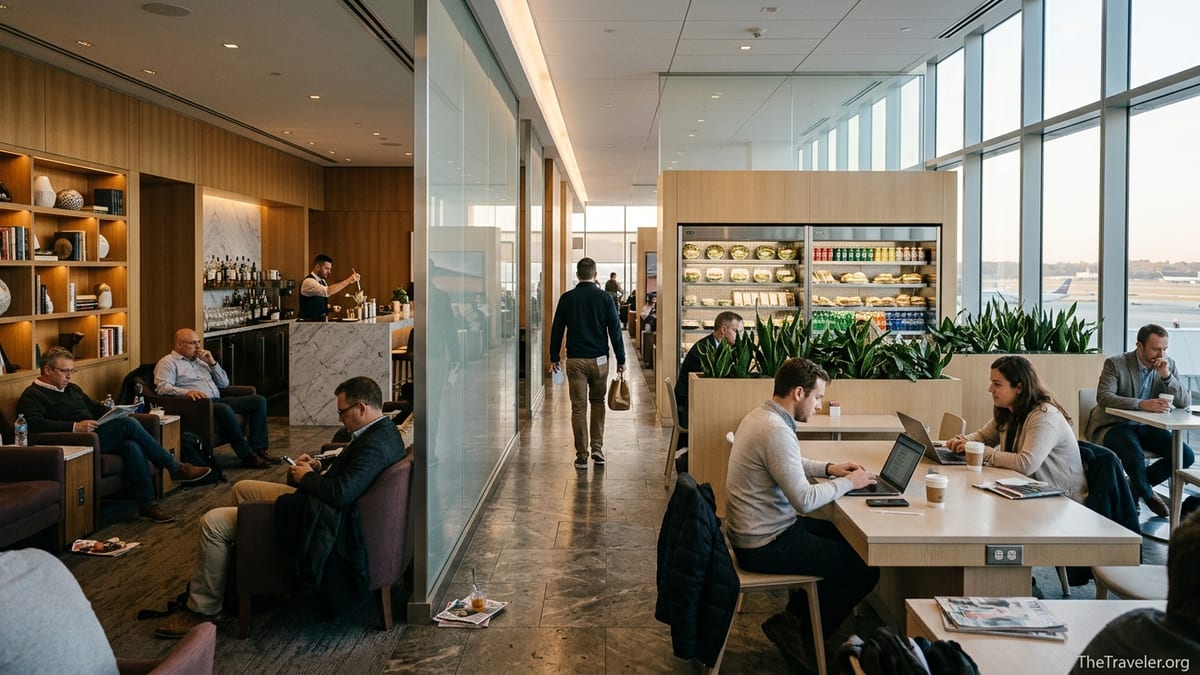
Capital One has leaned heavily into a modern, small plate concept. Reviews of the DFW lounge describe a series of stations with individually plated dishes such as chicken tinga elote, San Marzano bruschetta flatbread and fondue mac and cheese, along with pastries and snacks. In Denver and Washington Dulles, travelers similarly report high quality, restaurant-style bites rather than a single central buffet. Perhaps the biggest differentiator is the grab-and-go room. At DFW, for example, you can walk into a refrigerated area stocked with packaged salads, sandwiches, fruit, cold brew and canned drinks, and take a bag of items out to your gate. This is a genuine advantage on tight connections or when you prefer to eat on the aircraft instead of in the lounge.
Amenities follow the same pattern. Both brands offer fast Wi-Fi, plenty of outlets, showers and a mix of workspaces and relaxation areas. Centurion Lounges commonly provide shower suites, family rooms and sometimes extra touches like spa services or nap rooms, depending on location. Capital One, starting from a blank slate, has experimented more. The DFW lounge includes a small fitness room with Peloton bikes and yoga mats, plus quiet relaxation pods. At some locations you will also find multi-faith rooms, nursing rooms and luggage lockers, bringing a more wellness focused feel than the typical business lounge.
The right choice comes down to how you use a lounge. If you value a proper sit down hot meal and artisan cocktails before a red-eye flight, Centurion often feels more like a boutique hotel lounge transplanted into an airport. If you want flexibility to grab a salad and cold brew for the plane and maybe stretch your legs on a bike between flights, Capital One is deliberately catering to that style of traveler.
Crowding, Waitlists and How Comfortable It Feels
Centurion Lounges have become a victim of their own success. In popular hubs such as Dallas Fort Worth, Denver, Las Vegas and New York LaGuardia, long lines at the reception desk and sign-up waitlists are common, particularly in the early morning and late afternoon banks of departures. Social media posts from 2025 and 2026 are full of travelers describing 30 to 60 minute waits to get into some Centurion Lounges at peak times. Once inside, you may find difficulty locating a quiet table, especially if you are traveling as a family of four and need seats together.
Capital One, with fewer cardholders eligible for free entry, has so far experienced somewhat less intense crowding, but its lounges are not empty. At the DFW lounge, for example, recent visitors report joining a virtual waitlist in the terminal when there were already more than 20 parties ahead of them, although the actual wait to be called upstairs might be only 5 to 15 minutes. In Denver and Washington Dulles, travelers describe busy but manageable crowds, with open bar stools and some available seating zones except during heavy bank times. The newer lounges also benefit from modern layouts with more partitions and a mix of solo pods, communal tables and soft seating, which helps noise levels even when nearly full.
If you are sensitive to crowds, it can be helpful to compare specific locations. At Dallas Fort Worth, for example, some travelers prefer the Capital One Lounge over the Centurion Lounge precisely because the Centurion space feels chronically packed, while others stick with the Centurion for its wider food selection despite the crowds. Your airline and terminal assignments matter too. A traveler connecting from American Airlines domestic to a long-haul international flight at DFW might choose whichever lounge is closest to the departing gate, accepting a short waitlist if it means a longer stretch of time to relax once inside.
Policies are being tweaked as a direct response to this crowding. American Express is tightening how early you can enter during long layovers and has already limited complimentary guesting. Capital One is limiting no-cost guests and requiring some minimum spend thresholds for full benefits. These changes are not just fine print. They are tools the issuers use to keep their lounges from feeling like standing-room-only airport food courts.
Real-World Value: A Tale of Two Travelers
To understand which lounge network is actually better value, it helps to walk through a couple of realistic scenarios. Consider a solo consultant based in Chicago who flies twice a month on United and American to cities like Dallas, Denver, San Francisco and Miami. She already holds a premium travel card for points and travel protections. For her, adding an Amex Platinum might make sense if she values the broad Centurion network plus partner lounges, since she will see Centurion signs at several of her regular hubs. Over the course of a year, if she visits a Centurion Lounge 15 or 20 times, the per-visit cost of the annual fee effectively drops to a modest amount, especially when she offsets some of it with statement credits.
Now compare that to a family of four in Atlanta who takes two big trips per year, often connecting through Dallas Fort Worth to reach ski destinations like Denver or summer trips out of Washington Dulles. They do not travel often enough to justify a very high annual fee card primarily for lounge access. However, the parents might carry a Capital One Venture card and be willing to pay a per-visit fee at a Capital One Lounge when they have a long layover. In DFW, they could use the grab-and-go food room to pick up kid-friendly sandwiches and snacks, shower after a hot day of travel and then head to their gate. If they only visit lounges four or five times a year, the total they spend on day passes could easily be lower than the yearly fee of a Platinum card plus potential guest charges at Centurion Lounges.
There is also a middle ground traveler: someone who already has an Amex Platinum for reasons unrelated to lounges, such as airline fee credits and hotel status, and is considering adding a Venture X. For that person, the comparison is not either-or but rather where each lounge shines. They might default to Centurion Lounges in cities where Capital One has no presence, but deliberately seek out Capital One at DFW or Denver when they want grab-and-go food, fitness facilities or a slightly calmer atmosphere. In this combined strategy, the marginal cost of access to Capital One is only the incremental annual fee of the Venture X card minus whatever travel credits it offers.
The core lesson is that lounge value is personal and highly dependent on how often you fly, which airports you use and whether you are usually solo or with companions. A lounge that looks magnificent in photos but sits in a terminal you never visit is worth exactly zero to you in practice.
How To Decide Which Network Fits Your Travel Style
Beyond cold math, there is a question of taste and travel style. Some flyers genuinely enjoy arriving at the airport early, sitting down to a plated meal and treating the lounge like a quiet co-working space. Others simply want to escape the gate area, use a clean restroom, grab a coffee and plug in for an hour. American Express Centurion Lounges tilt toward the first group: more formal dining, strong cocktails, and a design language of dark woods, statement art and cozy, living room style zones. Capital One Lounges tilt toward the second group, with bright, contemporary interiors, wellness rooms and a free-flow approach where you might grab a bistro-sized plate from one station, fill a to-go bag at another and retreat to a semi-private pod to work.
Think through one of your typical travel days. If you are a business traveler flying a 6 a.m. departure, a Centurion Lounge that opens as early as 5 a.m. with a full hot breakfast buffet can be a major upgrade over airport fast food. If you are a leisure traveler connecting through Las Vegas in the evening and want a light snack and sparkling wine away from the slot machines, the Centurion Lounge there does the job nicely. In contrast, if you often land in Dallas at midday and catch a late afternoon connection, the ability to grab packaged salads and cold brew from the Capital One Lounge for the second leg of your trip may matter more than whether the lounge has a celebrity chef attached to the menu.
Also consider non-food amenities you truly use. If you are someone who will absolutely use a shower after a long-haul flight, check whether your regular airports have lounges with multiple shower suites and whether there is usually a waiting list. At some Capital One locations, there may be only a single shower, which can create bottlenecks when several people want to freshen up. In larger Centurion Lounges, there may be several shower rooms, but the waitlist can still stretch if the lounge is oversubscribed. Looking up a few recent traveler reports for specific lounges you plan to use can set realistic expectations.
Finally, pay attention to how policies are evolving. American Express has already shown a willingness to tighten access when lounges feel too crowded, and it has announced additional access changes effective July 8, 2026. Capital One has introduced spending requirements to unlock some guest benefits and is refining access rules as it opens more lounges. The best choice today may tilt one way or another in a few years, so flexibility matters. Avoid structuring your entire card strategy around a single lounge network if your travel is changing or if you expect issuers to keep adjusting rules to manage demand.
The Takeaway
When you strip away marketing slogans, the choice between American Express Centurion Lounges and Capital One Lounges comes down to three questions: where you fly, how you travel and who you travel with. Centurion Lounges have the broader footprint and a reputation for strong food and drink, but they also suffer from crowding and increasingly restrictive guest policies in busy hubs. Capital One Lounges are fewer in number but often feel fresher and more flexible, with standout amenities like grab-and-go food and wellness rooms.
If you are a frequent flyer who already leans into American Express Membership Rewards and often passes through airports like Miami, Las Vegas, San Francisco or New York LaGuardia, prioritizing Centurion Lounge access via a Platinum card can make your travel day noticeably more comfortable. If your routes consistently touch Dallas Fort Worth, Denver or Washington Dulles and you prefer a lighter, more modern experience with to-go options, Capital One’s growing lounge network may suit you better, whether through a Venture X card or occasional paid visits.
For many travelers, the smartest approach is not blind loyalty to one brand but a realistic assessment of usage. Look at your past itineraries, estimate how many lounge visits you will actually make in a year, and calculate the effective per-visit cost once you include card fees and guest charges. Combine that with your personal preferences for environment and amenities, and the right answer usually becomes clear long before you reach the check in counter.
FAQ
Q1. Which lounge network has more locations, Centurion or Capital One?
American Express Centurion Lounges currently have more locations overall, especially when you include international sites and smaller "Studio" concepts, while Capital One Lounges are concentrated in a handful of major U.S. hubs such as Dallas Fort Worth, Denver, Las Vegas, New York JFK and Washington Dulles.
Q2. If I have an Amex Platinum and a Capital One Venture X, which lounge should I pick at Dallas Fort Worth?
At DFW, it usually comes down to your priorities on that specific trip. If you want a fuller hot buffet and a more traditional lounge feel, the Centurion Lounge is a good bet. If you prefer grab-and-go food, a fitness room and often slightly easier seating, many travelers choose the Capital One Lounge by Gate D22 instead.
Q3. Do either of these lounges offer truly free access without a credit card?
In general, no. Both brands tie access to specific credit cards and, in some cases, allow paid day passes. You will either pay through an annual card fee, a per-visit fee at the door, or both if you bring guests beyond your card’s free allowance.
Q4. How bad is the crowding in Centurion Lounges compared with Capital One Lounges?
Crowding varies by airport and time of day, but Centurion Lounges in big hubs are often at or near capacity with waitlists during peak travel times. Capital One Lounges can also be busy and use waitlists, yet travelers frequently report slightly less intense crowding and easier seating, at least for now.
Q5. Which lounges have better food and drinks?
Both networks offer solid food and complimentary alcoholic drinks, but in different styles. Centurion Lounges lean toward larger buffets and sit-down style meals, while Capital One emphasizes chef-inspired small plates and a strong grab-and-go section where available. Your perception of "better" will depend on whether you value a restaurant-style buffet or portable, lighter bites.
Q6. I usually travel with my spouse and two kids. Which lounge network is more family friendly?
Both can work for families, but you need to watch guest policies. Centurion Lounges often charge for extra guests beyond a small free allowance, which can add up for a family of four. Capital One Lounges may include limited guesting for Venture X cardholders, with additional guests paying per visit. In practice, many families find Capital One’s grab-and-go options and nursing or family rooms helpful, but the most cost-effective choice depends on which card and guest rules you have.
Q7. Are showers and quiet spaces available in both lounge networks?
Yes. Many Centurion Lounges and Capital One Lounges have shower rooms and quieter zones for work or rest. Centurion Lounges typically have several shower suites in larger locations, while some Capital One Louges have fewer showers but compensate with relaxation rooms, nap-style pods or wellness spaces.
Q8. Can I rely on these lounges for a full meal instead of buying food in the terminal?
Usually yes, especially at busier times when the full food spread is available. Centurion Lounges commonly offer breakfast, lunch and dinner style buffets substantial enough to replace a meal. Capital One Lounges offer a mix of small plates and snacks that many travelers find satisfying, plus take-away items in some locations, which can easily stand in for a meal if you sample several items.
Q9. I only fly a few times a year. Is it still worth getting a premium card mainly for lounge access?
If you only travel occasionally, paying a high annual fee solely for lounge entry is often hard to justify. In that case, consider a card that allows discounted day passes to Capital One Lounges or rely on paid access when you have a particularly long layover, rather than carrying an expensive card you rarely use.
Q10. How should I decide between these lounge networks if my travel plans may change?
Build in flexibility. If your routes are shifting, favor a card that has strong overall travel benefits in addition to lounges, so you still get value even if you use the lounges less. Review your trips every year or two, and be willing to switch focus from Centurion to Capital One or vice versa if your most common airports change.