


Airport lounges used to be the domain of first class tickets and elite frequent flyers. Today, a growing number of travelers walk into premium spaces simply by flashing the right credit card. At the center of this shift is the American Express Centurion Lounge network, now facing real competition from Chase Sapphire Lounges, Capital One Lounges and the broader Priority Pass program. If you are trying to decide whether an Amex Platinum, Chase Sapphire Reserve, Capital One Venture X or another card makes the most sense, understanding how Centurion Lounges compare in practice is essential.
Get the latest updates straight to your inbox!
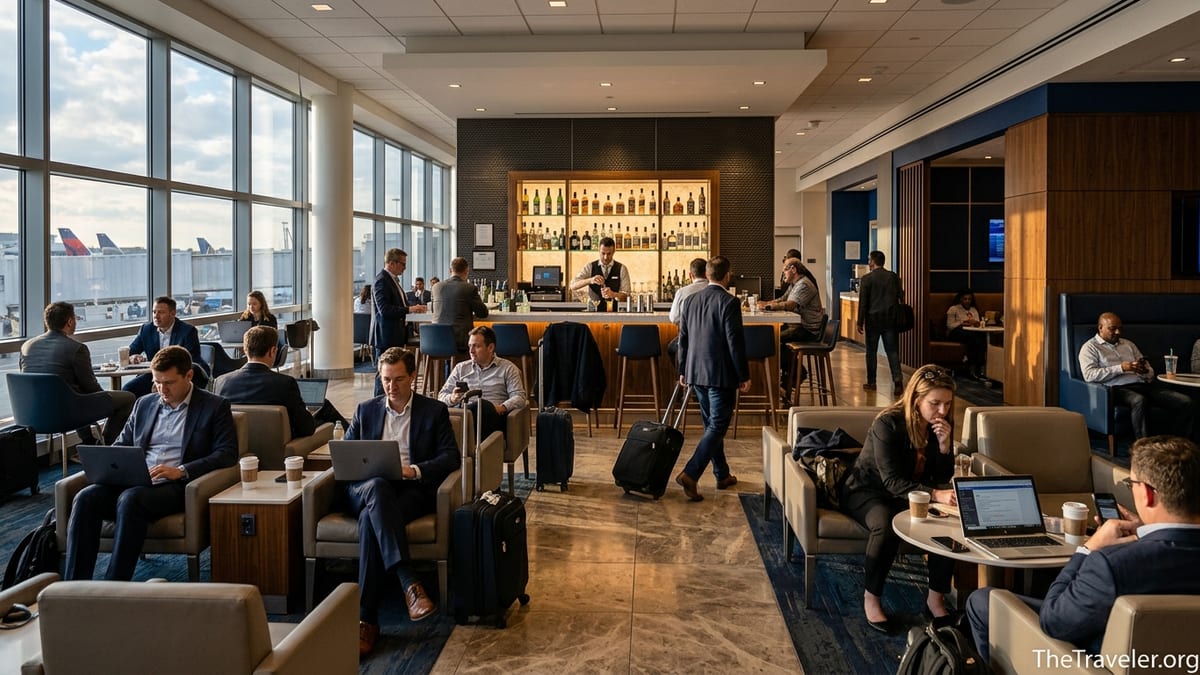
Where You Will Actually Find These Lounges
The first question most travelers should ask is not which lounge has the coolest cocktails, but which one they will realistically encounter. American Express Centurion Lounges are concentrated in major hubs, especially in the United States. As of mid 2026, there are roughly a couple dozen Centurion locations worldwide, including busy US airports such as Dallas Fort Worth, Miami, Las Vegas, San Francisco, New York LaGuardia, Seattle and Denver, plus international outposts like London Heathrow and Hong Kong. American Express has announced an additional lounge at Newark Liberty International Airport expected to open sometime in 2026, which will further strengthen coverage for Northeast travelers.
By contrast, Priority Pass is a network product rather than a single branded space. It offers access to more than a thousand lounges globally in hundreds of airports, operated by airlines and independent providers. A traveler flying from a mid-size US airport such as Cincinnati, Cleveland or Portland is far more likely to find a Priority Pass lounge or partner restaurant than a Centurion Lounge. For someone who regularly flies to secondary European or Asian cities, the difference is even more pronounced, since Centurion’s footprint outside key global gateways remains modest.
The new bank-branded lounges sit somewhere in between. Chase Sapphire Lounge by The Club has been expanding in major international and domestic hubs, including locations tied to airports like New York JFK, Boston, Hong Kong and Philadelphia. Capital One currently operates a much smaller network, with carefully curated lounges in select US airports and additional locations under development. These programs will not match the sheer reach of Priority Pass in the near term, but for many US based travelers who mainly connect through large hubs, they offer a realistic alternative to Centurion Lounges.
For a typical US traveler who lives near a major hub such as Dallas, Atlanta, New York or Miami and tends to fly on the big three US carriers, Centurion Lounges may appear frequently on their itineraries. Someone who lives near a smaller airport or often travels to secondary cities is more likely to rely on Priority Pass or airline specific clubs instead. The practical value of any program depends heavily on your home airport and usual routes.
Access Rules and Guest Policies in the Real World
On paper, Amex Centurion Lounge access sounds straightforward: carry an eligible American Express card, show a same day boarding pass and walk in. In practice, the details matter. The Platinum Card and Centurion Card are the primary gateways. Holders of certain Delta Reserve cards can also access Centurion Lounges when flying on Delta the same day. Most visits are complimentary for the cardholder, but guest access has tightened over time. In many cases, bringing family members now incurs a per guest fee unless you meet specific annual spending thresholds or promotions, a shift that frequent travelers have noticed at busy hubs.
Chase Sapphire Lounges take a different approach. Sapphire Reserve, J.P. Morgan Reserve and certain legacy Ritz Carlton cardholders receive complimentary access through their Priority Pass Select membership issued by Chase. Access is typically permitted up to three hours before departure, and those cardholders can usually bring up to two guests at no additional charge, with extra guests charged a fixed visit fee. Importantly, non Chase Priority Pass members are far more restricted. For example, a traveler with a Priority Pass issued by a different bank, such as Capital One or Citi, may get only one complimentary visit per year to a Chase Sapphire Lounge before substantial visit charges apply, even if that same Priority Pass otherwise grants them unlimited visits to standard Priority Pass lounges.
Capital One Lounges are tightly tied to the issuer’s premium cards. Venture X and Venture X Business cardholders receive complimentary entry for themselves, but guest policies have become significantly more restrictive. Capital One has introduced a high annual spending requirement for those wishing to bring complimentary guests. A family of four going on one big summer trip from a Capital One hub airport may find that two of them enter free, while the other two either pay a per visit fee or remain in the public terminal unless the primary cardholder has met the elevated annual spend needed to unlock guest privileges.
Priority Pass itself has highly variable guest policies, because individual lounges set the rules. A traveler with Priority Pass through a Chase Sapphire Reserve or similar premium card typically has complimentary guest access coded into their membership. However, some lounges, particularly in crowded Asian hubs, now restrict free guests and may charge per person even when the card issuer advertises free guests. This means that two travelers with identical Priority Pass cards can have different outcomes depending on the specific airport, day and even hour they visit.
Comparing the On the Ground Experience
American Express built the Centurion brand around a specific style of lounge experience. Walk into the Centurion Lounge in Dallas or Miami during off peak hours and you will usually find a bright, design forward space with dedicated work zones, a staffed bar with signature cocktails and a buffet that feels more like an upscale hotel breakfast than typical airport fare. Many locations feature extras such as shower suites, quiet rooms, and at some airports even spa or wellness services. Coffee is crafted rather than poured from an urn, and wine lists are often curated with recognizable labels rather than generic house options.
Chase Sapphire Lounges, operated in partnership with The Club, aim for a similar premium feel. The Chase Sapphire Lounge at Philadelphia International Airport, for example, highlights locally inspired menus, a curated selection of craft cocktails and local beers, and amenities such as wellness rooms, family spaces and private bathrooms. Once you are inside, food and drinks are generally complimentary, just as in a Centurion Lounge. Many frequent travelers say the overall ambiance of a Chase Sapphire Lounge is closer to a Centurion Lounge than to the older generation of Priority Pass spaces, which often resemble basic airline clubs.
Capital One Lounges take a slightly different tack, with an emphasis on grab and go as well as dine in service. At locations like Dallas Fort Worth, you might find fridges stocked with packaged salads, sandwiches and cold brew coffee that you can take on your flight, alongside seating areas with hot buffet items and bar service. This hybrid model can be particularly appealing for travelers on tight connections or those who prefer to pick up food for later rather than sit down in the lounge.
Traditional Priority Pass lounges vary widely. In a newer flagship independent lounge in a major European hub, you might find a space that rivals a Centurion Lounge in design, with quiet work areas, hot buffet items like pasta and curries, and a solid self service bar. In a small regional airport in Asia or South America, a Priority Pass lounge may be little more than a quiet room with soft drinks, packaged snacks and modest seating. For a business traveler passing through Frankfurt, the difference between a Centurion Lounge and a good independent lounge might be fairly small; for a leisure traveler in a smaller Caribbean or regional US airport, Priority Pass may simply provide a chair and Wi Fi away from the main concourse.
Crowding, Time Limits and Capacity Controls
One of the most common complaints about Centurion Lounges is crowding. As card issuers have added more travel benefits to premium credit cards, more people qualify for lounge access. At peak times, such as Sunday evenings in Las Vegas or Monday mornings in Charlotte, Centurion Lounges can fill to capacity. American Express has responded over the years by tightening access rules, setting entry windows relative to departure time and occasionally placing guests on waitlists at the door. Travelers often report being turned away or asked to wait when arriving more than a few hours before their flights, or when lounges hit fire code limits.
Chase Sapphire Lounges also enforce time based access rules. Typically, cardholders can enter up to three hours before a departing flight. That sounds generous, but it can be limiting on long layovers. For instance, a traveler with a six hour layover who lands in the morning and departs in the afternoon might find that they cannot enter immediately upon arrival, and must instead wait until the three hour window before their next departure. While staff sometimes exercise discretion, the official policy can leave people sitting in the public terminal for half of a long connection before they are allowed into the lounge.
Capital One Lounges, given their relatively small number but high demand from premium cardholders, have also had to manage crowding with entry controls. Reports from frequent visitors describe peak hour waits and, at times, a queue forming outside the lounge entrance. Priority Pass lounges have long had the right to deny entry when full, and crowded conditions at popular times are an increasingly common reality, especially in busy international hubs where airline business class passengers, Priority Pass members and day pass guests are all competing for the same seats.
For travelers, these crowding and time limit issues translate into a practical tradeoff. A Centurion Lounge may offer a superior experience when you are inside, but depending on your airport and time of day, you might spend more time waiting at the door. A more basic but less popular Priority Pass lounge located at the other end of the terminal might, in some situations, provide a quieter and more consistent refuge, especially during off peak hours or in airports where premium bank branded lounges are not yet open.
Value for Different Types of Travelers
For a frequent US based traveler who flies at least once a month, and often through airports with Centurion Lounges, paying the annual fee for an Amex Platinum card can make sense purely on lounge value. A consultant who regularly connects through Dallas, Denver and San Francisco on domestic trips may consistently use Centurion Lounges for both outbound and return flights. Over a year, that might translate into a dozen or more lounge visits, with hot meals and drinks that would otherwise cost significant money in the terminal.
On the other hand, a traveler who flies less frequently but wants broad coverage might be better served by a card offering Priority Pass and access to multiple lounge brands. A Chase Sapphire Reserve holder who travels internationally twice a year may get into a Sapphire Lounge in Boston or Hong Kong, a Centurion Lounge through a travel companion’s Amex, and a mix of independent Priority Pass lounges in Europe and Asia. In this case, the strength of the program is not any single lounge, but the ability to find some form of lounge access in a very wide range of airports.
Capital One’s program can be especially valuable for travelers who frequently pass through the small set of airports that host a Capital One Lounge. For example, a family that flies out of a Capital One hub three or four times per year could enjoy substantial food and beverage savings and a calm space to manage kids before a long flight. However, if their travels shift to other airports where Capital One has no footprint, the perceived value drops quickly, and they may find themselves leaning on the partner Priority Pass network provided by their card instead.
Budget conscious travelers who rarely fly, or who mostly take short domestic trips from smaller airports, may find that paying a high annual fee for a premium card solely for lounge access does not add up. In those cases, occasional day passes to airline lounges, or entry to a Priority Pass lounge through a mid tier card benefit, may be more sensible. The right choice depends on how often you will realistically use the benefit, how many people you travel with and how much you value meals and quiet space during your airport time.
Key Differences at a Glance
Summarizing the main contrasts can help clarify which lounge program aligns with your travel style. Centurion Lounges lean into a consistent, high end, design driven environment with strong food and beverage and a focus on cardholder exclusivity. The tradeoff is a smaller global footprint and often tighter access and guest rules. They shine for solo travelers or couples who frequently use the same major hubs where Centurion Lounges are located.
Chase Sapphire Lounges and Capital One Lounges are still in their growth phase, but they already deliver a premium experience that rivals or, in some cases, exceeds Centurion standards. Their key advantages include generous complimentary guest policies for specific premium cardholders, at least before spending thresholds come into play, and amenities that often highlight local food and beverage partners. Their limitation is simple: a relatively small number of locations, which matters if you do most of your flying outside their current networks.
Priority Pass, by contrast, is about ubiquity and flexibility rather than a single branded feel. It is the program you want if you routinely find yourself in secondary markets, connect through unfamiliar hubs or simply like the security of knowing that in most major airports worldwide, you will be able to access some kind of lounge. The experience may range from basic to excellent, so expectations need to be calibrated, but the ability to step into a quieter space, charge devices and grab a snack is often enough to justify its place in many travelers’ wallets.
When comparing programs, think in concrete terms: how many times per year will you pass an actual Centurion Lounge entrance, a Chase Sapphire Lounge, a Capital One Lounge and a Priority Pass lounge you can use with your card? The answer to that question, rather than abstract prestige, should drive your decision.
The Takeaway
American Express Centurion Lounges helped redefine what an airport lounge could be for everyday premium cardholders, and they still set a high bar for design, food and beverage in many airports. Yet the landscape around them has evolved quickly. Chase Sapphire Lounges and Capital One Lounges now provide credible alternatives at key hubs, while Priority Pass continues to offer the broadest worldwide coverage, even if the experience is uneven from one location to the next.
For many US travelers, the best strategy is not choosing a single lounge brand, but selecting a credit card that unlocks several types of access. A traveler who carries an Amex Platinum for Centurion access, plus a card like Chase Sapphire Reserve or Capital One Venture X for Priority Pass and partner lounges, can move through a global network of spaces with far more options than any single program offers. The cost of holding multiple premium cards is high, but for frequent flyers who value comfort, productivity and reliable meals between flights, the combined lounge benefits can easily return more than their annual fees.
If you fly only a few times per year, or mostly from airports that lack Centurion, Chase Sapphire or Capital One lounges, then a simpler setup may be wiser. In that case, a card that provides Priority Pass access or airline specific lounge benefits aligned with your preferred carrier may offer better value than a Centurion focused product. The key is to match the card and lounge program not to marketing images, but to your actual flight patterns and the real world spaces you will encounter.
Ultimately, Centurion Lounges stand out for their consistent premium experience but are no longer the uncontested champion of bank operated airport lounges. Travelers now have meaningful alternatives, and with more competition, all of these programs are under pressure to keep improving food quality, expand networks and manage crowding more effectively. For flyers willing to do a bit of homework before applying for a card, that competition is good news.
FAQ
Q1. Can I access an American Express Centurion Lounge with any Amex card?
In most cases you need a premium card such as The Platinum Card or the Centurion Card, or a qualifying Delta Reserve card when flying on Delta the same day.
Q2. How early can I enter a Centurion Lounge before my flight?
American Express generally restricts entry to a few hours before your scheduled departure time to manage crowding, so same day access is not all day unlimited.
Q3. Are guests free in Amex Centurion Lounges?
Guest policies depend on the card and current promotions. Many cardholders now pay a per guest fee unless they meet specified annual spending thresholds or benefits.
Q4. Does Priority Pass get me into Centurion Lounges?
No. Priority Pass is a separate program used for independent and some airline lounges. Centurion Lounges require eligible American Express cards and are not part of Priority Pass.
Q5. Can I use a Chase Sapphire Lounge with a Priority Pass from another bank?
Generally you may get very limited access, such as one complimentary visit per year, with additional visits charged, even if your Priority Pass elsewhere offers unlimited standard visits.
Q6. Which program has the most locations worldwide?
Priority Pass has far more locations than Centurion, Chase Sapphire or Capital One lounges and covers hundreds of airports, including many without bank branded spaces.
Q7. Are Capital One Lounges included with the Venture X card?
Yes. Venture X and Venture X Business cardholders receive complimentary entry, but guest access is restricted and may require high annual spending or per visit fees.
Q8. Are food and drinks free inside Centurion, Chase Sapphire and Capital One lounges?
Yes, in these branded lounges standard food and beverage offerings are typically complimentary once you are admitted, including many alcoholic drinks, though premium items may cost extra.
Q9. What should I do if a lounge is full when I arrive?
Staff may operate a waitlist or ask you to return closer to departure. In some cases it is worth checking if another Priority Pass or airline lounge in the same terminal has space.
Q10. How do I decide which lounge focused credit card is best for me?
Review your home airport, usual connection points and how often you fly. Then compare how many times per year you are likely to pass a usable lounge for each program against each card’s annual fee.