


For many frequent travelers, lounge access is the headline reason to pay hundreds of dollars a year for a premium American Express card. At the center of that promise sits the Centurion Lounge network, marketed as a quieter, better designed and better fed alternative to the typical crowded gate area. But with tightened access rules, rising annual fees and persistent reports of overcrowding, the obvious question in 2026 is whether you should still trust Centurion Lounges to deliver on what your membership implies.
Get the latest updates straight to your inbox!
What Centurion Lounges Actually Offer Today
American Express launched Centurion Lounges to differentiate its premium cards from basic Priority Pass access. As of mid 2026 the network includes more than two dozen locations in the United States and abroad, in major hubs such as Dallas Fort Worth, Miami, Denver, Las Vegas, New York JFK and LaGuardia, Los Angeles, San Francisco, Seattle, London Heathrow and Hong Kong. Additional spaces, including Sidecar by The Centurion Lounge speakeasy style concepts in Las Vegas and Charlotte, build on the same design and service philosophy.
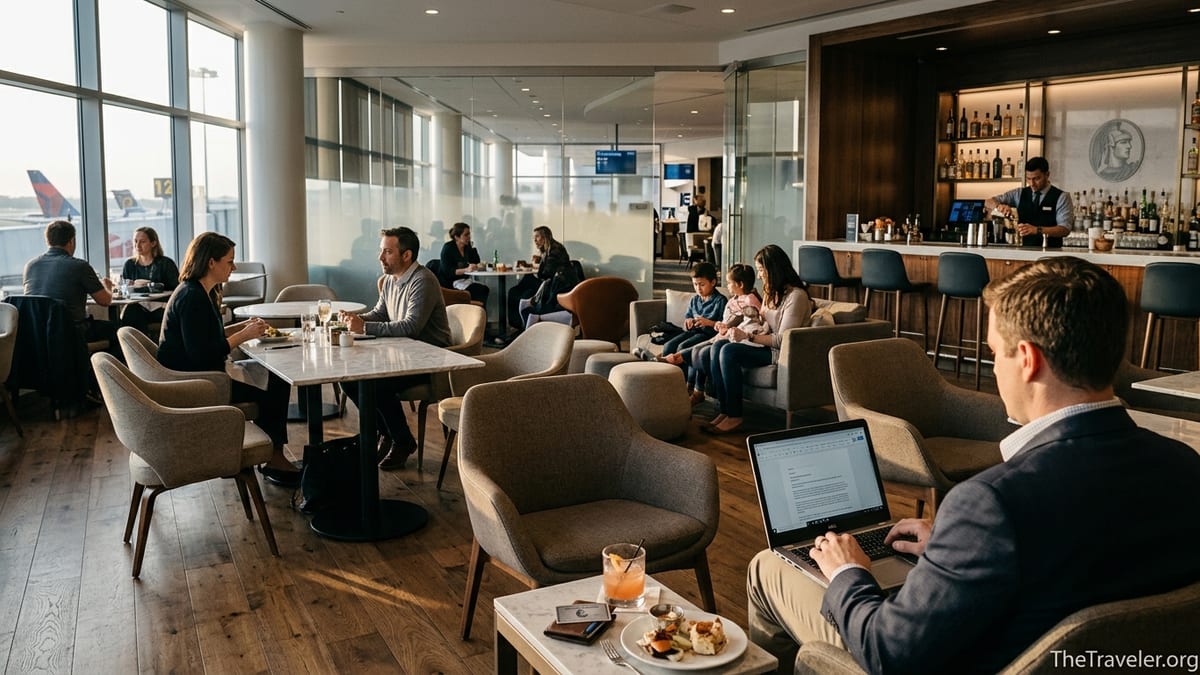
Inside, the brand promise is consistent: locally inspired hot food, a staffed bar, relatively comfortable seating, power outlets at most chairs and a calmer atmosphere than the main terminal. In practice that might mean short rib and quinoa bowls in Denver, a made to order guava panna cotta in Miami or dim sum style snacks in Hong Kong, along with complimentary cocktails built around regional spirits. Soft drinks, coffee and self serve snacks are standard, and most lounges include at least one quiet workspace zone and a family area.
Compared with many Priority Pass lounges that lean heavily on packaged snacks and basic buffet trays, Centurion Lounges usually feel closer to a domestic airline’s flagship or business class lounge. Travelers who come from an overstuffed gate at Las Vegas or Dallas often notice the difference immediately: proper plates and glassware instead of plastic, baristas in some locations and cocktails mixed to an in house menu rather than a generic rail pour.
That is the upside American Express uses to justify premium annual fees. The Platinum Card from American Express, for example, currently carries an annual fee in the mid six hundreds of dollars in the United States, and the Business Platinum and Delta SkyMiles Reserve cards sit in a similar range. Cardholders are told that part of that price buys an airport sanctuary on nearly every trip. Whether that is consistently true depends on how, when and where you travel.
Access Rules and How They Shape Real World Value
The first trust question is simple: can you actually get in when you expect to. American Express has tightened Centurion Lounge access rules several times over the last decade, primarily to fight crowding. As of 2026, entry at most locations is limited to cardholders flying that same day who arrive no earlier than three hours before their scheduled departure time, except for those in transit on a connection. A change announced for July 8, 2026 adds a five hour cap on how early connecting travelers can enter during a layover, a move aimed at people camping in the lounge during very long connections.
In real terms, that means a Los Angeles based traveler with a 9 p.m. departure cannot walk into the LAX Centurion Lounge at noon just to work all afternoon, even if they are carrying a Platinum Card and paid the full annual fee. They will be turned away until around 6 p.m. If they are connecting through Dallas Fort Worth on a long layover from Latin America to Europe, they will be able to use the lounge during the layover, but not for the entire day.
Guest rules have also become stricter and more expensive. Most Platinum and Business Platinum cardholders must now pay a per guest fee for adults and older children unless they spend roughly seventy five thousand dollars per calendar year on their card, in which case two guests are complimentary. A family of four traveling through Miami with only one qualifying card can easily spend around one hundred dollars just to bring everyone into the lounge for a two hour stay, which can reshape the value calculation compared with buying food in the terminal.
Some travelers find these policies manageable. A solo consultant who flies weekly between New York and Chicago might rarely need to bring a guest and may only have 60 to 90 minutes before boarding, so the three hour rule and guest fees are minor issues. A family that travels two or three times a year, or a couple who often fly with friends, may feel the restrictions more acutely and start to question whether "included" lounge access truly feels like a membership privilege.
The Overcrowding Problem: Expectation vs Reality
Even when you are eligible to enter on paper, capacity can still undermine the experience. In busy hubs such as Denver, Dallas Fort Worth, Las Vegas and New York LaGuardia, travelers regularly report wait lists forming at peak times. It is not unusual on a Monday morning for an agent at the Denver Centurion Lounge to quote a 30 to 45 minute wait before they can text you to come back once space opens up.
Those waits matter because lounges are typically most valuable during exactly the periods when terminals are most chaotic. If you land at Denver at 5 p.m. on a Friday with a two hour connection and need to eat and catch up on email before your next flight, spending 45 minutes standing in the hallway waiting for a text erodes the main benefit. Some travelers still find it worthwhile, especially if they would have spent 30 dollars or more on an airport restaurant meal, but others feel misled when "guaranteed" access effectively becomes a queue outside a velvet rope.
Inside the lounges, crowding can mean a struggle to find a seat near a power outlet, lines forming at the buffet and bar and a noise level that feels closer to a busy café than a premium retreat. Travelers posting first hand accounts after visits to the Seattle, Miami or Las Vegas lounges describe circling the room looking for a table, settling for a barstool by the entry or choosing to leave and find a quieter Priority Pass or airline lounge instead.
To its credit, American Express has invested in expansions. The Dallas Fort Worth lounge, for example, is in the process of a significant size increase projected to add around half again as much space, and newer lounges in Denver and New York JFK were built with higher capacity in mind. Even so, the core tension remains: the more successful the card products become, the more cardholders compete for finite lounge seats, which affects how safe it is to rely on Centurion Lounges as your primary airport plan.
Quality, Food and Amenities Compared With Alternatives
When you do get in, Centurion Lounges still compare favorably with many competitors. Travelers who have sampled both often describe Centurion food as meaningfully better than the average Priority Pass buffet. In Denver, for example, options might include roasted chicken thighs, roasted vegetables and a composed salad station, instead of just cold sandwiches and a tray of pasta. In Las Vegas, the lounge frequently offers hot dishes along with desserts like small tarts or cookies that feel closer to a restaurant dessert menu than mass produced sweets.
Beverage programs are another differentiator. Most Centurion Lounges feature a full bar with a cocktail list designed in partnership with mixologists, including specialty drinks and a short wine list, all complimentary. Many Priority Pass lounges, by contrast, offer a single house wine and a few basic spirits for free, with better options only available for purchase. For a traveler who would otherwise order a glass of wine and a cocktail at an airport bar, the Centurion bar can easily offset twenty to thirty dollars per visit.
Amenities such as showers, family rooms and quiet work spaces vary by location but can matter a lot on long trips. Showers in the Miami, Dallas and Seattle lounges, for example, can be essential for travelers arriving from overnight flights before connecting to domestic segments. Being able to shower, change clothes and then sit down with a hot breakfast in a lounge can transform how you feel walking onto your next flight. Similar facilities in New York JFK or Hong Kong can be particularly valuable for international travelers.
However, competitors are catching up. Chase Sapphire Lounges in locations such as Boston and Hong Kong, as well as new premium airline lounges from United, Delta and American in their hubs, increasingly feature excellent food, bar programs and stylish design. In Phoenix, for instance, reviewers note that the Chase Sapphire Lounge’s assigned seating system reduces the "seat hunt" frustration that still plagues many Centurion Lounges. Trusting Centurion Lounges alone as your premium experience may feel less compelling once you have seen what competing networks offer.
Real Travelers, Real Itineraries: When Centurion Works Best
Evaluating whether you should trust Centurion Lounges with your membership benefits requires looking at specific travel patterns. A good scenario is a frequent business traveler based in or regularly connecting through cities with strong Centurion coverage. Consider a consultant who flies twice a month between New York, Dallas and San Francisco. Most of those trips pass through airports with Centurion Lounges, and her schedules often leave 60 to 90 minutes before boarding. For her, the lounge is a reliably useful place to eat a proper meal, charge devices and work at a table, turning dead time into billable time.
Another scenario is a couple who takes three or four international trips a year and connects through hubs like Miami, Dallas or New York. On a morning departure to Europe, they might use the lounge for a light breakfast and coffee, and on return they may have access during a layover before their domestic connection. They rarely travel with more than one guest each, so guest fees are limited. For this pattern of travel, Centurion access can comfortably offset a portion of the card’s annual fee through meals and drinks they would have purchased anyway.
Where trust begins to fray is with infrequent leisure travelers and large families. Imagine a family of five based in Atlanta planning one big international vacation a year. Atlanta offers an American Express branded lounge alternative rather than a full Centurion Lounge, and the crowding there at peak vacation times can be intense. Even if they can all enter, the cost of paying per guest, combined with the effort of finding seats together, can make the experience feel less like a perk and more like an extra stress point. In that context, spending the same money on nicer meals in the terminal or on seat upgrades might yield more tangible comfort.
Similarly, digital nomads or remote workers who dream of using Centurion Lounges as their "airport office" for an entire day will likely be disappointed. The three hour access rule and tightening layover policy means the lounge is designed for a defined pre flight window, not for camping out morning to night with a laptop. If your travel lifestyle depends heavily on long, flexible pre flight stays, you may want to view Centurion access as a nice to have bonus rather than the backbone of your airport routine.
Risk Management: Should You Rely on Centurion as Your Only Lounge Option?
From a practical standpoint, trusting Centurion Lounges completely means assuming that they will be available, not overly crowded and located in the terminals you actually use. That is not always the case. American Express still does not have Centurion Lounges in many major international airports, and even within the United States coverage can be patchy. Chicago O’Hare, for instance, has airline lounges and Priority Pass options but no Centurion Lounge, so a Chicago based traveler may only see Centurion benefits when connecting elsewhere.
A growing number of experienced travelers treat Centurion access as one leg of a three part strategy, alongside airline specific lounge memberships and a Priority Pass style network. For example, a United frequent flyer might hold an annual United Club membership for guaranteed access at their home hub, rely on Centurion Lounges at airports such as Denver or Houston where they exist, and fall back on Priority Pass lounges in secondary markets or abroad. That mix reduces the risk that any one lounge network’s crowding or closures will ruin a long connection.
This kind of diversification is especially useful during irregular operations. Flight delays, weather disruptions and missed connections can change which terminal you are in or extend your time in the airport by many hours. In practice, several travelers have reported that during major storms or scheduling meltdowns, Centurion Lounges filled quickly, stopped accepting additional guests and maintained wait lists for hours. In those moments, having a second or third lounge option, even if it is less glamorous, can matter more than the marginal quality difference between food offerings.
Trust, in this sense, is about planning. If you keep your expectations anchored around Centurion Lounges being a high quality option when they are available and not a guaranteed refuge in every scenario, you are less likely to be disappointed. The membership benefit is real but conditional, and building your travel plans with those conditions in mind is crucial.
The Takeaway
American Express Centurion Lounges still deliver a premium airport experience when all the variables line up. The food is generally better than what you will find in most independent lounges, the bar programs are thoughtful, and the design consistently feels more like a modern coworking space than an aging airline club. For many frequent flyers who pass regularly through airports like Dallas, Denver, Las Vegas and New York, the ability to sit down to a proper meal and a drink before boarding meaningfully improves the travel day.
However, treating Centurion Lounge access as a guaranteed benefit that will always justify a high annual card fee is risky. Access restrictions, guest fees, crowding and uneven airport coverage mean that the real world value varies sharply depending on your travel pattern. A solo traveler with regular trips through Centurion airports may extract excellent value. A family that flies infrequently, or a traveler whose home airport lacks a Centurion Lounge, may find that the perk looks much better on the brochure than it feels at the gate.
If you are considering a premium American Express card mostly for Centurion Lounge access, it is wise to map your likely trips for the next year against the actual lounge locations, factor in guest costs and consider how often you travel during peak times. You might find that Centurion Lounges will be a welcome upgrade on half a dozen trips, or you might discover that an airline lounge membership, a different issuer’s lounge network or simply paying out of pocket for better food and more flexible seating fits your real travel life better.
Ultimately you can trust Centurion Lounges as one high quality piece of a broader airport strategy, not as a single solution. Use them enthusiastically when they work for your route and schedule, but keep backup options in mind and be honest about whether the value matches the annual fee you are paying for the privilege.
FAQ
Q1. Who can access American Express Centurion Lounges in 2026?
Eligible cardholders include those with select premium American Express cards such as the Platinum, Business Platinum, Centurion and certain co branded products like the Delta SkyMiles Reserve, subject to American Express eligibility rules. You must present the card, a same day boarding pass and a government issued ID, and you generally need to be departing from the same airport where the lounge is located.
Q2. What is the current time limit for entering a Centurion Lounge?
At most locations you can enter no earlier than three hours before your scheduled departure time, based on the boarding pass you present. If you are on a connection, you can typically use the lounge between flights, with a policy change in July 2026 adding a five hour cap on how early you can enter during a layover.
Q3. Are Centurion Lounges still overcrowded?
Many popular locations, especially at peak morning and evening bank times, continue to experience crowding and wait lists. Travelers at airports such as Denver, Dallas Fort Worth and Miami frequently report needing to wait for a text message when space opens. At off peak times, however, some lounges can be relatively quiet and comfortable.
Q4. How much does it really cost to bring guests into a Centurion Lounge?
Most Platinum and Business Platinum cardholders now pay a per guest fee for adults and older children unless they meet a high annual spending threshold on their card that unlocks complimentary guests. For a family of four with only one qualifying card, these charges can easily reach around one hundred dollars per visit, so it is important to check the current guest pricing and factor that into your value calculation.
Q5. How do Centurion Lounges compare to Priority Pass lounges?
Centurion Lounges usually offer better hot food, more thoughtfully designed cocktails and more stylish interiors than the average Priority Pass lounge, which often relies on simpler buffets and limited drink selections. That said, some individual Priority Pass locations, especially in Asia and the Middle East, can match or exceed Centurion quality, while Centurion Lounges can suffer from crowding that undermines the advantage.
Q6. Are Centurion Lounges worth it if I only travel a few times a year?
If you fly just once or twice annually and your home airport does not have a Centurion Lounge, the lounge benefit alone is unlikely to justify a high annual card fee. In that case, Centurion access should be seen as an occasional nice bonus on specific trips rather than a core reason to hold the card, and you should weigh it alongside other card benefits like travel credits and earning rates.
Q7. Can I rely on Centurion Lounges during long layovers or disruptions?
Centurion Lounges can be very helpful on moderate layovers, especially when showers and hot food are available, but they are not guaranteed refuges during long disruptions. Access limits, capacity controls and the new five hour layover policy mean that during extended delays or very long connections you may need to combine a lounge visit with time in the terminal, an airline lounge or even an airport hotel.
Q8. Do all major airports have Centurion Lounges?
No. While the network has expanded, many major airports, including some large domestic and international hubs, still have no Centurion Lounge at all. In those airports you may have access to other parts of the American Express Global Lounge Collection, such as partner airline lounges or independent lounges, but not a branded Centurion Lounge space.
Q9. How should I factor Centurion Lounges into my decision to get an Amex Platinum or similar card?
Start by mapping your likely trips for the year against the list of Centurion locations and estimating how many realistic visits you will make. Then think about whether you usually travel solo or with family, and how often you travel at peak times. Combine a rough value for meals and drinks you would otherwise buy with other card benefits, like travel credits or bonus points, to determine whether the overall package, including but not limited to lounge access, is worth the annual fee for you.
Q10. What is the best way to use Centurion Lounges to maximize value?
The most reliable way to get value is to use Centurion Lounges as your go to option for a proper meal and workspace in the one to three hours before departure from airports where they exist. Arrive close to the start of the three hour window, be prepared for possible waits at peak times and have a backup lounge or restaurant in mind. Treat Centurion access as one part of a layered airport strategy rather than the only reason to hold your card.