


More news on this day
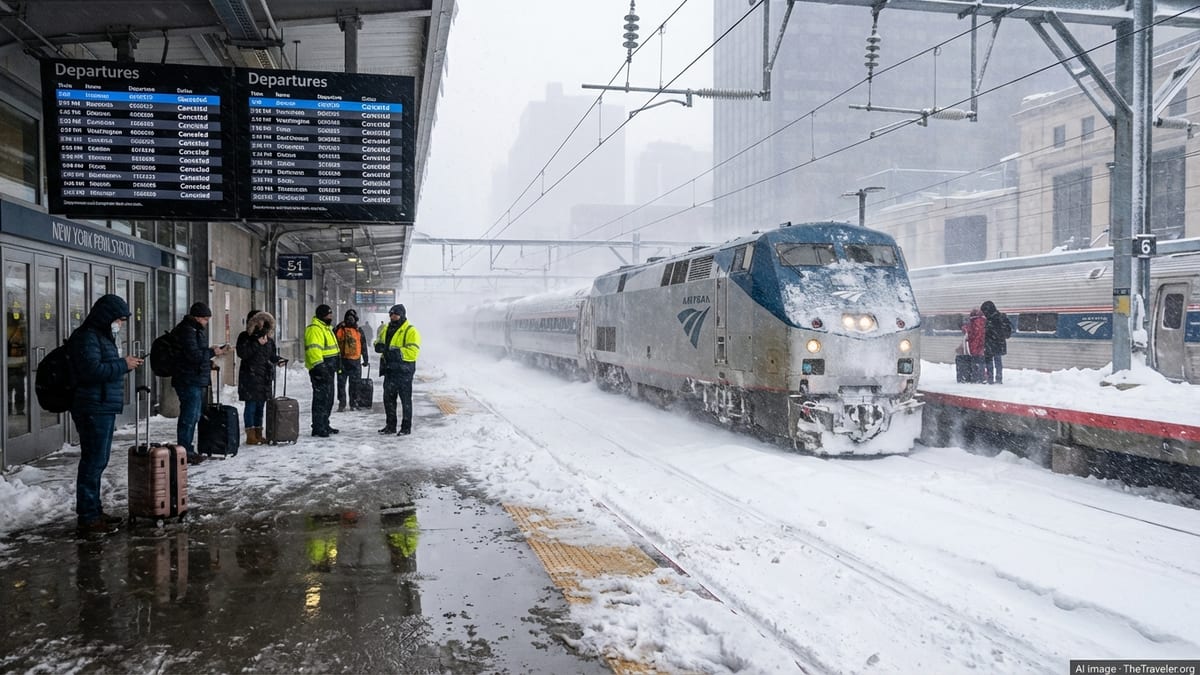
Thousands of rail passengers across the Northeast have been caught in a series of cascading Amtrak and NJ Transit delays in and around New York Penn Station in recent days, as infrastructure work, brush fires, and tight capacity through the Hudson River tunnels expose how fragile this vital corridor remains for commuters and long-distance travelers.
Get the latest news straight to your inbox!
What Is Causing the Latest Wave of Disruptions?
Recent service problems on Amtrak and New Jersey Transit have stemmed from a mix of factors, including fires near key rail chokepoints, overhead wire issues, and construction activity tied to major infrastructure projects. Reports from regional broadcasters and local outlets describe a brush fire near the Hudson River tunnels that temporarily paralyzed service into and out of New York Penn Station, forcing trains to halt and leaving riders facing extensive delays and cancellations on subsequent days as schedules reset.
Separate coverage has highlighted recurring overhead wire and signal issues on the busy stretch between Newark and New York, where Amtrak infrastructure underpins both Amtrak and NJ Transit operations. When these systems fail, trains are often forced to move at restricted speeds or wait for clearance, creating gridlock that can ripple along the Northeast Corridor from Washington to Boston. The result has been a pattern of severe delays at peak hours, packed platforms, and frustrated passengers searching for alternatives.
These latest disruptions come on top of planned changes linked to the Portal North Bridge project and the broader Gateway Program, which aim to replace aging infrastructure and expand capacity under the Hudson River. While these projects are intended to improve reliability over the long term, they can require single tracking and temporary service cuts that reduce the number of trains able to reach Manhattan at rush hour.
How Many Riders Are Affected and Where Impacts Are Worst
Publicly available information shows that New York Penn Station handles hundreds of Amtrak and NJ Transit trains each weekday, with NJ Transit alone typically moving tens of thousands of riders through the station on a normal day. When service is suspended or constrained between Newark and Manhattan, the impact is immediate for commuters on the Northeast Corridor, North Jersey Coast Line, and Midtown Direct trains, as well as for Amtrak passengers on regional and long-distance routes.
The most acute disruptions have centered on the narrow bottleneck formed by the North River tunnels and the approaches to New York Penn Station. Because Amtrak, NJ Transit, and the Long Island Rail Road all depend on shared tracks and platforms in this confined space, any incident affecting one operator can quickly spill over to the others. Even short-lived stoppages can leave trains stacked up outside the tunnels, while departure and arrival boards fill with delays and cancellations.
Coverage from local news outlets and rider reports indicate that some commuters have been forced to turn to PATH trains, buses, rideshares, or ferries when rail options into Manhattan suddenly vanish. Crowding has been reported at transfer points such as Newark Penn Station and Hoboken Terminal when NJ Transit diverts trains or cross-honors tickets to keep people moving during unplanned outages.
What Travelers Should Do Before Heading to the Station
For anyone planning to travel on Amtrak or NJ Transit in the coming days, checking conditions immediately before leaving home is essential. Official alert channels, mobile apps, and social media feeds for the railroads can provide the most current information on delays, modified schedules, or suspensions between Newark and New York. Because conditions can change quickly when infrastructure problems occur, travelers are being advised in published guidance to monitor updates repeatedly during major incidents rather than relying on a single early check.
Rail users are also urged in publicly posted advisories to allow extra travel time during the morning and evening peaks, when a single disabled train or power problem can disrupt multiple departures. Those with fixed appointments, flights, or connections may want to book earlier trains or consider backup routes through Hoboken, Jersey City, or other nearby hubs, especially while construction and repair work continues on key bridges and tunnels.
Travelers with flexible plans may find it useful to avoid the busiest windows altogether when alerts signal ongoing problems at New York Penn Station. Midday or late-evening departures can sometimes move more smoothly during extended disruptions, as operators adjust schedules and reposition equipment to recover from earlier delays.
Backup Options When Trains Are Stalled
When Amtrak and NJ Transit service is severely limited or suspended to New York Penn Station, passengers often must pivot quickly to alternative modes. According to recent coverage, NJ Transit has at times cross-honored rail tickets on its bus network and on PATH trains at Newark and Hoboken during major disruptions, allowing riders to detour into Manhattan via the World Trade Center or 33rd Street corridors instead of the usual Midtown rail approach.
Ferries across the Hudson River and local bus routes can also serve as pressure valves when platforms become overcrowded and departure boards turn red. Regional reports describe commuters walking from rail stations to waterfront terminals or park-and-ride lots in order to board ferries or express buses, particularly when delays have stretched beyond an hour and there is no clear estimate for restoration of full rail service.
Long-distance Amtrak travelers may have additional options, such as rerouting to or from Newark instead of New York, boarding at Philadelphia or other intermediate cities, or requesting changes to later departures when same-day arrivals become unrealistic. Travelers are encouraged by publicly available advisories to contact Amtrak or NJ Transit through official channels for rebooking information during extended outages.
Why These Problems Keep Happening and What Is Changing
The recurring delays highlight the vulnerability of a rail network that funnels a high volume of trains through a pair of century-old tunnels and a constrained Manhattan terminal. Reports on the Gateway Program and related work emphasize that until new tunnels are built and older structures are fully rehabilitated, Amtrak and NJ Transit will continue operating with limited redundancy. Any fire, power fault, or track issue near the tunnels or on the approaches to Penn Station can therefore have an outsized effect on service along the entire corridor.
At the same time, construction milestones such as the opening of the new Portal North Bridge and advance work for additional Hudson River capacity are gradually reshaping the system. Coverage from transportation-focused outlets notes that these projects are designed to untangle some of the most failure-prone segments of the network and add flexibility for future operations, even though the short-term impact for riders often appears as temporary cuts or reroutes.
For now, passengers can expect periodic disruptions to remain a feature of travel through New York Penn Station, especially during severe weather, infrastructure cutovers, or major incidents like fires. The most practical step for travelers is to treat the corridor as dynamic: verify conditions, build in buffer time, and be prepared to shift to backup routes when thousands of others are attempting to do the same.