


More news on this day
Rail travel across a key stretch of the Swiss Alps was thrown into turmoil on 16 February 2026, when an avalanche struck a regional train near Goppenstein in canton Valais, derailing several carriages, injuring five people and forcing the closure of one of the principal north–south routes through the mountains.
Get the latest news straight to your inbox!
What Happened Near Goppenstein
According to published coverage from Swiss and international outlets, the incident occurred shortly after 7 a.m. on 16 February as a BLS RegioExpress service was travelling from Spiez in Bernese Oberland toward Brig in Valais. Reports indicate that around 29 passengers and staff were on board when the train encountered snow that had reached the tracks following an avalanche in the steep valley above Goppenstein.
Images from the scene show at least one carriage tipped off the rails but remaining upright beside a snow-clogged cutting, a sign that the train appears to have ploughed into a mass of deposited snow rather than being swept far down the slope. Emergency responders evacuated everyone on board, with four of the injured treated at the scene and one person transported to hospital in Sion for further care.
Rail accident summaries and Swiss media reports describe the derailment as occurring in, or close to, an avalanche gallery and tunnel section between Goppenstein and Hohtenn, just south of the Lötschberg tunnel portal. The line is a vital Alpine link between northern and southern Switzerland, used both by regional passenger services and by trains carrying vehicles through the mountain.
Preliminary information points to a single avalanche event linked to heavy recent snowfall and strong winds. Early accounts from transport operators and local media suggest that the snow mass had already crossed the line and settled on the track when the train arrived, rather than physically striking a moving carriage, but full technical assessments of the sequence are still in progress.
Injuries and Immediate Response
Across several news reports, the number of injured has been consistently given as five, including the train driver. Publicly available information indicates that most injuries were classified as minor, and there have been no reports of fatalities connected to the derailment.
Rescue and recovery operations involved regional emergency services, rail specialists and avalanche experts working in difficult winter conditions. Passengers were led from the affected train to safer ground and were later transferred to alternative transport. Swiss press coverage notes that responders had to balance the urgent need to reach the train with the continued risk of secondary slides in the narrow valley.
Clearing the derailed rolling stock and the avalanche debris required several hours and the use of heavy machinery. Rail operations remained suspended through the day as teams stabilised the slope, checked snow galleries and inspected infrastructure for damage. By late evening, operators were signalling that a full return to normal timetables on the affected section would take longer than initially hoped.
While the human toll was limited compared with some historic Alpine rail accidents, safety analysts point out that the combination of a moving passenger train, constrained topography and high avalanche danger underscores how narrow the margin can be in winter operations, even in a country with long experience managing snow hazards.
Travel Chaos Across Valais and the Lötschberg Corridor
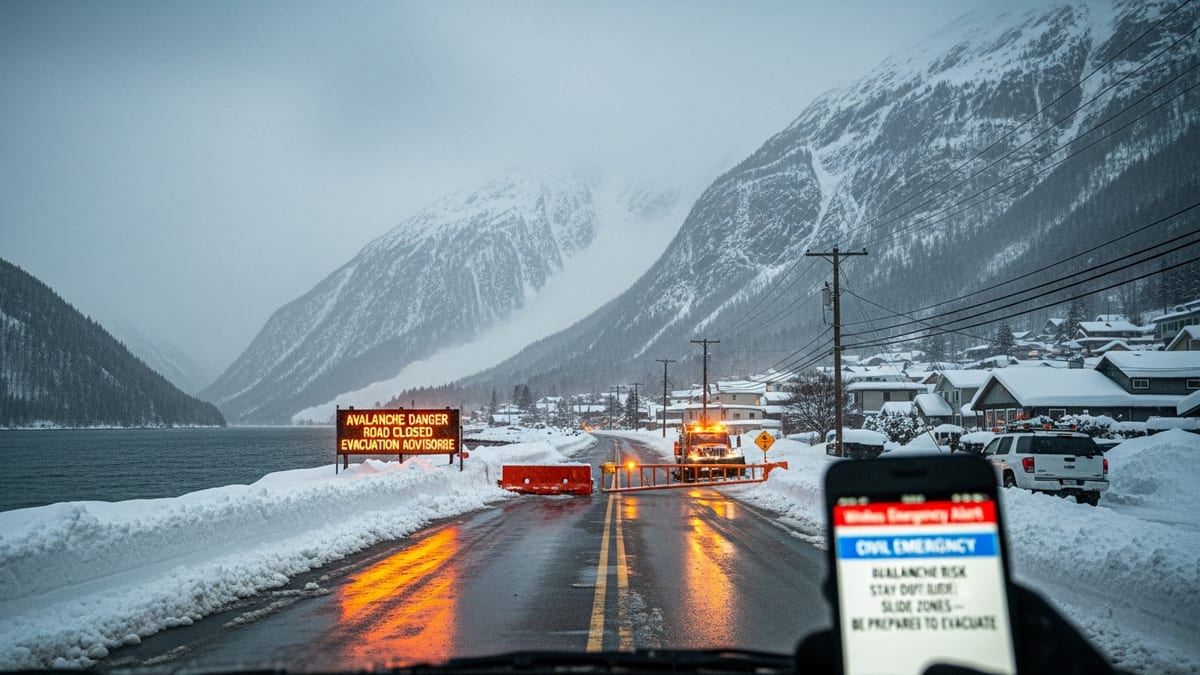
The derailment compounded a broader spell of disruption across Valais triggered by a series of avalanches in mid-February. In the days leading up to the incident, local coverage described several roads in the region being closed or cut off after snow masses crossed carriageways, including the route between Goppenstein and Gampel and access to the Lötschental valley.
Following the derailment, the federal rail operator’s public service updates showed all train traffic between Goppenstein and Brig suspended for much of 16 February, with knock-on effects for long-distance connections using the Lötschberg axis between Bern, Valais and onward to Italy. Travellers reported extended journey times, missed connections and crowded replacement buses as rail companies attempted to route passengers via alternative lines or road corridors where conditions allowed.
Regional bus and road networks were also under strain. Snow clearance teams worked to reopen key mountain roads, but authorities kept some sections closed while avalanche danger levels remained high. For several hours, parts of upper Valais and side valleys experienced a mix of blocked roads and suspended rail services, leaving communities and visitors with only limited options to move in or out.
By the following day, partial rail services had resumed on some stretches, with operators announcing that full restoration of the Goppenstein–Brig link would depend on inspections and repairs at the derailment site and ongoing avalanche control work. Travellers heading for ski resorts and cross-Alpine routes were urged through public information channels to expect residual delays and to monitor real-time updates closely.
Avalanche Risk and Winter Rail Operations in the Swiss Alps
The derailment has refocused attention on how Switzerland manages the intersection of mountain railways and avalanche risk. The Goppenstein corridor sits beneath steep, avalanche-prone slopes and is already equipped with a suite of protective measures, including snow sheds, reinforced galleries, nets and regular controlled blasting designed to release unstable snowpacks in a managed way.
Specialist reporting on Alpine infrastructure notes that, despite these defences, residual risk can never be entirely eliminated in high mountain settings. Heavy snowfall, rapidly fluctuating temperatures and strong winds can quickly load slopes with unstable slabs. When that happens, even well-protected lines can face short windows of elevated danger, particularly where tracks run close to avalanche runout zones.
In February 2026, several Alpine regions recorded persistent avalanche warnings at level four on the Swiss five-point danger scale, indicating a high likelihood of natural and human-triggered slides. The derailment near Goppenstein occurred against this backdrop, at a time when other transport links in Valais were already affected by snow movements and preventive closures.
Rail safety commentators point out that event analysis will likely consider questions such as how quickly new snow accumulations were detected, whether speed restrictions or additional safety margins might be warranted under certain conditions, and how to integrate real-time avalanche monitoring technologies more tightly with train control systems. Any findings from the technical investigation could influence future operating rules on exposed sections across the Swiss network.
What Travelers Heading to Valais Need to Know Now
For travellers planning trips through Valais and across the Lötschberg corridor in the current winter season, the derailment serves as a reminder that even reliable Swiss railways can face weather-related disruption. Public transport information sites for both national rail and regional operators continue to advise passengers to check live status updates on the morning of travel, particularly when forecasts call for heavy snow or strong winds at altitude.
Recent timetables show that regular RegioExpress services between Spiez, Goppenstein and Brig have been restored, but operators reserve the option to suspend traffic at short notice if avalanche risk again reaches critical levels. Auto-train shuttles and long-distance services using the Lötschberg base tunnel are generally less exposed to surface avalanches, yet they can still be affected indirectly when connecting lines or feeder routes are interrupted.
Travelers bound for ski resorts and mountain villages in Valais are encouraged by tourism bodies and transport providers to build flexibility into their itineraries, allow extra transfer time and remain alert to local guidance. In practice, this can mean being prepared to switch from rail to bus, accept rerouting via longer but safer corridors, or delay non-essential journeys during short periods of peak avalanche danger.
Despite the February derailment, publicly available data and historical records continue to show that serious injuries on Swiss railways remain rare compared with the very high volume of daily passenger movements. However, the Goppenstein incident illustrates that in the high Alps, the interplay of weather, topography and infrastructure demands constant vigilance and that even brief windows of instability can have swift and disruptive consequences for travelers.