


More news on this day
Amtrak is moving ahead with its most ambitious long-distance fleet renewal to date, advancing plans for a universal single-level railcar design that will replace aging Superliner and Amfleet equipment and reshape the experience on overnight routes across the United States.
Get the latest news straight to your inbox!
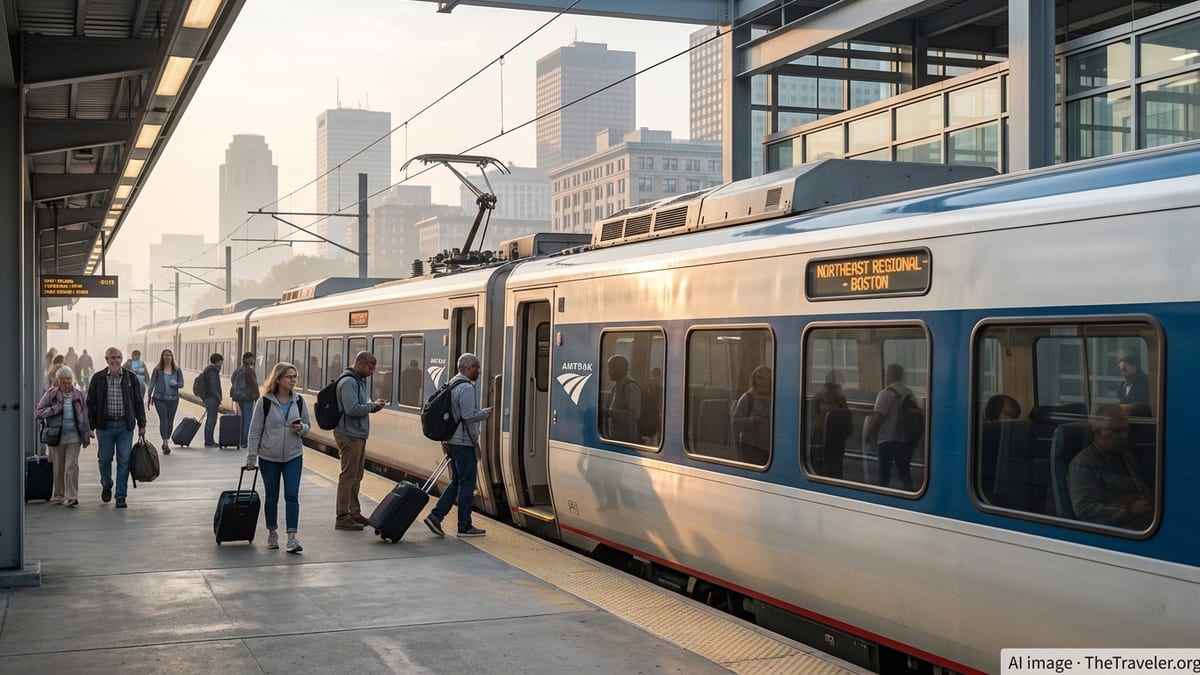
Largest Long-Distance Fleet Renewal in Amtrak’s History
Recent procurement documents and trade coverage indicate that Amtrak has issued a formal request for proposals covering more than 800 new single-level passenger cars for its long-distance network, described as the largest such fleet replacement program in the company’s history. The order is expected to serve 14 overnight and long-distance routes, targeting cars that in many cases are approaching 50 years in service.
The long-distance initiative builds on earlier planning work that began with a request for information in 2023 and subsequent technical specifications outlining performance, accessibility, and comfort standards. The new program moves that planning into a competitive bidding phase, with manufacturers invited to propose integrated fleets covering multiple car types instead of one-off replacements.
Publicly available information shows that the long-distance cars are intended to complement, but remain distinct from, the Airo-branded intercity trainsets now being introduced on shorter corridor routes. While the Airo equipment focuses on daytime, high-frequency corridors, the new universal single-level cars are being tailored for overnight journeys that require sleeping accommodations and expanded food service options.
Industry analyses note that the long-distance program has been coordinated with the Federal Railroad Administration and supported by recent federal infrastructure funding, although long-term financing and production timelines will ultimately depend on budget negotiations and manufacturer capacity.
From Bi-Level Superliners to a Universal Single-Level Strategy
For decades, Amtrak’s long-distance network has relied on a mix of bi-level Superliner cars in the West and single-level equipment in the East, a split driven largely by clearance restrictions on the Northeast Corridor. Reports in the rail trade press indicate that Amtrak has now pivoted away from a previous plan centered on new bi-level Superliner-style equipment and instead adopted a strategy built around a universal single-level fleet.
This strategic shift cancels an earlier bi-level procurement and responds to what observers describe as persistent challenges in developing a new double-deck design that could meet modern safety, accessibility, and manufacturing requirements. Single-level cars, by contrast, can operate across the entire network, including routes that serve New York Penn Station and other constrained terminals.
Advocacy and industry groups note that a standard single-level platform simplifies design work, widens the field of eligible manufacturers and can reduce program risk. With one core car shell and shared components, Amtrak gains flexibility to move equipment between routes and regions as demand, weather or service disruptions require, instead of keeping distinct fleets effectively locked to specific territories.
The new strategy does not eliminate bi-level trains overnight, since existing Superliner cars will remain in service during a multi-year transition. However, published commentary emphasizes that as those cars are retired, their replacements will be single-level units designed for both Western transcontinental routes and Eastern overnight corridors.
New Car Types and Onboard Experience Upgrades
Technical documents released through public channels outline a family of new single-level cars, including standard coach, higher-capacity coach and café or lounge variants, with additional designs expected for sleeping, baggage and food-service roles. These cars are being specified with modern interiors, large windows, updated lighting and power outlets intended to bring long-distance trains closer to current expectations for comfort and productivity.
Long-distance coaches are being planned with overnight use in mind, reflecting lessons from the Amfleet II cars that entered service in the early 1980s. Industry coverage suggests that Amtrak is seeking improved reclining seats, more legroom, and better accommodation for passengers on multi-night trips, along with enhanced accessibility features such as wider aisles and accessible restrooms.
For sleeper passengers, the universal single-level approach points toward updated bedroom and roomette layouts informed by the existing Viewliner fleet, which already serves several East Coast overnight trains. Dining and lounge concepts are also under review, with recent Amtrak planning documents highlighting an expansion of traditional dining service and the importance of social and sightseeing spaces on long-distance routes.
The fleet plan aims to standardize many of these amenities across routes, reducing the sharp differences that currently exist between Eastern and Western trains. Observers suggest that a more consistent product could make it easier to market long-distance services to new travelers while preserving the distinct character of individual routes.
Operational Flexibility and Network Resilience
Beyond onboard comfort, Amtrak’s shift to universal single-level cars is being framed as an operations and reliability decision. With a single core design that can run almost anywhere on the system, dispatchers and fleet managers gain more options to substitute cars, lengthen trains during peak seasons, or reposition equipment when weather or infrastructure issues disrupt normal patterns.
Commentary in specialized rail publications notes that this flexibility could reduce situations where one route is left with older or less reliable equipment for extended periods while others receive newer cars. Instead, standardized fleets can be shared more evenly as maintenance cycles and seasonal demand ebb and flow.
A single-level strategy also aligns with the growing emphasis on accessibility and level boarding. As more stations receive platform upgrades, a consistent car floor height and door arrangement can simplify boarding for passengers with reduced mobility, families with strollers, and travelers carrying luggage, while also speeding station stops.
At the same time, the move presents trade-offs. Some riders favor the panoramic views and unique feel of bi-level lounge and sleeper cars, particularly on Western scenic routes. Analysts point out that Amtrak will need to work with manufacturers to incorporate larger windows and thoughtfully designed lounges into the new single-level fleet to preserve the appeal of these journeys.
Timelines, Funding Questions, and Passenger Expectations
Although the procurement for more than 800 long-distance cars is underway, public documents indicate that the selection of a manufacturer, contract signing, and detailed design work will take several years. Entry into service is expected to be gradual, with new cars introduced in phases as they are delivered and tested, while older Superliner and Amfleet cars are retired.
Funding remains a key variable. Reports highlight that while the Infrastructure Investment and Jobs Act has provided significant sums for passenger rail, those resources are finite, and future appropriations will influence how quickly Amtrak can exercise options for additional cars or accelerate deliveries. The program’s scale also places pressure on North American manufacturing capacity at a time when multiple rail and transit agencies are ordering new equipment.
Passenger expectations are rising in parallel. Travel publications and rail passenger groups describe a growing demand for reliable Wi-Fi, comfortable overnight seating, private cabins, improved food and beverage options, and cleaner, brighter interiors. The universal single-level fleet is being positioned as the main tool to meet those expectations, replacing cars that in some cases date back to the late 1970s and early 1980s.
As proposals come in and designs are refined, the long-distance fleet program is poised to determine how Americans will experience cross-country train travel for decades. The universal single-level approach, if executed effectively, could transform not just the look of Amtrak’s trains, but the role overnight rail plays in the broader U.S. travel landscape.