


More news on this day
A fresh round of severe weather across Hawaii is colliding with peak spring visitor traffic, with heavy rain, flood risks, and high surf triggering transport disruption and closure of popular tourist attractions on multiple islands.
Get the latest news straight to your inbox!
Storm Pattern Follows Weeks of Extreme Weather
The latest storm systems arrive on the heels of back-to-back Kona-style events and an unusually wet late winter, creating saturated ground conditions across much of the state. Publicly available information from the National Weather Service indicates that upper-level disturbances and deep tropical moisture have repeatedly converged over the islands since March, producing intense downpours and localized flooding.
Recent coverage of the early April storms described rain rates of one to two inches an hour on Oahu, with flood advisories and flash flood warnings issued for coastal and interior areas. These conditions followed a March sequence of storms that had already pushed drainage systems and infrastructure to their limits, leaving many low-lying zones more vulnerable to new bursts of heavy rainfall.
Forecast discussions suggest that, while the strongest cells are expected to pass within days, additional bands of showers and thunderstorms may trail behind the main system. This pattern raises the possibility of renewed travel disruption even after the most intense rainfall eases, especially on islands where saturated soils increase the chance of landslides, debris flows, and road washouts.
For visitors, the timing is particularly difficult. April is a popular month for mainland travelers taking advantage of school breaks and shoulder-season fares, meaning a large number of tourists are arriving just as forecasters warn of unsettled conditions persisting into the coming week.
Flight Delays, Cancellations and Tight Capacity
Airport operations in Honolulu and across the neighbor islands have come under pressure as storm bands sweep through. Flight-tracking data and airline advisories over recent weeks show repeated rounds of delays and cancellations when low cloud ceilings and strong crosswinds have reduced visibility or made approaches unsafe, particularly during periods of intense rain.
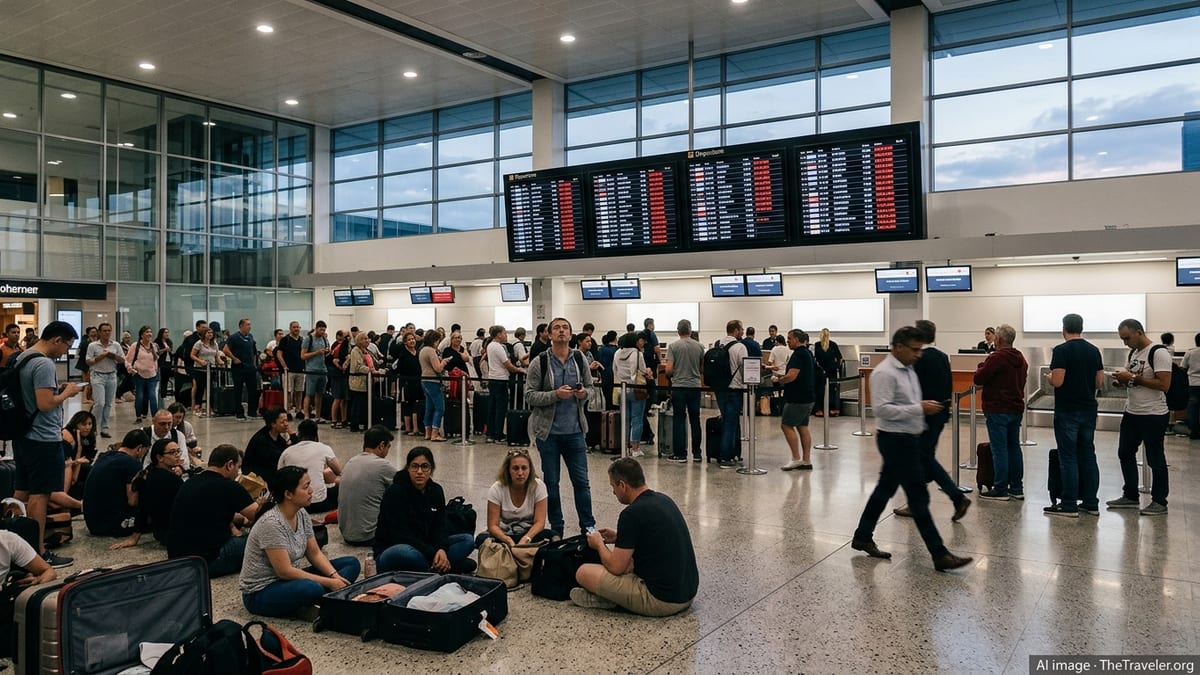
Weather-related disruptions in late March and early April led to clusters of cancellations at Daniel K. Inouye International Airport, with ripple effects to Hilo, Kona, Kahului and Lihue. While most flights have eventually departed the same day, compressed departure windows and limited gate space have produced crowded terminals and long lines at check-in and security during storm peaks.
Carriers serving Hawaii often operate near full capacity in the spring, leaving fewer open seats for stranded passengers to rebook. When multiple flights are affected on the same route, travelers may face re-accommodation windows stretching by a day or more, especially on interisland segments that rely on smaller aircraft and tightly scheduled rotations.
Some airlines have periodically issued weather waivers during the worst of the March storms, allowing changes without additional fees. For the current systems, travelers are being urged in public notices and social media updates to monitor their reservation status frequently, arrive early at the airport, and be prepared for gate changes or rolling departure times as conditions shift.
Closures Hit Beaches, Parks and Iconic Attractions
Beyond airports, the stormy pattern is affecting many of the natural attractions that draw visitors to the islands. Heavy rain has pushed runoff into coastal waters, prompting state health advisories against swimming in areas with brown water that could carry debris, sediment, and elevated bacterial levels. These advisories often linger for days after intense rainfall, limiting safe access to otherwise popular beaches.
On Oahu, recent reports indicate temporary shutdowns or limited access at coastal parks, hiking areas and outdoor recreation facilities after flooding and high surf. Municipal notices in Honolulu have highlighted closures of parks, botanical gardens, and select shoreline sites while crews inspect for erosion, downed trees, and damage to paths and parking areas.
Similar patterns have been seen on other islands. In March, portions of Haleakala National Park on Maui and high-elevation lookouts across the state were periodically closed during strong wind and heavy rain events, with updated alerts emphasizing falling rock hazards and reduced visibility. As the new storms move through, travelers are again being reminded to check land-management and county updates before setting out for sunrise viewings, waterfall hikes, or cliffside trails.
Tour operators have also had to adjust. Snorkel and sailing excursions are particularly sensitive to wind, swell and water clarity, and many companies have been shifting departure times, altering routes to more sheltered coves, or canceling altogether on shorter notice than usual.
Impact on Island-Hopping Itineraries
The unsettled weather is especially challenging for visitors planning multi-island trips with tightly packed schedules. Interisland flights are short but highly dependent on cooperative weather at both departure and arrival points. When storms pass unevenly across the archipelago, one island can be largely operational while another experiences grounded flights or closed roads, complicating connections.
Reports from travel industry outlets describe recent cases in which visitors faced missed resort stays, lost prepaid activities, and extra overnight expenses after Oahu or Maui flights were delayed by passing squall lines. In some instances, guests have arrived at their next destination only to find that road closures or power outages near resort areas limited access or curtailed services.
Travel advisors and visitor information channels are encouraging more flexible planning, including leaving wider gaps between interisland transfers and major activities such as weddings, boat charters, or once-per-trip tours. Public guidance also stresses the importance of monitoring airline apps, statewide emergency management updates, and island-specific news sources on a daily basis while storms remain in the forecast.
For those already on the ground, contingency planning has become part of the experience. Many visitors are switching out road trips and remote hikes for indoor cultural sites, shopping centers, and urban dining districts when lightning, flash flood advisories, or strong winds are highlighted in local forecasts.
Safety, Insurance and Practical Advice for Tourists
The recent storms are prompting renewed attention to basic safety practices for visitors in a state where flash floods and rockfalls can develop quickly. Public information campaigns from state and county agencies emphasize avoiding streams and gulches during and after heavy rain, heeding “road closed” and “trail closed” signage, and resisting the temptation to drive through standing or swiftly moving water.
Travel commentators note that many itineraries built months in advance did not fully anticipate the extent or persistence of this year’s late-season storms. As a result, interest in trip insurance with weather-related coverage has grown, particularly among travelers booking interisland flights and high-value excursions such as helicopter tours or private charters that can be grounded by low clouds and gusty winds.
Accommodation providers are responding with a mix of flexibility and caution. Some hotels and vacation rentals are waiving change fees or allowing short-notice date shifts during the most severe weather windows, while others are reinforcing standard policies but offering credits toward future stays. Publicly available booking guidance generally urges guests to communicate early with lodging providers if forecasts show heavy rain or potential flooding overlapping check-in or check-out dates.
Despite the disruption, state and local messaging continues to underline that Hawaii remains open to visitors, with air links functioning and many areas experiencing only intermittent showers. However, as another round of storms bears down, tourists are being asked to treat weather updates as essential trip-planning tools, build in flexibility, and prioritize safety when deciding whether to push ahead with scheduled activities or wait for clearer skies.