


More news on this day
Polar specialist Antarctica21 has unveiled a new Antarctic Travel Designers contest that offers travel advisors the chance to earn a complimentary familiarization trip to the White Continent, highlighting growing trade demand for fly-and-sail expeditions that bypass the Drake Passage.
Get the latest news straight to your inbox!
Contest Targets Frontline Antarctic Specialists
According to published coverage, the Antarctic Travel Designers contest is designed specifically for frontline travel advisors who actively sell polar and expedition cruises. By focusing on trade professionals already engaged with complex itineraries, Antarctica21 aims to deepen product knowledge and strengthen its presence in a competitive Antarctic market.
Reports indicate that participating advisors will be invited to showcase how they present and tailor Antarctic itineraries for clients, with an emphasis on creativity, accuracy and destination expertise. The structure is intended to reward those who can translate intricate logistics, seasonal nuances and ship differences into clear, compelling proposals for travelers.
The initiative reflects a wider trend in the expedition sector, where cruise and tour operators are increasingly turning to the agency community to drive high-value bookings. By positioning the contest around design skills and client-focused consultation, Antarctica21 is effectively spotlighting the role of advisors as “Antarctic travel designers” rather than simple order-takers.
Industry commentators note that this approach may also help new-to-polar advisors build confidence, as the contest framework encourages a deeper dive into ship features, sustainability practices and guest experience details that can be decisive in the premium expedition space.
Complimentary FAM Showcases Fly-and-Sail Model
Central to the contest is a complimentary familiarization trip that will allow winning advisors to experience Antarctica21’s signature fly-and-sail model firsthand. Publicly available information describes the company as an early specialist in flying guests over the often-rough Drake Passage to board small expedition ships closer to the Antarctic Peninsula.
By placing contest winners on an Antarctic FAM, Antarctica21 is expected to highlight practical elements such as pre-flight briefings, the aircraft segment from Patagonia to the sub-Antarctic islands, and the transition from air to ship. Experiencing these details in person can be critical for advisors who must field questions from travelers concerned about flight logistics or nervous about extended days at sea.
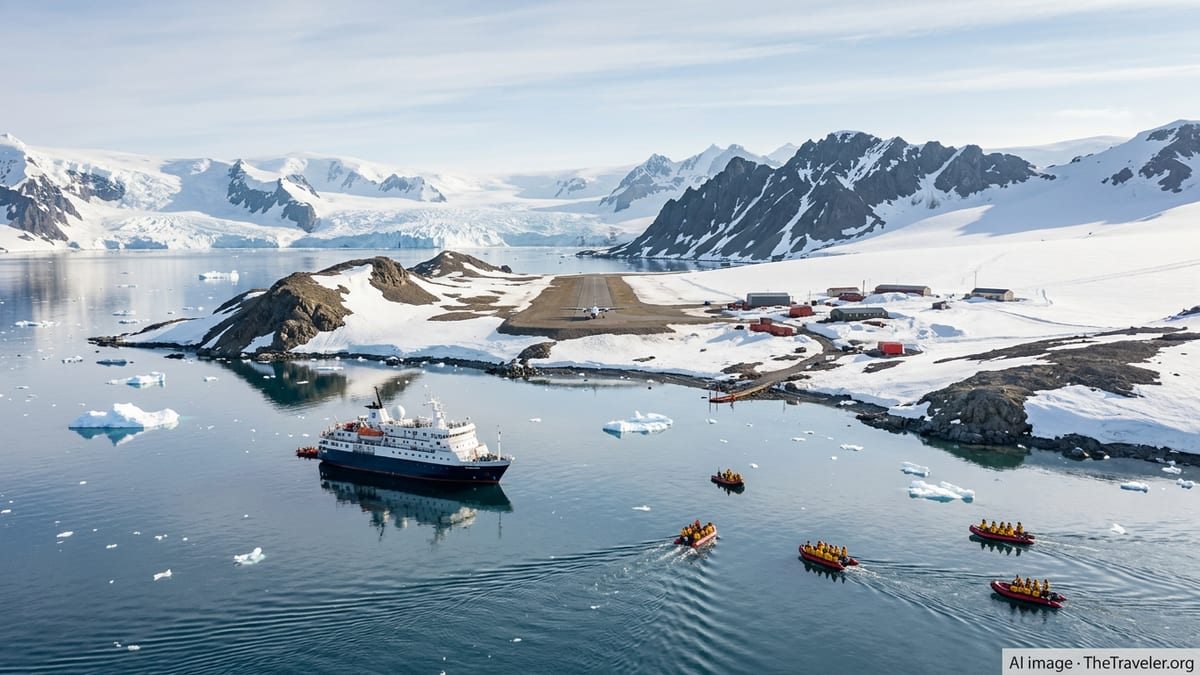
The FAM is also likely to showcase core components of a typical itinerary, including Zodiac excursions, wildlife viewing and educational programming on board. Trade observers suggest that such immersion helps advisors realistically set expectations for clients on everything from cabin comfort and motion at sea to how often landings occur and what weather-related adjustments may look like.
For a category in which purchases are often once-in-a-lifetime and carry premium pricing, first-hand familiarity with the journey is widely seen as a significant sales advantage. The contest framework gives Antarctica21 a way to allocate limited FAM berths to advisors who demonstrate long-term sales potential.
Entry Criteria and Evaluation Focus on Design Quality
While specific entry mechanics may vary by market, available descriptions of the Antarctic Travel Designers contest indicate that submissions will revolve around how advisors would conceptualize and present an Antarctica21 journey to a client. This can include sample itineraries, positioning statements, and explanations of why a fly-and-sail option suits certain traveler profiles.
The quality of trip design, rather than volume of past sales alone, appears to be a key evaluation factor. Commentators note that operators are increasingly looking for advisors who can match clients with the right style of expedition, ship size and season, which can dramatically affect guest satisfaction in polar regions.
Attention to detail around air connections, pre- and post-cruise stays, packing guidance and contingency planning is also likely to weigh in an advisor’s favor. These elements often determine whether guests feel well-prepared in an environment where weather can disrupt timetables and where remoteness limits on-the-fly changes.
By emphasizing design quality, Antarctica21 is effectively using the contest to crowdsource best practices in selling complex, high-latitude travel. The resulting ideas may inform future training materials, webinars and sales tools provided to the broader advisor community.
Strategic Move Amid Rising Antarctic Demand
The launch of the contest comes as travel interest in Antarctica continues to grow, particularly among affluent travelers seeking immersive, small-ship experiences. Industry analyses point to renewed demand for polar itineraries, with many guests attracted by unique wildlife encounters, pristine landscapes and the sense of visiting one of the last great wilderness frontiers.
Antarctica21’s focus on fly-and-sail expeditions also aligns with travelers who are concerned about crossing the Drake Passage by sea or who prefer to maximize time in the destination itself. Trade commentary suggests that this model can appeal strongly to first-time expedition guests, older travelers and those with limited vacation time.
At the same time, competition in the Antarctic segment has intensified as new vessels and brands enter the market. In this context, a contest that both educates and incentivizes frontline advisors can help a specialist operator reinforce its differentiators, from ship design and capacity to its experience with air logistics in the region.
The Antarctic Travel Designers initiative can therefore be viewed as part of a broader strategy to secure mindshare among key sellers, ensuring that when clients inquire about Antarctica, advisors are ready to position fly-and-sail options as a strong alternative to traditional sea-only crossings.
Implications for Travel Advisors and Clients
For travel advisors, the contest represents an opportunity not only to win a high-value FAM but also to sharpen their expedition-cruise portfolio. As more clients seek distinctive, experiential travel, the ability to confidently discuss Antarctica, route options and seasonal considerations can set an advisor apart in a crowded marketplace.
Advisors who engage with the contest may also benefit from increased visibility within Antarctica21’s distribution network and potential access to additional training resources. Over time, that can translate into stronger supplier relationships and a larger share of polar-related inquiries and bookings.
Clients, in turn, stand to gain from more informed counsel and better-matched itineraries. With a deeper understanding of what an Antarctica21 voyage entails, advisors can more accurately assess whether a fly-and-sail route, departure window and ship configuration fit a traveler’s comfort level, budget and sense of adventure.
As the Antarctic season approaches, the Antarctic Travel Designers contest underscores the ongoing role of human expertise in a category where destination knowledge, risk awareness and careful planning remain central to delivering memorable and responsible journeys to the end of the Earth.