


On the western fringe of Naples, tucked behind low volcanic hills and citrus groves, Lake Averno has spent years in the shadow of Italy’s headline destinations. Once known mostly to local walkers, classicists and Neapolitans escaping the city for a Sunday lunch, this small crater lake in the Campi Flegrei volcanic area is now appearing more often in tour operator brochures, Instagram posts and news reports. The question many travelers are starting to ask is simple: is Lake Averno still a hidden gem, or is it on the verge of becoming the next must-see stop on a Campania itinerary?
Get the latest updates straight to your inbox!
From “Gate to the Underworld” to Quiet Local Retreat
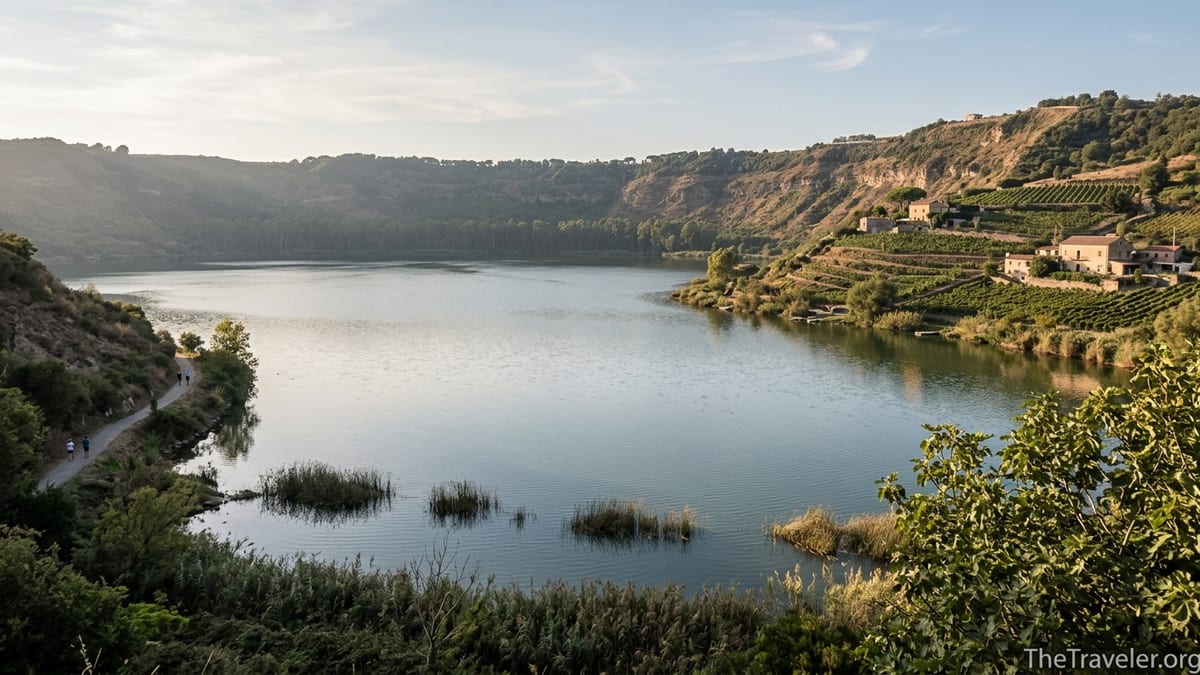
Lake Averno, or Lago d’Averno, sits in a perfectly round volcanic crater just outside Pozzuoli, about 45 minutes by regional train and local bus from central Naples. In Roman times it was feared and revered as the legendary “porta degli inferi,” the entrance to the underworld described in classical texts. Today, the steep crater walls are softened by vineyards and eucalyptus trees, and the lake feels surprisingly intimate compared with nearby coastal hotspots like Pozzuoli’s waterfront or the island of Procida.
For decades, Averno’s visitors were mainly locals from Pozzuoli and Bacoli out for a jog around the 3-kilometer lake path, families coming for Sunday lunch at agriturismi tucked into former farms, and a trickle of archaeology enthusiasts looking for remnants of Roman tunnels and port structures hidden in the brush. There were few signs, limited parking and virtually no international promotion, which kept numbers low even as wider Campania tourism boomed.
That low-key status has started to shift as travelers search beyond the crowded Amalfi Coast and Capri for less obvious corners of the Bay of Naples. Tour companies that once focused only on Pompeii and Mount Vesuvius now increasingly mention the broader Campi Flegrei volcanic field and its lakes, including Averno, as “off the beaten path” add-ons. At the same time, Italian media have revived interest in the lake’s mythology and geology, reinforcing its allure as a place where ancient stories and active earth processes meet.
Despite this renewed attention, Lake Averno still lacks the dense hotel strips, souvenir stands and traffic jams of Italy’s most famous lakes. On a weekday outside of high summer, you are more likely to share the path with dog walkers and cyclists than with tour groups, a sign that the site remains far from mass tourism even as awareness slowly grows.
Signs Lake Averno Is Becoming More Popular
One of the clearest indicators of Lake Averno’s rising profile is the way it now appears in regional tourism programming. Slow-travel and food-and-wine festivals in Campi Flegrei have begun centering events on the lake shore, combining tastings of local wines like Falanghina and Piedirosso with guided walks around the crater. These events, which are advertised across Campania and occasionally picked up by national outlets, have drawn visitors who might previously have stayed closer to Naples or Sorrento.
Local tour operators have also responded. A few years ago, private guides in Naples might have offered a generic “Campi Flegrei” excursion without specifying exactly where they would stop. Now, brochures and online descriptions increasingly name Lago d’Averno as a key stop, emphasizing its mythology and tranquil landscape. Typical small-group tours that include the lake, Cuma archaeological park and a winery visit often run in the range of 90 to 140 euros per person, transport included, which is comparable to mid-range day trips to Pompeii and Vesuvius. That parity in pricing reflects the sense that this once-overlooked area is now a marketable experience in its own right.
Independent travelers are following. Accommodation owners in Pozzuoli and nearby Bacoli report a noticeable uptick in international guests who mention the Campi Flegrei lakes by name when they book. Boutique bed-and-breakfasts near the coast that used to attract mostly Italian weekenders now count a higher share of visitors from northern Europe and North America, many of whom arrive with a wish list that includes “a quiet lake walk” alongside classic city sightseeing.
Social media is amplifying this trend. Search for Lake Averno on major platforms and you will increasingly find photos of early morning mist clinging to the water, runners on the lakeside path and sunset wine tastings at farms that overlook the crater rim. Most posts still attract modest engagement compared with viral Amalfi Coast content, which suggests the area is not yet mainstream, but the steady flow of new images points to a growing trickle of curious travelers.
The Volcanic Backdrop: Interest and Anxiety
Lake Averno’s landscape exists because of the same volcanic forces that have placed Campi Flegrei under the spotlight of global geologists. The lake fills a small crater within a large, complex volcanic system west of Naples that has experienced repeated periods of uplift, gas emissions and earthquake swarms. In recent years, episodes of seismic activity and noticeable ground deformation have drawn intense attention from researchers and Italian civil protection authorities.
These scientific developments have had mixed effects on tourism. On one hand, media coverage about Campi Flegrei’s unrest has occasionally spooked would-be visitors who are unfamiliar with the difference between long-term monitoring and an imminent eruption. On the other hand, the same coverage has sparked curiosity. Some travelers with a strong interest in earth science now come specifically to see how people live and farm on a caldera floor, and they often include Lake Averno, with its clearly defined crater and visible gas bubbling in places, in their itineraries.
Recent Italian television reports have shown the lake surface rippling where gases escape after local earthquakes, reinforcing its reputation as a place where the planet’s inner workings are close to the surface. At the same time, regional tourism offices emphasize that authorities maintain continuous monitoring networks and that civil protection plans are in place for the entire area. For visitors, the practical implication is that travel advisories can change but day-to-day life in surrounding towns usually continues normally, even during periods of increased seismicity.
This complex context shapes how Lake Averno is presented. Many guides now combine mythological stories about Aeneas and the underworld with measured explanations of bradyseism, the slow rising and sinking of the ground characteristic of Campi Flegrei. The result is a form of “geo-cultural” tourism that attracts curious visitors while reinforcing respect for the area’s risks and resilience.
On the Ground: What Travelers Experience Today
For travelers, the most tangible question is not whether interest in Lake Averno is growing in abstract terms but what the visit actually feels like now. On a typical spring or autumn weekday, arriving by local bus from Pozzuoli, you step off onto a quiet roadside near the crater rim. There is usually space in informal parking areas, and the main sound is birdsong and the occasional scooter, not bus engines. A mostly flat trail loops the lake, close enough to the water that you can see reeds and coots, but protected in places by low railings.
As of the 2025 season, there are still relatively few formal visitor facilities: no large visitor center, no turnstiles and only a handful of signs explaining geology or mythology. Several entry points lead to the lakeside path, and you can walk the full circuit in about 45 minutes at a relaxed pace. Local runners and dog walkers make up a visible share of users, especially in the early morning and at dusk, when temperatures are softer and the crater walls catch the low sun.
Food and drink options, however, show how tourism is evolving. A number of agriturismi and restaurants on or near the lake offer fixed-price lunches that highlight volcanic-soil produce and local wines. It is common to find three-course midday menus, including starters, a pasta with seafood or seasonal vegetables and dessert, in the 30 to 45 euro range per person, wine included. On weekends, these venues become hubs for Neapolitan families celebrating birthdays and communions, and foreign visitors are increasingly a minority at neighboring tables rather than an exception.
Guided experiences are also expanding. Small local operators run kayak outings on the lake when conditions and regulations permit, pairing short paddles with storytelling about the Roman fleet that once used nearby waters as a military harbor. Others offer vineyard walks on the crater slopes, where you can see how vines planted in ash-rich soils differ from those on the Amalfi terraces. Prices for such niche experiences often fall between 50 and 90 euros per person for half-day itineraries, comparable to food tours in central Naples but in a quieter, more rural setting.
Is It Still a Hidden Gem? A Balanced Verdict
Taking all this into account, Lake Averno today occupies an in-between space. It is no longer a secret known only to locals and scholars, but it has not yet become the kind of heavily trafficked destination where visitors queue for selfies at designated viewpoints. Its profile has risen within Italy and among a subset of international travelers interested in geology, history and wine, yet the overall numbers remain modest compared with major Italian lakes such as Como or Garda.
Several factors help preserve its relatively low-key feel. Access primarily relies on local transport and private cars rather than large tour buses, limiting the volume of group excursions. Strict environmental protections around the lake and within the wider Campi Flegrei Regional Park constrain new construction, so there are no sprawling hotel complexes directly on the shore. Most accommodations are in nearby towns, and guests reach the lake for half-day visits before returning to coastal promenades or Naples in the evening.
Seasonality also plays a role. During peak Italian holiday periods, particularly August weekends, the surroundings do get busy, mostly with residents of the Naples metropolitan area escaping the heat. The lakeside parking areas can fill, and restaurants may require reservations. Outside those windows, however, even in high season, you can often walk considerable stretches of the path in near solitude, especially in the early morning. Compared with widely publicized destinations like Positano, where crowds are dense from late spring through early autumn, Lake Averno still feels refreshingly uncrowded.
In practical terms, travelers who come expecting a completely undiscovered spot might be surprised to find established food-and-wine venues and organized tours. Those who come seeking a calm, atmospheric landscape with a strong sense of local life rather than polished resort infrastructure are likely to find that Lake Averno still fits the definition of a “hidden gem,” just one that more people are slowly discovering.
Planning a Visit: Costs, Logistics and Practical Tips
Reaching Lake Averno from Naples usually involves taking a regional train or metro to Pozzuoli, then transferring to a local bus or taxi. A single regional train ticket costs only a few euros, and local buses are similarly inexpensive, though schedules can be irregular, especially on Sundays and public holidays. Many visitors opt for a taxi from Pozzuoli station to the lake, which typically runs in the 15 to 25 euro range one way depending on traffic and time of day.
Day-trip tours that bundle Lake Averno with other Campi Flegrei stops are increasingly common. These often include hotel pickup in central Naples, private transportation, a licensed guide and tastings or a simple lunch. Prices generally span from about 90 euros per person for larger groups to 180 euros or more for custom private itineraries. Compared with the cost of hiring a private driver independently, which can exceed 250 euros for a full-day outing in the region, these structured tours can be good value for travelers who prefer not to navigate local transport.
Once at the lake, there is no general admission fee for simply walking the perimeter path, though certain archaeological sites or private gardens around the crater may charge small entry fees during special events or open days. Comfortable walking shoes are essential, as parts of the path can be uneven or muddy after rain. In summer, shade is limited on some stretches, so carrying water, sun protection and a hat makes the experience more pleasant.
Travelers should also remain mindful of the area’s volcanic context. Local authorities and Italy’s civil protection agency issue updates on Campi Flegrei’s status. While everyday life rarely stops for residents, itineraries can be affected during intense earthquake swarms or if precautionary measures are introduced. Booking accommodation with flexible cancellation policies in Pozzuoli or Naples and checking local news in the days before arrival are sensible steps for a visit scheduled months in advance.
How to Experience Lake Averno Like a Respectful Local
Because Lake Averno still functions as a neighborhood green space for many residents, travelers can help preserve its peaceful character by treating it less as a staged attraction and more as a shared backyard. That starts with timing. Joining locals for an early morning lap around the lake, when runners stretch at the water’s edge and fishermen check their lines, offers a more authentic feel than arriving midday in a rush between other sights.
Supporting small-scale businesses in the area can also make a difference. Booking lunches at family-run agriturismi that source from nearby vegetable plots and vineyards helps keep traditional agriculture viable on the crater slopes. Many of these establishments sell their own olive oil or wine for 8 to 20 euros a bottle, making for meaningful, place-specific souvenirs that channel money directly into the community rather than into anonymous chains.
Environmental respect is critical in this relatively fragile landscape. Staying on marked paths protects both shoreline vegetation and ongoing scientific monitoring equipment installed to track ground movement and gas emissions. Carrying out any trash, avoiding loud music and leaving fishing spots and picnic areas clean preserve the calm atmosphere that makes the lake feel special in the first place.
Finally, consider pairing a visit to Lake Averno with nearby cultural sites such as the ancient acropolis of Cuma or the Roman amphitheatre in Pozzuoli. Doing so spreads visitor flows across several locations instead of concentrating everyone in a single beauty spot and underscores the reality that Campi Flegrei is a living cultural landscape, not just a dramatic geological backdrop.
The Takeaway
Lake Averno is no longer entirely off the radar. Its reputation as an evocative volcanic lake tied to underworld myths and ringed by vineyards is spreading, boosted by slow-travel events, curated tours and social media images. Yet its infrastructure and visitor numbers remain modest compared with Italy’s major lakes and coastal icons. Travelers willing to navigate slightly patchy public transport or invest in a guided day trip are rewarded with quiet paths, local restaurants and a palpable sense of living on the restless edge of the earth.
For now, Lake Averno fits neatly into a modern definition of a hidden gem: a place that is known but not overrun, accessible but not entirely effortless, and shaped more by everyday local use than by mass tourism. Those drawn to layered landscapes where mythology, science and daily life intersect would do well to visit sooner rather than later, while the lake still balances on that fine line between discovery and popularity.
FAQ
Q1. Where exactly is Lake Averno and how do I get there from Naples?
Lake Averno lies near Pozzuoli in the Campi Flegrei area, west of Naples. Most visitors take a regional train or metro to Pozzuoli and then a local bus or taxi to the lake, a journey that typically takes 45 to 70 minutes door to door.
Q2. Is Lake Averno safe to visit given the Campi Flegrei volcanic activity?
Lake Averno sits within the Campi Flegrei volcanic system, which is closely monitored by Italian authorities. While the area experiences periodic small earthquakes and ground uplift, civil protection agencies issue alerts if conditions change. Travelers should check local updates before visiting but day-to-day life generally continues normally.
Q3. Do I need to pay an entrance fee to walk around Lake Averno?
There is usually no admission fee to access the main lakeside path, and you can walk the full circuit freely. Fees may apply only for occasional special events, private gardens or nearby archaeological sites, which are clearly indicated when open.
Q4. How long does it take to walk around the lake?
The loop path around Lake Averno is about 3 kilometers long. Most visitors complete it in 45 to 60 minutes at a relaxed pace, longer if they stop often for photos or birdwatching.
Q5. Are there restaurants or cafes at Lake Averno?
Yes. Several agriturismi and restaurants on or near the crater offer meals featuring local products and wines. Many serve fixed-price lunches, especially on weekends, so it is wise to reserve in advance during busy periods like August and holidays.
Q6. Can I swim or kayak in Lake Averno?
Swimming opportunities are limited and may be restricted in some sections for environmental reasons, so visitors should follow posted signs and local guidance. Kayak or small boat outings are sometimes offered by local operators under controlled conditions, usually as part of guided experiences.
Q7. What is the best time of year to visit Lake Averno?
Spring and autumn are ideal, with mild temperatures, greener crater slopes and generally fewer crowds. Summer can be hot in the middle of the day but pleasant in early mornings and evenings. Winter visits are possible, though some eateries may reduce hours.
Q8. Is Lake Averno suitable for children and less experienced walkers?
Yes, the lakeside path is mostly flat and manageable for children and people with basic fitness, though surfaces can be uneven in places. Sturdy shoes, sun protection and water are recommended, and families may wish to avoid the hottest midday hours in summer.
Q9. Are there accommodations directly on the lake?
There are no large hotels right on the shoreline due to environmental protections. Most visitors stay in nearby towns such as Pozzuoli, Bacoli or central Naples and visit Lake Averno on a day trip or half-day excursion.
Q10. Is Lake Averno still considered a hidden gem compared with other Italian lakes?
Compared with well-known lakes like Como or Garda, Lake Averno receives far fewer international visitors and has a more local, low-key atmosphere. It is gaining attention but still feels like a quieter, lesser-known destination rather than a major tourist hotspot.