


More news on this day
Argentina is steadily recasting itself as a laboratory for the future of travel, stitching together scenic highways, revived rail lines and nature-led itineraries into routes designed to captivate the most curious and reflective visitors.
Get the latest news straight to your inbox!
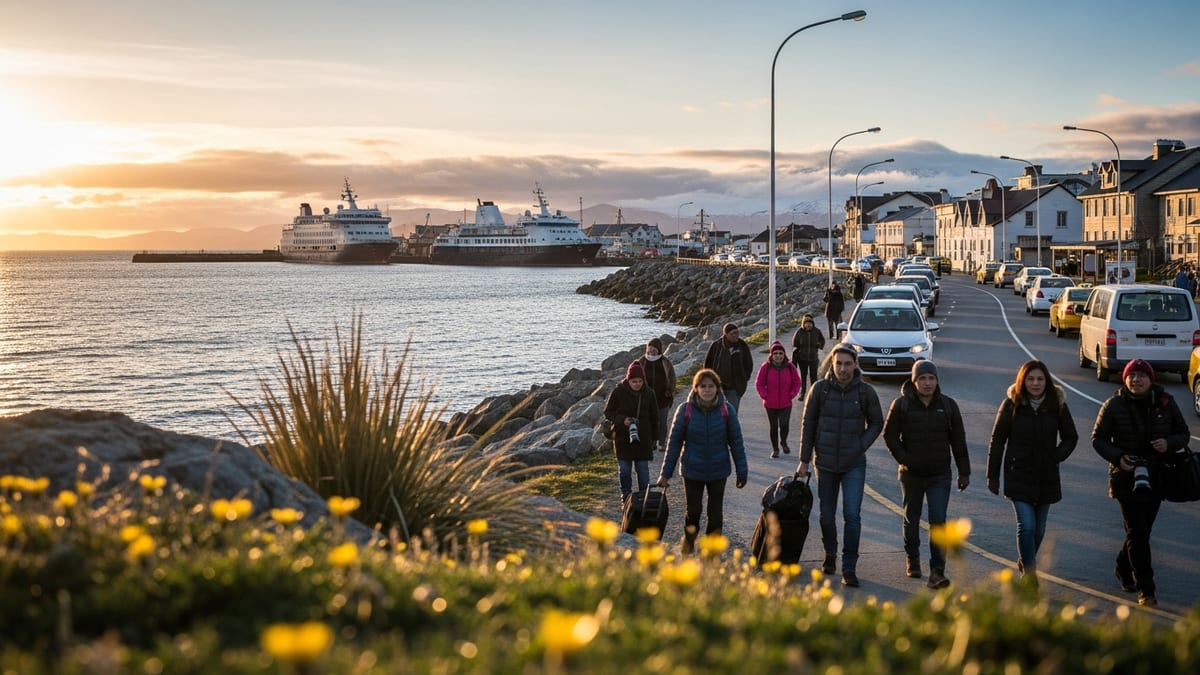
From Classic Icons to Curated Curiosity
For decades, Argentina’s tourism image has revolved around a familiar set of icons: Buenos Aires nightlife, Iguazú Falls, Patagonian glaciers and Mendoza vineyards. Today, a quieter transformation is reshaping that narrative, as planners and regional destinations experiment with routes that prioritize curiosity, immersion and a sense of journey over simple checklists of sights.
Publicly available tourism data for 2024 and 2025 shows international arrivals climbing back toward pre-pandemic levels, but with visitors staying longer and dispersing more widely across the country. Analysts interpret this shift as evidence that travelers are increasingly seeking experiences beyond the capital and traditional hubs, trading fly-in, fly-out trips for overland itineraries that link multiple regions.
This evolution is not just about attracting more people. Policy documents and industry briefings highlight a growing emphasis on “quality over quantity,” aiming to draw travelers who are willing to spend more time and money in local communities while treading lightly in fragile environments. That focus is directly shaping how Argentina designs its new generation of routes.
The result is a tourism map that looks less like a list of isolated hotspots and more like a web of story-driven corridors, where each bend in the road or change in landscape is treated as part of a larger narrative about nature, culture and identity.
La Ruta Natural: A Framework for Soul-Stirring Journeys
At the heart of this shift sits La Ruta Natural, a national nature-tourism program formalized in 2021 and now extended across the country. Official documentation describes it as a framework of 17 major circuits and dozens of scenic routes, designed to connect protected areas, small towns and remote landscapes through thematic itineraries focused on wildlife, astronomy, paleontology and outdoor adventure.
Online portals associated with La Ruta Natural group destinations by interest rather than by administrative boundary. Travelers can search routes built around birdwatching, stargazing, desert and high-Andean landscapes or urban nature escapes, then drill down into suggested drives, short circuits and multi-day crossings. The approach is explicitly meant to help visitors move from well-known icons into lesser-known places along the same corridor.
In northern Argentina, for instance, routes through Salta and Jujuy present a sequence of vivid contrasts: lush Yungas cloud forest, cactus-dotted valleys, high-altitude salt flats and puna plateaus linked by sinuous mountain roads. One highlighted scenic drive along National Route 51 climbs “a las nubes,” or toward the clouds, from green lowlands to stark, lunar-style terrain, treating the transformation of the landscape itself as the central experience.
In Patagonia, La Ruta Natural overlays classic self-drive dreams such as the Road of the Seven Lakes with new circuits connecting lake districts, steppe, glaciers and coastal wildlife sites. Background material emphasizes not only viewpoints and hikes, but also seasonal rhythms, from whale watching off the Atlantic to autumn colors in Andean forests, encouraging travelers to time their journeys for more intimate, less crowded encounters.
Wine, Rails and Story-Driven Themed Routes
Alongside these broad circuits, Argentina is testing more tightly focused, story-led routes aimed at niche interests. A recent example is the so-called “Wine Train” in the province of Jujuy, a tourism experience launched in 2026 that combines the Solar Train of the Quebrada with guided visits to some of the world’s highest vineyards. Promotional material frames the railway not just as transportation, but as a narrative thread stitching together pre-Hispanic history, Andean culture and cutting-edge high-altitude viticulture.
National tourism campaigns also highlight a family of traveler “types” mapped to curated itineraries. One publicly promoted concept invites visitors to identify as an adventurer, nature lover or wildlife observer and then match that persona to a route that might include mountain biking in Tilcara, scenic cycling along the Route of the Seven Lakes or wildlife-focused safaris in Patagonia and coastal reserves.
These themed offerings signal a broader move toward routes built around questions rather than monuments: how people live at nearly 4,000 meters above sea level, how glaciers are monitored in a warming climate, or how indigenous knowledge shapes land use in arid valleys. For the chronically curious, the journey becomes less about ticking off a list of landmarks and more about following a thread of inquiry across regions.
Tourism analysts note that such storytelling-heavy routes can also help spread visitors over time and space. By encouraging travelers to link famous locations with emerging stops and lesser-known villages, the routes channel economic benefits more evenly while easing pressure on marquee sites.
Slow Roads: Redefining Patagonia and the Northwest
If any single element captures this new approach, it is the reinvention of long-distance road travel. Argentina’s Ruta 40, which stretches from the Bolivian border to Tierra del Fuego, has long been a symbol of frontier road tripping. Today, it is increasingly presented as a modular backbone for slow itineraries, with segments that plug into La Ruta Natural circuits or themed drives through national parks and heritage landscapes.
Travel forums and recent trip reports describe visitors carving the route into manageable phases: a week dedicated to the desert hues and colonial towns of the northwest, another spent threading through Patagonian steppe and turquoise lakes, or a focused loop linking glaciers, cave art and small ranching communities. This incremental approach turns what was once an intimidating epic into a series of accessible, narrative-rich chapters.
In the northwest, roads climbing to high passes and salt flats are now framed as “experiential corridors,” where roadside viewpoints, community-run lodgings and archaeology sites are integrated into suggested circuits. Publicly available route guides advise on acclimatization, safe driving and responsible photography, underlining the shift toward slower, more mindful travel.
Further south, the combination of paved sections, gravel detours and ferry crossings across Patagonia is being reinterpreted as an advantage rather than an obstacle. The varied conditions encourage travelers to linger in gateway towns, time crossings with the weather and adjust plans according to local advice, reinforcing a sense that flexibility and open-ended curiosity are features, not bugs, of the Patagonian experience.
Balancing Curiosity With Conservation
As Argentina leans into routes that promise to “blow your mind” with dramatic scenery and layered stories, a parallel conversation is unfolding about the limits of growth. Global research on tourism’s environmental impacts, widely cited in policy circles, warns that increased visitation to sensitive ecosystems can accelerate biodiversity loss and strain local infrastructure if it is not carefully managed.
The design of La Ruta Natural and related programs reflects an attempt to anticipate those risks. Official texts emphasize that the circuits are meant to guide visitors toward already protected or managed areas, support local operators and disperse flows beyond a handful of overcrowded sites. Many route descriptions foreground simple low-impact practices, from sticking to marked trails and respecting wildlife viewing distances to favoring certified local guides.
Some analysts see these routes as test beds for a new social contract between hosts and visitors. Instead of marketing untouched wilderness as an infinite resource, the itineraries invite travelers to see themselves as temporary stewards, with curiosity and wonder balanced by responsibility. The most transformative experiences, planners suggest, may be those in which visitors leave with a deeper understanding of how landscapes and communities are adapting to climate and economic pressures.
For Argentina, the bet is that by tying its tourism future to soul-stirring, curiosity-driven routes rather than mass-market spectacle, it can attract a global audience that values meaning as much as scenery. The experiment is still unfolding, but the early contours point toward a redefinition of what it means to travel across one of South America’s most diverse countries.