


John F. Kennedy International Airport is one of the busiest gateways to the United States, and getting there efficiently can make or break the start of a trip. Whether you are coming from Midtown Manhattan, Brooklyn, Queens, or even New Jersey, you will usually choose between the AirTrain plus subway or Long Island Rail Road, an express bus, a yellow cab or rideshare, or driving yourself. This guide focuses on how to reach JFK in 2026 using real routes, typical travel times, and ballpark costs so you can pick the option that fits your budget, schedule, and comfort level.
Get the latest updates straight to your inbox!
Understanding JFK’s Layout and the Role of AirTrain
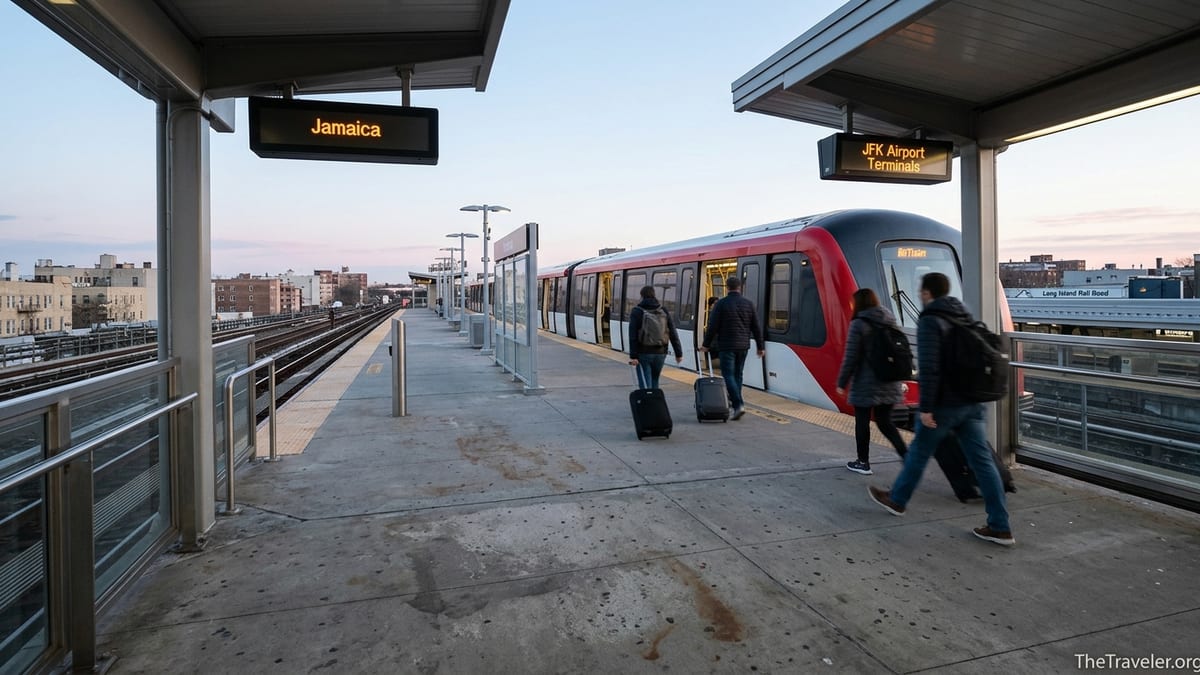
Before choosing how to get to JFK, it helps to understand how the airport is arranged. JFK sits in southeast Queens, about 15 to 18 miles from Midtown Manhattan depending on the route. The airport is spread across multiple passenger terminals linked by an elevated people mover called AirTrain JFK. You do not take the subway or railroad directly into the terminals. Instead, nearly every public option feeds into AirTrain at either Jamaica Station or Howard Beach Station, then AirTrain takes you the last few minutes to your terminal.
AirTrain is free when you ride it only within the airport, for example between terminals, parking lots, rental car centers, and the on-site TWA Hotel. You pay the AirTrain fare only when you enter or exit at the two “landside” stations at Jamaica and Howard Beach. As of mid 2026, the base AirTrain fare has recently increased and is now in the high single digits per ride, so the combined cost of AirTrain plus subway or Long Island Rail Road is still affordable but no longer ultra cheap.
Most travelers connect via Jamaica Station, where AirTrain links directly with the Long Island Rail Road and the E, J, and Z subway lines. This is usually the fastest route from Midtown Manhattan or western Queens. Howard Beach Station, to the southwest, connects with the A subway line and works well for many parts of Brooklyn and Lower Manhattan. When planning your trip, think of AirTrain as the unavoidable last leg for all rail and subway travelers, then choose the subway or LIRR route that gets you to the right connection point.
JFK is also in the middle of a multi-year redevelopment program, which means road layouts, parking areas, and pickup rules can fluctuate. If you will be driving, taking a taxi, or meeting a rideshare, it is worth checking for any construction advisories the week before you travel so you are not surprised by closed ramps or redirected traffic near certain terminals.
Reaching JFK by Subway and AirTrain
For budget-conscious travelers, the subway plus AirTrain is often the best combination of price and reliability. From most parts of Manhattan, you will either take the E train to Jamaica Center–Parsons/Archer and walk upstairs to the AirTrain at Jamaica Station, or take the A train to Howard Beach–JFK Airport and transfer there. Travel times vary by where you start, but many people reach JFK from Midtown in about 60 to 75 minutes including the AirTrain segment.
A typical Midtown example looks like this: from 42nd Street near Times Square, you can walk or take the 7 or shuttle train to 42nd Street–Port Authority and then transfer to the E train. Ride the E toward Queens to Sutphin Boulevard–Archer Avenue–JFK Airport, then follow the signs upstairs to the AirTrain entrance. Your subway fare is usually just under 3 dollars on a standard MetroCard or OMNY tap, and then you pay the separate AirTrain fare at the turnstiles to reach the platforms for the airport trains.
From Lower Manhattan, many travelers prefer the A train route. For example, from Fulton Street or Chambers Street you can take the A toward Far Rockaway or Rockaway Park and stay on until Howard Beach–JFK Airport. At Howard Beach, clear the turnstiles, pay the AirTrain fare, and follow the signs to the platform. The AirTrain ride from Howard Beach to the terminals typically takes about 10 minutes, similar to the run from Jamaica, with trains running frequently throughout the day and evening.
Subway plus AirTrain is rarely the absolute fastest option, but it is predictable and significantly cheaper than a cab. It works particularly well during weekday daytime hours when trains are frequent. Overnight or on weekends, planned maintenance may reroute or slow certain lines, so it is wise to leave extra time or check service alerts on the day of travel, especially if you are relying on a single subway route like the A through Brooklyn.
Using Long Island Rail Road for a Faster Rail Connection
Travelers who prioritize speed and comfort often use the Long Island Rail Road in combination with AirTrain from Jamaica Station. LIRR trains between Manhattan and Jamaica generally run faster than the subway and offer more comfortable seating, luggage racks on some cars, and clearer departure boards. During busy periods, LIRR can cut your overall travel time to JFK by 15 to 25 minutes compared with a subway-only route.
From Midtown, the most straightforward route is from New York Penn Station or Grand Central Madison. You board any LIRR train that stops at Jamaica, which is most of the trains serving Long Island destinations. The ride from Midtown to Jamaica usually takes around 20 minutes, more or less depending on whether the train is an express. Once at Jamaica, you follow the airport symbols to the AirTrain transfer area, pay the AirTrain fare at the gates, then ride the airport train to your terminal in about 10 minutes.
The cost for this faster ride is still reasonable for many travelers. A typical off-peak adult LIRR fare from Midtown to Jamaica sits in the low to mid teens in US dollars in 2026, with peak fares a bit higher. When you add the AirTrain charge, your total per person often lands somewhere in the high teens to low twenties. For a solo traveler with luggage, that can be excellent value for a roughly 40 to 50 minute total trip from Midtown to terminal, especially compared with a taxi stuck in traffic.
LIRR is also a strong option from parts of Brooklyn and Queens that have direct trains to Jamaica, such as from Atlantic Terminal in Downtown Brooklyn. For instance, a traveler staying near Brooklyn Heights can walk or take a quick subway ride to Atlantic Terminal, catch an LIRR train to Jamaica in about 15 minutes, then connect to AirTrain. While this is more expensive than staying on the subway all the way, many people find the combination of speed, comfort, and fewer stairs or crowded platforms worth the extra cost.
Express Buses and Local MTA Buses to JFK
Dedicated airport express buses between Manhattan and JFK have evolved over the past decade, and some of the older branded services that once served Grand Central and Port Authority have changed or ceased operations. As of 2026, many travelers now mix local or limited-stop MTA buses with the subway or AirTrain rather than relying on a single express coach from Midtown. There are also private shuttle operators that sell seats on scheduled vans or minibuses, but availability and reliability can vary, so it is important to read recent reviews before booking.
Within Queens, a popular low-cost option is the Q10 bus, which connects the Kew Gardens area to the Lefferts Boulevard AirTrain station near JFK. For example, a traveler staying in Forest Hills or Kew Gardens can board the Q10 at Kew Gardens–Union Turnpike subway station, ride the bus directly toward JFK, then transfer to the AirTrain at Lefferts Boulevard. The bus fare follows standard MTA pricing, and there is usually a free transfer between bus and subway or between bus lines if you use the same payment method within the allowed time.
From parts of Brooklyn, some people still prefer to take a subway line such as the C or J to a bus that feeds into AirTrain or directly to the airport’s outer roads, especially if they are trying to avoid multiple subway transfers with heavy luggage. That said, once you are relatively close to JFK, AirTrain remains the most straightforward way to actually reach the terminals, so most bus-based strategies end with an AirTrain connection rather than trying to navigate the airport’s internal road network by local bus alone.
For visitors deciding between bus and rail, the key trade-off is predictability. Buses are more exposed to surface traffic, particularly on routes that use major arteries like Queens Boulevard or Woodhaven Boulevard. During the weekday rush or on summer weekends, a 45-minute bus ride can easily become more than an hour. For that reason, many travelers use buses only for the first or last short leg of the journey, connecting to the subway or LIRR for the longer segments.
Taking a Yellow Taxi or Rideshare to JFK
New York’s iconic yellow taxis remain a popular choice for travelers heading to JFK who want a door-to-door ride without dealing with train transfers or hauling luggage up and down stairs. The city’s Taxi and Limousine Commission sets a flat fare for trips between Manhattan and JFK. As of early 2026, that flat rate is around 70 US dollars for trips between any point in Manhattan and JFK, not including tolls, the congestion surcharge for parts of Manhattan, and an optional tip for the driver.
In practical terms, a typical yellow cab ride from Midtown Manhattan to JFK on a weekday afternoon might end up close to 90 to 100 dollars once you include a bridge or tunnel toll and a standard tip of around 15 to 20 percent. The meter should show the appropriate JFK flat fare code rather than the normal per-mile metered rate. If you do not see the flat fare indicated on the meter after leaving Manhattan or the airport, you can politely ask the driver to confirm they have activated the JFK flat rate.
Rideshare services such as Uber and Lyft also serve JFK, offering both standard and higher-end car categories. Pricing varies with demand and time of day, but app quotes from Midtown to JFK often fall within a similar band to yellow cabs in normal traffic, sometimes slightly cheaper or more expensive depending on surge pricing. One advantage of rideshare for many travelers is the ability to see a fare estimate and route before you commit, and to input your exact terminal in the app so the driver knows precisely where to drop you.
Whether you choose a taxi or rideshare, traffic is the biggest wild card. When the Van Wyck Expressway and Belt Parkway flow smoothly, journeys from central Manhattan can take around 45 minutes. During peak rush hours or when there are lane closures related to airport construction, the same trip can easily stretch to 75 minutes or longer. If you are departing in the early morning or late at night, a taxi or rideshare can feel particularly convenient because you avoid waiting on platforms, though this convenience comes at a price premium compared with rail options.
Driving Yourself or Being Dropped Off by Car
Some travelers prefer to drive themselves to JFK, especially those coming from the suburbs of Long Island, Westchester, or New Jersey. Driving offers complete control over your schedule and a private space for your luggage, but you must budget for parking and be comfortable navigating busy expressways and potentially confusing airport signage. From central Queens or much of Brooklyn, many people still find a subway or LIRR connection less stressful than approaching JFK by car during rush hour.
The two main approaches to JFK from the rest of New York City remain the Van Wyck Expressway from the north and the Belt Parkway from the west. From Manhattan, a common route is to cross the East River via the Queens Midtown Tunnel or one of the bridges, follow signs to the Long Island Expressway and then the Van Wyck south to JFK. Drivers from Brooklyn often use the Belt Parkway eastbound, then follow the JFK exit ramps into the airport complex. En route, electronic signs frequently display estimated travel times to the terminals, which is helpful when choosing between competing ramps.
On arrival, you will see overhead signs for individual terminals and for parking areas labeled by proximity and duration. Daily and long-term parking rates at JFK are generally in line with other large US airports, sitting in the tens of dollars per day. Many off-airport parking lots nearby, such as those in Jamaica or along Rockaway Boulevard, offer slightly lower daily rates and shuttle buses to the terminals. For example, a traveler flying out for a one-week vacation might choose a private lot that runs 24-hour shuttles, park there for the week, and budget one or two extra hours in case of traffic or shuttle delays.
If you are being dropped off by a friend or family member, plan a clear meeting point and leave extra time. Construction may temporarily reroute traffic away from a terminal’s usual curb, or restrict access near certain departure halls. In those situations, your driver might need to follow signs to a temporary drop-off area or a short-term parking garage, and you may walk a short distance to reach check-in. Build that uncertainty into your schedule, particularly during busy travel peaks like Thanksgiving or major summer holiday weekends.
Choosing the Best Option for Your Budget and Schedule
No single way of getting to JFK works best for every traveler or every trip. The right choice depends heavily on your starting point, how much luggage you are carrying, your tolerance for crowds and stairs, and how much you are willing to pay to save time or avoid transfers. For solo travelers with light baggage starting in Midtown, the LIRR plus AirTrain combination often strikes a strong balance of speed, comfort, and price. For example, someone staying near Penn Station can be standing at their JFK terminal curb in under an hour door to door by taking a short walk to the station, a quick LIRR ride to Jamaica, and then AirTrain to the terminal.
If you are traveling with a family or group of three or four, the math changes. A yellow cab at the flat JFK rate or a rideshare booked in advance may cost more in total than individual train tickets, but divided among multiple people the per-person cost can be similar or even lower. In that case, the convenience of being picked up at your hotel with your entire group and dropped at your exact terminal might outweigh the time savings that rail sometimes offers, especially if you would otherwise need to navigate several subway transfers with strollers or heavy bags.
For travelers staying in Brooklyn or Queens neighborhoods not served directly by the E or A trains, a hybrid approach can work well. You might take a short rideshare or local bus to a major transit hub like Jamaica, Atlantic Terminal, or Howard Beach, then switch to AirTrain for the airport. This splits the difference between cost and convenience, keeping your cab or rideshare time relatively short while still avoiding the slowest parts of the subway network or the most congested highway segments.
Whatever you choose, the most important step is to work backward from your flight’s scheduled departure time. International flights from JFK often suggest arriving at the airport three hours before departure, while domestic US flights may recommend two hours. Add your estimated travel time plus a buffer of at least 30 to 45 minutes for delays in transit. During severe weather or holidays, adding a full extra hour is rarely a mistake. Thinking in terms of latest safe departure from your starting point, and then choosing the transportation mode that fits that window, will reduce stress more than any particular route choice.
FAQ
Q1. What is the cheapest way to get to JFK from Manhattan? The lowest-cost option for most people is the subway combined with AirTrain. For example, you can take the E train from Midtown to Jamaica or the A train from Lower Manhattan to Howard Beach, then transfer to AirTrain for the final leg into the terminals. The total cost is typically under 15 dollars per person, depending on the current AirTrain fare and any discounts on your subway payment method.
Q2. How long does it take to get to JFK from Midtown by train? From Midtown Manhattan, a typical journey using the E subway line to Jamaica plus AirTrain is around 60 to 75 minutes door to door. If you use the Long Island Rail Road instead of the subway, you can often cut that to about 45 to 60 minutes, assuming normal service and minimal waiting time between trains.
Q3. Is the Long Island Rail Road worth the extra cost? Many travelers find the LIRR worthwhile because it is faster and more comfortable than the subway, especially during peak commuting hours. With a roughly 20 minute ride from Penn Station or Grand Central Madison to Jamaica and a quick AirTrain connection, the time savings can be significant. If an extra 5 to 10 dollars compared with the subway fits your budget, it is often a good value.
Q4. How much does a yellow cab from Manhattan to JFK cost? As of 2026, yellow taxis have a flat fare in the 70 dollar range between Manhattan and JFK, not including tolls, congestion surcharges in parts of Manhattan, and an optional tip. In practice, most rides from Midtown end up around 90 to 100 dollars once those extras are included, depending on the route and how generous you are with tipping.
Q5. Are Uber and Lyft cheaper than taxis to JFK? Sometimes rideshare apps are slightly cheaper, and sometimes they are more expensive, depending on demand and time of day. During off-peak times you may see quotes similar to or a bit lower than the yellow taxi flat fare. During periods of high demand or bad weather, surge pricing can push rideshare costs beyond what you would pay in a cab. The advantage is that you see a fare estimate in the app before you commit.
Q6. Can I use a MetroCard or OMNY to pay for AirTrain? Payment systems at JFK have been evolving, and AirTrain fare collection has been adapting alongside the wider OMNY rollout on subways and buses. In practice, you can usually pay with a mix of contactless cards, mobile wallets, and ticket machines at Jamaica and Howard Beach. It is a good idea to arrive with a standard payment card that works on New York transit or allow a few extra minutes to buy a ticket at the station if you are unsure which method applies when you travel.
Q7. How early should I leave for JFK from Manhattan? For domestic flights, many airlines recommend arriving at JFK around two hours before departure, and for international flights about three hours. From Midtown, that means leaving about three to four hours before a domestic flight and four to five hours before an international one if you are using rail or a taxi, to account for transit time plus a healthy buffer for delays, security lines, and any check-in issues.
Q8. Is it safe to take the subway to JFK late at night? The New York City subway operates 24 hours, and many people do use it overnight to reach the AirTrain. As with any big city, it is wise to stay aware of your surroundings, keep valuables secure, and ride in populated cars. If you are traveling very late with large amounts of luggage or feel uncomfortable on public transit at night, you may prefer a taxi or rideshare despite the higher cost.
Q9. What if I am traveling with a lot of luggage or small children? In that situation, minimizing transfers and stairs becomes more important than shaving off a few dollars. A yellow cab or rideshare directly from your hotel or apartment to your terminal can be worth the extra money. If you still want to use rail, consider taking a short car ride to a major hub like Jamaica or Howard Beach, then switching to AirTrain, which is designed to handle luggage and has elevators and escalators.
Q10. Are there any direct trains from Manhattan into the JFK terminals? No, there are currently no direct subway or commuter rail services that run straight into the passenger terminals at JFK. All rail-based options require a transfer to AirTrain at Jamaica or Howard Beach. Any service or driver that claims to take you straight from Manhattan into the terminals without AirTrain is using road access rather than a direct rail line.