


More news on this day
Air travel across Asia and parts of the Middle East is facing another sharp bout of disruption, with operational data indicating that 432 flights have been canceled and a further 8,754 delayed in a single day, affecting major hubs from Bangkok and Manila to Istanbul and Amman and impacting carriers including China Southern, Saudia, Air China, IndiGo and several regional airlines.
Get the latest news straight to your inbox!
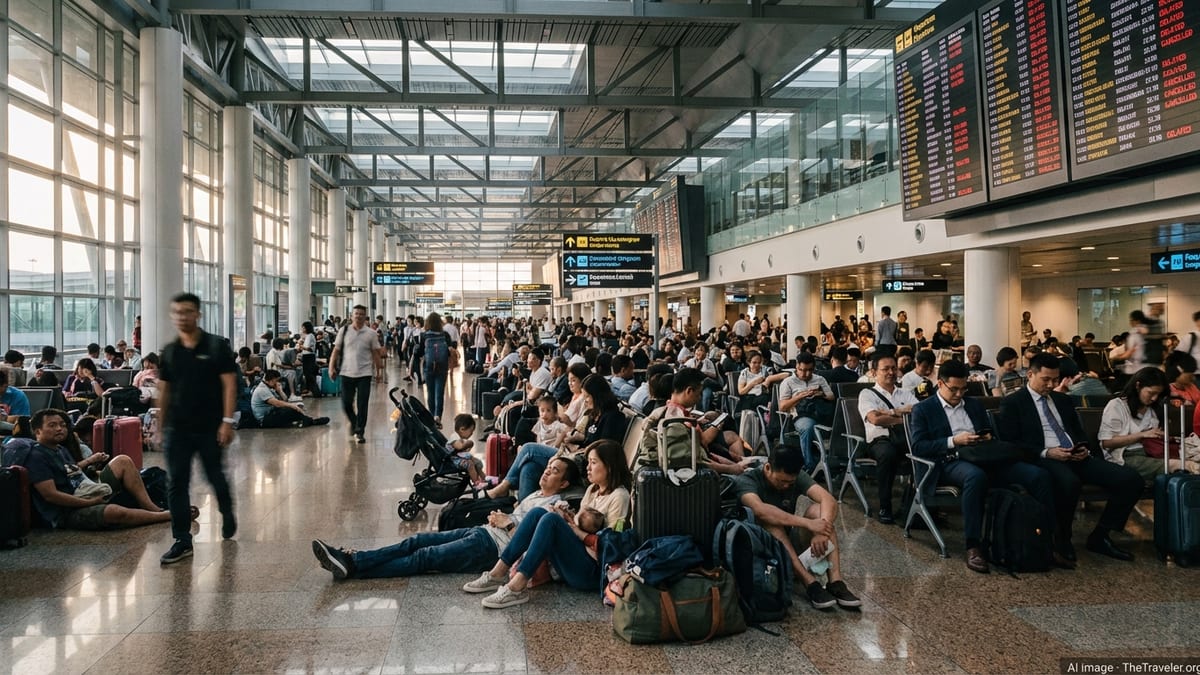
Widespread Cancellations From Southeast Asia to the Gulf
Publicly available aviation tracking data for early July 2026 shows flight operations under pressure across a broad swath of Asia, stretching from Thailand and the Philippines to Kuwait, Turkey and Jordan. Airports in Bangkok, Manila, Kuwait City, Istanbul and Amman are among the most affected, with schedules repeatedly reworked as airlines respond to weather, airspace limits and shifting demand patterns.
The latest disruption snapshot points to 432 outright cancellations alongside 8,754 delays, a volume that translates into tens of thousands of passengers experiencing missed connections and significantly extended travel times. While the figures fluctuate hour by hour, they underscore a pattern of persistent instability in regional operations rather than a short, isolated outage.
Regional reports indicate that reductions in scheduled flying at several carriers, which began earlier in the year in response to higher fuel prices and operational constraints, have coincided with day-of-travel cancellations and rolling delays. As a result, even airports not directly affected by severe weather or conflict-related restrictions are feeling knock-on effects when aircraft and crews fail to reach their next rotations on time.
Major Hubs From Bangkok to Manila Feel the Strain
Bangkok’s main international gateway has been a recurring flash point in recent disruption cycles, with daily data in recent weeks showing sizable numbers of delayed departures affecting both regional and long haul services. Thai-based carriers and foreign airlines alike have faced schedule pressures, particularly on routes linking Bangkok to Northeast Asia and the Middle East, where reroutings and extended flight times have reduced operational slack.
In the Philippines, Manila’s primary international airport continues to operate at high utilization, which leaves limited room to absorb irregular operations. Recent monitoring of performance in the capital shows a pattern of delays building through the day as early schedule slips ripple through domestic and international banks of flights. Passengers on low cost and full service carriers alike have reported longer waits at gates and tighter connection windows on regional links.
The congestion at these Southeast Asian hubs is feeding into wider network challenges. Delayed departures from Bangkok or Manila can cascade into late arrivals at secondary cities around the region, and the same aircraft often turn around to operate onward flights to destinations in South Asia or the Gulf, spreading the disruption beyond the original hotspot.
Middle East Transit Points and Conflict-Affected Corridors
In the Gulf, Kuwait has emerged as a particular point of vulnerability. Online advisories and passenger reports in recent weeks describe broad cuts to connecting itineraries through Kuwait City, with some travelers receiving notification that July transit services have been canceled or consolidated. These adjustments are taking place against a backdrop of elevated fuel costs and continued sensitivity around airspace near conflict zones.
Turkey and Jordan, key gateways linking Asia to Europe and North America, are also being drawn into the disruption map. Istanbul, one of the region’s busiest hubs, has experienced both weather-related delays and route changes tied to evolving overflight restrictions. Amman, served heavily by regional and European carriers, has seen a series of schedule changes on flights to and from Turkey and beyond, as airlines adjust routings around unstable areas and periodically trim frequencies.
The interaction between commercial decisions, safety-driven airspace closures and geopolitical uncertainty has created a complex operating environment for carriers transiting the Middle East. Even when airports remain fully open, extended routings and tighter fleet utilization leave less margin for recovering on-time performance after a disruption elsewhere in the network.
China Southern, Saudia, Air China, IndiGo and Others Adjust Networks
Published airline updates across the region indicate that several major carriers have been reshaping their schedules in parallel with the day-to-day disruption spike. In China, large state-backed operators such as China Southern and Air China have already been adjusting capacity on selected international routes this year, balancing demand with higher operating costs and airspace constraints. Those structural changes now intersect with the latest round of delays and cancellations, amplifying the visible impact on passengers.
In the Gulf, Saudia has been modifying service patterns on certain Middle East and Asian routes in response to airspace restrictions and changing traffic flows, contributing to a shifting mix of frequencies and departure times at key transit points. Travelers connecting through regional hubs have reported retimed services and, in some cases, rebookings onto alternative routings when original flights are withdrawn from the schedule.
India’s IndiGo, one of Asia’s largest low cost carriers, has separately announced temporary suspensions on several international routes between July and September 2026 as it responds to weaker seasonal demand, rising fuel prices and longer flight times linked to international airspace constraints. These planned network cuts, affecting destinations in Southeast Asia and East Asia, reduce overall capacity just as day-of-travel delays and cancellations strain the remaining schedule.
Other regional airlines, including low cost operators in Southeast Asia and full service carriers in Northeast Asia, are similarly tweaking frequencies and aircraft assignments. The combined effect is a patchwork of thinner schedules and reduced redundancy, which makes it harder to recover quickly when irregular operations occur.
Knock-On Effects for Travelers and What Passengers Can Do
For travelers, the numerical tally of 432 cancellations and 8,754 delays translates into practical challenges that begin well before reaching the airport. With airlines actively reshaping networks and same-day operations proving volatile, passengers are increasingly encouraged by travel advisories and consumer groups to monitor their flight status closely, use airline apps where available and allow extra time for connections, especially when transiting hubs like Bangkok, Manila, Istanbul, Kuwait City or Amman.
Consumer guidance published by passenger rights organizations highlights that options typically include rerouting on alternative services, accepting a later departure or seeking a refund when flights are canceled or subject to extended delays, depending on the jurisdiction and the ticket’s fare rules. In some countries, regulators require carriers to provide meals, accommodation or other assistance once a delay crosses certain thresholds, while in others, such support is largely at airline discretion.
Travel industry analysts note that the current wave of disruption is layered on top of several years of volatility involving pandemics, geopolitical tensions and sharp swings in fuel prices. As long as airlines across Asia and the Middle East continue to operate with limited slack in fleets and crews, even localized issues such as severe weather over one hub or a temporary airspace restriction along a popular corridor can quickly scale into region-wide knock-on effects.
For now, the operational picture suggests that travelers planning itineraries through Bangkok, Manila, Kuwait City, Istanbul and Amman in the coming weeks should treat schedules as subject to change, build flexibility into their plans where possible and remain prepared for further bursts of cancellations and delays as airlines, airports and regulators work within a constrained and often unpredictable operating environment.