


More news on this day
Hong Kong International Airport has introduced an expanded heat safety strategy designed to protect thousands of frontline workers as the city experiences longer, hotter summers and more frequent heat stress warnings.
Get the latest news straight to your inbox!
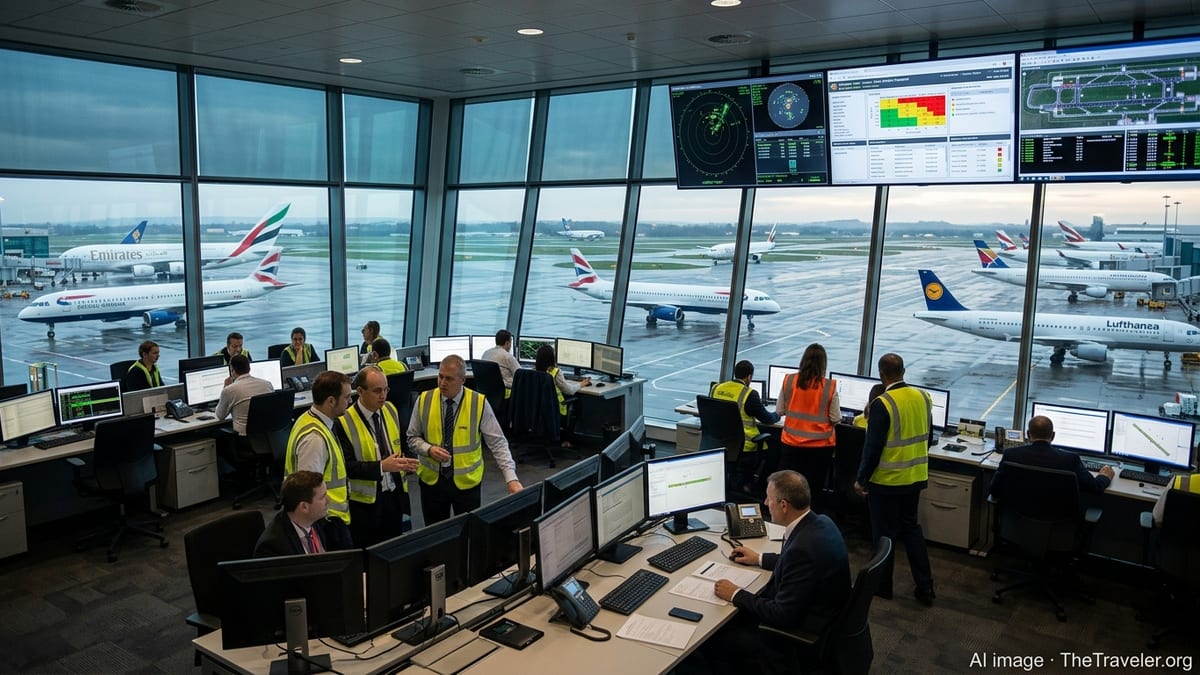
Airport Responds to Rising Heat Stress Risks
Publicly available climate data for Hong Kong indicates a steady rise in summer temperatures and an increasing number of very hot days in recent years. Extreme heat has become a significant operational and health challenge for major transport hubs, particularly for ground and apron staff working outdoors or in semi-enclosed areas.
Airport Authority Hong Kong has framed its latest measures as part of a broader response to climate-related physical risks, building on the citywide Guidance Notes on Prevention of Heat Stroke at Work and the Heat Stress at Work Warning system introduced by the Labour Department. The airport’s strategy is aimed at aligning on-site practices with these government frameworks while tailoring them to the demands of aircraft turnaround, baggage handling and airside logistics.
According to recent sustainability reporting and official occupational safety materials, priority is being placed on minimizing heat-related illness, maintaining safe staffing levels, and ensuring continuity of operations during periods of prolonged high temperature or combined heat and humidity.
The airport’s approach reflects a wider trend in Asia-Pacific aviation, where operators are increasingly treating heat stress as a core safety and resilience issue rather than a seasonal concern.
Cooling Infrastructure and Shaded Rest Facilities Expanded
One of the central elements of the enhanced strategy is the expansion and reconfiguration of cooling and rest facilities for staff working outdoors. Existing shaded shelters on the apron and near remote stands are being supplemented with additional covered areas so ground crews have shorter walking distances to reach respite points between tasks.
Public documentation from Airport Authority Hong Kong shows that cool potable water is being made widely available through fixed dispensers and roving water trucks positioned near work sites. These units are intended to serve ramp handlers, maintenance teams, cargo workers and other staff who may be exposed to direct sun or radiated heat from pavement and aircraft surfaces.
Air-conditioned rest rooms and staff centres within and around the terminal precinct are also being incorporated into updated work-rest scheduling. During periods of extreme heat, teams can be rotated more frequently into these cool spaces, enabling core operations to continue while limiting accumulated exposure.
These infrastructure changes build on earlier experiments with shaded kiosks and cooling points across Hong Kong’s higher-risk outdoor workplaces, now adapted to the specific layout and traffic flows of the airport environment.
Protective Gear, Work-Rest Cycles and Health Monitoring
A second pillar of the airport’s strategy concerns personal protection and work organisation. Guidance referenced in airport sustainability and safety documents highlights recommendations for light-coloured, loose-fitting uniforms, wide-brimmed hats or safety helmets with neck covers, and the optional use of cooling sleeves and vests for high-exposure roles.
In line with the Labour Department’s risk-based approach, supervisors are being encouraged to adjust shift arrangements and task allocation according to time of day, location and prevailing heat stress indices. This can include shortening continuous outdoor assignments, increasing the frequency of breaks, and scheduling the most physically demanding tasks for cooler hours where possible.
Pre-shift health checks and ongoing monitoring of workers who may be more vulnerable to heat are also becoming more prominent. Corporate climate risk disclosures from aviation operators in Hong Kong indicate growing attention to baseline fitness assessments before peak summer, with the goal of identifying staff who require modified duties when temperatures spike.
The combination of modified uniforms, structured rest cycles and targeted health monitoring is intended to reduce both acute incidents such as heat exhaustion and longer-term productivity losses associated with chronic heat exposure.
Digital Alerts and Data-Driven Heat Risk Management
The upgraded heat safety approach at Hong Kong International Airport is closely tied to new forms of digital monitoring and warning. Citywide, the Heat Stress at Work Warning system is now linked to the Hong Kong Observatory’s extremely hot weather alerts, creating a clearer signal for employers when risk levels increase.
At the airport, operations planners are integrating these official warnings with on-site temperature, humidity and solar radiation readings around apron and landside areas. Publicly available materials from occupational safety bodies in Hong Kong point to the growing use of Wet Bulb Globe Temperature indicators to capture combined heat load, rather than relying only on air temperature.
When thresholds are reached, the airport can trigger stepped responses such as activating additional rest centres, deploying water trucks to new locations, and implementing more conservative work-rest regimes. This tiered, data-driven model is intended to provide predictable rules for supervisors and contractors, reducing ambiguity about when extra precautions are required.
Digital communication tools, including internal messaging platforms and mobile notifications, are being used to circulate heat alerts, guidance reminders and updates on the status of rest areas, helping to keep frontline staff informed as conditions change through the day.
Training, Awareness and Industry Implications
Training and awareness campaigns form the final cornerstone of Hong Kong International Airport’s reinforced heat safety strategy. Materials from the Occupational Safety and Health Council show an expanding calendar of seminars, online briefings and sector-specific workshops focused on preventing heat stroke at work, with aviation and logistics among the targeted audiences.
Airport staff are being equipped to recognise early signs of heat-related illness, understand the importance of hydration, and follow internal protocols on reporting symptoms or requesting assistance. Training modules are aligned with the government’s updated guidance notes and draw on case studies from across Hong Kong’s outdoor workplaces.
For airlines, ground handling agents and other companies operating at the airport, the heightened focus on heat safety is reshaping contract expectations and operational planning. Recent sustainability disclosures from carriers based in Hong Kong highlight closer collaboration with the airport authority on worker shelters, heat exposure monitoring and use of personal cooling equipment for ramp staff.
As climate projections point to further increases in the frequency and intensity of extreme heat, Hong Kong International Airport’s evolving strategy is likely to serve as a reference point for other major hubs in subtropical regions. Its mix of physical infrastructure upgrades, personal protection measures, data-led risk management and staff training illustrates how airports can embed heat safety into day-to-day operations while maintaining passenger throughput and reliability.