


More news on this day
More than 100 flights across Asia were reported cancelled in recent days, disrupting travel plans for hundreds of passengers at major hubs including Yangon, Manila, Mactan-Cebu and Jakarta’s Soekarno Hatta, with services operated by Garuda Indonesia, Batik Air, IndiGo, Cebu Pacific and other carriers among those affected.
Get the latest news straight to your inbox!
Where Disruptions Are Hitting Travelers
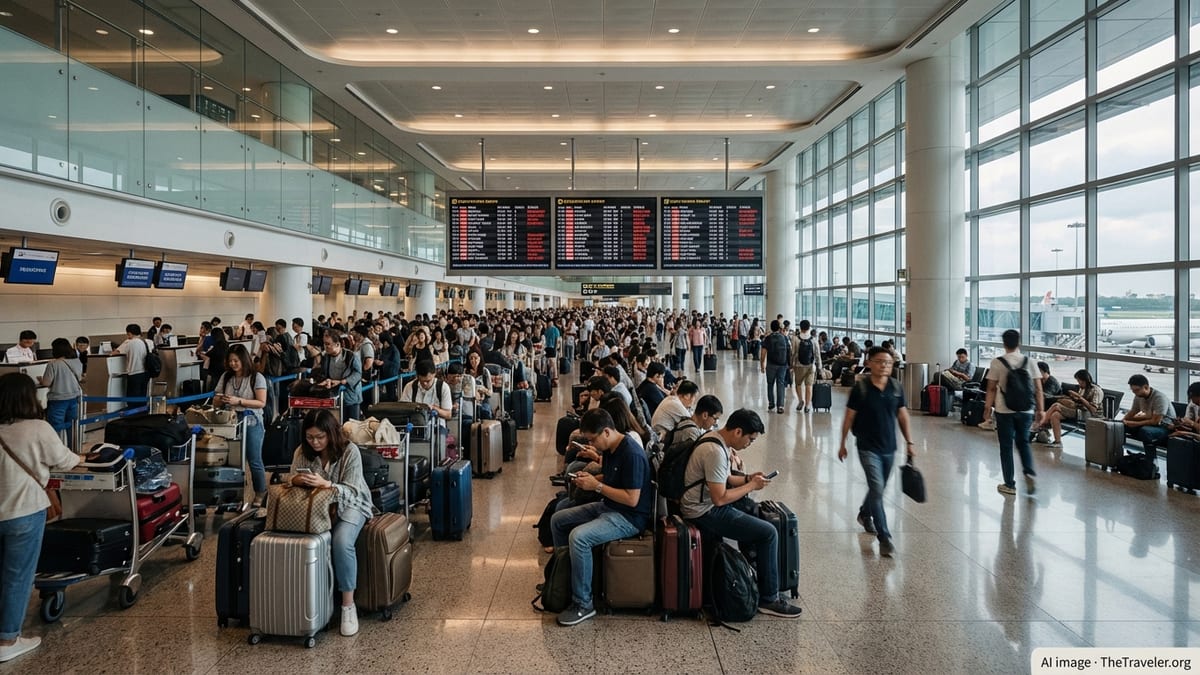
Published coverage and live tracking data point to concentrated disruption at several key airports in Southeast and South Asia. Yangon International in Myanmar, Manila’s Ninoy Aquino International and Mactan-Cebu International in the Philippines, and Jakarta’s Soekarno Hatta in Indonesia have all seen clusters of cancellations and delays, alongside smaller pockets of disruption at secondary airports in the region.
While each airport is experiencing its own mix of operational issues, passengers have reported being stranded overnight or facing prolonged waits for rebooking at Manila and Cebu in particular, where low cost and full service carriers share already busy terminals. Travelers transiting through these hubs have been especially vulnerable as missed connections ripple through multi sector itineraries.
At Jakarta’s Soekarno Hatta, where Garuda Indonesia and Batik Air both operate significant networks, cancellations have resulted in knock on effects for domestic links to Indonesian islands as well as regional flights. In Yangon and other smaller gateways, a single cancellation on a route served only a few times per week can leave travelers without same day alternatives.
Airlines Most Affected So Far
Among the carriers with disrupted services are Indonesia’s flag carrier Garuda Indonesia, full service and hybrid operator Batik Air, India based IndiGo and Philippines based low cost carrier Cebu Pacific. Other regional and international airlines have also adjusted or cancelled flights on selected routes.
Garuda Indonesia and Batik Air, both linked to major operations at Soekarno Hatta, have trimmed frequencies and cancelled a number of regional and domestic services as schedules are recalibrated. Publicly available performance data shows that Garuda typically maintains relatively strong on time metrics for the region, but the current pattern of cancellations underlines how even established carriers can be affected when conditions tighten.
Cebu Pacific, which operates dense domestic networks from Manila and Mactan-Cebu alongside international routes, has been managing rolling schedule changes since earlier network adjustments tied to broader geopolitical and cost pressures. Reports from affected passengers indicate that some flights have been cancelled on short notice, with alternative departures offered on later dates or different routings where seats are available.
IndiGo, one of Asia’s largest low cost airlines, has also been listed among carriers cancelling or consolidating flights across its network. Given the airline’s scale, even a modest percentage of cancellations can translate into a meaningful number of affected passengers across multiple airports.
Why Over 100 Flights Are Being Cancelled
There is no single cause driving the latest wave of cancellations. Instead, a combination of factors appears to be converging across markets, including aircraft availability constraints, ongoing crew scheduling challenges, airspace restrictions linked to geopolitical tensions, and volatile fuel and operating costs that have prompted airlines to prune weaker routes and frequencies.
In parts of Southeast Asia, airlines are still fine tuning post pandemic capacity, balancing strong leisure demand with narrower margins on some international sectors. When bookings fall short of expectations on certain days or routes, carriers may consolidate flights, leaving some services cancelled while accommodating passengers on remaining departures.
Weather related disruption, while not the primary driver in most reports, can compound these structural issues. When storms or reduced visibility affect a hub like Manila or Jakarta, aircraft and crews can end up out of position, forcing same day cancellations that then impact flights departing from secondary airports such as Cebu or Yangon.
Regulatory and safety requirements also play a role, particularly where duty time limits for crew intersect with delays from earlier in the day. In these cases, airlines may have no option but to cancel or significantly reschedule services to remain compliant.
What Stranded Passengers Can Do Now
Travelers whose flights are cancelled at short notice are being offered a mix of options, typically including rebooking on the next available flight on the same route, rerouting through an alternative hub, or receiving a refund or travel credit. The exact choices depend on the operating carrier and the country where the ticket was sold, as local consumer protection rules can influence available remedies.
Passenger reports from Manila, Cebu, Yangon and Jakarta suggest that online and app based self service tools are often faster than airport counters, which can become congested soon after large scale cancellations are announced. Where systems allow, affected travelers are using manage booking functions to move to later dates or different flight times without additional fees.
Those connecting onward on separate tickets, such as low cost domestic sectors feeding into international long haul flights, face added complexity. In these cases, downstream flights are usually not automatically protected, and travelers may need to coordinate with multiple airlines to adjust their plans. Travel insurance policies that include trip interruption benefits can help offset extra accommodation or rebooking costs, but coverage varies and often requires documentation of the original cancellation.
Across the region, consumer advocates generally advise passengers to retain boarding passes, booking confirmations and any written notices of cancellation, as these can be important when seeking refunds, compensation where applicable, or reimbursement from insurers.
How to Reduce Risk on Upcoming Asia Flights
For travelers with upcoming trips through Yangon, Manila, Mactan-Cebu, Jakarta or other busy Asian hubs, planning ahead can help reduce exposure to last minute disruption. Booking longer connection times, especially when changing airlines or terminals, creates more buffer if an inbound flight is delayed or rescheduled.
Where possible, travelers may wish to favor single ticket itineraries on one carrier or within one alliance, as these are more likely to include built in protection for missed connections. Checking flight status frequently in the 24 hours before departure, via airline apps or airport information feeds, can provide early warning of potential changes.
Some passengers are also adjusting their travel patterns by choosing early morning departures, which tend to be less affected by the knock on delays that accumulate later in the day. Avoiding the final flight of the day on critical legs can also provide more fallback options if a cancellation occurs.
Ultimately, the current wave of cancellations across Asian airports underlines how fragile airline schedules can be when multiple pressures align. While airlines continue to refine their networks and restore resilience, travelers passing through hubs such as Yangon, Manila, Cebu and Jakarta may need to build more flexibility into their plans and be prepared for rapid changes on the day of travel.