


Whiteoak Canyon is one of Shenandoah National Park’s classic waterfall hikes, a steep mountain gorge laced with cascades and cold swimming holes just below Skyline Drive. It is spectacular, but it is not a casual stroll. Between the rocky footing, elevation gain, shifting weather and often packed parking lots, this is a hike that rewards anyone who shows up prepared. Here is everything you need to know before tackling Whiteoak Canyon, whether you are planning a short family outing to the first falls or a full-day loop linked with Cedar Run.
Get the latest updates straight to your inbox!
Where Whiteoak Canyon Is and Why It Is So Popular
Whiteoak Canyon sits on the eastern slope of Shenandoah National Park in Virginia’s Blue Ridge Mountains. The main upper trailhead is on Skyline Drive around milepost 42.6, while a lower trailhead lies outside the park boundary near Syria, Virginia. The canyon itself cuts sharply down from the Blue Ridge crest into private valley land, which is why hikers can start either high from Skyline Drive or low from Weakley Hollow Road near the Old Rag area.
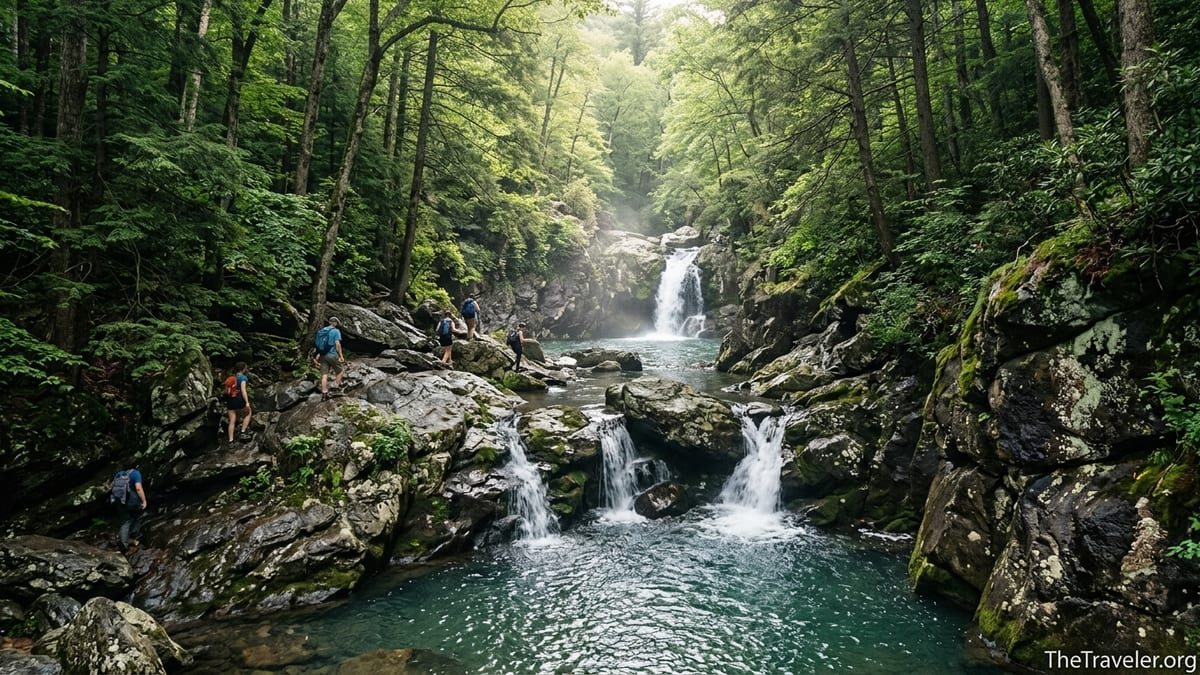
The draw is a chain of six major waterfalls dropping through a tight, boulder-filled gorge, with countless smaller cascades and pools in between. The tallest, often referred to as Upper Whiteoak Falls, is roughly 80 to 90 feet high and framed by dark rock slabs. In late spring the rhododendron and mountain laurel bloom along the trail, while in October the canyon glows with maple and oak foliage. On hot July weekends, you will see families and college groups cooling off in clear, chest-deep pools at the base of the lower falls.
Whiteoak Canyon also appeals because it scales to different abilities. A family with school-age kids might walk just a mile or so from the lower boundary parking lot to the first small falls and a shallow pool, then turn around. More experienced hikers will continue up to visit several waterfalls in one go, or link Whiteoak Canyon with Cedar Run on an 8 mile loop that gains more than 2,000 feet. The same drainage is also used for overnight backcountry trips that connect to Nicholson Hollow and, for very strong hikers, routes that include Old Rag on multi-day itineraries.
All of this puts Whiteoak Canyon among the park’s busiest trails in warm months. On a clear Saturday in June, it can feel as popular as high-profile hikes like Old Rag or Dark Hollow Falls, particularly around the lower swimming holes. That popularity is part of the experience, but it also makes advance planning essential for parking, timing and safety.
Understanding the Main Routes and Difficulty
The classic Whiteoak Canyon options fall into three broad categories: a short out and back from the lower boundary trailhead, a moderate waterfall hike from the upper Skyline Drive trailhead, and a strenuous full loop that combines Whiteoak Canyon with Cedar Run. Each version has different challenges.
From the lower trailhead near Syria, many visitors hike upstream along the blue blazed Whiteoak Canyon Trail for 2 to 3 miles round trip. The trail follows the Robinson River and then the canyon stream, crossing sturdy footbridges and passing a series of small cascades. This lower segment has some rocky steps and roots but is manageable for most reasonably fit adults and older children. It is a good choice if you have a half day, want access to deeper pools, and do not mind some steady uphill walking.
Starting from the upper trailhead on Skyline Drive at milepost 42.6, hikers descend into the canyon toward the upper tiers of falls. Reaching one of the major waterfalls usually means a 4 to 5 mile round trip with roughly 1,000 feet of elevation loss and gain. The path can be steep and slippery after rain, with rock steps, small stream crossings and narrow sections above the gorge. Many guidebooks list this as a moderate hike, but for visitors unused to mountain trails it can feel strenuous, particularly on the climb back out to Skyline Drive.
The most demanding option is the Whiteoak Canyon Cedar Run loop. Typically done as a full-day, 7.5 to 8.5 mile circuit, it descends one drainage and climbs the other, with around 2,200 feet of cumulative elevation change. Strong hikers often start at the lower boundary trailhead, climb Whiteoak Canyon past multiple waterfalls to Skyline Drive, cross over, pick up the Cedar Run Trail, and descend that rocky stream back to the valley. Cedar Run includes rougher footing, steeper rock steps and some scramble-like sections. If you are used to 10 mile mountain hikes, this will be a solid but reasonable day. If your normal walks are on flat bike paths, the loop will likely feel very tough.
Permits, Fees, Parking and When to Go
Unlike the nearby Old Rag day use area, Whiteoak Canyon itself does not currently require a separate day hiking permit, but you still need to cover Shenandoah’s entrance fee when you access the trail. As of 2026, that entrance fee is typically collected as a per-vehicle pass that is valid for multiple days. Many frequent visitors buy an annual pass, or use an America the Beautiful interagency pass, which is accepted at the entrance stations and at small ranger stations near boundary trailheads.
Parking is one of the most practical challenges at Whiteoak Canyon. The upper lot on Skyline Drive near milepost 42.6 is relatively small and fills quickly on fair-weather weekends between late April and October. Drivers who arrive after mid-morning often find it full and must choose another hike or loop around and wait for spaces to open. The lower boundary parking near Syria is larger but also reaches capacity on summer Saturdays, especially when the weather is hot and local visitors flock to the swimming holes. In recent years, construction and maintenance projects have occasionally closed or reduced capacity at the lower lot, so it is wise to check the park’s current alerts page the week of your trip.
From a seasonal perspective, late April through early June and mid-September through late October are often ideal times for the hike. In spring, the waterfalls surge with snowmelt and seasonal rains, and daytime highs along the canyon are usually in the 60s or low 70s Fahrenheit. In fall, water levels are often moderate but the hardwood forest around the gorge turns brilliant shades of red, orange and gold, which photographers love. July and August bring warm water and prime swimming, but also high humidity, afternoon thunderstorms and biting insects.
To maximize your chances of a good experience, aim to start at or before 8:00 a.m. on peak-season weekends, particularly if you are driving up Skyline Drive from the Washington, D.C. area. On a Saturday in June or October, many local hikers leave the suburbs between 5:30 and 6:30 a.m. to reach the trailhead before the lots fill. If you can hike midweek, the difference is noticeable: on a Tuesday in May you may share the trail mostly with a handful of other parties instead of steady crowds.
Trail Conditions, Gear and How to Prepare
Whiteoak Canyon is a true mountain gorge, and the trail’s condition reflects that. The path is a mix of packed dirt, rocks, stone steps and short stretches of exposed bedrock. In dry weather, this is simply rugged. After a recent rain, wet leaves and moss can make some of those rocks slick. In winter or early spring, ice can form in shaded sections near the water, which is why many local hikers carry traction devices when they visit in January or February.
Footwear is one of the simplest ways to set yourself up for a pleasant day. Trail runners or light hiking boots with good tread are recommended. Visitors who attempt the hike in flat-soled casual sneakers or old running shoes often find the descent punishing on their toes and the climb back out tiring. On the Cedar Run side, where the path is steeper and more eroded, sturdy shoes make an even bigger difference. Trekking poles help with balance on rock steps and reduce knee strain on the way down.
Water and food planning matter more than many first-time visitors expect. On warm days, aim to carry at least 2 liters of water per person for a half-day outing, and 3 liters or more for the full Whiteoak Canyon Cedar Run loop. There is plenty of stream water along the route, but it must be treated or filtered before drinking, so a compact filter bottle or pump is a useful backup. Simple trail snacks like nuts, jerky and energy bars go a long way; many hikers stop at a flat rock above one of the mid-canyon falls for a longer lunch break.
Finally, even though the trail is well marked with blue blazes, a paper map or downloaded offline map on your phone provides peace of mind. Service from major carriers can be patchy in the gorge. Smart local hikers download a park-approved map or reputable hiking app map in advance, set their device to airplane mode to conserve battery, and keep a small emergency kit with a headlamp, bandages, blister treatment and a light rain jacket. This level of preparation may feel like overkill for a 5 mile hike, but every year rangers respond to calls from hikers caught by darkness, sudden storms or minor injuries in the canyon.
Waterfalls, Swimming Holes and Safety Considerations
Most people come to Whiteoak Canyon for the water features, and they are right to be excited. The canyon’s six main waterfalls vary in height and character, from wide, sliding slabs to narrow chutes that plunge into deep pools. Between these are smaller ledges where water fans over rock, and quiet stretches where the stream meanders through boulders and cobbles. On a typical summer weekend you will see children splashing in ankle-deep side pools, adults soaking in knee-deep current, and braver visitors briefly plunging into colder, chest-deep basins.
That beauty comes with risks. The National Park Service regularly warns that rocks around waterfalls are extremely slippery, and that several serious injuries and occasional fatalities in Shenandoah involve people leaving the trail near falls or attempting to climb wet rock. At Whiteoak Canyon this can mean someone stepping off the established path to get closer to the lip of a cascade, slipping and falling onto boulders below. Treat every wet rock as slick, stay behind any posted safety signs or railings, and resist the temptation to approach the edge for a photo.
Swimming itself is not prohibited in Whiteoak Canyon, but it is entirely at your own risk, and conditions can change quickly. Early in the season, water can be frigid, and even strong swimmers may experience cold shock when they first immerse. After heavy rain, currents and water levels rise, and the seemingly gentle pools can develop stronger undertows or flows. Locals often check recent rainfall totals and stream conditions before deciding to swim, and many limit themselves to calmer side pools during high water. Families with young children often bring life vests or floatation for kids, then assign an adult to stay within arm’s reach at all times.
Another factor is crowd behavior. On busy weekends, some pools attract a party-like atmosphere, with groups spread out on flat sun-warmed rocks. Noise and roughhousing can distract from footing and situational awareness. If you arrive at a crowded pool that does not fit the experience you want, consider walking a bit farther upstream or downstream to find a quieter spot. Whatever your choice, pack out all trash and keep glass containers away from the water, since broken glass is a recurring problem for rangers and volunteers who manage popular swimming areas.
Connecting Whiteoak Canyon to Longer Adventures
Whiteoak Canyon can easily fill a morning or afternoon on its own, but its location in the park also makes it a natural building block for longer days. The best known extension is the loop that includes Cedar Run, which roughly doubles the number of waterfalls you see and provides a different type of terrain. Cedar Run is steeper, narrower and more rugged, with sections where the trail hugs the stream’s edge and scrambles around rock outcrops.
Strong hikers sometimes broaden the loop even further, linking Whiteoak Canyon with Nicholson Hollow or with routes that pass near Old Rag. For example, an experienced backpacker might start from the lower Whiteoak boundary lot, climb the canyon to Skyline Drive, traverse a section of the ridge, then drop via a different drainage to camp in a backcountry site along Nicholson Hollow. The next day they might loop back using fire roads and side trails. These itineraries typically total 15 to 25 miles over two or three days and require backcountry camping registration and careful map study.
Even without overnight plans, you can turn Whiteoak Canyon into a full scenic day by pairing the hike with short stops nearby. Some visitors park at the upper trailhead in the morning, hike to one or two of the upper falls, then drive a short distance north on Skyline Drive for lunch at a lodge or wayside, followed by a sunset stop at a roadside overlook. Others base in the valley and, after a half day in the canyon, drive a few minutes to a farm market or small restaurant in the Madison or Luray areas for a casual post-hike meal.
Whatever your ambitions, be realistic about your group’s fitness and pace. A team of trail runners might complete the full Whiteoak Canyon Cedar Run loop in four to five hours, moving quickly and taking brief breaks at a few falls. A family of four with grade-school children might need eight hours to cover the same ground with long swim stops, snack breaks and photo pauses. Building in extra time cushions you against slower sections and makes room for weather shifts such as afternoon thunderstorms in summer.
Wildlife, Weather and Leave No Trace
On any trip to Whiteoak Canyon you are sharing the gorge with wildlife. White tailed deer commonly browse along the trail edges, and black bears use the forested slopes above the canyon as part of their home range. Bear sightings are not unusual in Shenandoah, but aggressive encounters are rare when visitors store food properly and keep a respectful distance. If you see a bear near the trail, give it space, make your presence known with calm speech, and wait for it to move away before passing.
Smaller residents include salamanders that thrive in the canyon’s cool, moist microclimate, along with a variety of birds such as warblers, thrushes and hawks soaring above the treeline. Children often delight in spotting bright orange newts on damp spring days. To protect these species, teach younger hikers to admire wildlife without touching or chasing it, and to stay on established paths rather than cutting new side trails to the water.
Weather can change quickly in the Blue Ridge, and the canyon can amplify those shifts. On a warm August afternoon, thundershowers often build along the crest and sweep through the gorge with gusty winds and heavy rain, which can temporarily raise water levels and reduce visibility on the trail. In shoulder seasons, temperatures at the upper trailhead along Skyline Drive may be 10 degrees Fahrenheit cooler than in the valley, so carry an extra layer even if the lower parking area feels mild. In winter, the canyon can trap cold air and hold snow or ice longer than more exposed slopes.
Practicing Leave No Trace principles makes a visible difference at Whiteoak Canyon. Pack out every scrap of trash, including food wrappers and fruit peels. Use restrooms at trailheads before starting, since steep, rocky terrain and proximity to water make it hard to find appropriate bathroom spots along the way. If you must go in the backcountry, move well away from water sources and follow current park guidelines. Finally, resist carving initials into trees or rocks near popular pools. Rangers and volunteers spend countless hours rehabilitating such damage so that future visitors can experience a more natural landscape.
The Takeaway
Whiteoak Canyon is one of Shenandoah National Park’s most rewarding hikes, combining a dramatic gorge, multiple waterfalls and refreshing pools within reach of both Skyline Drive and the valley. It is also a real mountain environment that demands respect. Understanding the route options, being honest about your group’s ability, and taking simple steps such as arriving early, carrying adequate water and wearing grippy footwear can turn a potentially stressful outing into a memorable day.
Think of the canyon not just as a checklist destination, but as a place to move slowly. Pause at quieter cascades instead of crowding into the busiest pools, listen for thrushes in the hemlocks, and notice how light changes as the sun angles into the gorge. Whether you are making a quick visit to one waterfall or spending a full day linking Whiteoak Canyon with Cedar Run, informed preparation will help you leave with tired legs, a camera full of photos, and a deeper appreciation for this carved slice of the Blue Ridge.
FAQ
Q1. How long is the Whiteoak Canyon hike?
The distance depends on your route. A shorter outing to the first falls from either trailhead can be around 3 miles round trip, while the full Whiteoak Canyon Cedar Run loop can approach 8 miles with significant elevation gain.
Q2. Do I need a special permit to hike Whiteoak Canyon?
You do not currently need a separate day use permit just for Whiteoak Canyon, but you must pay the standard Shenandoah National Park entrance fee or use a valid park pass for access.
Q3. Is Whiteoak Canyon suitable for children?
Many families hike lower sections of the trail with school age children, especially to the first waterfall and nearby pools. Very young kids or those not used to uneven terrain may find the steeper, rockier parts challenging, so adjust your plans to your group’s comfort level.
Q4. Can I bring my dog on the Whiteoak Canyon trail?
Shenandoah generally allows pets on most trails, and dogs are commonly seen on Whiteoak Canyon, but they must be leashed and under control. Check the latest park rules before your visit and consider your dog’s ability to handle steep, rocky ground and stream crossings.
Q5. When is the best time of year to hike Whiteoak Canyon?
Spring and fall are often ideal, with strong waterfalls and milder temperatures in April and May, and colorful foliage in late September and October. Summer brings warm swimming conditions but also heat, humidity, insects and larger crowds.
Q6. Is swimming allowed in the waterfalls and pools?
Swimming is not formally developed but is generally allowed at your own risk in many pools along the canyon. Conditions can be cold, currents can be stronger after rain, and rocks are slippery, so use caution and always put safety ahead of getting into the water.
Q7. What gear should I bring for a day on the trail?
Sturdy hiking shoes with good grip, at least 2 to 3 liters of water per person, snacks, a light rain jacket, sun protection and a small first aid kit are sensible basics. Trekking poles and a downloaded map or paper map add extra safety, especially if you plan to complete the full loop.
Q8. How crowded does Whiteoak Canyon get?
On sunny weekends from late spring through fall, both the upper Skyline Drive lot and lower boundary parking can fill by mid-morning, and popular pools may feel busy. Starting early, hiking on weekdays, or visiting in shoulder seasons reduces crowding significantly.
Q9. Are there restrooms or services at the trailheads?
Basic restroom facilities are typically available at or near the main trailheads, but services are limited once you start hiking. Plan to use the restroom before you begin, carry all the water and food you need, and pack out your trash.
Q10. Can I combine Whiteoak Canyon with other nearby hikes?
Yes, experienced hikers often link Whiteoak Canyon with Cedar Run for a strenuous loop, or incorporate it into longer backcountry itineraries that connect to Nicholson Hollow. With careful planning, you can also pair a half day in the canyon with shorter scenic stops along Skyline Drive.