


More news on this day
American Airlines flight attendants are mounting a fresh challenge to the carrier’s computer-based training program, arguing that a contractual eight-hour limit on unpaid annual modules is being breached as regulators and the company add more safety and security content to the curriculum.
Get the latest news straight to your inbox!
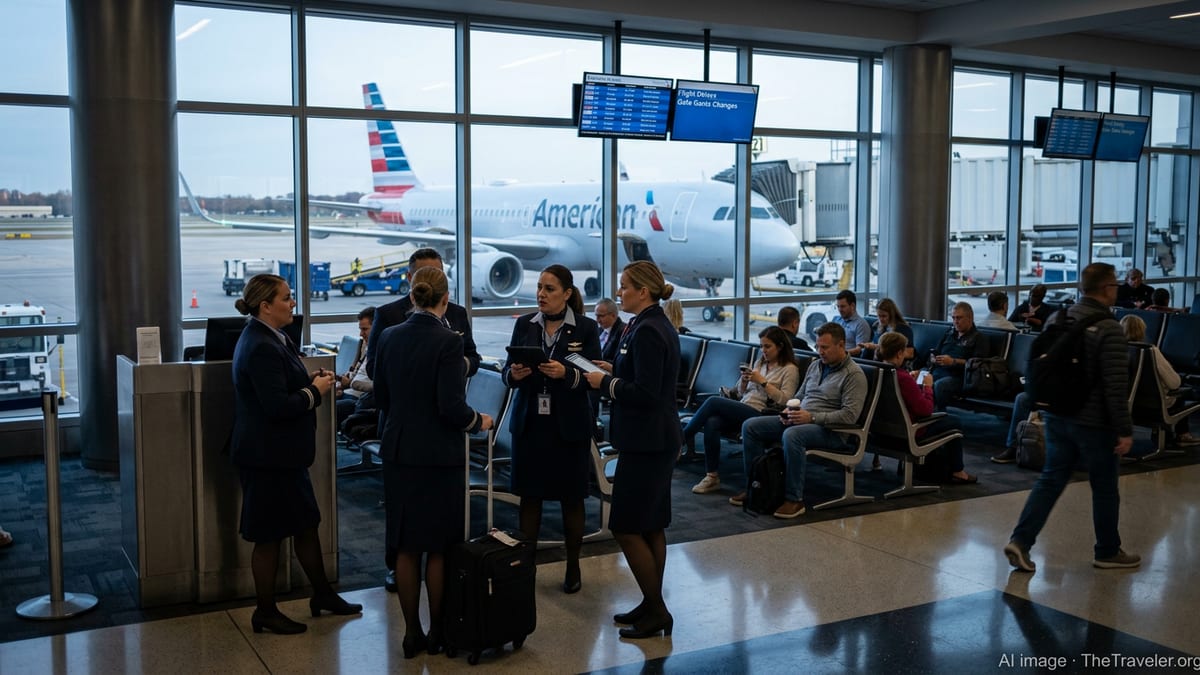
Union Files Grievance Over Recurrent Training Load
The Association of Professional Flight Attendants, which represents tens of thousands of American Airlines cabin crew, has escalated a dispute over the length of the airline’s latest round of recurrent computer-based training. According to publicly available union documentation, members report that the 2025 to 2026 web-based training modules required for annual “continuing qualification” are taking longer than the eight-hour maximum outlined in the collective bargaining agreement.
In a presidential grievance filed in August 2025 and later appealed after the company denied the claim, the union asserted that time-tracking submitted by flight attendants shows the new curriculum routinely surpasses the agreed limit. The filing seeks additional compensation for those who completed the longer modules and demands that future programs be redesigned so they can be finished within eight hours.
The airline has formally rejected the grievance, arguing in its response that the program complies with contractual and regulatory requirements. The dispute has now moved into the system board and arbitration process established under the flight attendants’ 2024 contract, with the outcome likely to set an important benchmark for how digital training is measured and paid across the industry.
Reports from union hotlines and internal communications indicate that some crew members have begun documenting their login times and progress screens to support the case. Those accounts describe a patchwork of security, emergency procedures and customer-service modules that, taken together, extend well beyond what many expected when the eight-hour cap was negotiated.
Regulatory Demands Collide With Contractual Limits
The training in question forms part of American’s federally required recurrent program, which must keep cabin crew current on safety and security procedures. Federal aviation rules obligate airlines to maintain detailed ground and recurrent programs for flight attendants, including instruction on emergency evacuations, passenger handling and crew resource management. These obligations have expanded in recent years as regulators have updated training standards in response to cabin safety incidents and disruptive passenger behavior.
Publicly available regulatory material shows that carriers must ensure flight attendants complete approved courses on topics ranging from threat recognition to coordination with other crew members. While the rules do not prescribe a specific number of hours for computer-based modules, they require operators to demonstrate that staff are competent and current, often leading airlines to add new online segments as policies or equipment change.
This regulatory backdrop has complicated the union’s effort to enforce a strict eight-hour limit on unpaid online work. The contract language reached in 2024 was designed to cap the time that flight attendants are expected to spend on web-based training outside of paid classroom sessions. The current dispute turns on whether American can satisfy both federal training requirements and contractual protections without shifting additional uncompensated work onto cabin crew.
Labor specialists following the airline sector note that flight attendants across multiple carriers have raised similar concerns as safety content has grown and airlines have leaned more heavily on self-paced, at-home coursework. In that context, American’s case is being watched as a test of how far unions can go in defining clear time limits for mandated digital training.
Flight Attendants Cite Unpaid Hours and Fatigue
For many American Airlines flight attendants, the argument over the eight-hour cap is tied to longer running tensions over how time is measured and paid in the job. Industry practice typically compensates cabin crew for time from aircraft door closure to arrival, with separate formulas for scheduled training days. Time spent on required computer-based modules at home often falls into a gray area, and unions have increasingly pushed to limit or compensate that work.
Reports circulated by the Association of Professional Flight Attendants describe members setting aside multiple evenings or days off to complete the latest modules, sometimes repeating sections after technical glitches or failing a knowledge check. Some crew members have expressed frustration that this additional workload arrives on top of irregular schedules, long duty days and rising expectations for customer service.
Union communications suggest that the cumulative effect is a feeling of being “always on,” even when flight attendants are officially off duty. Advocates argue that unpaid training hours can contribute to fatigue and reduce the time available for rest between multi-day pairings, even though those hours do not appear in official duty-time records used to manage fatigue risk.
American Airlines has not publicly detailed how it measures the duration of its web-based modules, but training documentation indicates that the company uses estimated completion times for design and pay purposes. The current grievance challenges whether those estimates adequately capture the real time required for flight attendants who must balance the modules with work and personal obligations.
Union Leans on New Contract and Arbitration Path
The challenge comes less than two years after American Airlines flight attendants ratified a new multi-year agreement valued in the billions of dollars, which raised pay and codified several quality-of-life provisions. Included in that contract is specific language governing training, including limitations on consecutive days of flying and classroom sessions, as well as the contested eight-hour maximum for annual computer-based coursework.
Under the system board procedures spelled out in the agreement, unresolved disputes such as the current training grievance can be advanced to arbitration if union and management representatives cannot reach a settlement. According to contract documents, the panel typically convenes near American’s general offices and can issue binding decisions on how the contract should be interpreted and applied.
Published union materials indicate that flight attendants are being encouraged to retain records of their training time while the grievance moves forward. The union is also collecting reports about technical issues and access problems, which can add to completion times and may form part of the argument that the current modules are not realistically achievable within the contractual limit.
Larger questions about how to balance flexible, self-paced learning with predictable and paid work hours are expected to feature prominently as the case progresses. Any ruling or settlement could influence the design of future training programs at American, prompting the airline either to streamline content further or adjust compensation structures for digital coursework.
Industry-Wide Implications for Digital Training
American Airlines is not alone in relying heavily on computer-based training for flight attendants and other front-line employees. Across the United States, carriers have shifted large portions of regulatory and service training into online platforms to reduce time in physical classrooms and allow staff to complete modules from home or layover locations.
Labor agreements at other airlines already specify pay formulas or maximum durations for such training, reflecting growing sensitivity to the boundary between on-duty and off-duty time. Recent tentative agreements and contract proposals at rival carriers show provisions that tie compensation directly to the number of hours required to complete e-learning segments, with some explicitly stating that such work must take place on company time and equipment.
Travel and labor analysts suggest that, as airlines continue to refine their digital training strategies, disputes like the one at American could shape industry norms. If arbitrators or subsequent negotiations reinforce strict caps on unpaid e-learning, carriers may have to trim or repackage content, or provide more paid training days, particularly when regulators introduce new safety mandates.
For passengers, the dispute is largely invisible, unfolding behind the scenes of daily operations. Yet the outcome could affect the way airlines prepare cabin crew for emergencies and evolving security risks, and how fairly that burden is shared between employers and staff. As the grievance proceeds through established channels, both American Airlines and its flight attendants face growing pressure to find a balance between robust safety training and the realities of an already demanding work schedule.