


More news on this day
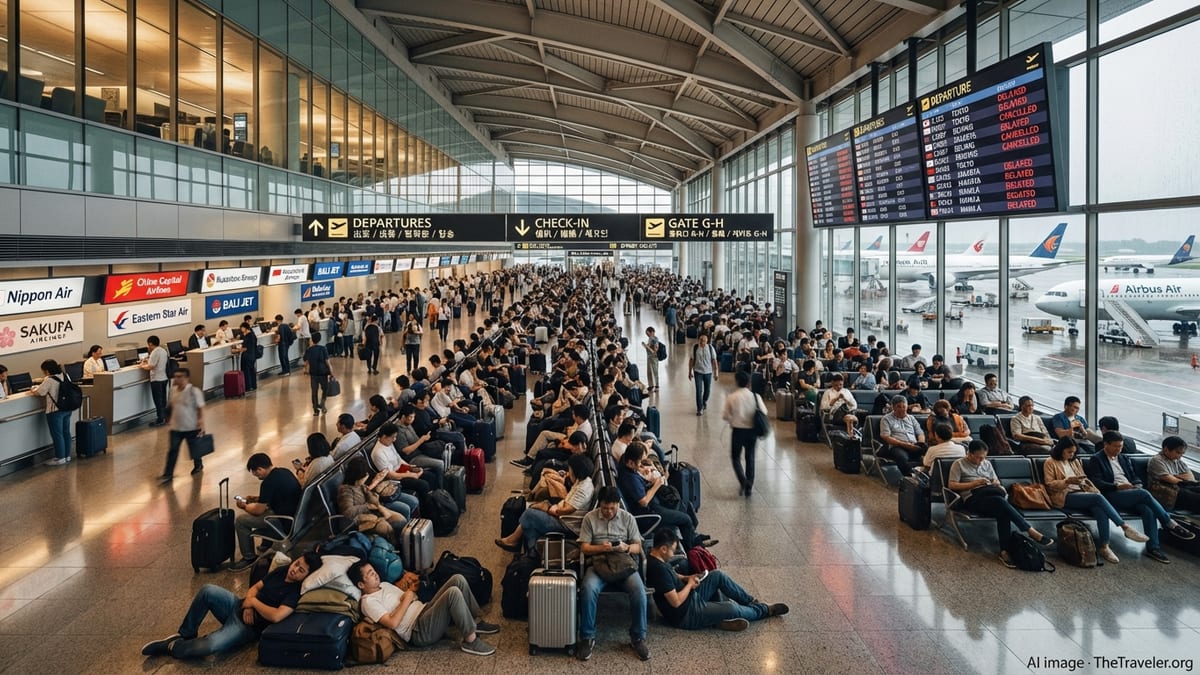
Asia’s aviation network is facing renewed turbulence as regional data for mid July indicate at least 534 flights cancelled and 5,351 delayed across key hubs including Riyadh, Jakarta, Kuala Lumpur and Guangzhou, disrupting operations at carriers ranging from emerging low cost airlines such as Akasa to established players including Saudia, ANA, UTair and Kam Air.
Get the latest news straight to your inbox!
Ripple Effects Across Middle East and Asian Hubs
Published operational data and media coverage from mid July show an increasingly strained flight network stretching from the Gulf to East Asia, with Riyadh’s King Khalid International Airport, Jakarta Soekarno Hatta, Kuala Lumpur International and Guangzhou Baiyun among the hardest hit. Disruptions reported over several consecutive days have cascaded across connecting banks of flights, amplifying delays well beyond the original problem sectors.
Riyadh has been a focal point, with passenger accounts and schedule trackers highlighting rolling delays on services linking the Saudi capital to Southeast Asia and Europe. While some carriers into and out of Riyadh continue to post strong on time performance statistics, the knock on impact of route reductions, equipment changes and missed connections has fed into the wider count of cancellations and late arrivals affecting Asia bound itineraries.
In Southeast Asia, Jakarta and Kuala Lumpur have both experienced dense clusters of altered schedules. Airline timetable changes, route suspensions and weather related disruption have converged, eroding the reliability of peak hour waves that normally carry passengers onward to China, Japan and the Middle East. Guangzhou, a major Chinese gateway, has in turn seen pressure on arrival and departure slots as late running flights bunch up against already busy summer schedules.
The accumulated outcome, according to operational snapshots compiled from flight tracking and airport data, is a combined tally of more than 500 outright cancellations and over 5,000 delays tied directly or indirectly to these regional hubs within a compressed period, underscoring how quickly localised issues can evolve into a transcontinental disruption story.
Airlines Under Strain: From Akasa to Saudia and ANA
The impact is being felt across a broad mix of airline business models. India based Akasa, which has been expanding regional connectivity, features among the carriers caught in the congestion, with passengers reporting missed onward connections and same day retimings on services that rely on tight turnarounds at busy hub airports. Low cost operators that depend on high aircraft utilisation are particularly vulnerable when rotations are interrupted.
Gulf and Saudi operators are also navigating a complex environment. Publicly available performance data for June showed Saudia achieving world leading punctuality on a monthly basis, yet July’s operational picture has been complicated by shifting traffic flows and network adjustments around the Middle East. Industry commentary points to situations where strong underlying performance can still be overshadowed in passenger experience terms when even a small fraction of flights into congested Asian hubs is delayed or cancelled.
In Northeast Asia, Japanese carrier ANA has issued repeated operational updates through its public channels this week, flagging schedule changes on selected intra Asia flights. While many services continue to operate as planned, the need for day of departure adjustments has added to the overall count of delayed or retimed flights linking Japan with China and Southeast Asia, including routes touching Guangzhou and other major Chinese cities.
Russian operator UTair and Afghanistan based Kam Air, both of which maintain niche networks that intersect with Gulf and Central Asian gateways, have been cited in regional tracking summaries as among the airlines adjusting selected frequencies or experiencing extended ground times. For travellers using these carriers to connect into larger Asian hubs, even minor alterations have translated into missed onward departures or overnight stays.
Weather, Geopolitics and Capacity Constraints Combine
A combination of short term shocks and longer running structural issues lies behind the spike in cancellations and delays. In recent days, typhoon activity around East Asia has forced airlines to cancel or reroute flights into and out of North Asian airports, with Kuala Lumpur and other Southeast Asian gateways feeling the downstream effect as aircraft and crews are left out of position. Published notices from regional airlines confirm that several services between Kuala Lumpur, Taipei and Chinese cities were scrubbed or consolidated as storm systems moved through.
Geopolitical tensions and associated airspace restrictions add another layer of complexity. Carriers operating between the Middle East and East Asia have had to design longer routings around sensitive regions, tightening crew duty time limits and reducing the margin for absorbing ground handling delays at intermediate stops. When a single leg in a multi sector pattern runs late, the entire chain can quickly fall outside regulated operating windows, prompting last minute cancellations.
Capacity constraints at rapidly recovering airports further aggravate the situation. Demand across Asia has climbed close to or above pre crisis levels on many routes, yet runway slots, air traffic control staffing and ground resources have not always scaled at the same pace. Reports from Jakarta and Guangzhou point to queues for departure and arrival slots at peak times, leaving airlines with limited options to recover schedules once disruption begins to build during the day.
Industry analysts note that many of the affected airports serve as both origin and connecting hubs, multiplying the impact of any single delay. A late arrival into Riyadh, Jakarta or Kuala Lumpur in the early morning can knock several onward flights off their planned departure times, creating the conditions for the high aggregate delay statistics now being recorded.
Passenger Experience and Regulatory Responses
For travellers, the most immediate consequence is uncertainty. Accounts posted on public forums describe repeated schedule changes, extended waits on the ground and last minute notifications of cancellation. Passengers connecting between Akasa, Saudia, ANA, UTair, Kam Air and other carriers at shared hubs report particular stress when interline arrangements are limited or when separate tickets are involved, leaving them to negotiate rebooking on their own.
Regulators and consumer bodies in several Asian jurisdictions have in recent years set out clearer expectations for how airlines should respond to large scale disruption, including guidance on rebooking, refunds and care for stranded passengers. Publicly available information from authorities in Malaysia, Singapore and other markets outlines obligations ranging from meal vouchers and accommodation to fee free changes, depending on the cause and duration of the disruption.
However, the patchwork nature of these rules across different countries and airline home bases can complicate outcomes for travellers on multi leg itineraries. A passenger flying from Riyadh to Guangzhou via Kuala Lumpur or Jakarta on two different carriers may fall under distinct regulatory regimes on each sector, with differing entitlements if a cancellation or long delay occurs. Travel specialists advise that this fragmentation contributes to the perception of inconsistency when major disruption events unfold.
Airports themselves are adapting with additional customer service teams, real time information displays and closer coordination with airlines during peak disruption windows. Yet when hundreds of flights across a region are simultaneously affected, queueing for assistance and limited hotel capacity near major hubs can quickly become pain points, particularly for families and passengers requiring special assistance.
Outlook for the Remainder of the Summer Peak
Forward looking schedules published by airlines suggest that capacity across Asia and the Middle East will remain high through August, leaving limited slack in the system to absorb further shocks. New routes, including additional services between Riyadh and Southeast Asian cities, are planned to launch in late July, which may eventually help diversify options but could also strain resources in the early weeks of operation.
Operational experts writing in industry outlets highlight that restoring reliability will depend on a mix of tactical and structural measures. These include longer ground times at congested hubs to create buffers, additional standby crews and aircraft, and more conservative schedule planning during typhoon season and periods of heightened geopolitical risk. Some carriers have already trimmed marginal frequencies and consolidated lightly booked flights to focus on maintaining stability on core routes.
In the short term, passenger facing information and flexibility remain critical. Reports from recent disruption episodes indicate that travellers who booked directly with airlines and monitored schedule changes through carrier apps or airport dashboards were often able to secure earlier rebooking options than those waiting for email notifications alone. Advisories from consumer organisations continue to recommend allowing extra time for connections through Riyadh, Jakarta, Kuala Lumpur and Guangzhou while the regional network remains fragile.
With the summer peak still underway, the tally of 534 cancellations and 5,351 delays tied to Asia bound and intra Asian flights serves as a warning of how finely balanced the system has become. Absent a sustained period of stable weather and calmer geopolitical conditions, airlines and passengers alike may need to prepare for further bouts of disruption before schedules begin to ease later in the year.