


More news on this day
Cleanup and environmental assessment efforts are underway at a southwest Calgary pond after a Canadian Pacific Kansas City (CPKC) freight train derailed early Monday, sending multiple railcars into the water near the Priddis Slough wetland between the communities of Chaparral and Silverado.
Get the latest news straight to your inbox!
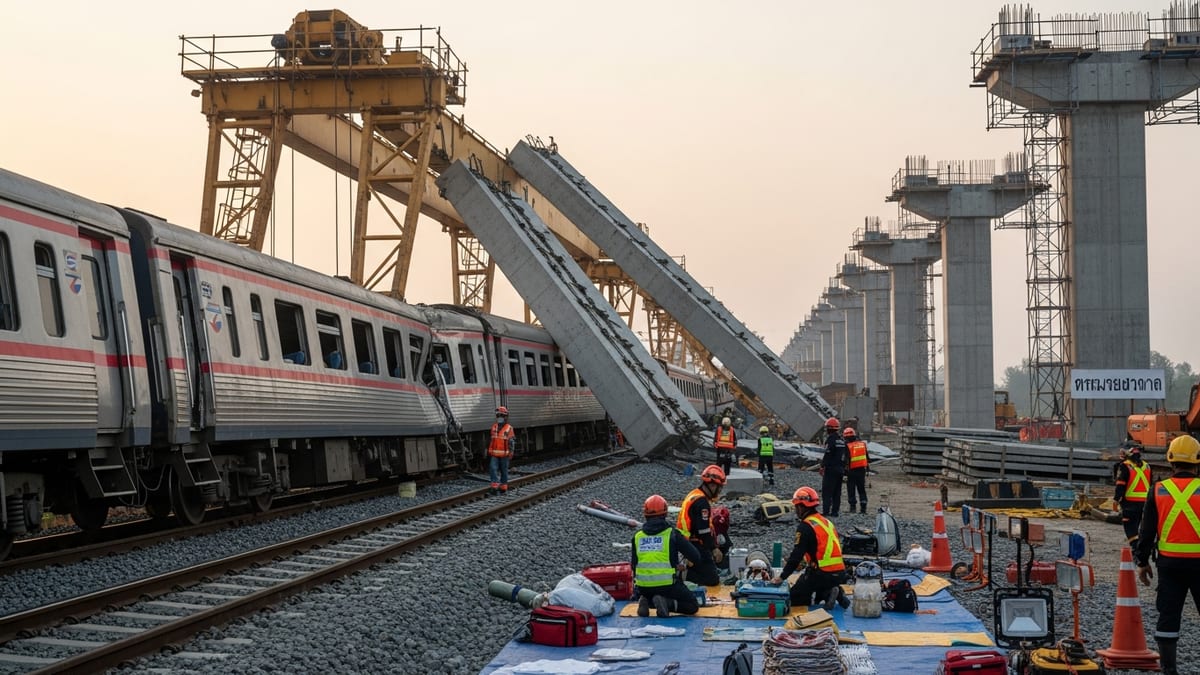
Railcars in water but no leaks reported
Publicly available information indicates the derailment occurred at around 7:30 a.m. on July 13, just south of Stoney Trail along the CPKC line near Sheriff King Street Southwest. Initial reports describe a mixed freight consist, with 13 cars leaving the track and several coming to rest partially or fully submerged in a stormwater pond connected to the broader Priddis Slough wetland system.
According to published coverage, the affected cars were carrying lumber, plywood and pressurized tank loads of propane and argon. Images from the scene show crumpled boxcars and at least two tank cars lying on their sides in the shallow water, with pallets of wood and other debris floating at the surface.
Reports from the rail operator and local news outlets indicate there have been no observed leaks from the tank cars and no injuries. The absence of visible product releases has reduced the immediate risk of fire or toxic exposure, although responders continue to monitor the site while recovery work proceeds.
Traffic restrictions remain in place around the rail line near Macleod Trail and nearby residential streets as heavy equipment is moved into position to stabilize and remove derailed cars from the water and embankment.
Environmental protection at Priddis Slough wetland
The derailment occurred at the edge of Priddis Slough, a well-known wetland and stormwater feature in Calgary’s southwest that supports migratory birds, waterfowl and small mammals. The pond also forms part of a system of engineered stormwater infrastructure designed to manage runoff from rapidly growing suburban communities.
Crews on site are reported to be using containment booms and absorbent materials around the derailed cars as a precaution, a common practice in rail incidents where tank cars enter surface water. Even in the absence of a confirmed spill, such measures are typically deployed to ensure that any minor hydraulic fluids or residual cargo do not spread beyond the immediate area.
Specialists are expected to carry out ongoing water and sediment sampling to check for changes in air and water quality during and after the removal of railcars. Standard post-incident monitoring usually focuses on dissolved oxygen, hydrocarbons and other indicators that could signal fuel or chemical contamination in sensitive aquatic habitats.
Residents backing onto the wetland have reported heavy machinery operating near the shoreline, as cranes and wrecking equipment are positioned carefully to avoid further disturbance to the pond banks and the adjacent marsh.
Complex logistics for derailment recovery
Cleanup operations at the site involve a multi-stage process, beginning with securing the train, assessing each derailed car and identifying any that may require special handling due to their cargo. Publicly available information from similar Canadian derailments shows that tank cars containing pressurized gases such as propane or argon are typically inspected on site and venting, transfer or re-railing plans developed if any structural damage is detected.
At the Calgary pond, early reports suggest the tank cars remained intact, allowing crews to prioritize removing derailed boxcars and spilled lumber from the shallow water. Heavy cranes and side-boom tractors are generally used to lift cars onto temporary track panels or flatbed trailers, while divers or shoreline workers may guide slings to ensure cars are not dragged across the pond bottom in ways that could disturb sediments.
Once the railcars are removed, work is expected to shift toward clearing debris, inspecting the rail bed and replacing damaged track components. Depending on the extent of rail and ballast damage, partial train service along the affected line may resume relatively quickly, with full restoration following once all engineering assessments are completed.
In parallel with track repairs, contractors typically remove contaminated soils or vegetation if any are identified, followed by site grading and replanting along disturbed shorelines.
Investigation and broader rail safety context
The Transportation Safety Board of Canada has indicated that investigators are being deployed to the southwest Calgary derailment, adding the incident to a growing list of rail events under review in 2026 across the country. These investigations typically examine track conditions, train speed, equipment performance and operational practices in order to understand what led to a derailment.
Recent derailments elsewhere in Canada have prompted wider discussion of rail safety in proximity to waterways and residential areas, particularly where freight trains carry mixed cargo that may include hazardous materials. The Calgary incident, which occurred at the edge of a stormwater pond bordering dense suburban development, is likely to factor into ongoing conversations about setback distances, inspection frequency and infrastructure resilience as rail traffic increases.
According to publicly available federal guidance, railway companies are required to develop and maintain emergency response plans for dangerous goods, conduct regular inspections and work with local emergency managers on preparedness. Events like the Calgary pond derailment may lead to additional recommendations on track maintenance, speed restrictions or cargo handling practices on key corridors.
While the current situation at Priddis Slough appears to involve no confirmed leaks from hazardous tank cars, the presence of rolling stock in water underscores the potential consequences when rail infrastructure and stormwater systems intersect.
Community concerns and next steps
The derailment near Chaparral and Silverado has drawn strong interest from nearby residents, many of whom use the pathways around the wetland for walking and recreation. Social media posts and local discussions have focused on concerns about potential impacts to wildlife, possible fuel or chemical releases, and the visual disruption of cranes and wrecking equipment operating beside the pond.
Publicly available information indicates that local responders and the railway are maintaining a visible presence at the site while cleanup continues, a practice that can help reassure nearby communities that the incident is being actively managed. Updates on road access, noise, and the anticipated duration of heavy recovery work are expected to be focal points for residents in the coming days.
Once railcars and debris are removed and environmental sampling is complete, attention is likely to shift to long-term rehabilitation of the shoreline and any damaged vegetation. In similar cases, restoration work may include regrading disturbed areas, replanting native species and monitoring the wetland’s recovery over one or more seasons.
For now, clean up at the southwest Calgary pond remains focused on safely extracting the derailed freight cars, protecting water quality in Priddis Slough and restoring a key rail link through one of the city’s fastest-growing districts.