


More news on this day
Australian travellers heading for Europe and beyond are being urged to think carefully before routing flights through major Middle East hubs, as evolving conflict risks, changing government advisories and stricter local rules increase the stakes for even short airport stopovers.
Get the latest news straight to your inbox!
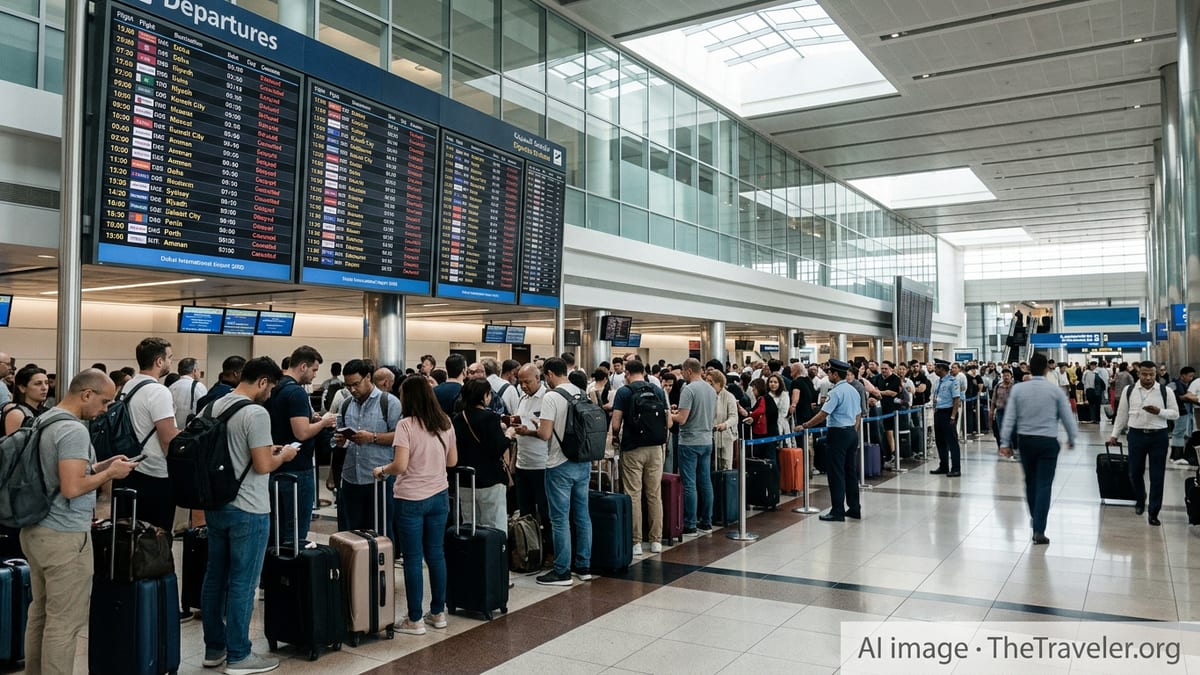
Travel advice shifts as conflict reshapes regional risk
Publicly available Australian government travel advice shows that security conditions across parts of the Middle East remain volatile, with authorities warning that the situation could deteriorate with little or no notice. Recent updates highlight that while some destinations have moved from the highest “do not travel” level to “reconsider your need to travel,” that same caution explicitly applies to transits as well as longer stays.
The Department of Foreign Affairs and Trade’s Smartraveller service has drawn a direct line between holiday plans and the choice of transit hub, stressing that travellers should consider advice levels not only for where they are going, but also for any country where they land, even if they do not plan to clear immigration. That message has become more pointed after months of missile strikes, airspace closures and airport disruptions linked to conflict involving Iran, Israel and other regional actors.
Coverage from Australian outlets including ABC News and specialist travel industry bulletins describes how key hubs such as Dubai, Abu Dhabi and Doha have at different points faced temporary flight suspensions, damage to airport infrastructure and diversions as airlines respond to military activity and government aviation notices. For Australians, these hubs are central to popular one-stop routes between the east coast and Europe, which means the ripple effects are being felt across peak northern summer travel.
While major Gulf carriers have progressively restored schedules after recent strikes and closures, analysts quoted in local media warn that renewed attacks or escalations could once again affect airspace access with minimal warning, stranding travellers in transit or forcing complex last-minute re-routing.
What “reconsider your need to transit” really means
A key change that affects Australians is the language now used in formal travel advisories. When a destination is listed at Level 3, “reconsider your need to travel,” guidance notes clarify that this also means “reconsider your need to transit.” In practice, this pushes travellers to actively weigh the risks of a short stopover in the Middle East against alternatives in Asia or Europe, rather than treating transit as a neutral or low-risk option.
Travel advice explanations published by Smartraveller emphasise that advisory levels are based on factors such as the threat of terrorism, armed conflict and potential for sudden disruption to essential services. Recent Middle East updates underline that airports, aviation facilities and crowded terminals are among locations that could be affected in any future attack, and that international airspace restrictions can be imposed with little advance notice.
Reports in Australian travel trade publications indicate mounting concern within the industry about the gap between relatively cheap, widely available fares via the Gulf and the heightened risk profile of those routes. Some agents have begun steering clients towards itineraries via Singapore, Bangkok, Hong Kong or other Asian gateways, noting that the government’s wording makes it harder to recommend Middle East transits without detailed risk discussions.
Consumer discussion on public forums also reflects confusion over how the advisory level interacts with airline operations. Many travellers point out that flights to and through the Gulf continue to operate at high frequency and that airports appear “business as usual,” while others stress that the concern is less about everyday conditions and more about the consequences if conflict suddenly closes airspace while passengers are mid-journey.
Insurance, coverage gaps and the cost of a cheap stopover
One of the sharpest warnings for Australians considering a Middle East transit relates to travel insurance. Policy documents published by major insurers commonly exclude cover for events linked to war, civil unrest or travel against government advice. That means travellers whose itineraries include countries listed at Level 4 “do not travel,” or sometimes Level 3, may find claims rejected if delays, cancellations or injuries are connected to the underlying conflict.
Insurance advisories and product disclosure statements reviewed by Australian media in recent months show that many policies distinguish between standard operational disruptions and losses caused by acts of war or terrorism. Some insurers have also issued specific Middle East travel advisories, pointing customers to the fine print and urging them to confirm whether a given transit routing remains covered on the dates they intend to fly.
Industry experts quoted in newspapers and on national broadcasters warn that a seemingly minor itinerary choice can carry significant financial risk. If airspace closures force a diversion to a nearby country at a higher advisory level, or if passengers are stuck for days in an affected hub, out-of-pocket costs for accommodation, rebooking and missed connections may not be reimbursed. Travellers are being urged to obtain written confirmation from their insurer on whether a particular transit point is covered, especially for trips booked months in advance.
There is also growing concern that some travellers may not realise that flying through a higher-risk country, even without leaving the airport, can trigger exclusions. Travel lawyers interviewed in recent coverage suggest that Australians carefully compare policies, as a small premium saving could be quickly outweighed by the cost of an uncovered disruption in a conflict-affected region.
Legal and behavioural risks in Gulf transit hubs
Beyond security considerations, official travel advice highlights legal and behavioural risks that can catch Australian passengers off guard while transiting Gulf states. Smartraveller notes that local law applies to visitors even if they remain airside, and that behaviour considered acceptable in Australia may attract fines, detention or prosecution in countries such as the United Arab Emirates and Qatar.
Recent updates to the United Arab Emirates country page reference instances of travellers facing questioning or detention over clothing and symbols deemed politically sensitive, including items associated with Palestinian solidarity or LGBTQI+ identities. Publicly available guidance stresses that social media activity, public displays of affection, the possession of certain medications and the consumption of alcohol outside licensed venues can all attract penalties, even during a short transit.
Security advice from other governments, including the United States, points to the potential targeting of transportation hubs in the region and reiterates that terrorist attacks may occur with little or no warning. These assessments, combined with strict local laws, create a complex risk environment in which an unexpected overnight layover, diversion or missed connection could expose Australians to unfamiliar legal systems at a particularly stressful moment.
Travel planners therefore recommend that passengers transiting the Middle East familiarise themselves with local regulations in advance, carry only medications accompanied by appropriate documentation, and avoid clothing or accessories that could be interpreted as politically provocative. For some travellers, particularly those who identify as LGBTQI+ or who are concerned about freedom of expression, these considerations are becoming a deciding factor in whether to select a Gulf hub at all.
How airlines and travellers are adapting
Major Gulf carriers have adjusted schedules, re-routed flights and occasionally suspended services in response to missile strikes, airspace closures and evolving government aviation notices since early 2026. Media monitoring of operational updates from airlines such as Emirates, Qatar Airways and Etihad shows days with hundreds of cancellations and diversions during peak flare-ups, followed by gradual restoration of services as damage is assessed and aviation regulators reopen key corridors.
Australian airlines partnering with Middle East carriers have introduced flexible rebooking options at various points in recent months, offering passengers the ability to switch dates or route away from affected hubs during periods of heightened tension. Travel agents report that some Australians are taking advantage of these waivers to move to itineraries via Asia or to postpone non-essential trips to Europe until the outlook is clearer.
At the same time, demand for cheaper fares through the Gulf remains strong, particularly among cost-conscious travellers and families planning long-haul holidays. Many passengers posting on public forums state that they are willing to accept a higher perceived risk in exchange for substantial savings, while others say they are relying on the assumption that major international hubs will be heavily defended and quickly repaired if attacked.
Government advisories and expert commentary suggest that Australians now face a more complex calculus than in previous years. The combination of evolving conflict dynamics, the possibility of sudden airport closures, tighter local laws and patchy insurance coverage means that a quick change of planes in the Middle East is no longer a routine decision, but a key factor in trip planning that deserves close attention before booking.