


More news on this day
Hundreds of travelers across Brazil faced hours of disruption on July 13 as major hubs including Brasília, Rio de Janeiro, São Paulo and Salvador reported 316 delayed and 20 canceled flights, affecting operations for LATAM, Air Canada, GOL and several other domestic and international carriers.
Get the latest news straight to your inbox!
Weather And Airspace Constraints Ripple Through Key Hubs
Operational data compiled from Brazil’s major airports on July 13 indicate that a combination of dense morning fog and temporary airspace constraints helped drive a spike in delays and cancellations across the country’s busiest corridor. The disruption was concentrated at Brasília, São Paulo, Rio de Janeiro and Salvador, all of which are central nodes in Brazil’s domestic and international networks.
Reports from local traffic and aviation bulletins show that low visibility impacted ground movements in the São Paulo region earlier in the day, coinciding with restrictions on a key mountain highway connection frequently used by passengers traveling between the coast and the metropolitan area. In several cases, tight turnaround schedules left airlines with limited room to recover once early departures slipped behind schedule.
Publicly available airport movement boards later in the day showed waves of late departures cascading through afternoon and evening banks of flights. As aircraft and crew rotated between Brasília, Rio de Janeiro, São Paulo and Salvador, isolated delays quickly evolved into a network-wide backlog that stranded passengers in terminals around the country.
While Brazil’s air traffic management system continued to keep core routes open, temporary limitations in certain approach and departure corridors meant flights often waited on the ground for space in the system, contributing to steadily lengthening holds and missed connection windows.
LATAM, GOL And International Carriers See Schedules Disrupted
The country’s largest airline groups, including LATAM and GOL, were among the most affected as the disruption unfolded along their busiest domestic trunk routes. Public tracking data for heavily used shuttle services between São Paulo and Brasília, as well as São Paulo and Salvador, showed multiple departures operating significantly behind schedule, with some flights pushed into later time slots or consolidated.
International operators also felt the impact. Long haul flights arriving from North America and Europe into São Paulo and Rio encountered congested arrival banks, and several onward domestic connections departed late or were canceled after inbound aircraft missed their scheduled slots. Air Canada, which relies on Brazilian partners for domestic feed beyond its São Paulo gateway, saw customers rebooked onto later services as downline flights departed full or out of sequence.
According to published airline disclosures, carriers serving Brazil already face tight capacity at major airports such as São Paulo Guarulhos, Congonhas and Rio de Janeiro’s city and international airports, increasing their vulnerability to sudden weather or flow-control measures. With aircraft utilization running high during the Southern Hemisphere winter travel season, even short-lived disruptions can quickly trigger a chain of knock-on delays.
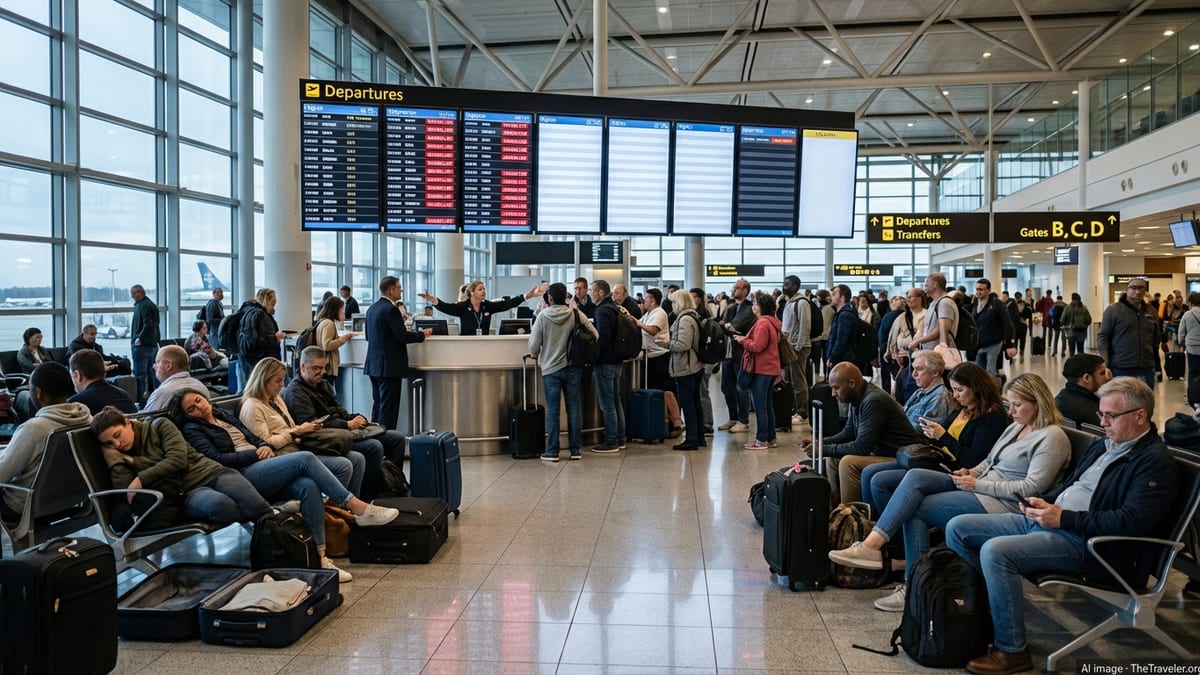
On July 13, this structural tightness was evident in crowded departure lounges and extended queues at customer service counters in multiple terminals, as carriers worked within existing slot and crew constraints to accommodate displaced travelers on later flights.
Passengers Face Long Waits And Tight Connection Windows
The immediate effect for many travelers was prolonged waiting time in terminals across the country. Afternoon banks at Brasília and São Paulo, which serve as primary connecting points for trips between Brazil’s interior and coastal cities, were especially affected as incoming flights from secondary markets arrived late, leaving passengers racing to make shortened or missed connections.
Domestic travelers reported connection times in key hubs shrinking to well under an hour as inbound services taxied in behind schedule. In some cases, gate changes and compressed boarding windows created additional stress as families and business travelers attempted to reach new flights scattered across large terminals.
For international passengers arriving on overnight services, the disruption translated into missed onward flights to leisure destinations such as Salvador and to political and business centers such as Brasília. Many were rebooked onto late-night or next day departures, filling remaining seats at peak times and adding pressure to already busy schedules for the following day.
Social media and local forum discussions pointed to inconsistent experiences with rebooking and accommodation, with some passengers quickly placed on alternative flights and others facing multi-hour waits to receive new itineraries. The mixed outcomes underscored the challenge of managing irregular operations in a market dominated by a small number of large hubs and high-demand trunk routes.
Spotlight On Brazil’s Congested Airport System
The disruptions on July 13 once again highlighted long-standing concerns about congestion and resilience in Brazil’s airport network. Data from industry and regulatory reports show that major facilities in São Paulo, Rio de Janeiro, Brasília and Salvador already handle some of the highest passenger volumes in Latin America, with runway and terminal capacity in several locations operating close to their practical limits.
Recent filings from Brazil’s main carriers emphasize that constrained access to key airports, slot limitations and infrastructure bottlenecks can amplify the operational impact of weather or technical restrictions. Airlines have warned that when fog, storms or temporary airspace closures occur, they have limited ability to reroute aircraft or expand schedules on short notice, especially during busy travel periods.
Analysts note that Brazil’s experience mirrors patterns seen in other large markets where traffic growth has outpaced investment in runways, taxiways and terminal systems. As more travelers rely on air links between major cities such as São Paulo, Rio de Janeiro, Brasília and Salvador, short operational disruptions are increasingly likely to translate into broad, multi-airport delays.
This week’s episode is expected to reinforce calls from aviation and tourism observers for continued upgrades to airport infrastructure, airspace management tools and contingency planning, with the goal of ensuring that routine weather or localized constraints do not repeatedly cascade into nationwide disruption.
What Travelers Can Expect In The Coming Days
By late evening on July 13, operational data suggested that departure and arrival times at Brazil’s main hubs were slowly stabilizing, although residual delays remained on some routes feeding into and out of São Paulo, Rio de Janeiro, Brasília and Salvador. Airlines began repositioning aircraft and crews in preparation for the next day’s schedules, a process that can take several rotations to fully normalize.
Travel planners expect that most services operated by LATAM, GOL, Air Canada and other affected airlines will return closer to published times over the following 24 to 48 hours, provided no additional adverse weather or technical constraints arise. Nonetheless, passengers booked on early morning or late evening departures in the next few days may still experience minor knock-on delays as networks reset.
Publicly shared travel advice circulating in Brazil continues to stress the benefits of longer connection windows at major hubs, especially when itineraries combine international arrivals with domestic legs through São Paulo, Rio or Brasília. Travelers are also encouraged to monitor flight status frequently on the day of departure and to remain alert for gate and schedule changes at the airport.
For now, the July 13 disruption serves as a reminder of how quickly a mix of fog, airspace limitations and already stretched infrastructure can upend air travel plans in one of the world’s largest domestic aviation markets, stranding hundreds of passengers and reverberating across airline networks well beyond Brazil’s borders.