


More news on this day
Summer travelers at San Antonio International Airport experienced an uncomfortable and disruptive start to the week after an air conditioning problem in terminal facilities coincided with a wave of flight delays, complicating operations during already busy July traffic.
Get the latest news straight to your inbox!
Cooling issues strain busy summer operations
Reports from travelers and flight-tracking data indicate that on one of the hottest stretches of July, parts of San Antonio International Airport’s terminal complex experienced air conditioning problems that left sections of the building noticeably warmer than normal. The disruption came as afternoon temperatures outside reached the mid-90s Fahrenheit, putting additional pressure on the airport’s cooling systems and on airlines already navigating peak-season crowds.
Publicly available information about the airport’s infrastructure shows that chilled air and other utilities for the passenger terminals are routed through a central utility plant built to serve multiple buildings on the airfield. When temperatures rise rapidly or mechanical systems are strained, even a relatively contained outage can quickly be felt in crowded gate areas, security lines, and baggage halls where thousands of travelers are gathered.
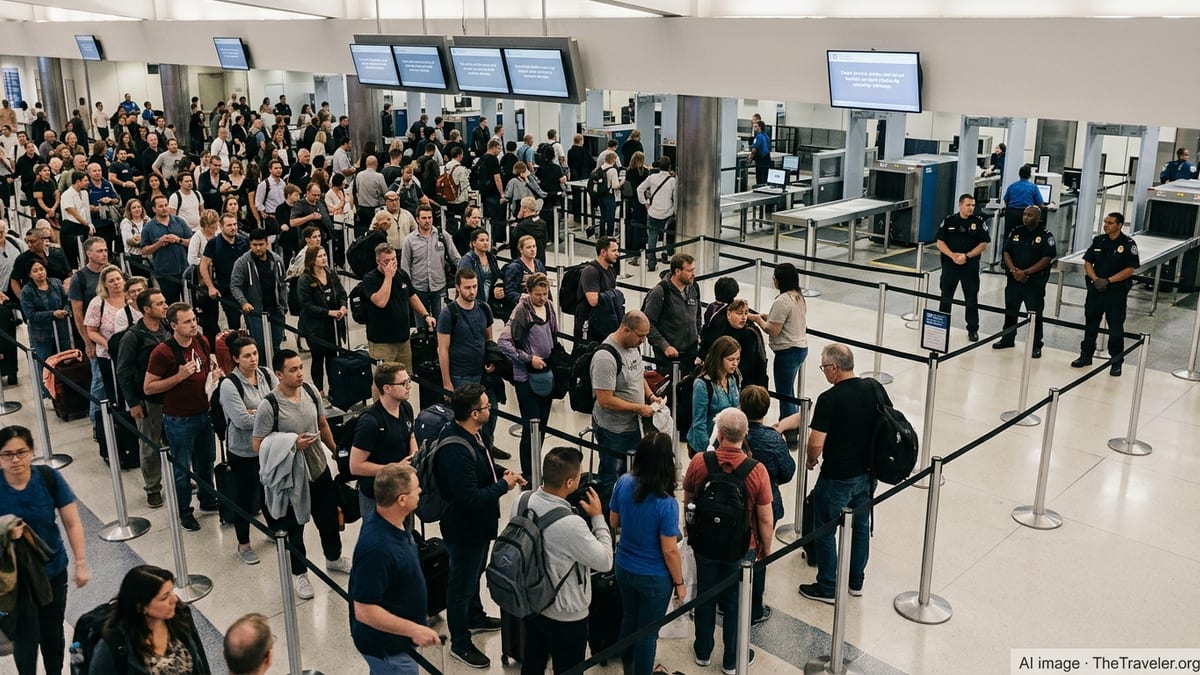
Travelers posting updates from the concourses described warm, humid conditions near several gates and in portions of the check-in hall as staff distributed water and attempted to move passengers toward cooler parts of the building. While the core flight operations of runways and control towers remained unaffected, the lack of stable cooling inside the terminal complicated boarding, deplaning, and ground handling activity.
Operational data for San Antonio International in recent months highlights that the airport has been managing growth in passenger numbers alongside ongoing maintenance and expansion work. In that context, even short-lived technical problems with climate control can ripple through the schedule, particularly when they arise in the middle of the afternoon departure and arrival banks.
Flight delays build as airlines adjust ground times
Flight-tracking boards for San Antonio on the affected day showed a noticeable cluster of delayed departures and late-arriving aircraft as airlines slowed down or reshuffled turnarounds during the warmest hours. Some departures left the gate later than scheduled after crews waited for conditions in the cabin and jet bridge to become more tolerable, while other flights absorbed extra ground time as baggage and catering staff worked in warmer-than-usual ramp and gate environments.
According to publicly available performance data, San Antonio International typically posts mid-range on-time scores among U.S. airports of similar size, with most delays tied to routine factors such as late inbound aircraft, weather in other parts of the country, or airspace congestion. On this occasion, however, the cooling issues inside the terminal added an unusual, local factor to the mix, turning an infrastructure glitch into a customer-experience problem that intersected with schedule reliability.
Some airlines appeared to prioritize getting planes off the gate to restore airflow in the cabin systems once engines and auxiliary power units could run at full capacity, while others opted to hold boarding to reduce the amount of time passengers spent seated in warmer cabins. These differing strategies contributed to a patchwork of outcomes in which some flights departed close to on time and others logged delays of an hour or more.
Patterns seen in national delay data show that once an airport’s departure stream slows, disruptions can propagate throughout the network, affecting later flights that use the same aircraft. That dynamic was visible in select routes touching San Antonio, where evening operations reflected knock-on delays traced back to the hottest part of the afternoon.
Why terminal air conditioning matters for travelers
While air conditioning issues do not directly interfere with air traffic control or runway safety, stable cooling is increasingly recognized as a critical part of airport resilience during extreme heat. Modern terminals rely on large, centralized chillers, air handlers, and miles of ductwork to keep indoor temperatures within a narrow comfort range, even as automatic doors continually open to the hot ramp and curbside areas.
When that system falters, passengers can experience longer waits in security lines, boarding queues, or at baggage claim in conditions that feel far hotter than typical indoor comfort. For travelers with young children, older adults, or those with medical conditions affected by heat, these shifts are more than an inconvenience and can influence decisions about whether to remain in line, seek medical assistance, or request rebooking.
For airlines, a terminal cooling issue overlays directly onto operational choices about ground times. Boarding a full aircraft connected to a jet bridge that is not adequately cooled can quickly raise cabin temperatures, particularly if the aircraft is drawing limited preconditioned air from the gate. That scenario may prompt crews to reduce boarding speed or sequence passengers differently, all of which add minutes that can accumulate into measurable delay.
Industry research on delay propagation underscores that small, localized disruptions can contribute meaningfully to nationwide performance when they align with already tight scheduling and high demand. In warm-weather hubs such as San Antonio, air conditioning reliability has effectively become another factor in how smoothly the daily flight schedule runs.
Infrastructure pressures and future upgrades
The cooling problems also draw attention to the broader question of how mid-sized U.S. airports are modernizing their utility systems as passenger volumes grow. Budget documents and planning materials for San Antonio highlight ongoing investment in terminal expansion, new gates, and supporting infrastructure designed to accommodate rising traffic and new airline services over the next several years.
Central utility plants, which provide chilled water and other services to terminals, typically operate near capacity during peak summer afternoons. If a chiller unit, pump, or control system underperforms or requires emergency maintenance, operators may have limited flexibility to reroute capacity, resulting in temperature fluctuations in parts of the building until the issue is resolved.
Airports across the Sun Belt have been reevaluating their resilience strategies as heat waves become more frequent and intense. For San Antonio, that conversation includes not only long-term capital projects such as new terminal construction, but also interim measures like redundant cooling units, upgraded monitoring systems, and contingency protocols for moving passengers and staff when interior temperatures rise.
Travel-industry analysts note that many airports are now bundling climate-control upgrades into larger modernization programs, recognizing that travelers increasingly judge their experience not only on security wait times and flight punctuality, but also on the basic comfort of the terminal environment.
What passengers can expect in the near term
As temperatures remain high across Texas, travelers passing through San Antonio International in the coming days are likely to encounter a more watchful posture toward terminal comfort, with airport teams monitoring temperatures, mechanical performance, and passenger flows closely to avoid a repeat of the disruption. Airlines may build slightly more buffer into turn times during the hottest afternoon windows, particularly on routes with high load factors.
Passengers scheduled to travel through the airport are encouraged, based on widely shared best practices, to check flight status frequently on airline apps or airport displays, arrive with extra time in case of gate changes or minor delays, and carry water or refillable bottles to stay hydrated inside the terminal. For those with tight connections elsewhere in the network, awareness of possible heat-related slowdowns at their origin or connection points can help in planning alternatives if delays build.
While the latest cooling issue at San Antonio International appears to have been temporary, it illustrates how infrastructure challenges that are largely invisible to travelers under normal conditions can quickly become central to the travel experience when they falter. As summer traffic continues, both the airport and its airline partners face the task of keeping terminals not only operational, but also comfortably cool, even on the hottest days.