


More news on this day
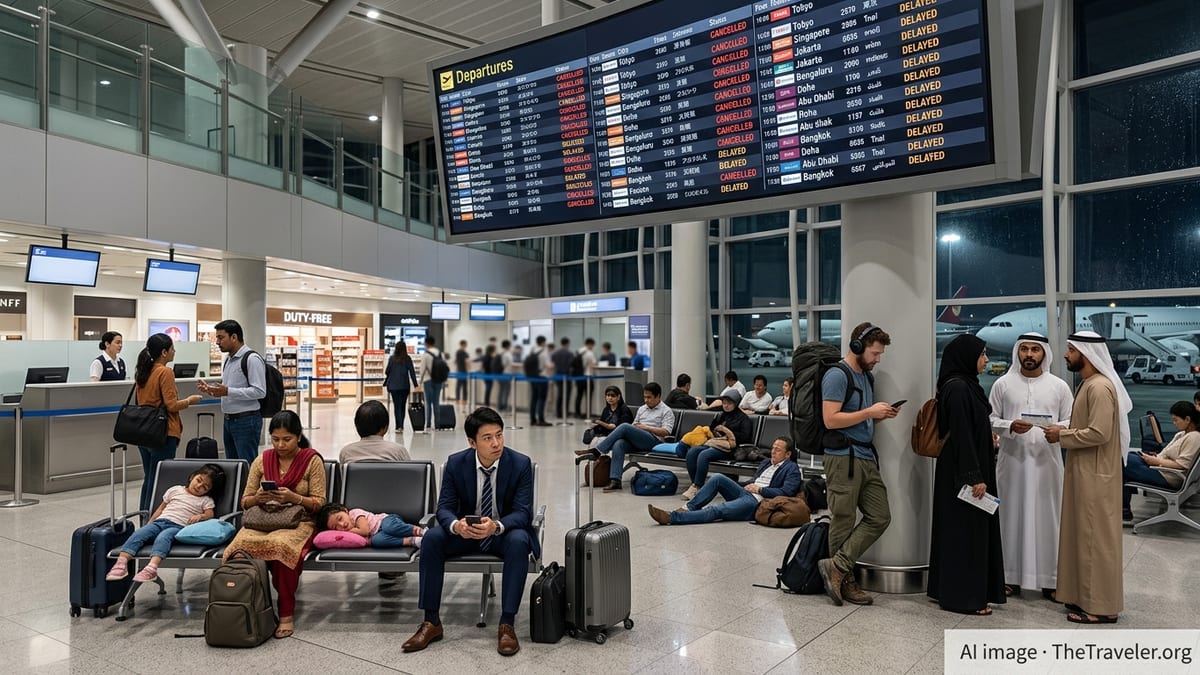
Flights across Asia faced widespread disruption on July 14, as publicly available tracking data indicated 493 cancellations and about 5,387 delays affecting major hubs including Dubai, Shanghai, Riyadh, Bangkok and Mumbai, with services operated by Saudia, Air China, Emirates, Japan Airlines and other carriers heavily impacted.
Get the latest news straight to your inbox!
Wave of Cancellations Hits Key Gulf and Asian Gateways
Operational data from regional aviation trackers on July 14 indicated that airports in the United Arab Emirates, China, Saudi Arabia, Thailand and India together accounted for 493 cancelled flights and more than 5,000 delays, creating knock-on disruption across Asia and beyond. Major connecting hubs such as Dubai International, Shanghai Pudong, Riyadh, Bangkok Suvarnabhumi and Mumbai handled a large share of the disrupted services, amplifying the impact on long haul and regional itineraries.
In the Gulf, Dubai and Riyadh continued to feel the aftershocks of earlier route adjustments and capacity cuts on Middle East services as airlines reworked schedules and routings around sensitive airspace. Published aviation statistics and regional media coverage in recent months have highlighted repeated timetable changes on services linking the Gulf with Europe and Asia, leaving carriers such as Emirates and Saudia with tighter operating margins when weather or airspace constraints emerge.
Across East Asia, Shanghai was among the most affected Chinese gateways, according to flight status dashboards that aggregate real time information from airports and airlines. Disruptions at such a large transfer hub tend to cascade quickly through domestic and regional networks, forcing carriers including Air China and its partners to swap aircraft, consolidate frequencies or hold flights on the ground until slots and crew become available.
India’s main gateways, led by Mumbai, also reported elevated levels of delay, with local aviation data and media updates indicating congestion during peak departure banks. While outright cancellations remained lower than during major past crises, the volume of late departures and missed connections added to a difficult operating day for airlines and airports across the subcontinent.
Weather Systems and Airspace Constraints Compound Pressures
Beyond day to day congestion, a combination of adverse weather and ongoing airspace restrictions has contributed to the latest spike in disruption. In recent days, tropical weather systems in parts of East Asia prompted advance cancellations from some carriers, including notices from Thai-based and Vietnamese low cost airlines that they would suspend certain flights into Shanghai and other affected destinations as storms approached.
At the same time, international safety advisories and regional security considerations have reshaped some of the most heavily used long haul corridors over the Middle East. Updated guidance from European and regional aviation bodies this year has urged operators to exercise caution or avoid specific flight information regions, pushing airlines to adopt longer routings that increase fuel burn, narrow turnaround margins and decrease schedule resilience.
These factors have intersected with ongoing capacity constraints at several Asian carriers still rebuilding fleets and networks after earlier shocks to demand and supply chains. Publicly available schedules and airline statements in recent months show that some operators have been running lean rotations on widebody fleets, which leaves fewer spare aircraft when storms, technical checks or crew duty limits force adjustments.
The result on July 14 was a network that had little slack to absorb localized issues. Delays at one or two constrained hubs quickly propagated through interconnected banks of flights across the Gulf, South Asia and East Asia, converting minor timetable disruptions into missed connections and last minute cancellations for thousands of passengers.
Impact on Major Carriers and Passenger Journeys
The disruption across Dubai, Shanghai, Riyadh, Bangkok and Mumbai affected a broad mix of airlines, from Gulf superconnectors to national and regional carriers. Public flight status boards showed services operated by Emirates, Saudia, Air China, Japan Airlines and other Asian and European brands among those delayed or cancelled as the day progressed.
For hub carriers such as Emirates in Dubai and Saudia in Riyadh, even a relatively small number of cancelled departures can trigger extensive rebooking requirements because of the high proportion of transfer traffic. Passengers connecting between Europe, Asia and Africa often rely on tight transfer windows, and missed slots can mean overnight stays or significant rerouting when alternate flights are already heavily booked during the northern summer peak.
In Shanghai and Bangkok, regional networks feeding into long haul departures were particularly exposed. East Asian and Southeast Asian routes typically operate with multiple daily frequencies, but published load factors this summer indicate strong demand, leaving fewer empty seats for accommodating displaced travelers. Japan Airlines and other Northeast Asian operators serving these hubs have been forced on several recent occasions to adjust departure times and swap aircraft types in response to shifting slot and weather conditions.
In India, where domestic demand remains robust, delays on trunk routes into Mumbai and other metros set off a chain reaction across secondary cities. Aviation analytics aggregating on time performance across the market show that when one or two metro hubs experience significant disruption, smaller stations often see late arriving aircraft and crew, increasing the risk of further delays and additional same day cancellations.
Airport Operations Strain Under Volume and Staffing Constraints
Ground operations at the affected airports faced mounting challenges as cancellations and delays accumulated. Check in counters and security lanes in Dubai, Bangkok and Mumbai experienced periods of heavy crowding as passengers queued to rebook, obtain boarding passes for newly assigned flights or clear immigration and security for revised itineraries.
Handling agents and airport managers across the region have warned in recent months that staffing and training have not always kept pace with the rapid rebound in traffic. Publicly released airport performance reports have pointed to shortages in ground handling, security screening and ramp operations at some hubs, increasing the time required to turn aircraft and process peak hour passenger volumes.
As disruptions unfolded on July 14, these underlying strains became visible. Limited numbers of available gates and parking stands at some airports forced aircraft to wait on taxiways or remote stands, further lengthening turnaround times. Baggage systems in several hubs also came under pressure, with social media posts from travelers describing long waits for bags and misrouted luggage after missed connections.
For airports that serve as major connection points between Europe, the Middle East and Asia, such as Dubai and Bangkok, the combination of high transfer ratios and constrained infrastructure can quickly magnify the effect of even modest operational shocks. Aviation analysts have noted that without additional investment in stands, gates and terminal capacity, similar episodes of disruption are likely to recur during peak travel periods.
What Travelers Can Expect in the Coming Days
With weather systems still moving through parts of East Asia and airspace advisories in place across portions of the Middle East, operational experts expect some residual disruption to continue in the short term. Airlines typically require at least one to two days of relatively stable operations to fully realign aircraft and crew after a large wave of cancellations and delays.
Publicly available guidance from airlines and civil aviation authorities across the region continues to emphasize the importance of monitoring real time flight status through official channels before departing for the airport. Carriers have increasingly encouraged digital check in and proactive rebooking through mobile apps when flights are re timed or cancelled, in a bid to reduce pressure on airport counters and call centers.
Travel industry analysts say passengers flying through Dubai, Shanghai, Riyadh, Bangkok, Mumbai and other busy hubs in the next several days should be prepared for longer connection times and potential last minute schedule changes. They recommend selecting itineraries with more generous layovers where possible and considering early morning or late night departures, which some performance data suggests may be less exposed to cumulative daytime delays.
While the scale of the July 14 disruption falls short of the most severe global aviation crises of recent years, the episode underlines the continued vulnerability of Asia’s dense, hub focused networks to concurrent weather, airspace and capacity pressures. As airlines and airports push to accommodate strong summer demand, maintaining buffers in fleet planning, staffing and infrastructure remains central to avoiding a repeat of the nearly 6,000 flight disruptions recorded across the region in a single day.