


More news on this day
Early findings from a freight train derailment in southwest Calgary indicate no significant damage to adjacent provincial wetlands, easing immediate fears while detailed environmental assessments continue.
Get the latest news straight to your inbox!
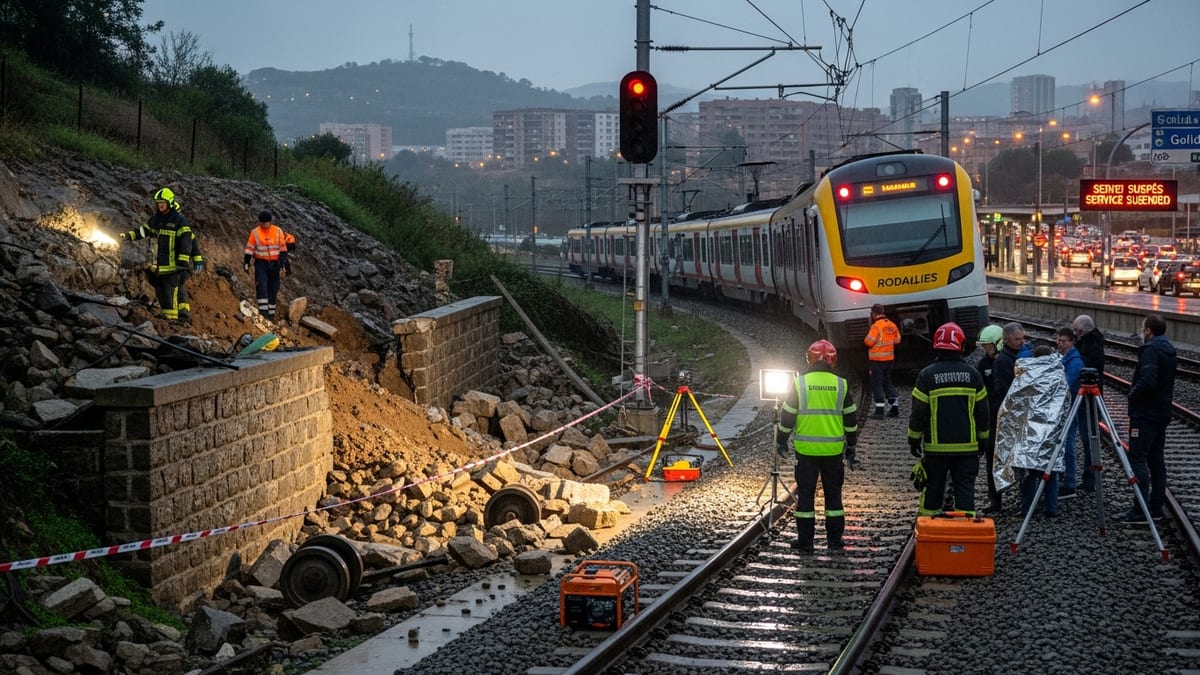
Derailment sends rail cars into Calgary waterway
A Canadian Pacific Kansas City freight train derailed in southwest Calgary on July 13, 2026, sending several rail cars into a nearby water body and triggering concerns about contamination of local ecosystems. Initial images from the scene showed tank cars partially submerged, emergency crews on-site and containment measures being deployed around the affected area.
According to published coverage, the derailment occurred near a corridor that intersects with provincially managed natural areas on the city’s western edge, a popular escape for local residents seeking nature close to downtown. The proximity of the incident to sensitive wetlands and riparian zones prompted immediate questions from residents and environmental groups about the potential release of fuels or other harmful substances.
Publicly available information indicates that hazardous materials were not the primary focus of the initial response and there were no reported injuries. Even so, environmental specialists and government agencies began sampling surface water and soils shortly after the incident to determine whether any pollutants had migrated beyond the crash site.
For travelers and outdoor enthusiasts who routinely use nearby parks and pathway systems, the derailment briefly cast a shadow over summertime plans, with some residents choosing to avoid the area until more was known about possible impacts on water quality and wildlife.
City points to minimal risk for provincial wetlands
As rail cars were stabilized and removed, the City of Calgary and provincial partners emphasized that early assessments did not indicate a significant threat to provincial wetlands that lie downstream or adjacent to the derailment zone. Reports indicate that containment booms, absorbent barriers and soil berms were installed quickly, reducing the likelihood of any material traveling far into connected wetland complexes.
Based on information released by municipal and provincial agencies, any leakage from the derailed cars appeared to be limited and largely confined to a small section of the waterway. Flow conditions on the day of the incident, described as moderate and controllable, supported the use of localized containment rather than large-scale diversion or evacuation measures.
Environmental reporting on similar rail events in Canada shows that rapid deployment of physical barriers and on-site vacuum trucks can significantly reduce the spread of contaminants into wetlands, which are particularly vulnerable to oil-based products. In the Calgary case, officials overseeing the cleanup have highlighted the absence of visible surface sheens across the broader wetland network and the lack of fish kills or sudden bird mortality as early positive signs.
For visitors eyeing weekend paddling, birdwatching or walking in the nearby provincial recreation lands, the message from public information channels has been that routine activities can continue, while localized closures remain around the rail corridor itself for safety and investigation purposes.
Ongoing monitoring and safeguards around sensitive habitats
While early statements have stressed the limited impact on wetlands, monitoring efforts are expected to continue for weeks or months. Published technical guidance for Canadian rail and infrastructure projects highlights that wetlands can be affected long after an incident through subtle changes in water chemistry, sediment quality and vegetation health, even when initial visual inspections appear reassuring.
Environmental sampling teams in Calgary are focusing on surface water, sediments and shoreline vegetation within and downstream of the derailment area. Data from these samples will be compared with baseline conditions to determine whether small amounts of spilled material accumulated in low-lying marshes, backwaters or groundwater-fed channels that are not immediately obvious to the eye.
If elevated contaminant levels are detected, standard responses can include targeted vegetation removal, excavation of contaminated soils, and restoration planting with native wetland species. Publicly available environmental policies at the provincial level also contemplate compensation and habitat enhancement work should any lasting degradation of provincially significant wetlands be confirmed.
For travelers and residents, this means that some access routes, trails or informal shoreline paths close to the derailment site may remain partially restricted during monitoring. However, regional tourism operators and park managers are expected to keep most facilities, campgrounds and trailheads open, providing alternative vantage points for experiencing the city’s river valley and wetland landscapes.
Travel and tourism considerations for Calgary visitors
From a tourism perspective, the incident has so far been framed as a localized infrastructure disruption rather than a citywide environmental crisis. Reports indicate that rail traffic has been managed through speed restrictions and adjusted schedules while inspectors evaluate track conditions, but Calgary’s airports, highways and urban transit services are operating normally.
Hotels and tour providers focusing on urban nature outings, cycling excursions and photography tours near the affected corridor have been monitoring public updates and adjusting itineraries where necessary. In many cases, guides are opting for alternative stretches of riverfront and upland parkland that provide similar views of the city skyline and prairie foothills without approaching the active cleanup zone.
Travel media coverage notes that Calgary’s wider network of wetlands, including protected areas on the city’s outskirts and along key bird migration routes, remains open and popular in the peak summer season. Birdwatchers are still reporting strong sightings of waterfowl and shorebirds, suggesting that habitat quality across the broader region has not been compromised by the derailment.
Visitors planning trips that combine Calgary with excursions to nearby mountain parks are being encouraged, through public information channels, to check local advisories for any temporary trail or parking restrictions close to the rail line. For most itineraries, minor detours are sufficient to avoid the work area while still taking in riverside viewpoints and urban wildlife hotspots.
Renewed focus on rail safety near valued natural areas
The Calgary derailment has added to a broader national conversation about rail safety where tracks pass close to waterways, wetlands and residential neighborhoods. Recent coverage of other Canadian derailments has underscored how quickly transportation incidents can become environmental stories, particularly when fuel or chemical cargo is involved.
Transportation oversight bodies and environmental agencies in Canada have, in recent years, placed greater emphasis on risk assessments for rail corridors that intersect with provincially significant wetlands and conservation lands. These assessments often recommend lower speeds, frequent infrastructure inspections and spill response equipment staged close to sensitive areas.
In the wake of the Calgary incident, commentators in Canadian media have pointed to the relative good fortune that the derailment did not involve large volumes of highly toxic cargo and occurred in an area where access for cleanup crews was straightforward. Publicly available information suggests that the rapid, coordinated response helped prevent a more serious impact on the surrounding wetland network.
For the travel community, the episode serves as a reminder of the complex interface between transportation systems and the natural landscapes that draw visitors to places like Calgary. As the city continues to promote its riverside pathways, bird habitats and wetland parks as key attractions, the performance of risk controls along nearby rail lines will remain an important backdrop to both environmental confidence and visitor perception.