


Punta Sur Eco Beach Park sits at the wild southern tip of Cozumel, where a historic lighthouse, crocodile-filled lagoon, shallow Caribbean beaches, and protected reefs all come together in one conservation area. This guide walks you through every part of the park, from climbing Faro Celarain to snorkeling the reef and spotting birds over Colombia Lagoon, with practical tips on facilities, beach clubs, and how long to spend on site.
Get the latest updates straight to your inbox!
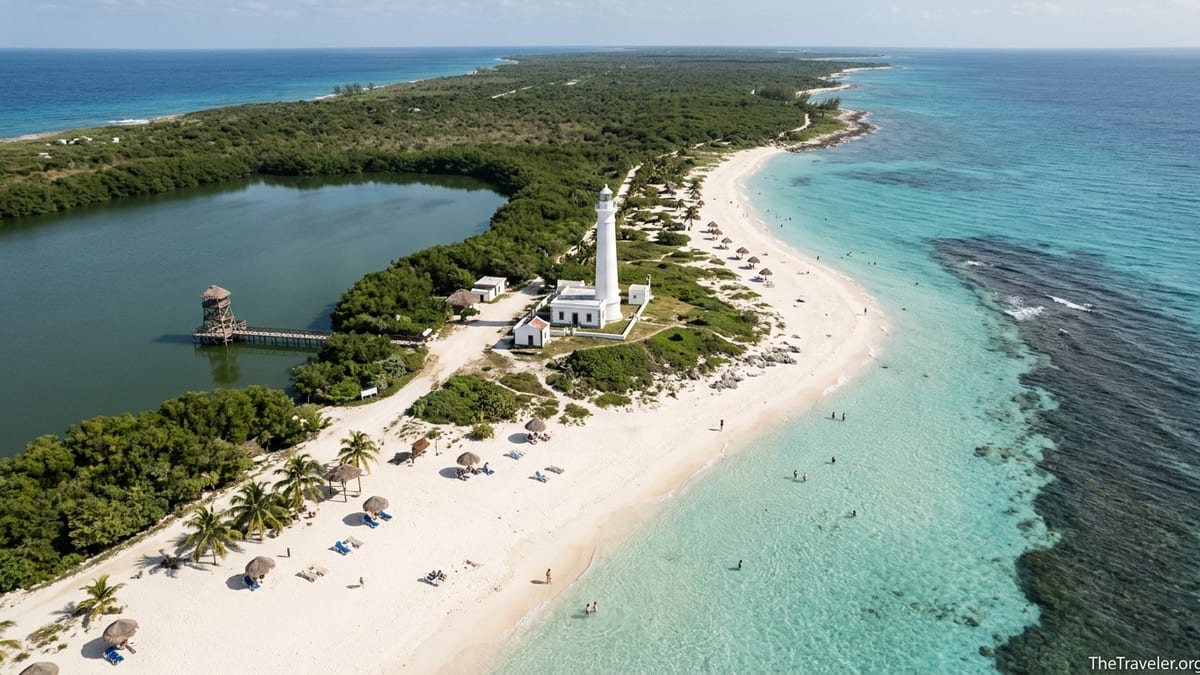
Orientation: What Punta Sur Eco Beach Park Actually Is
Punta Sur Eco Beach Park covers the entire southern tip of Cozumel, forming the island’s largest ecological reserve. Inside its protected area you will find a classic white lighthouse, miles of undeveloped shoreline, coastal dunes, mangrove lagoons, and fringing reef that forms part of the wider Arrecifes de Cozumel National Park. The feel is very different from the busier beach clubs closer to town; Punta Sur is quieter, more spacious, and intentionally kept low key to protect the environment.
The park is officially known as Parque Punta Sur or Eco Parque Faro Celarain. Admission as of mid 2026 is generally around 25 US dollars for adults and a reduced rate for children, with kids under three usually free. That single entry fee covers access to the lighthouse museum, the crocodile viewing platforms over Colombia Lagoon, the nature trails, catamaran or small boat ride on the lagoon when operating, and the beaches at the far end of the park. Food, drinks, and gear rentals are extra, but many visitors are surprised by just how much is included for the base price.
From the cruise piers or downtown San Miguel, it typically takes 35 to 45 minutes to reach the park entrance by taxi or rental vehicle, depending on traffic and which pier your ship uses. After you pass through the gatehouse and ticket area, a long internal road runs through the reserve toward the lighthouse and then farther along to the beach clubs. Even without stopping, the drive from the entrance to the final beach takes around 15 to 20 minutes, which is important to factor into your timing if you are visiting on a cruise schedule.
Most people structure their day around three park highlights: Faro Celarain lighthouse for the view and museum, Colombia Lagoon for wildlife, and the Caribbean side beaches for swimming and reef access. If you give yourself enough time to experience each of these at a relaxed pace, Punta Sur adds up to one of the most varied single-day outings anywhere on Cozumel.
Faro Celarain Lighthouse and Nautical Museum
Faro Celarain is the white, cylindrical lighthouse that marks Cozumel’s southernmost point and serves as the visual centerpiece of Punta Sur. The structure stands over a low headland, with the Caribbean on one side and the lagoon and mangroves on the other. Inside, a narrow staircase of roughly 130 steps spirals to the top viewing platform. On clear days you can see the coastline curve away in both directions and look straight down onto the surf breaking on the outer reef.
Before or after your climb, it is worth spending a few minutes inside the small nautical museum housed in the former keeper’s quarters at the base of the lighthouse. Displays explain the maritime history of Cozumel, early navigation in the Caribbean, and shipwreck stories from the surrounding reefs. While it is not a large museum, travelers with children often find it a helpful way to contextualize the lighthouse and give younger visitors a break from the heat before tackling the staircase.
At ground level around Faro Celarain you will usually find restrooms, shaded seating, and at least one small shop or kiosk selling drinks and simple snacks. Many tour groups time their first stop here, allowing guests to stretch their legs after the drive and to take photos around the lighthouse and shoreline. If you are arriving independently, consider visiting the lighthouse earlier in the day, both to avoid the hottest midday sun on the staircase and to beat the peak of cruise excursion traffic.
From Faro Celarain, the park’s internal road continues along the coastline toward the beach area. Some organized Jeep or buggy tours will pause for quick photo stops at viewpoints between the lighthouse and the beaches, but if you are driving yourself you can simply follow the well-marked route until you reach the first beach club and parking area.
Colombia Lagoon: Crocodiles, Birds, and Mangroves
Colombia Lagoon lies just north of the main road between the park entrance and the beaches, forming part of a shallow lagoon system behind the dunes. Here, brackish water and mangroves create a habitat for American crocodiles, herons, egrets, and a variety of other coastal and migratory birds. Instead of cages or pens, the park uses elevated boardwalks and a simple observation tower so you can look down into the lagoon while keeping a healthy distance from the wildlife.
Many visitors see crocodiles basking on the mudbanks or swimming slowly along the channels below the platforms. Because these are wild animals, sightings are never guaranteed, but late morning and early afternoon on warm, sunny days tend to be productive times. Even if the crocodiles are shy when you visit, the lagoon still offers excellent birdwatching and a very different landscape from the beaches, with dense mangrove roots and still, reflective water.
Punta Sur often operates a short catamaran or small motorboat tour on Colombia Lagoon that is included in your admission ticket when running. The boat typically departs from a simple dock reached by a boardwalk near the observation tower and spends about 30 to 40 minutes cruising quietly through the lagoon to look for birds and crocodiles. Guests sit under a canopy, and a local guide explains the ecology of the mangroves and the importance of the lagoon as part of the Mesoamerican Reef system. Tips for guides are appreciated but optional, so having some small peso or dollar notes handy is helpful.
If you are serious about wildlife photography, bring a zoom lens; crocodiles and birds often stay just far enough away that a phone camera might struggle. A 200 to 300 millimeter equivalent lens on a mirrorless or DSLR camera captures much more detail. Whatever you bring, use a neck strap and take care with loose items on the observation tower, as wind gusts can be stronger than they appear over the open water.
Beaches, Reef Access, and Snorkeling Conditions
The beaches at Punta Sur run along the park’s southeastern shoreline, with soft white sand and long, shallow entries into clear turquoise water. Unlike the steeper drop-offs at some west coast Cozumel beaches, the shore here often stays waist-deep for a considerable distance, making it especially appealing for families with younger children or for anyone who prefers to stand rather than swim. Beach palapas, loungers, and hammocks are grouped near the main access points, leaving wide stretches of sand with plenty of space between visitors.
The snorkeling at Punta Sur is typically done from shore or, more commonly, as part of a guided swim parallel to the reef led by a local guide. The fringing reef sits a short distance off the beach and can be reached by swimming out from marked entry points. For environmental reasons and safety, the park strongly encourages or requires guests to join a guide rather than wandering at random over the reef, and some beach clubs work with trusted snorkel guides who organize small groups. Expect to see sea fans, brain coral, schools of grunts and damselfish, and occasionally rays or turtles along the reef’s edge.
Water conditions vary with weather, but mornings often bring the calmest seas and clearest visibility. On windy days, waves can pick up quickly, and the park may temporarily restrict or halt snorkeling if currents look unsafe. Bring your own snorkel gear if you have it, or rent a set from one of the beach areas; rentals are typically priced per person for mask, snorkel, fins, and a required flotation vest. Most visitors also choose to wear rash guards instead of traditional sunscreen to reduce reef damage, since the park is part of a wider marine protected area.
Even if you are not interested in snorkeling, simply wading in the shallows and floating over the sandy bottom can be one of the most relaxing parts of a Punta Sur visit. Plan for strong sun here: the open beach offers little natural shade apart from the palapas, so a wide-brimmed hat, sunglasses, and frequent hydration are as important as your swimsuit. Sandals or water shoes make the walk from parking to the beach easier, especially when the sand heats up in midday.
Beach Clubs, Food, and Facilities
Punta Sur is managed as an eco park, but you will still find a small number of beach clubs and service areas tucked into the dunes. Near the end of the internal road, simple beach clubs offer shaded seating, palapas, hammocks, and basic restaurant service right on the sand. Menus tend to focus on familiar Mexican-Caribbean staples such as fish tacos, ceviche, grilled shrimp, quesadillas, and guacamole, along with soft drinks, beer, and frozen cocktails. Prices are usually a bit higher than in town due to the remote location, but most visitors find them reasonable given the setting.
Some clubs provide loungers and umbrellas on a first-come, first-served basis with an expected minimum consumption per person rather than a separate chair rental fee. In practice, that might mean a couple ordering a shared platter of nachos, a ceviche, and a few drinks over the course of several hours, which effectively covers their beach seating. A few newer operations have invested in more upscale day beds and branded beach furniture, creating a slightly more polished atmosphere while still respecting the park’s low-density guidelines.
Across the park, facilities are basic but adequate. Expect restrooms at the main entrance, near the lighthouse museum, and adjacent to at least one of the beach clubs. Showers and changing areas are usually simple outdoor rinsing stations or modest enclosed stalls rather than full spa-style facilities. Parking is unpaved but straightforward, and most rental Jeeps, compact cars, and even some small tour buses can navigate the internal road without difficulty in normal weather conditions.
If you have specific dietary needs or are traveling with small children, consider bringing snacks and plenty of water even though food is available inside the park. A soft-sided cooler with sandwiches, fruit, and juice boxes can make the day easier, especially if you plan to spend several hours on the farthest beach away from the main services. Just remember that this is a protected area, so you should pack out all trash and avoid feeding any wildlife that approaches your picnic spot.
Nature Trails, Mayan Ruins, and Quiet Corners
Beyond the main highlights, Punta Sur offers low-key nature experiences that reward visitors who slow down. Short, signed trails lead through coastal vegetation, giving you a close look at dune plants, cactus species, and scrub forest adapted to the salty, windy conditions. These walks are generally flat and short enough for most visitors, though the paths can be sandy and uneven, so closed-toe shoes or sandals with a strap are more comfortable than flip-flops.
Not far from the lighthouse sits El Caracol, a small pre-Hispanic Mayan structure sometimes described as a shrine or signal station. Its name, which means “the snail,” comes from the conch shells embedded in the construction. Though modest in scale compared with mainland ruins, El Caracol provides a tangible link between the ancient coastal trade routes and the modern lighthouse that replaced older navigational methods. Simple interpretive signage explains the site’s significance, and many visitors stop here for photos as part of the loop between the lagoon and the beach.
Because Punta Sur spreads out over a large area, it is easy to find quiet corners even on days when multiple cruise ships are in port. Early in the morning, you might share the beach only with a few other photographers capturing the soft light over the Caribbean. Later in the afternoon, as organized tours head back toward town, independent travelers often find that the park feels noticeably calmer, with long stretches of beach nearly empty aside from shorebirds patrolling the waterline.
Keep an eye out for small native mammals such as the Cozumel coati or raccoon-like creatures that sometimes roam near the parking areas and beach clubs. While they can be charming to watch, it is important not to feed them, both for their health and to avoid encouraging them to become persistent around dining areas. Binoculars are also handy if you enjoy birdwatching; osprey, frigatebirds, and pelicans are commonly seen cruising above the surf or perched on posts near the lagoon.
Practical Planning: Getting There and How Long to Stay
Punta Sur lies roughly 30 kilometers south of San Miguel, Cozumel’s main town. If you are staying at a resort on the island, the simplest option is usually a taxi or rental vehicle. Taxis from the hotel zone and cruise piers often operate on fixed-zone pricing; you can check the current rate with your hotel concierge or at the taxi stand before committing. If you rent a Jeep or compact car for the day, you can combine Punta Sur with a loop of the island’s eastern shore, stopping at other viewpoints or beach bars on the way back.
Many cruise passengers and resort guests choose a guided Jeep, buggy, or small-bus excursion that includes transportation, park entry, and a structured schedule of stops at the lighthouse, lagoon, and beach. These tours can be convenient if you prefer not to drive, and they take the guesswork out of timing for passengers who must be back on board by a set hour. The trade-off is less flexibility: you may only have 45 to 60 minutes at the beach before it is time to move on, so consider whether you prefer more independent, unhurried time in one place.
In terms of time commitment, plan for at least two and a half to three hours inside the park if you want to climb the lighthouse, visit Colombia Lagoon, and spend some time on the beach. Add another 60 to 80 minutes in total for travel from and back to the cruise piers or town, depending on traffic and how often you stop for photos along the way. Travelers who are particularly interested in snorkeling or who love low-key beach days often stay four to five hours, especially if they set up at a beach club and order lunch.
The park typically opens in the morning and closes in the late afternoon, so check the current hours with your hotel or at the ticket booth when planning a visit, particularly during holidays or low season when schedules can shift. Arriving close to opening time means cooler temperatures for the lighthouse climb and more tranquil beaches, while a mid-morning arrival may line up better with public boat departures on Colombia Lagoon.
The Takeaway
Punta Sur Eco Beach Park brings together many of Cozumel’s best qualities in a single protected area: a working lighthouse with sweeping views, a mangrove lagoon home to wild crocodiles and wading birds, a shallow family-friendly beach on the Caribbean side, and easy snorkeling access to sections of the island’s famous reef. It is less about flashy attractions and more about space, scenery, and subtle wildlife encounters.
With one affordable entry fee covering the key experiences inside the park, Punta Sur represents strong value for travelers who appreciate nature and do not mind the longer drive from town. By planning a half day to full day, wearing proper sun protection, and bringing curiosity for both the land and sea, you can turn a simple beach outing into a memorable look at Cozumel’s wild south. For many visitors, a day at Punta Sur becomes the highlight that they remember long after their cruise or resort stay has ended.
FAQ
Q1. How much does it cost to enter Punta Sur Eco Beach Park?
Admission for adults is generally around 25 US dollars, with a reduced rate for children and free entry for very young kids, but prices can change slightly over time.
Q2. How long should I plan to spend at Punta Sur?
Most visitors are happiest with at least three hours inside the park, which allows time for the lighthouse, crocodile lagoon, and a relaxed swim or snorkel at the beach.
Q3. Is Punta Sur suitable for young children?
Yes, the shallow beaches and calm water are very family friendly, but parents should supervise children closely near the lagoon and never let them approach wildlife or climb railings.
Q4. Can I snorkel from the beach at Punta Sur?
You can usually snorkel from shore with a guide along the fringing reef; conditions depend on weather and currents, so always follow local safety advice and posted signs.
Q5. Are there food and drinks available inside the park?
Yes, small beach clubs and kiosks serve meals, snacks, and drinks, though menus are limited compared with town, so bringing extra water and snacks is still a good idea.
Q6. What wildlife might I see in Colombia Lagoon?
Visitors often spot American crocodiles, herons, egrets, and other coastal birds from the observation tower and boardwalks, especially on warm, sunny days.
Q7. Do I need to book a tour, or can I visit independently?
You can do either; guided excursions bundle transportation and timing, while independent visitors enjoy more flexibility but must arrange their own taxi or rental vehicle.
Q8. Is Punta Sur accessible for people with limited mobility?
Some areas, such as the main beach access and certain viewpoints, are relatively flat, but the internal paths, boardwalks, and lighthouse stairs can be challenging for those with reduced mobility.
Q9. What should I wear and bring for a day at Punta Sur?
Light clothing, a swimsuit, reef-safe sun protection, a hat, sunglasses, sturdy sandals, water, and optionally snorkel gear, binoculars, and a camera with a zoom lens work well.
Q10. Is Punta Sur open year-round?
The park is usually open throughout the year, but hours and services can vary by season and weather, so it is wise to confirm current opening times once you are on the island.