


More news on this day
Air travel across Asia and the Gulf faced another punishing day as publicly available flight tracking data showed 227 cancellations and more than 3,400 delays across key hubs in Singapore, Japan, the United Arab Emirates, Vietnam, China, India and Indonesia, disrupting operations for carriers including Emirates, Japan Airlines, SpiceJet, VietJet Air and others.
Get the latest news straight to your inbox!
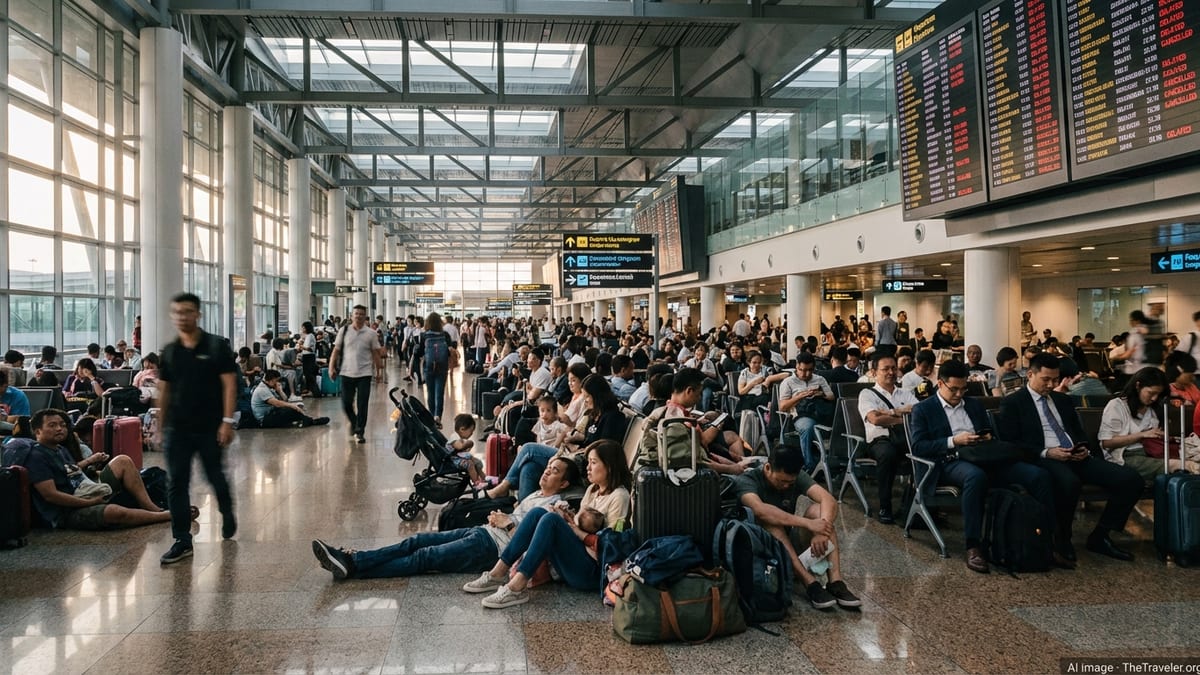
Major Hubs From Osaka To Abu Dhabi Under Pressure
Operational data compiled from multiple tracking platforms and airport departure boards indicate that disruption has been concentrated at a string of major gateways, including Osaka, Shanghai, Abu Dhabi, Hanoi and Hyderabad, with spillover effects across wider regional networks. Flights into and out of Singapore have also recorded elevated delay levels, mirroring a pattern seen repeatedly in recent months as tight schedules collide with surging passenger demand.
In Japan, Osaka Kansai has featured prominently among affected airports, with long queues forming at security and check in as delayed inbound aircraft pushed departure banks later into the day. Reports indicate that some services from the Middle East and Southeast Asia into Kansai have been either retimed or cancelled outright, forcing rebookings via Tokyo and other alternative gateways.
At Shanghai’s primary international hub, a series of recent information technology and air traffic flow issues has already highlighted the vulnerability of regional operations to even short disruptions. Flight disruption logs for the latest incident again show Shanghai near the top of both cancellation and delay tallies, contributing to knock on problems for China bound services departing from Singapore, India and the Gulf.
Abu Dhabi has faced its own share of schedule strain as airlines thread flights through a congested and geopolitically sensitive airspace corridor. While core operations continue, the combination of airspace restrictions, rolling schedule changes and aircraft availability constraints has periodically forced Gulf carriers and their Asian partners to thin out frequencies or consolidate flights on certain days.
Emirates, Japan Airlines, SpiceJet And VietJet Among Hardest Hit
Published coverage of recent disruption days across Asia and the Middle East shows a broad mix of airlines appearing in cancellation and delay tables, rather than a single carrier dominating. Full service operators such as Emirates and Japan Airlines have been listed alongside low cost players including VietJet Air and SpiceJet, reflecting how widespread scheduling pressures have become across different business models.
For Emirates, route specific suspensions and one off cancellations into markets such as Osaka have created particular challenges for travellers relying on the carrier’s hub and spoke model in Dubai. Publicly available passenger accounts describe instances where Emirates services between Dubai and Kansai were withdrawn for extended periods, forcing re-routings via Tokyo or alternative Asian hubs for those seeking to reach western Japan.
In South and Southeast Asia, Indian carrier SpiceJet and Vietnam based VietJet Air have also featured repeatedly in disruption trackers. High aircraft utilization and dense short haul schedules leave these operators exposed when upstream delays accumulate, with even minor ground handling or weather issues at one station quickly rippling through to subsequent sectors and contributing to the rising tally of late departures.
Japan Airlines, along with other Japanese and Korean network carriers, has faced sustained pressure on routes linking major domestic and regional points to hubs in China, Southeast Asia and the Gulf. Tight connection windows at airports such as Osaka, Tokyo and Seoul mean that any delay on feeder services can cascade into missed long haul departures, requiring last minute reaccommodation and, in some cases, overnight stays for affected passengers.
Weather, Airspace Constraints And Staffing Pose Ongoing Risks
Analysts note that the specific trigger for any single disruption day can vary, ranging from localized thunderstorms or fog to more systemic issues such as airspace closures or airport infrastructure outages. However, recent patterns across Asia point to a combination of factors repeatedly undermining schedule reliability, especially at peak travel times.
Weather remains a persistent wildcard. Seasonal storms over parts of the Indian Ocean, the Bay of Bengal and the South China Sea regularly force reroutes and holding patterns that can erode crew duty limits and burn through built in schedule buffers. When this coincides with already busy holiday or long weekend periods, the number of flights arriving late into key transit hubs can climb quickly.
Airspace constraints linked to geopolitical tensions and military activity in parts of the Middle East and surrounding regions have further compressed options for airlines connecting Asia with Europe and Africa. Publicly available routing information shows multiple carriers operating longer or more northerly tracks to avoid sensitive zones, adding flight time and narrowing turnaround margins at downline airports.
Staffing and resource limitations at some airports and ground handling companies also continue to play a role. Even as passenger volumes approach or exceed pre pandemic levels on popular Asia Pacific and Gulf routes, recruitment and training pipelines for pilots, cabin crew, air traffic controllers and technicians have not always kept pace. This has left operations vulnerable when sickness spikes, technical issues emerge or unexpected weather events hit multiple hubs simultaneously.
Knock On Effects Across Secondary Asian Airports
While headline disruption numbers often focus on marquee hubs such as Singapore, Tokyo, Shanghai and Abu Dhabi, data from flight status platforms show significant secondary impacts at smaller and mid sized airports across Asia. Cities including Hanoi, Hyderabad and regional Chinese and Indonesian gateways have all reported higher than usual levels of late and cancelled services on days when major hubs experience stress.
Hanoi’s Noi Bai airport, for example, has seen delays on both inbound and outbound services when aircraft originating in Japan, China or the Gulf depart late from their point of origin. VietJet Air and other regional carriers operating tight turnarounds at Noi Bai face limited flexibility to absorb such shocks, particularly on aircraft that are scheduled to complete multiple sectors in a single day.
Hyderabad and other Indian cities with strong links to Gulf and Southeast Asian hubs have similarly registered elevated delay counts on peak disruption days. Publicly available timetables show many flights timed to connect with early morning or late night waves in Dubai, Abu Dhabi and Singapore, leaving little room to recover when those inbound flights arrive significantly behind schedule.
In Indonesia and across secondary markets in China, delay patterns have demonstrated how quickly problems in a handful of major hubs can spread across continental networks. Aircraft rotations that link regional fields to national or regional centers such as Jakarta, Beijing or Shanghai are particularly exposed, as a late departure early in the day can echo across the remainder of the schedule.
What Travelers Can Do As Disruptions Persist
With no single cause driving the current wave of cancellations and delays, aviation observers suggest that elevated disruption risk is likely to persist across Asia and the Gulf through the coming peak travel periods. Airlines continue to adjust schedules, add spare aircraft where possible and refine crew planning, but structural constraints in airspace and infrastructure mean that sudden spikes in delays remain a possibility.
Publicly available guidance from airports and carriers across the region emphasizes the importance of monitoring flight status closely in the 24 hours before departure. Official apps, text alerts and airport information screens generally provide the earliest indication of schedule changes, giving passengers more time to adjust transfers, accommodation and ground transport if a flight is significantly delayed or cancelled.
Travel specialists also highlight the value of building additional buffer time into itineraries that rely on tight connections at major hubs such as Singapore, Tokyo, Shanghai and Abu Dhabi. Selecting slightly longer connection windows, favoring morning departures where feasible and avoiding last flight of the day options on critical legs can provide extra protection against missed onward journeys when disruption strikes.
For now, the latest tally of 227 cancellations and more than 3,400 delays serves as another reminder of the fragility of Asia’s recovering aviation ecosystem. As passenger demand continues to grow, the region’s airlines and airports face the ongoing challenge of reinforcing operations so that localized shocks do not so easily cascade into continent wide disruption.