


More news on this day
Thousands of travelers across Asia and the Middle East are facing long queues, missed connections and unexpected overnight stays as airlines cancel hundreds of flights and delay thousands more at major hubs including Beijing, Kuala Lumpur, Tokyo, New Delhi, Istanbul and Dubai.
Get the latest news straight to your inbox!
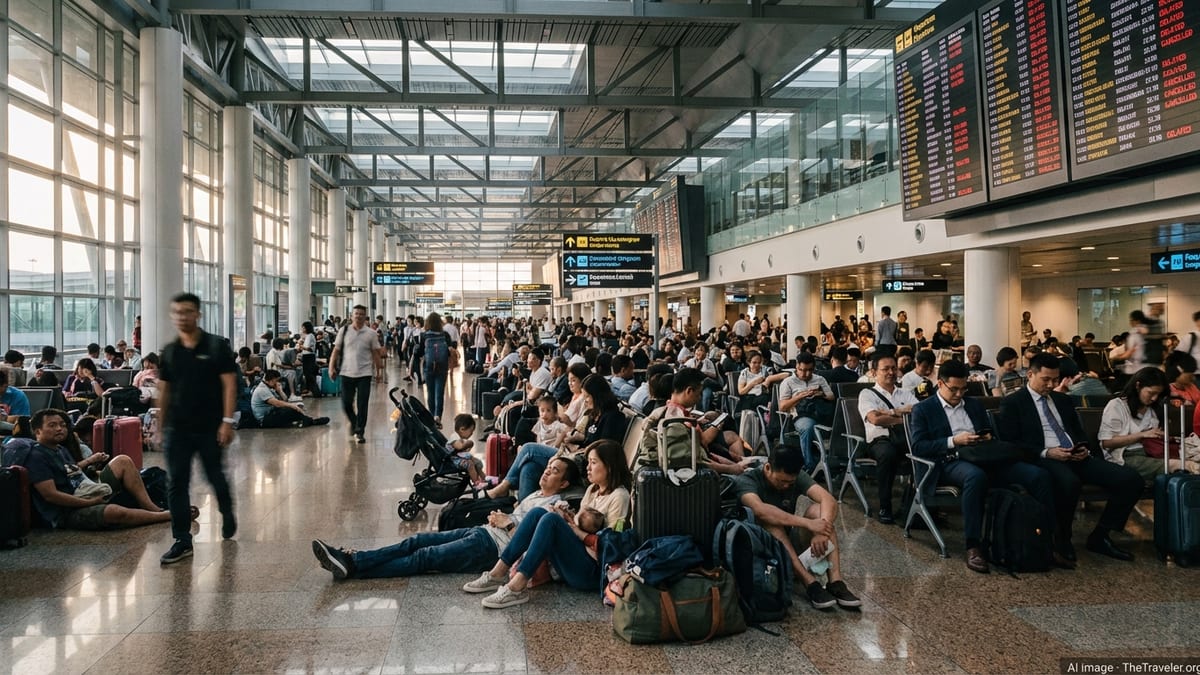
Wave of Cancellations and Delays Ripples Across Key Hubs
Published aviation data and regional news coverage for June 2026 show a mounting wave of disruptions across Asia’s busiest airports as carriers struggle with reduced capacity, rising fuel costs and congested airspace. In aggregate, hundreds of flights have been canceled and several thousand delayed across recent days, leaving passengers crowded into terminals with limited rebooking options.
In China, disruption reports from early June describe widespread delays and cancellations at major hubs serving Beijing and other large cities, with knock-on effects for onward services to Europe, North America and Southeast Asia. These problems are being compounded by schedule adjustments from international carriers that rely on Chinese airports as key transfer points, leading to missed connections for long haul travelers.
Japan has simultaneously been grappling with its own network bottlenecks, with domestic and international routes affected at major airports around Tokyo and other metropolitan regions. Coverage from traveler advocacy and aviation tracking platforms indicates that well over 500 flights were canceled and hundreds more delayed nationwide in early June, causing severe crowding at check in counters, transfer desks and accommodation lines.
Further west, large international hubs such as Dubai and Istanbul are also experiencing turbulence in their daily operations as airlines recalibrate their June and summer schedules. Flight reductions at these transit gateways are particularly painful for passengers traveling between Europe, the Indian subcontinent and East Asia, who often depend on a single missed leg to complete itineraries spanning three regions.
Airlines Slash Schedules as Costs and Capacity Bite
Several Asian and Gulf carriers have announced substantial schedule cuts for May and June, eroding resilience across the wider network. Thai AirAsia publicly detailed a reduction of around 30 percent of its flight capacity for the early summer period, alongside suspensions on select routes such as services between Bangkok’s Don Mueang airport and Hong Kong. Similar route consolidations are being reported at other low cost and hybrid carriers in the region.
Full service airlines are also engaged in large scale recalibration. Emirates has reduced its June departures from Dubai by roughly 16 percent, removing hundreds of flights from the schedule and reshaping connections to cities including Beijing and key destinations in Australia and the Indian Ocean. Aviation analysts note that such cuts, when implemented at short notice, can strand passengers with limited rebooking options and push remaining flights close to full capacity.
Regional carriers such as Garuda Indonesia and Batik Air have been adjusting their programs as well, consolidating frequencies on underperforming or operationally challenging routes. Publicly available information highlights that these changes, although sometimes targeted at quieter travel days, can have system wide impact when they affect feeder flights into larger intercontinental services operated by partner airlines.
In parallel, other operators including Korean Air, Malaysia based airlines and Gulf competitors are fine tuning capacity on sectors connecting to Tokyo, Beijing, Kuala Lumpur, New Delhi and secondary cities. Industry trackers point to a careful balancing act as carriers juggle higher fuel bills, aircraft maintenance cycles and crew availability, often resulting in last minute timetable changes that travelers discover only hours before departure.
Travelers Face Crowded Terminals and Limited Alternatives
The practical result for passengers is a patchwork of cancelled and delayed flights that can be difficult to navigate, particularly when itineraries involve multiple airlines or self connections. Reports from recent disruptions in Beijing and Shanghai describe travelers queueing for hours at transfer desks to secure alternative routings after afternoon cancellations cascaded into evening departures.
In Japan, where hundreds of flights were either canceled or severely delayed at the start of June, passengers encountered overloaded call centers and mobile apps that could not always offer same day alternatives. With popular routes to and from Tokyo, Osaka and regional hubs already operating near capacity, many travelers were forced to accept departures a day or more later than planned.
At Southeast Asian hubs such as Kuala Lumpur, travel blogs and passenger forums have documented cases in which a single aircraft incident or runway disruption removed key rotations from the schedule, further tightening an already constrained operation. The cancellation of individual sectors has left some travelers stranded midway through multi leg journeys linking India, the Gulf and East Asia.
In Dubai and Istanbul, where a large share of traffic connects between continents, schedule cuts by long haul carriers have significantly reduced flexibility. When a transit flight is canceled at short notice, passengers who previously might have chosen among several onward departures in the same day are now confronted with the prospect of overnight stays or rerouting through entirely different hubs such as Doha, Singapore or European gateways.
Compounding Factors Behind the Disruptions
A mix of short term shocks and longer term structural issues appears to be driving the latest wave of cancellations and delays. Industry commentary frequently cites surging jet fuel prices as a central factor, prompting airlines such as Thai AirAsia and Thai Lion Air to trim unprofitable or marginal routes during the low season, particularly on links between Southeast Asia and major markets in China, India and Japan.
Capacity limitations following the global fleet grounding and gradual reactivation of stored aircraft continue to play a role as well. Some carriers have fewer spare aircraft and crew reserves than before, making it harder to absorb operational disruptions such as technical inspections, weather related delays or runway incidents. When a single flight is removed, it can trigger a chain reaction across an airline’s network and leave aircraft and crew out of position.
Airspace constraints and shifting geopolitical conditions are also influencing route planning for services that connect East Asia, South Asia, Europe and the Gulf. Publicly available commentary from airline analysts suggests that increased avoidance of certain overflight corridors has lengthened flight times and narrowed operational buffers, leaving less room in daily schedules to recover from late departures or unplanned diversions.
At the same time, demand patterns have become less predictable in some key markets. While overall passenger numbers in Asia have rebounded strongly compared with earlier years, load factors can vary sharply by route and day of week. Airlines reacting quickly to lower than expected bookings on selected sectors may consolidate multiple departures into a single flight, translating into late cancellations that travelers experience as sudden and disruptive.
What Stranded Passengers Are Being Advised to Do
Consumer advocates and travel compensation specialists recommend that affected passengers document every step of their disruption, including boarding passes, written cancellation notices and receipts for meals, ground transport and hotels. These records can be essential when filing claims under regional passenger protection frameworks or seeking reimbursement directly from carriers.
Travel blogs focusing on Asia and the Middle East emphasize the importance of checking flight status repeatedly in the 24 hours before departure, especially for trips routed through Beijing, Kuala Lumpur, Tokyo, New Delhi, Istanbul and Dubai. With many airlines revising schedules on short notice, a flight that appears confirmed several days in advance may still be retimed or canceled as operational realities change.
Experts also suggest building longer connection windows when traveling through hubs where recent disruption levels have been high. Instead of choosing the tightest possible transfer, travelers heading through Dubai, Istanbul or major North Asian airports may reduce their risk of missed connections by allowing several hours between flights, even if this results in a longer overall journey.
Finally, publicly available guidance from passenger rights organizations highlights that travelers should familiarize themselves with the compensation and care policies applicable to their itinerary. Rules vary widely between jurisdictions such as the European Union, Turkey, India and Gulf states, and between low cost and full service carriers. Understanding in advance what support may be available can help passengers make informed decisions when flights are canceled or heavily delayed at short notice.