


Newark, New Jersey is often treated as a place you pass through on the way to New York City. That is a mistake. Used well, Newark can be a smart, good-value base for visiting Manhattan while also offering its own rich food culture, museums and performance venues. From Portuguese bakeries in the Ironbound to evenings at the New Jersey Performing Arts Center, this compact city rewards travelers who pause and explore instead of rushing straight to Midtown.
Get the latest updates straight to your inbox!
Why Base Yourself in Newark Instead of Manhattan
For many visitors, especially those watching their budget, Newark can be a practical alternative to staying in Manhattan. Hotels around Newark Penn Station and in the downtown core are often noticeably cheaper than comparable rooms across the Hudson, particularly on weekdays when New York business rates climb. You still have fast rail links into Manhattan, but you are paying New Jersey rather than New York prices for accommodation, casual meals and parking.
Location is another advantage. Newark Penn Station sits on major regional rail lines, so you can be at New York Penn Station in Midtown in roughly 20 minutes on an NJ Transit commuter train, or reach the World Trade Center in Lower Manhattan via PATH trains in about 25 minutes, depending on schedules. That means you can spend the day at the Met or Broadway, then be back in your Newark hotel room with a late-night snack from a nearby diner without a long or complicated journey.
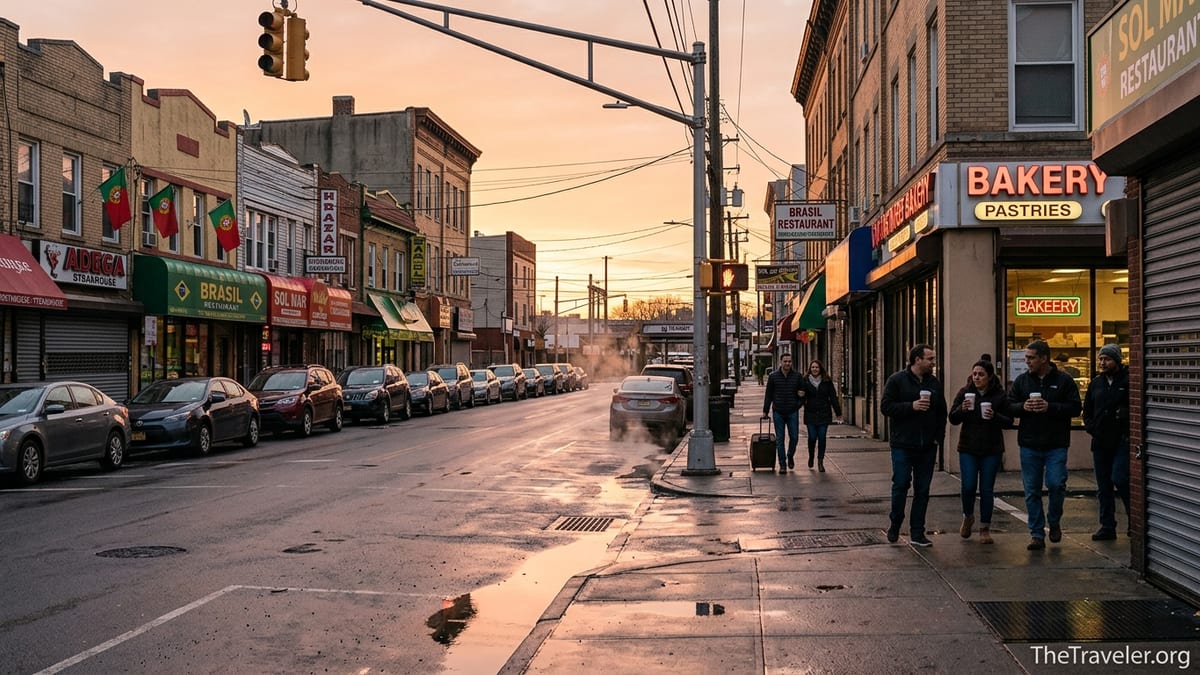
Newark also offers a more local, everyday feel than many heavily touristed parts of Manhattan. In neighborhoods like the Ironbound, families gather at Portuguese and Brazilian restaurants on weekends, and regulars chat in cafés as soccer plays on television. You can walk into a small bakery for a pastel de nata and be surrounded mainly by Newark residents rather than tour groups. For travelers who enjoy feeling part of city life rather than only its visitor economy, that atmosphere can be part of the appeal.
Finally, Newark rewards curiosity with its own cultural institutions. The Newark Museum of Art has long-standing art and science exhibits and community-focused shows; the New Jersey Performing Arts Center (NJPAC) and Newark Symphony Hall draw major touring musicians and comedians as well as local ensembles. Planning your trip around one of these performances lets you combine NYC sightseeing with distinctive evenings in Newark itself.
Getting In and Around: Trains, PATH and Local Transit
If you are flying, Newark Liberty International Airport is an obvious entry point. From the terminals, an automated AirTrain connects to Newark Liberty International Airport Station, where you can transfer to frequent NJ Transit trains to Newark Penn Station or directly into New York Penn Station. The ride into Newark Penn typically takes around 10 minutes once you are on the train, making it easy to move from plane to hotel without needing a taxi.
Newark Penn Station is the city’s main rail hub and your anchor for both local exploring and daily trips into Manhattan. NJ Transit commuter trains on the Northeast Corridor and North Jersey Coast Line run frequently between Newark Penn and New York Penn Station in Midtown, often every 10 to 15 minutes at peak periods. The ride is around 20 minutes, and you buy tickets from vending machines, staffed windows or the NJ Transit mobile app. Many visitors keep a small balance in the app and simply activate a ticket just before boarding.
For Lower Manhattan, the PATH system is useful. PATH trains from the lower level of Newark Penn run directly to the World Trade Center, with a typical travel time of roughly 25 minutes once you depart. Fares are usually lower than NJ Transit, and the same contactless payment you would use on the New York City subway can often be tapped on at PATH turnstiles. This makes it straightforward to, for example, visit the 9/11 Memorial and nearby neighborhoods like Tribeca, then return to Newark without ever using a taxi.
Within Newark, you can often walk between downtown, the performing arts district and the Ironbound, especially in good weather. Newark Light Rail links Newark Penn Station to the Newark Museum of Art area and neighborhoods farther north, and local buses fill in gaps. At night, many travelers prefer taxis or rideshares for short hops between dinner, entertainment venues and their hotel. Drivers are familiar with taking visitors between Newark Penn, NJPAC and the Ironbound’s main dining streets, which keeps rides simple even for first-timers.
Eating Your Way Through Newark’s Ironbound
The Ironbound neighborhood, a short walk or one light-rail stop from Newark Penn Station, is the heart of the city’s food scene. Historically shaped by waves of Portuguese, Spanish and later Brazilian and Latin American immigration, it is packed with restaurants, cafés and bakeries along main arteries such as Ferry Street and Wilson Avenue. Local tourism officials estimate there are well over 100 spots serving Iberian and Latin dishes in just a small radius, which gives a sense of how dense the options are.
For a classic sit-down meal, many visitors gravitate to long-running Portuguese and Spanish restaurants where grilled seafood and generous platters are the norm. You might find charcoal-grilled whole fish served with potatoes and garlicky greens, or a clay pot of seafood stew rich with clams, mussels and shrimp in tomato broth. Brazilian rodizio steakhouses are another Ironbound fixture, with servers circulating through the room carving slices of slow-roasted beef, pork and chicken at your table; you pay a fixed price and eat as much as you like from the skewers and salad bar.
In recent years, smaller, more contemporary spots have joined the traditional mainstays. At Sabor Unido on Jefferson Street, for example, the focus is on Brazilian and Portuguese comfort food in a casual room rather than a large banquet-style restaurant. Diners order plates such as moqueca-style fish stew or grilled meats with rice and beans, and locals mention it as a favorite for its neighborhood feel and reasonable prices compared with some of the bigger venues. You are likely to hear Portuguese spoken at nearby tables, reinforcing that this remains a living immigrant community rather than a themed dining strip.
Cafés and bakeries round out an Ironbound food crawl. On a typical morning you might see a line out the door at a Portuguese café as people wait for strong coffee and pastries before work, with televised soccer matches playing in the background. Ordering a galão, a popular Portuguese coffee with more milk than an espresso but stronger than a typical American drip, along with a custard tart or savory codfish cake, can be a simple way to experience the neighborhood’s everyday rhythm before heading into Manhattan for the day.
Beyond Iberian Cuisine: Newark’s Broader Food Culture
While the Ironbound is best known for Portuguese and Brazilian food, the wider Newark area offers a broader culinary picture. Downtown, newer restaurants and bistros have opened in mixed-use developments, reflecting the ongoing growth of residential towers and office conversions. A place like Sihana Bistro, for instance, operates in a modern building near the waterfront and pairs creative seasonal dishes with live music events and cooking classes, attracting a mix of office workers, local residents and visitors who have ventured beyond the immediate station area.
Elsewhere in the city, longstanding diners and soul food spots highlight different strands of Newark’s identity. Classic New Jersey diners near the highways serve round-the-clock breakfasts, burgers and blue-plate specials to truck drivers, students and travelers returning from late shows. Neighborhood cafes closer to Springfield Avenue or the South Ward might offer fried chicken, collard greens and macaroni and cheese in settings that feel more like family dining rooms than formal restaurants, especially on Sunday afternoons.
Food festivals and street events provide another lens on Newark’s culinary life. The Brazilian Day celebration that takes over stretches of the Ironbound typically features pop-up grills, stalls selling skewers of meat, pastel pastries and fresh sugarcane juice, plus live music and dancing. For a visitor who times their trip to coincide with this kind of event, it is possible to sample a wide range of casual foods in a single afternoon while also getting a sense of how strongly Brazilian and Portuguese culture continue to shape the area.
Using Newark as a base also makes it easy to shift flavors without much effort. One evening you may dine on seafood rice in the Ironbound; the next day you can take a 20-minute NJ Transit ride into Manhattan to try Korean barbecue in Midtown or a tasting menu in SoHo. Because the rail connections are so frequent, you are not locked into either city’s dining scene and can choose on a day-by-day basis where to spend your restaurant budget.
Museums and Culture: From Art to Performance
Newark’s cultural landscape is anchored by the Newark Museum of Art, located north of downtown and reachable by a short taxi ride, a Newark Light Rail trip or a 15 to 20 minute walk from Newark Penn Station. The museum combines fine art with science and local history in a single complex. Long-running installations include galleries focused on the natural world and technology, such as an Animal Kingdom exhibit that uses interactive displays to explore biodiversity, alongside changing art shows and community-driven presentations.
One notable focus of recent years has been amplifying local stories that are often overlooked in larger institutions. A multi-year exhibition highlighting Black women in 19th-century Newark, for example, uses portraits, archival materials and everyday objects to illuminate both personal histories and broader social changes. Visitors can move from these intimate narratives into global collections that include American, African and Asian art, which creates a sense of connection between Newark’s own past and international movements.
Performance spaces extend those cultural offerings into the evening. The New Jersey Performing Arts Center, commonly known as NJPAC, sits near the riverfront in downtown Newark and is one of the largest performing arts centers in the United States. It regularly hosts the New Jersey Symphony, touring pop and rock musicians, jazz legends, comedians and dance companies. A traveler might plan a trip around a weekend when the symphony is playing film scores one night and a well-known singer-songwriter appears the next, all accessible within a short walk or taxi ride from downtown hotels.
Newark Symphony Hall, farther south on Broad Street, represents another strand of the city’s performance history. This historic venue has hosted orchestras, ballet companies and community events for decades, and ongoing renovation and programming efforts aim to keep it active as a cultural hub. Checking schedules for both NJPAC and Newark Symphony Hall before your visit lets you fold concerts, plays or stand-up comedy into an itinerary that might otherwise be dominated by Manhattan attractions.
Day Trips into New York City: How to Make It Easy
One of the biggest advantages of using Newark as your base is how straightforward day trips into New York City can be. A typical morning might start with breakfast at a local café near Newark Penn Station, followed by a short walk to the station to catch an NJ Transit train into Manhattan. Tickets can be purchased as round trips, which simplifies the ride home; many travelers enjoy being able to leave shows or dinners in Midtown knowing that frequent trains will bring them back across the Hudson late into the night.
Choosing between NJ Transit and PATH depends largely on your destination. If you are heading to Midtown attractions like Times Square, the Theater District or the High Line, going straight into New York Penn Station on NJ Transit is usually fastest. From there, you can walk or use the subway to reach most points of interest. If your plans center on Lower Manhattan, such as the 9/11 Memorial, Wall Street or the Brooklyn Bridge, then the PATH train from Newark to the World Trade Center may be more convenient and often a bit cheaper, since you avoid crossing town from Midtown.
Visitors who intend to make multiple trips into Manhattan over several days usually benefit from planning loosely rather than locking into specific trains. Schedules can change due to maintenance or unexpected delays, especially on weekends. Checking NJ Transit and PATH apps or station departure boards each morning lets you pick whichever service is running most smoothly. For example, if a service alert shows delays on the line to New York Penn, you might opt to take PATH to the World Trade Center and adjust your sightseeing that day toward Lower Manhattan instead of Midtown.
Another practical tip is to factor in the experience of the stations themselves. New York Penn Station can be crowded, with passengers lining up for track assignments and limited seating. Some travelers prefer using PATH even when it takes slightly longer because they find the platforms and connections via the World Trade Center more manageable. Newark Penn, by contrast, tends to feel more compact and easier to navigate, which can make the daily commute component of your trip feel less stressful than wrestling with major hubs at both ends.
Safety, Practicalities and Choosing Where to Stay
Like any urban center, Newark has areas that feel lively and comfortable for visitors and others that are quieter or more industrial. Most travelers who base themselves here choose hotels in the downtown and Ironbound areas, both for walkability and for proximity to Newark Penn Station. Staying within a short walk or a brief taxi ride of the station simplifies early-morning train connections to New York and late-night returns after concerts or dinners.
In terms of safety, the same common-sense habits you would use in New York or any large city apply. Stick to well-lit main streets at night, especially around the station and along major dining corridors. Many visitors feel comfortable walking between downtown hotels, NJPAC and Ironbound restaurants in the early evening when streets are busy, but prefer taxis or rideshares after late performances, particularly if carrying shopping bags or luggage. Newark police and transit staff are visible around the station, and station concourses are usually busy at peak travel times.
Budget planning should account for the cost of frequent rail travel into Manhattan. While NJ Transit and PATH fares are generally lower than typical New York taxi rides, they add up if you commute every day. Travelers often offset this by choosing less expensive Newark hotels or by eating more meals in Newark, where portions can be generous and restaurant prices slightly lower than in comparable Manhattan neighborhoods. For example, a shared platter of grilled seafood and sides in the Ironbound might feed two people for roughly the cost of a single entrée at a mid-range Manhattan brasserie.
Parking is another consideration. Some Newark hotels include parking in their rates or charge lower nightly fees than Manhattan garages. If you are driving, compare hotel packages that bundle parking and breakfast with the convenience of walking to Newark Penn Station. Once your car is parked, you can rely on trains and your feet for the rest of the trip, avoiding bridge and tunnel tolls and Manhattan parking charges while still accessing the full range of New York City attractions.
The Takeaway
Newark is more than an airport stopover or a distant suburb of New York City. Used thoughtfully, it can be a comfortable, culturally rich base that keeps you well connected to Manhattan while offering its own reasons to stay in town. Between the food traditions of the Ironbound, the exhibitions at the Newark Museum of Art and performances at NJPAC and Newark Symphony Hall, there is enough here to fill several days even before you board a single train to New York.
For many travelers, the ideal trip blends both cities: mornings on the train into Manhattan for museums and landmarks, afternoons exploring Ironbound cafés or downtown galleries, and evenings split between Broadway shows and Newark concerts. Add in the practical benefits of often lower hotel prices, easier airport access and walkable neighborhoods around Newark Penn Station, and the case for including Newark in your next New York–area itinerary becomes clear.
FAQ
Q1. Is it realistic to stay in Newark and visit New York City every day?
Yes. Many commuters make this trip daily, and visitors can do the same by using frequent NJ Transit trains between Newark Penn Station and New York Penn Station or PATH trains to the World Trade Center.
Q2. How long does the train from Newark Penn Station to Midtown Manhattan take?
On NJ Transit, the ride from Newark Penn Station to New York Penn Station in Midtown usually takes around 20 minutes once you are on board, not counting waiting time.
Q3. Which is better for visitors, NJ Transit or PATH?
NJ Transit is usually best if you are headed to Midtown, since it goes directly to New York Penn Station. PATH is convenient and often cheaper if your destination is Lower Manhattan near the World Trade Center.
Q4. Is the Ironbound neighborhood safe to visit at night for dinner?
The Ironbound is a popular dining district, and its main streets are busy and feel generally comfortable in the evening. As in any city, stick to well-lit routes and consider a taxi or rideshare late at night.
Q5. Do I need a car to explore Newark and get into New York City?
No. If you stay near Newark Penn Station or downtown, you can rely on trains, PATH, light rail, buses and walking. Many visitors park once at their hotel, or arrive by air or rail and never use a car.
Q6. What kind of food is Newark known for?
Newark is especially known for Portuguese, Spanish and Brazilian food in the Ironbound neighborhood, including rodizio steakhouses, seafood dishes and traditional bakeries, though you will also find diners, bistros and soul food elsewhere in the city.
Q7. Is the Newark Museum of Art worth visiting if I am already seeing museums in New York?
Yes. The Newark Museum of Art offers a mix of art, science and local history, including exhibits focused on Newark’s own communities, which you are less likely to encounter in Manhattan institutions.
Q8. How late do trains run back to Newark after an evening in New York?
NJ Transit and PATH both run late into the night, with reduced frequency compared with daytime service. Before heading out for the evening, check the latest schedules so you know your options for getting back.
Q9. Are Newark hotels really cheaper than Manhattan hotels?
Often they are, especially for mid-range and business hotels near Newark Penn Station or the airport. Prices vary by date and demand, so it is worth comparing options on your specific travel dates.
Q10. Can I experience local culture in Newark without speaking Portuguese or Spanish?
Yes. English is widely spoken, and staff in restaurants, museums and venues are used to hosting visitors. Knowing a few words of Portuguese or Spanish can be a friendly gesture, but it is not necessary to enjoy the city.