


More news on this day
JetBlue Flight B6123, a regularly scheduled service from New York’s John F. Kennedy International Airport to Los Angeles, diverted back to JFK shortly after departure following an in-flight issue that prompted a precautionary return and fresh scrutiny of the carrier’s recent operational challenges.
Get the latest news straight to your inbox!
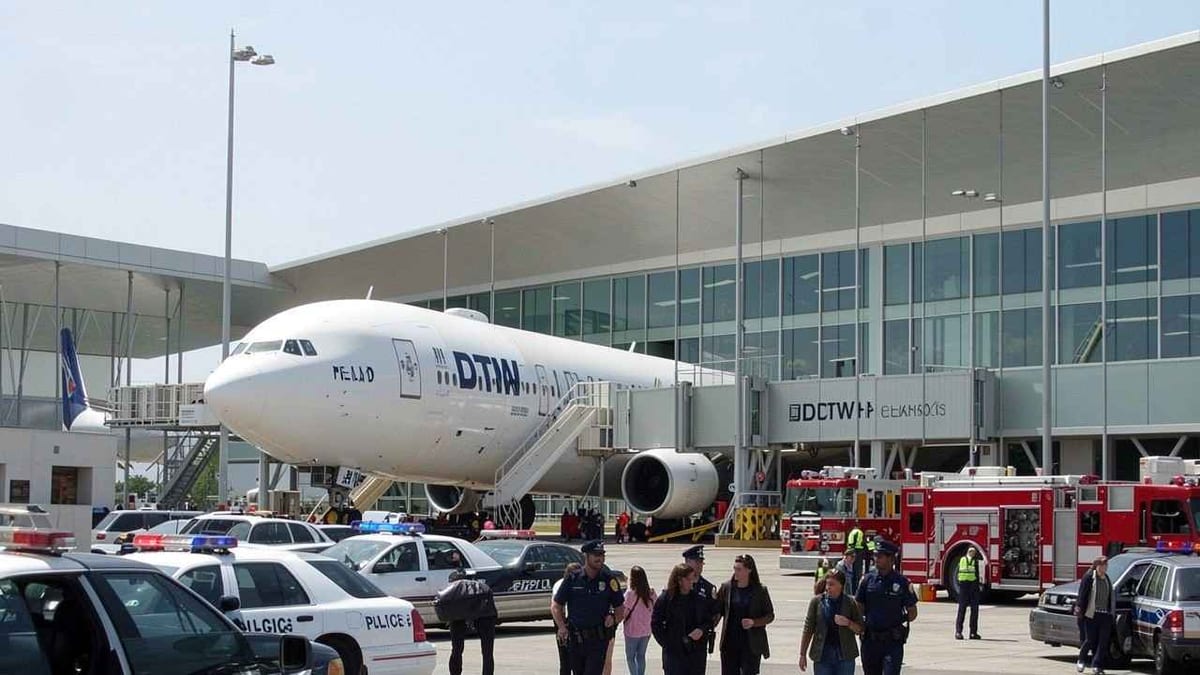
Transcontinental Flight Returns Shortly After Departure
Publicly available flight-tracking data shows that JetBlue Flight B6123, operating the New York to Los Angeles route, departed John F. Kennedy International Airport and began its westbound climb before turning back toward New York instead of continuing across the country. The aircraft subsequently landed at JFK, concluding the flight well short of its intended 2,400-mile journey.
The deviation from the usual JFK to Los Angeles routing drew attention from passengers monitoring their flight status in real time and from those tracking JetBlue’s transcontinental performance, given that B6123 is a long-standing link between the two major U.S. gateways. Data indicates the flight’s track formed an abbreviated loop over the Northeast rather than the typical arc across the continental United States.
As of late July 2026, the diversion appeared as an irregularity within an otherwise routine schedule for B6123, which normally connects New York and Los Angeles multiple times per week. No injuries were reported in connection with the return, and the aircraft landed back at JFK without further incident.
Available information does not specify the exact cause of the in-flight issue, but the early decision to turn back to the airline’s primary New York hub suggests a precautionary approach prioritizing access to maintenance, additional aircraft and crew resources.
Operational Impact for Passengers on the JFK–LAX Route
The diversion of Flight B6123 added to an already challenging stretch for travelers moving through JFK, where weather-related congestion and crew availability have recently contributed to delays and cancellations across a number of carriers. JetBlue customers on the diverted flight faced an unplanned return to the departure airport, followed by the process of rebooking or waiting for a replacement aircraft.
Reports from recent weeks describe a pattern of schedule disruptions on JetBlue’s key JFK routes, including extended tarmac waits, rolling departure-time changes and late-night cancellations after hours of delay. For passengers on a diverted long-haul service like B6123, the practical impact often includes missed onward connections, rearranged ground transport and the need for last-minute changes to hotel or meeting plans on the West Coast.
Travelers affected by diversions generally depend on airline rebooking options, same-day standby availability and, in some cases, hotel or meal support in line with carrier policies. Publicly posted accounts from JetBlue customers this summer highlight a mixture of experiences, with some securing rapid re-accommodation on other flights and others describing long lines at airport counters and extended call-center wait times.
On a high-demand corridor such as JFK to Los Angeles, a single aircraft unexpectedly removed from service can create a ripple effect across the day’s schedule. Even when a diversion like B6123’s return to JFK is resolved safely, seats on alternative departures may be scarce, forcing some travelers to accept next-day options or different routings through other cities.
Safety Precautions and Diversion Protocols
In the United States, flight diversions are a recognized safety measure used whenever crews or airline operations teams judge that continuing to a destination could carry elevated risk or complicate the handling of a technical issue. Returning to a major hub such as JFK provides access to airline maintenance facilities, spare parts, replacement aircraft and additional crew members who can step in if required rest-time rules limit the original crew’s ability to continue.
JetBlue’s public-facing customer materials describe diversion airports and contingency plans as part of its broader operational framework, with language noting that the carrier maintains resources at designated hubs to respond to irregular operations. While every incident differs, an early turn-back to the departure airport often reflects a desire to balance passenger safety with logistical practicality, ensuring that subsequent inspections or repairs can be completed in an environment the airline controls.
Industry practice generally calls for crews to err on the side of caution when potential mechanical, weather or other in-flight concerns arise. Even issues that ultimately prove minor can prompt a diversion if information available in the cockpit is incomplete or if conditions along the planned route appear uncertain. For passengers, such decisions can be frustrating given the resulting disruption, but they remain a core element of modern commercial aviation safety culture.
Once on the ground after a diversion, an aircraft typically undergoes inspection before being cleared for further service. Depending on findings, the plane may either resume its schedule, be assigned a delayed departure, or be removed from service until repairs are completed.
Context: A Strained Summer for JetBlue Operations
The diversion of Flight B6123 comes at a time when JetBlue’s operations in the Northeast are under pressure from a combination of convective summer weather, tight crew resources and heavy reliance on JFK as a central hub. Published discussions among travelers and aviation watchers in July 2026 point to a run of late departures and cancellations on some of the carrier’s core routes, particularly on days when thunderstorms or air-traffic-control restrictions slow traffic along the Eastern seaboard.
When bad weather affects the New York area, JFK’s role as a major hub for JetBlue means that even localized disruptions can cascade across its network. Aircraft and crew rotations built around tight turn times become harder to maintain, and any additional events such as a diversion can compound the strain. Industry observers note that smaller fleets and concentrated route structures can make it more difficult for a carrier to recover quickly after multiple irregular operations in a short period.
The airline has responded in recent months by adjusting some schedules, adding selective new routes and promoting rescue fares for stranded travelers on other carriers, moves that illustrate both growth aspirations and the complexity of maintaining reliability under challenging operating conditions. The diversion involving B6123 fits within a broader environment in which many U.S. airlines are working to balance ambitious summer timetables with the realities of weather, staffing and airport congestion.
For passengers planning transcontinental travel during peak periods, the recent experience at JFK underscores the value of monitoring flight status closely, allowing extra time for connections and remaining flexible about routing. While diversions like Flight B6123’s return to New York are relatively rare compared with the overall number of flights completed each day, their impact can be significant for those on board and for the wider network that must absorb an unexpected schedule change.
What Passengers Can Expect After a Diversion
When a flight such as JetBlue B6123 diverts back to its origin, the immediate questions for travelers typically center on how quickly they will reach their destination and what support the airline will provide. In practice, outcomes vary according to factors such as the nature of the issue, availability of spare aircraft, time of day and overall network conditions.
Passengers are often rebooked on later same-day departures or on flights the following day, either on the same carrier or, in some cases, via interline agreements. Those with time-sensitive plans, including business meetings or international connections out of Los Angeles, may opt to explore alternative airlines if seats are available, even as they seek refunds or credits for the disrupted segment from JetBlue.
Consumer advocates frequently recommend that travelers document all communications with airlines during disruptions, save boarding passes and receipts for necessary expenses, and review the carrier’s contract of carriage and applicable regulations. Such steps can help passengers understand eligibility for refunds or reimbursements after an event like the B6123 diversion, especially when delays extend beyond several hours or require overnight stays.
For many travelers, the experience of an unexpected return to the departure airport can be disorienting. Yet, as the case of JetBlue Flight B6123 illustrates, diversions remain an integral part of how modern airlines manage risk in complex, weather-sensitive airspace while continuing to move millions of passengers each summer.