


More news on this day
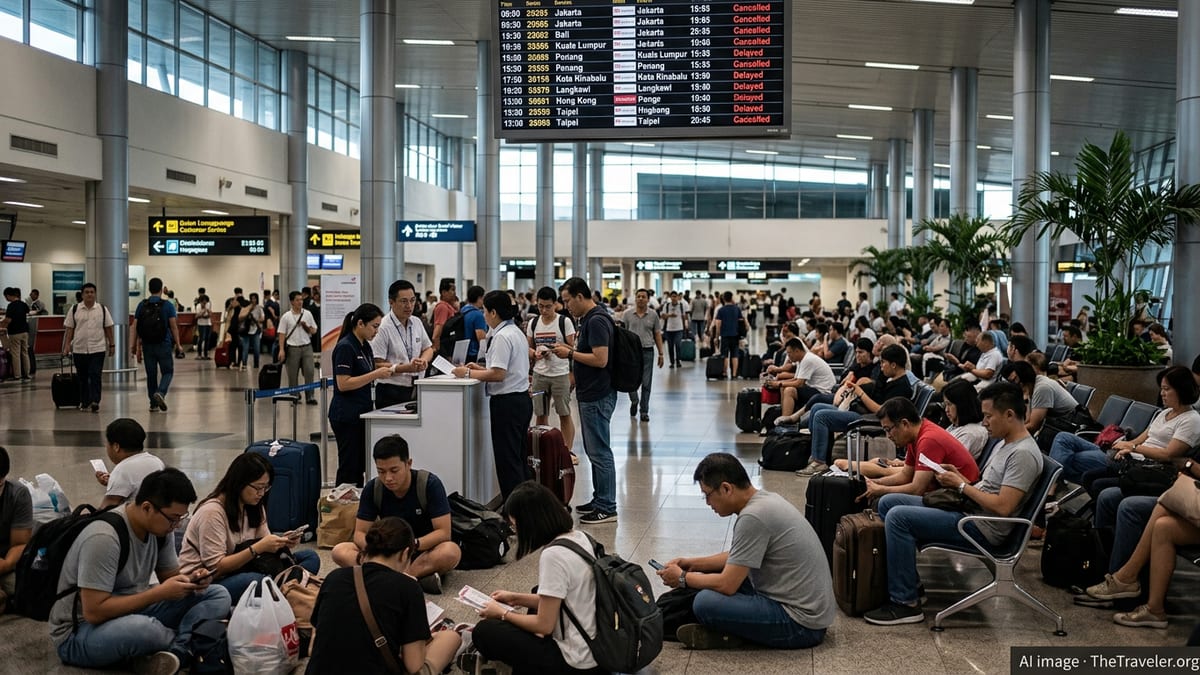
Thousands of air travellers have been left stranded across Asia as a fresh wave of operational disruption saw 2,699 flights delayed and 186 cancelled across major hubs in Thailand, Hong Kong, Singapore, Malaysia, Indonesia and China, snarling schedules for carriers including Cathay Pacific, AirAsia, Singapore Airlines and Air China.
Get the latest news straight to your inbox!
Beijing, Bangkok and Kuala Lumpur Among Worst Affected
Publicly available aviation data for the latest disruption indicates that mainland China’s busy hubs bore a significant share of the turbulence, with Beijing Capital, Shanghai Pudong, Guangzhou Baiyun and other major airports collectively accounting for hundreds of delayed and cancelled services. Beijing Capital alone reported well over one hundred delays alongside dozens of cancellations, while secondary hubs such as Beijing Daxing and Shanghai Hongqiao also experienced substantial knock-on effects.
In Southeast Asia, Bangkok’s Suvarnabhumi and Don Mueang airports, Kuala Lumpur International and Jakarta Soekarno Hatta all recorded heavy congestion, with several hundred combined delays reported over the course of the day. The disruption affected both domestic and international routes, complicating travel plans for passengers heading to regional leisure destinations as well as onward long haul connections to Europe, the Middle East and North America.
At Singapore Changi and Hong Kong International, which function as key transit gateways for the wider region, reports indicate that more than one hundred flights at each airport were delayed. Even a relatively modest number of outright cancellations at these hubs created ripple effects throughout airline networks, as missed connections forced widespread rebooking and aircraft rotation challenges.
Smaller but strategically important holiday gateways such as Phuket in Thailand and Bali’s Denpasar airport in Indonesia were also hit with dozens of delayed services. For travellers returning from peak season beach trips, the combination of congestion at origin airports and backups at regional hubs translated into extended waits, missed tours and disrupted hotel check outs.
Regional and Flag Carriers Battle Network Domino Effect
The disruption has affected a broad mix of airlines, from low cost operators to full service flag carriers. Public timetables and flight tracking platforms show that Cathay Pacific services into and out of Hong Kong encountered extensive delays, while its regional and long haul rotations faced schedule compression as aircraft and crews arrived late from previous sectors.
In Southeast Asia, AirAsia’s dense short haul network across Thailand, Malaysia and Indonesia left it particularly exposed to airport congestion. When key hubs such as Kuala Lumpur, Bangkok Don Mueang and Jakarta experienced rolling delays, knock on effects quickly spread across the carrier’s point to point routes, leaving many passengers facing last minute gate changes and prolonged waits on the ground.
Singapore Airlines and its regional partners also contended with growing pressure on schedules, especially at Changi, where even small disruptions can quickly cascade due to tightly timed banked connections. For Air China and other mainland Chinese airlines, simultaneous strain across multiple home hubs exacerbated already complex operational planning, with aircraft frequently arriving late into Beijing, Shanghai or Guangzhou and subsequently departing behind schedule on onward legs.
Observers note that these issues come on top of previously announced capacity adjustments at several Asian airlines, as carriers continue to juggle higher fuel costs, evolving demand patterns and crew availability. The combination of structural pressures and acute congestion has made restoring punctuality more difficult when sudden spikes in disruption occur.
Geopolitics, Weather and Capacity Constraints Drive Chaos
Recent coverage across regional outlets highlights how a combination of factors has set the stage for repeated bouts of disruption in Asia’s skies. Geopolitical tensions affecting certain airspace corridors have prompted rerouting of long haul flights, lengthening journey times and compressing aircraft and crew utilization. Longer flying times reduce buffers in already packed timetables, raising the risk that early delays propagate throughout the day.
Seasonal weather patterns are adding further complexity. Localised storms and heavy rainfall have periodically restricted operations at key hubs, while low visibility and lightning hold airport movements below planned capacity. Even when direct weather impacts are relatively short lived, clearing backlogs can take many hours, especially at airports already running close to their operational limits.
Air traffic control and ground handling capacity are also under scrutiny. Industry analysis over recent months points to staffing challenges in some jurisdictions, as well as infrastructure that has struggled to keep pace with the rapid rebound in demand since international borders reopened. When traffic volumes climb close to or beyond pre pandemic levels, seemingly minor system glitches or equipment outages can trigger disproportionate delays.
Analysts suggest that Asia’s network of mega hubs, which concentrate vast numbers of connecting passengers through a handful of airports, offers efficiency in normal times but also creates vulnerability. When one or two major hubs encounter significant disruption, airlines often struggle to re route passengers and aircraft through alternative cities at short notice.
Travellers Confront Long Queues and Limited Rebooking Options
For passengers, the numbers translate into long hours in terminals across the region. Social media images and local reports describe crowded check in halls in Bangkok, Kuala Lumpur, Jakarta and several Chinese airports, with travellers queuing for rebooking assistance, food vouchers or accommodation information after missed connections.
Many affected travellers face complex itineraries involving multiple airlines and separate tickets, complicating efforts to secure alternative routes. Where seats are available, they are often on later flights that are themselves at risk of delay, while some popular routes during school holidays and festival periods are already close to full. Families and business travellers alike have reported having to split groups across different flights or accept lengthy overnight layovers.
Consumer advocates in several markets continue to highlight the patchwork of passenger protections across Asian jurisdictions. While some countries have formal compensation frameworks or require airlines to provide meals and hotel rooms in defined circumstances, others rely largely on individual carrier policies. As a result, two travellers on similar itineraries but flying different airlines or departing from different countries can experience very different levels of support.
Travel planners note that widespread disruption weighs particularly heavily on travellers connecting through multiple hubs in quick succession. A delay departing a regional airport in Indonesia or Malaysia can lead to a missed connection in Singapore or Bangkok, which in turn jeopardises a long haul sector onward to Europe or North America. In such cases, what begins as a minor delay on a short flight can ultimately derail an entire trip.
Ongoing Volatility Highlights Need for Flexible Planning
The latest wave of delays and cancellations follows several consecutive days of heightened disruption across Asian airspace, underscoring the fragile equilibrium currently facing airlines and airports. Industry monitoring suggests that while traffic volumes have largely recovered, the margin for error within the system remains thin, especially during peak travel periods.
Travel specialists increasingly recommend that passengers build extra buffer time into itineraries involving transfers at major hubs such as Hong Kong, Singapore, Bangkok, Kuala Lumpur, Jakarta and the main Chinese gateways. Longer connection windows, early morning departures and travel insurance with disruption coverage are being promoted as practical tools to reduce the risk of severe travel headaches when schedules unravel.
For now, operational data indicates that airlines are working through backlogs and gradually rebalancing aircraft rotations, but with congested hubs and ongoing external pressures, further pockets of disruption remain possible. As Asia’s aviation sector continues to navigate a demanding operating environment, passengers may need to prepare for continued volatility in departure and arrival times, even on routes that once enjoyed consistent punctuality.