


More news on this day
Thousands of travellers across Australia and New Zealand are facing major disruption after 63 flight cancellations and about 370 delays hit services operated by Qantas, Jetstar, Virgin Australia, Air New Zealand and several other carriers at key airports including Melbourne, Sydney, Auckland and Wellington.
Get the latest news straight to your inbox!
Wide-Ranging Disruptions at Key Trans-Tasman Hubs
Publicly available airport and flight-tracking data for April 12, 2026, indicate that cancellations and delays were concentrated at the region’s busiest hubs, particularly Melbourne and Sydney in Australia and Auckland and Wellington in New Zealand. Secondary airports such as Brisbane, Adelaide, Christchurch and Queenstown also reported knock-on disruption as aircraft and crew struggled to return to normal rotations.
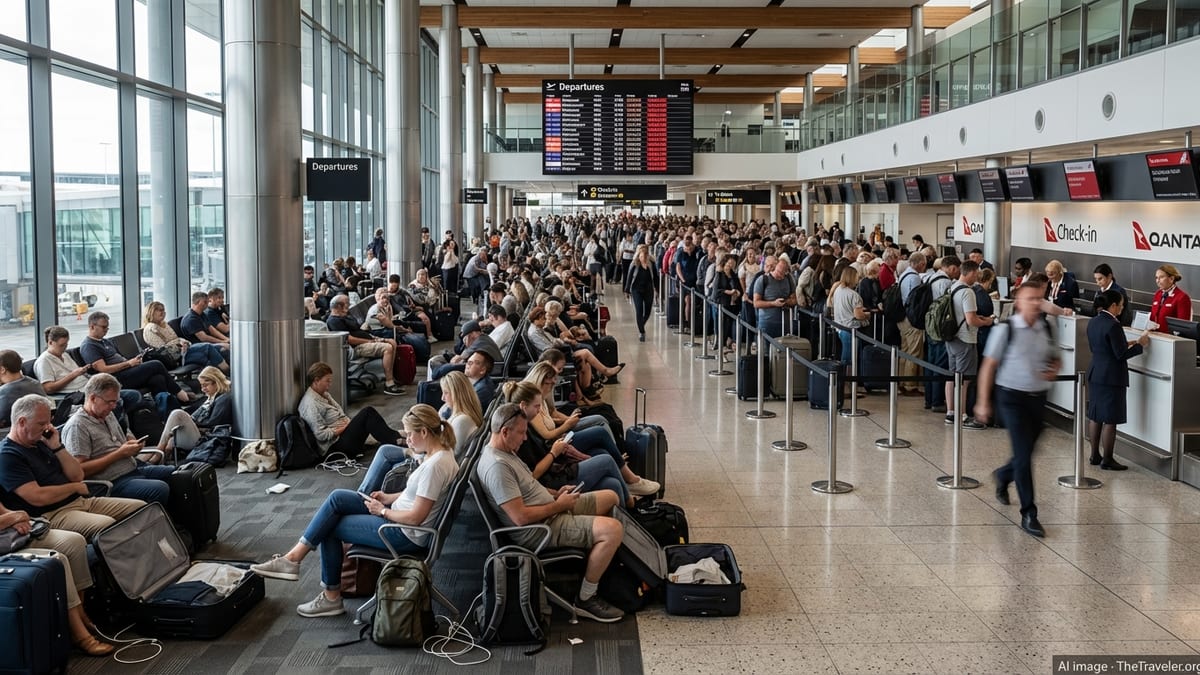
Reports describe long queues at check-in counters and service desks as passengers attempted to secure alternative flights, meal vouchers or overnight accommodation. Many travellers were left waiting hours for updated information as rolling delays pushed departure times back multiple times or resulted in last-minute cancellations.
The 63 cancellations recorded across the network removed thousands of seats from circulation on an already busy travel day, placing pressure on remaining services. With around 370 flights delayed, on-time performance across domestic and trans-Tasman routes fell sharply compared with typical mid-season averages, exacerbating congestion in terminal areas and at border control points.
Data compiled by travel and aviation trackers suggest that both short-haul domestic services and longer international links were affected, particularly high-frequency routes such as Sydney to Melbourne and Auckland to Wellington, where tight schedules make recovery from disruptions more difficult.
Major Airlines Among Those Most Affected
According to published coverage, the disruption involved a broad mix of carriers, with Qantas, Jetstar, Virgin Australia and Air New Zealand featuring prominently in the day’s statistics. These airlines operate a large share of domestic and trans-Tasman services, meaning any operational instability quickly ripples through airport departure boards.
Jetstar and Virgin Australia bore a notable share of domestic delays in Australia, with flights from Melbourne and Sydney to regional centres experiencing late departures and arrivals. For Qantas, a combination of busy trunk routes and connections to international partners compounded the complexity of rebooking passengers who missed onward flights.
In New Zealand, Air New Zealand services linking Auckland and Wellington with Christchurch, Queenstown and smaller centres also encountered significant schedule changes. Travellers connecting from Australia into the New Zealand domestic network often reported missed or heavily delayed onward sectors as aircraft arrived late from across the Tasman.
Other international carriers operating into Melbourne, Sydney, Auckland and Wellington were indirectly affected when their inbound aircraft relied on connecting passengers or feeder flights from the disrupted domestic networks. This added a further layer of complexity for travellers on long-haul itineraries to Asia, North America and Europe.
Operational Pressures, Weather and Capacity Constraints
While specific causes varied by flight and route, recent weeks have seen a combination of factors tightening aviation operations in Australia and New Zealand. Published reports highlight staffing shortages in ground handling and air traffic control, as well as adverse weather patterns that periodically restrict runway capacity at major airports such as Sydney and Wellington.
Industry commentary points to lingering structural pressures since the pandemic, including leaner crew rosters, high fleet utilisation and limited spare aircraft. When multiple issues occur on the same day, airlines have fewer options to redeploy aircraft or crew, making it harder to isolate a disruption to a single route or time band.
Fuel costs and network reconfigurations linked to global geopolitical tensions have also altered flight timings and routings in recent months. These shifts can leave little margin for error in complex, tightly timed networks spanning Australia, New Zealand and long-haul partners, increasing the likelihood that a local delay spreads through multiple services.
Government and industry data released over the past year already indicate elevated rates of cancellations and late arrivals on some of the busiest domestic city pairs in both countries. The April 12 event appears to fit within this broader pattern of volatility that has drawn growing scrutiny from frequent flyers and consumer advocates.
Impact on Travellers and Airport Operations
The immediate impact on travellers ranged from missed family events and business meetings to unplanned overnight stays in transit cities. Many passengers reported needing to arrange last-minute accommodation at their own expense while seeking reimbursement later, reflecting ongoing debate in both countries about the adequacy of consumer protections for disrupted flights.
Airports across the region experienced strain on terminal facilities as delayed passengers remained airside for extended periods. Seating, charging points and food outlets came under pressure, particularly in departure lounges serving evening peak departures where multiple delayed flights were held open simultaneously.
For airport operators, the disruption highlighted the importance of real-time communication channels, digital flight information displays and contingency planning with airline partners. With multiple carriers affected at once, managing gate allocations and turnaround times became a critical task to avoid further compounding the delays.
Ground transport links also felt the impact, as late-night arrivals and rescheduled departures altered passenger flows to and from city centres. Taxi and rideshare wait times lengthened at some airports, while public transport services struggled to align with irregular arrival waves.
What Travellers Can Do During Ongoing Volatility
Consumer advice circulating in the wake of the disruption encourages travellers in Australia and New Zealand to build additional buffer time into itineraries, especially when connecting between separate tickets or onto international long-haul flights. Booking earlier departures in the day and avoiding tight self-made connections can help reduce the risk of being stranded.
Publicly available guidance from airlines and travel experts suggests that passengers use mobile apps and online self-service tools as a first step when delays occur. These platforms often provide the quickest avenue for rebooking, tracking baggage and requesting refunds or credits, particularly when airport service counters are overwhelmed.
Travellers are also advised to keep records of boarding passes, receipts and written notifications of cancellations or lengthy delays, which may be required when seeking compensation or reimbursement for additional costs such as meals and accommodation. In some cases, travel insurance policies can provide supplemental coverage where airline obligations are limited.
With recent days bringing multiple episodes of disruption across the wider Asia-Pacific region, including additional cancellations and delays on April 13, the April 12 event across Australia and New Zealand underscores the importance of flexible planning. Observers note that schedule reliability may remain uneven in the near term as airlines balance strong demand with operational and capacity constraints.