


More news on this day
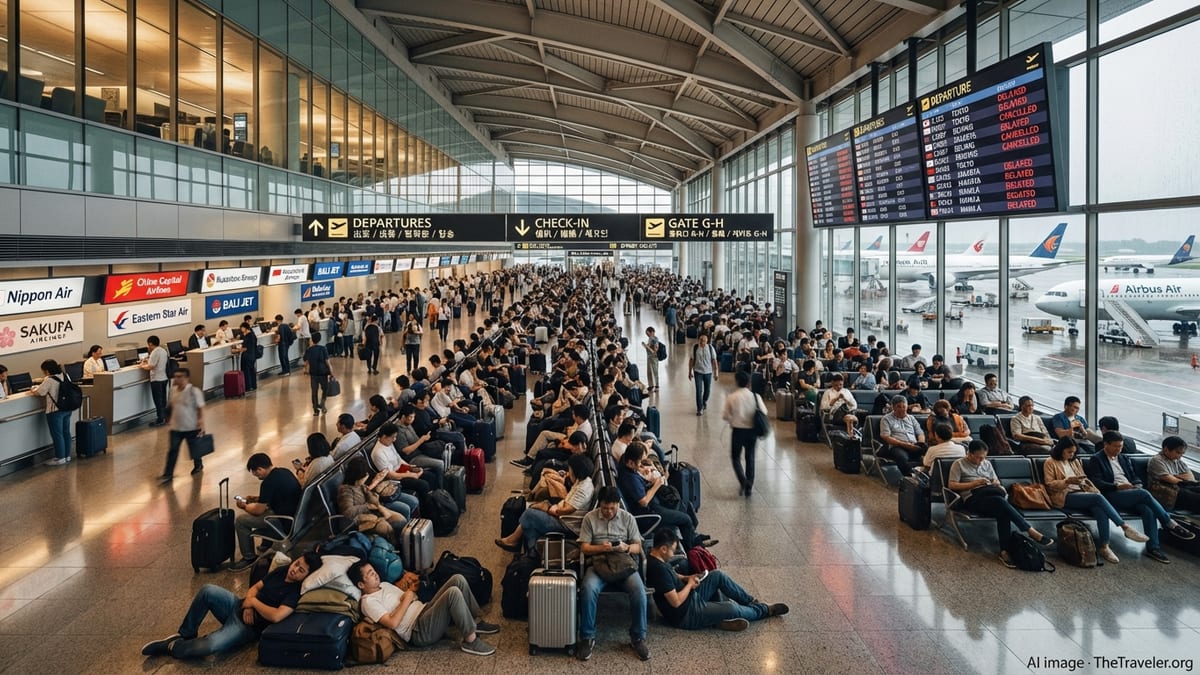
A fresh wave of operational disruption across Asia has left travelers facing mounting delays and cancellations, with publicly available tracking data indicating that Batik Air, Air China and Hainan Airlines have collectively recorded more than 430 delayed flights and over 40 cancellations in recent days, straining connections across Indonesia, China, Malaysia, Singapore and wider regional networks.
Get the latest news straight to your inbox!
Disruptions Concentrated Around Major Asian Hubs
Flight-status dashboards and independent aviation trackers show that the latest disruption is centered on some of Asia’s busiest hubs, where tight schedules leave little room to absorb delays. Routes touching Jakarta, Kuala Lumpur, Beijing, Guangzhou and Singapore appear to be particularly exposed, with rolling knock-on delays building through the day as late inbound aircraft struggle to be turned around on time.
Regional aviation coverage indicates that similar waves of disruption across Asia this month have already produced thousands of delayed departures and hundreds of cancellations, underscoring how quickly congestion at one or two airports can cascade across an interconnected network. With Batik Air, Air China and Hainan Airlines all operating dense schedules that mix domestic and international legs, even modest timetable shocks are now rippling outward into secondary cities and holiday destinations.
In this latest episode, the three carriers together are understood to have logged 432 delays and 44 outright cancellations across their combined operations. While that represents only a fraction of their total schedules, the clustering of problems at peak travel times has amplified the impact on travelers trying to make onward connections or reach major regional hubs on tight itineraries.
Travel data services suggest that the situation has been especially challenging at Chinese and Southeast Asian gateways that serve as transfer points between long-haul flights and shorter regional hops. As aircraft arrive late from China or Indonesia, services to Malaysia, Singapore and neighboring countries have been pushed back, contributing to the rolling disruption.
Batik Air Struggles With Regional Connectivity
Within Southeast Asia, Batik Air’s operations illustrate how even a single carrier’s disruption can reverberate across multiple countries. The airline connects Indonesian cities and Kuala Lumpur to destinations such as Singapore and regional secondary airports, relying on fast turns and high aircraft utilization. When an early-morning domestic leg runs late, later flights that feed key international routes can quickly fall behind schedule.
Consumer and regulatory reporting from Malaysia has previously highlighted that Batik Air is among the local airlines most exposed to operational cancellations, particularly on shorter regional segments. In the current disruption, the carrier’s delays appear concentrated on routes linking Indonesia and Malaysia, with knock-on effects for passengers attempting to connect onward to Singapore or beyond Southeast Asia.
Travel forums and recent passenger accounts describe itinerary changes, rebookings and extended layovers as travelers attempt to work around schedule shifts. For some, this has involved last-minute overnight stays near hub airports, while others have opted to reroute via alternative carriers or ground transport where possible.
Industry observers note that the airline’s growing network and ambition to compete more aggressively in regional markets have raised expectations for schedule reliability. The latest wave of delays and cancellations is therefore likely to renew scrutiny of operational resilience, crew and aircraft availability, and contingency planning during peak seasons.
Air China and Hainan Airlines Face Mounting Operational Strain
In mainland China, Air China and Hainan Airlines are contending with their own operational pressures as they rebuild international capacity while juggling busy domestic networks. Data from flight-tracking platforms shows that both carriers have been affected by clusters of delays on routes linking major Chinese hubs with Southeast Asian cities, including Jakarta, Kuala Lumpur and Singapore.
Recent coverage of disruptions at Chinese airports has pointed to weather, airspace congestion and tight turnaround windows as recurring triggers for late departures. Once aircraft and crews begin running behind schedule, subsequent flights can be forced to depart hours late or, in some cases, be cancelled entirely when curfews or duty-time limits are reached.
Publicly available passenger guidance published by Hainan Airlines on how it manages irregular operations underlines the complexity of dealing with cancellations and long delays. The documents describe a range of scenarios in which schedule changes can occur for operational or safety reasons, as well as basic rebooking options. In practice, however, travelers have reported having to navigate crowded service desks and long call-center queues when flights are disrupted at short notice.
For Air China, individualized flight-status pages monitored over the weekend showed multiple services operating behind schedule, particularly on longer international legs. Travel discussion boards in recent days have also featured posts from passengers describing missed onward connections when initial Air China segments arrived late, underscoring the wider consequences for multi-leg itineraries that rely on punctual operations.
Weather, Seasonal Demand and Network Complexity Drive Cascading Delays
Meteorological agencies across the region are signaling a period of unsettled conditions and, in some areas, developing El Niño patterns, factors that can complicate aviation planning. In Indonesia, recent climate bulletins and seasonal outlooks have pointed to evolving rainfall trends and stronger-than-usual weather systems, while forecasters elsewhere in Asia have tracked tropical storms affecting key flight corridors.
Earlier in June, published coverage from Singapore reported that several flights on regional carriers had to be rescheduled due to a tropical storm system impacting Japan, illustrating how weather events far from Southeast Asian hubs can still alter local timetables. As Batik Air, Air China and Hainan Airlines operate numerous services that pass through or near weather-affected areas, even modest changes in routing or altitude can result in extended block times and subsequent delays.
Seasonal demand is adding another layer of strain. The mid-year travel period is traditionally strong for both leisure and business traffic, and airlines have been ramping up capacity in response to the rebound in international travel. This leaves less slack in schedules and fewer spare aircraft to absorb shocks when irregular operations occur.
Aviation analysts note that Asia’s network complexity, with multiple carriers interlining and codesharing across domestic and international sectors, magnifies the effect of each delayed departure. A late-arriving widebody flight from China or Indonesia can jeopardize dozens of onward connections in hubs like Singapore and Kuala Lumpur, as passengers scramble to rebook scarce seats on alternative services.
Passengers Confront Missed Connections and Patchwork Protections
For travelers, the most immediate consequence of the current disruption is a spike in missed connections and last-minute itinerary changes. Social media posts and travel forums over the past week feature accounts of passengers arriving in Southeast Asian hubs only to discover that onward segments operated by Batik Air, Air China or Hainan Airlines have been delayed, retimed or cancelled.
Guidance documents from airlines serving the region, including Air China and Hainan Airlines, set out general approaches to rebooking and assistance in cases of cancellations and significant delays. However, passenger experiences suggest that outcomes can vary depending on whether tickets are issued on a single itinerary, the cause of the disruption and local consumer-protection rules in each jurisdiction.
Travel-rights advocates point out that, unlike in some markets, there is no single, harmonized compensation framework across Asia governing delays and cancellations. Instead, travelers moving between Indonesia, China, Malaysia and Singapore encounter a patchwork of regulations, airline policies and voluntary commitments, creating uncertainty about what support they can expect when plans are disrupted.
As the latest figures on delays and cancellations for Batik Air, Air China and Hainan Airlines circulate among data providers and news outlets, industry attention is turning to how carriers can strengthen resilience ahead of the next peak season. For passengers planning trips across Asia in the coming weeks, the current situation offers a reminder of the importance of longer connection times, flexible tickets and up-to-date monitoring of flight status when transiting some of the region’s busiest hubs.