


More news on this day
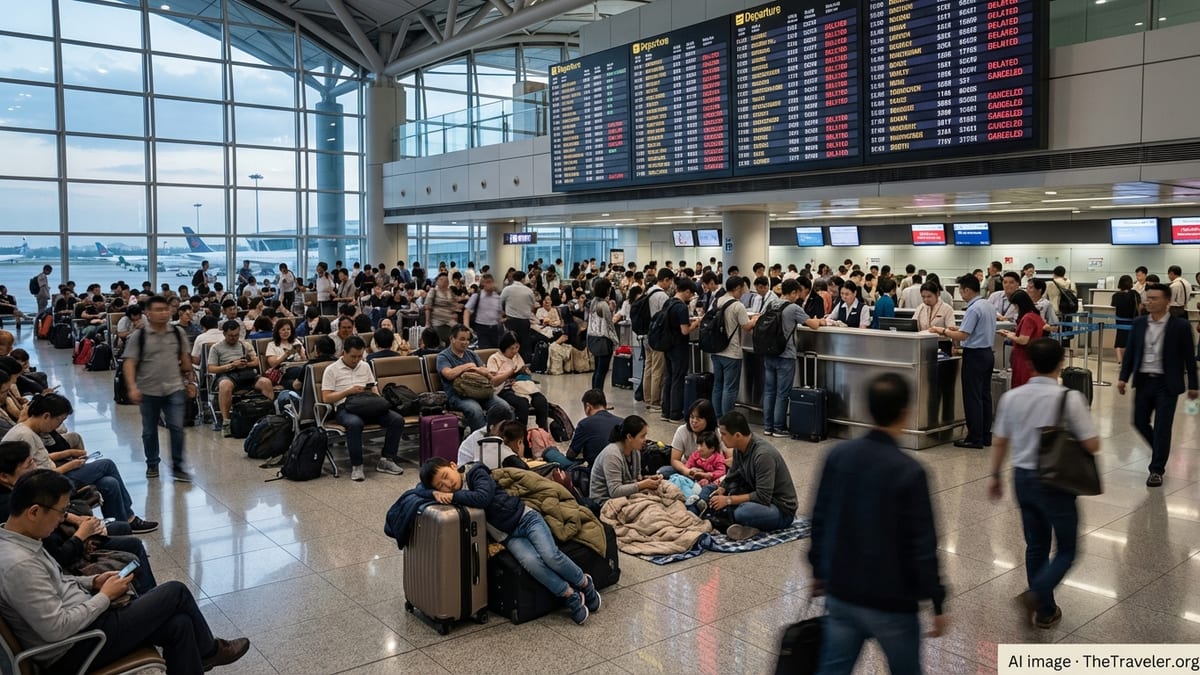
Travelers passing through Beijing Daxing International Airport on June 22 faced mounting disruption as summer storms in northern China contributed to nine flight cancellations and 107 delays, affecting operations across China Eastern, Air China and a range of domestic and international routes.
Get the latest news straight to your inbox!
Thunderstorms Slow One of Beijing’s Newest Hubs
Publicly available weather reports for the Beijing region on June 22 pointed to a band of thunderstorms and heavy rain moving across the capital area, with forecasters warning of intense local downpours and lightning. The conditions coincided with the busy afternoon and evening bank of departures at Beijing Daxing International Airport, one of the city’s two major aviation gateways.
Operational data compiled from flight-tracking and status services indicated that by late evening, a total of nine departures and arrivals at Daxing had been cancelled and 107 were recorded as delayed. The disruption was spread over both domestic and international sectors, with delays concentrated in peak travel periods when airspace congestion, ground-handling slowdowns and weather-related spacing requirements compound each other.
Although Daxing was conceived to relieve pressure from Beijing Capital International Airport, the newer hub has grown quickly and now handles tens of millions of passengers annually. When adverse weather narrows available air corridors around the capital, both airports can be affected as controllers adjust takeoff and landing rates, often resulting in rolling pushbacks and extended holds on the tarmac.
China Eastern and Air China Among Most Affected Carriers
China Eastern and Air China, two of China’s largest network airlines, were among the carriers most exposed to the June 22 disruption at Daxing. Schedules show both groups using the airport as a key node for domestic services into eastern and southern China as well as selected international routes, meaning delays in Beijing can quickly cascade into their wider networks.
Flight-status boards on Saturday showed multiple China Eastern departures from Daxing pushed back from their scheduled slots, in some cases by over an hour, as aircraft waited for updated departure sequences. Similar patterns were visible for Air China flights, with several services marked as delayed or with departure times “to be determined,” a common indication that crews were awaiting revised takeoff slots as weather cells moved through the area.
For airlines that rely on tight aircraft rotations, even relatively short delays can create knock-on effects. An outbound flight that leaves late from Beijing may arrive behind schedule at a secondary city, compressing the turnaround window for its next sector or forcing the carrier to reshuffle equipment to protect later departures. The nine cancellations recorded at Daxing on June 22 appeared to reflect that broader operational calculus, where airlines trim certain sectors to restore overall schedule stability.
International Routes Face Tight Connections and Missed Links
The June 22 irregular operations at Daxing also rippled across international itineraries that use the airport as a connecting hub. Long-haul and regional routes into and out of mainland China often operate on less frequent schedules than major domestic city pairs, leaving passengers with fewer immediate alternatives when a Beijing sector is delayed or cancelled.
Travel industry discussions around recent Chinese airline operations have highlighted concerns about tight connection windows at Beijing-area airports, especially when inbound flights run late. A delay on a domestic leg feeding into Daxing can jeopardize onward departures to destinations in Europe or Southeast Asia, potentially stranding passengers for many hours or requiring overnight accommodation when later flights are already full.
On June 22, status feeds showed several Air China and China Eastern services that link Beijing with other major Asian and domestic hubs experiencing extended departure holds. Such delays increase the likelihood that travelers will miss onward flights on separate tickets or with partner carriers, especially where minimum connection times do not fully account for weather-related congestion and border formalities.
Peak-Season Demand Increases the Pressure on Operations
The disruption at Daxing came as China’s civil aviation sector moves into the height of the summer season, a period when passenger numbers and aircraft movements typically surge. Official traffic and schedule planning for the 2026 summer and autumn seasons has pointed to expanding frequencies on domestic routes and the gradual rebuilding of international networks, leaving less slack in the system when weather or airspace constraints arise.
Reports on China’s broader airline performance this year have noted that carriers are juggling several challenges at once, including pilot and crew rostering, aircraft availability and evolving air-traffic management rules. When thunderstorms reduce available routing options around major hubs, airlines are forced to hold aircraft on the ground, divert some flights to alternates or prioritize certain sectors, all of which feed into the kind of mixed pattern of cancellations and delays seen at Daxing on June 22.
For travelers, that combination of high seasonal demand and reduced operational flexibility often translates into fuller flights, fewer empty seats on later services and longer waits for rebooking if an itinerary is disrupted. The figures from Daxing on Saturday illustrate how even a modest number of outright cancellations can intersect with more than a hundred delayed movements to affect thousands of passengers over the course of a single day.
What Travelers Through Daxing Should Expect in Coming Weeks
While June 22 represented a particularly difficult day for many passengers moving through Beijing Daxing, operational data and traveler reports suggest that intermittent disruption is likely to remain a feature of flying in and out of northern China during the summer storm season. Thunderstorms are common in the region through July and August, and local meteorological services have already issued multiple short-notice advisories for lightning and heavy rainfall this month.
Publicly accessible airline guidance generally encourages passengers to monitor flight status closely in the 24 hours before departure, especially on itineraries that involve tight connections or separate tickets. Many carriers serving Daxing offer mobile applications or SMS services that push real-time updates on gate changes and delays, which can be especially useful at large, multi-runway hubs where walking distances between concourses are significant.
Travel experts also emphasize the importance of allowing generous connection times when planning itineraries through Beijing, factoring in potential weather slowdowns, runway queueing and the time needed to clear immigration and security for international transfers. The June 22 disruption at Daxing, with its combination of nine cancellations and 107 delays, underlines how quickly summer storms can reshape even a carefully planned day of flying across China and beyond.