


More news on this day
Asia’s aviation sector, once the engine of global air travel growth, is entering a turbulent phase in 2026 as jet fuel shortages, conflict-related airspace closures and mounting operational strains converge into what regional analysts are calling a systemic aviation crisis.
Get the latest news straight to your inbox!
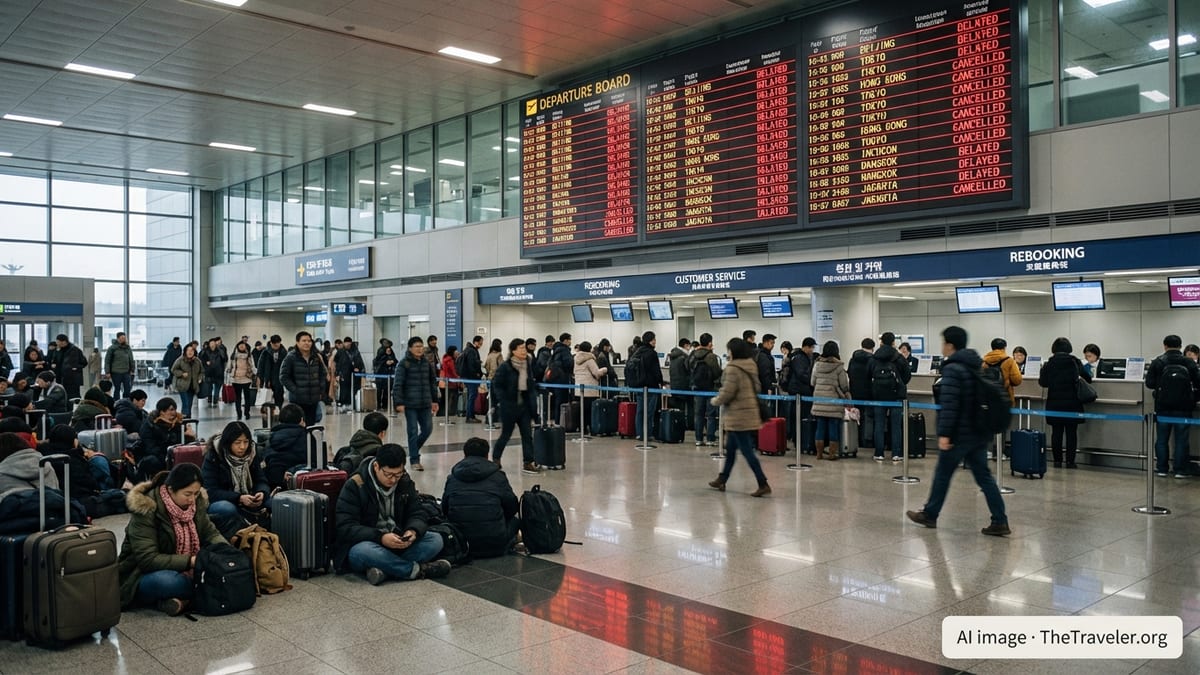
Fuel Shock Turns Travel Rebound Into Capacity Crunch
The most immediate pressure point is the region’s access to jet fuel. The war in Iran has disrupted supplies from one of the world’s key refining hubs, tightening global availability and pushing prices sharply higher. Analysis cited by regional media indicates that the turmoil has already triggered shortages at several Asian airports and raised concerns that constraints could spill over to Europe if the Strait of Hormuz remains only partially open.
Economic research focused on Asia describes a widening squeeze in refined fuels across the region, with jet fuel singled out as a major vulnerability. An April 2026 assessment from Oxford Economics noted that shortages are constraining aviation capacity, particularly on shorter routes, as airlines prioritize higher-yield long-haul services where possible.
Industry forecasts from the International Air Transport Association (IATA) still point to positive global profitability in 2026, but at much thinner margins. IATA’s June 2026 outlook links the halving of global airline profits to conflict-related disruptions in the Middle East and record fuel costs, while highlighting that some Asia Pacific carriers are partially offsetting the shock by capturing rerouted Europe–Asia traffic.
The imbalance between robust demand and constrained capacity is especially stark in Asia Pacific, where passenger traffic is forecast to grow faster than any other major region. IATA’s long-range projections show Asia Pacific outpacing global averages, intensifying the tension between growth targets and the practical limits imposed by fuel, fleets and infrastructure.
Conflict, Airspace Closures and Lengthened Routes
The fuel shock is tightly bound up with wider geopolitical risks. Conflict-zone advisories issued by regulators have led many carriers to avoid large portions of Middle Eastern airspace, while Russian airspace remains closed to most Western airlines. A detailed safety analysis in Asian Aviation magazine in mid-2026 described how Europe–Asia routes are now forced into a patchwork of remaining corridors over the Caucasus, Central Asia and parts of the Gulf, adding flight time and complexity for airlines and air navigation systems.
These diversions translate directly into higher fuel burn and crew costs at a time when both are already elevated. IATA’s 2026 safety and operations briefings underline how airspace closures and airport restrictions are contributing to bottlenecks, longer sector times and higher operational risk, particularly where traffic has been funneled into a smaller number of congested routes and hubs.
Carriers in hubs traditionally dependent on Middle East connections are recalibrating their networks. Public traffic updates from airlines such as Cathay Pacific in 2026 highlight a shift away from certain Gulf destinations and a redeployment of capacity to Europe and North America, where demand remains strong and routings are less directly exposed to the most volatile airspace.
Regulators have responded with additional guidance on conflict-zone risk assessments, but the underlying problem of overlapping crises in energy markets and geopolitics leaves airlines with constrained options. Safety commentators in regional journals argue that these pressures have revived concerns first raised after earlier conflict-zone tragedies, with renewed debate over how to keep civilian aircraft clear of evolving front lines without crippling connectivity.
Safety Incidents Test Oversight Across the Region
The crisis is not confined to economics and scheduling. A series of incidents in 2025 and 2026 has raised questions about how well safety systems are coping with rapid growth, resource constraints and more complex operating environments. Regional outlets have documented cases ranging from runway incursions and near misses at major hubs to serious communication lapses on long-haul flights.
In Hong Kong, publicly released government information in August 2026 detailed an investigation into a loss of communication between a Cathay Pacific flight and air traffic control during a July sector to London. Authorities completed their review of the airline’s internal report and directed enhancements to its safety reporting mechanisms, underscoring how regulators are using individual events to push for broader system improvements.
Australia’s network has faced its own stresses. In August 2026, national media in Australia reported on a near collision at Sydney Airport involving a Jetstar and a Qatar Airways flight. The investigation drew attention to shortages of air traffic controllers and rostering challenges, which have contributed to delays and raised concerns about workload and fatigue in a high-density airspace environment.
Elsewhere in Asia, official and industry databases list several notable accidents and serious incidents so far in 2026, including a fatal regional aircraft crash in Indonesia and high-profile general aviation accidents in India. While overall accident rates in commercial aviation remain historically low, IATA’s latest global safety report emphasizes that 2025 saw an increase in fatal accidents and onboard fatalities, reinforcing calls for sustained investment in risk mitigation, infrastructure and safety culture.
India’s Turbulent Boom Highlights Structural Weaknesses
India, one of the world’s fastest-growing aviation markets, has become a focal point in the 2026 crisis narrative. The country’s rapid expansion in passenger demand has collided with infrastructure and workforce constraints, as well as scrutiny of safety practices at major carriers. Analysis in industry and regional media portrays the past two years as a stress test for India’s aviation ambitions.
A scheduling and staffing breakdown at IndiGo in late 2025, widely covered in the press and detailed in public records, led to thousands of cancellations and stranded passengers. The episode was linked to challenges in complying with new pilot fatigue rules, amidst broader concerns over pilot shortages and technology integration. Government fare caps were introduced on some routes to protect passengers during the disruption and remained in force into early 2026.
At the same time, separate coverage has highlighted intensified oversight of Air India following safety audits and high-profile incidents. Commentators in aerospace journals describe this period as a “moment of reckoning” for India’s aviation sector, exposing the fragility beneath headline growth and prompting calls for stronger regulation, training and investment in air traffic infrastructure.
The tensions in India mirror wider regional issues. Comment threads, industry surveys and official statements across Asia reference common challenges: limited airport capacity in key cities, long lead times for new aircraft and parts, and a shortage of skilled personnel from pilots to maintenance engineers and controllers. These factors amplify the impact of the current fuel and geopolitical shocks, turning short-term disruptions into a broader structural test.
Managing Growth: Safety Plans and Human-Capital Bottlenecks
Despite the turbulence, Asia’s aviation authorities and airlines are moving to reinforce safety frameworks and rebuild resilience. Singapore provides one example. Its Civil Aviation Authority unveiled a National Aviation Safety Plan for 2025 to 2027, setting out dozens of actions across four priority areas, from runway safety and infrastructure upgrades to managing emerging risks such as satellite navigation interference and staffing constraints.
IATA’s safety and operations briefings during its 2026 annual meeting similarly emphasize the need to address bottlenecks in parts supply, training and recruitment. The association notes that productivity per employee has dipped slightly as airlines rebuild workforces after the pandemic and prioritize operational resilience. The result is an industry that is flying more passengers with a relatively inexperienced and still-expanding pool of staff.
Analysts and professional forums point to pilot and controller training as a critical chokepoint. Commentaries from within the pilot community describe a mismatch between strong demand for cockpit careers and limited training capacity, noting that instructor shortages and high training costs slow the pipeline of new aviators just as airlines in Asia and beyond seek to add capacity.
As 2026 progresses, the picture emerging across Asia is of an aviation system under simultaneous economic, geopolitical and operational strain. Traffic is surging, but fuel costs, conflict-related rerouting, infrastructure gaps and human-capital bottlenecks are all eroding resilience. Publicly available forecasts still anticipate long-term growth for Asia Pacific, yet the events of this year suggest that sustaining that growth safely will require significant and sustained investment.
Japan Times: Asia’s air travel crisis and the Iran war fuel squeeze
Oxford Economics: Asia’s exposure to refined fuel shocks
IATA: 2026 global airline profitability under fuel and conflict pressures
Asian Aviation: Conflict-zone risks and Asia–Europe route pressures