


Aspire Lounges have quietly become one of the most common independent airport lounges across the UK, Europe and beyond. If you fly through hubs like London Heathrow, Gatwick, Zurich, Johannesburg or Copenhagen, there is a good chance you will see the Aspire brand alongside airline and Priority Pass lounges. For many travellers the question is simple: is paying for Aspire Lounge access, or using a lounge membership to get in, genuinely worth it compared with sitting in the main terminal?
Get the latest updates straight to your inbox!
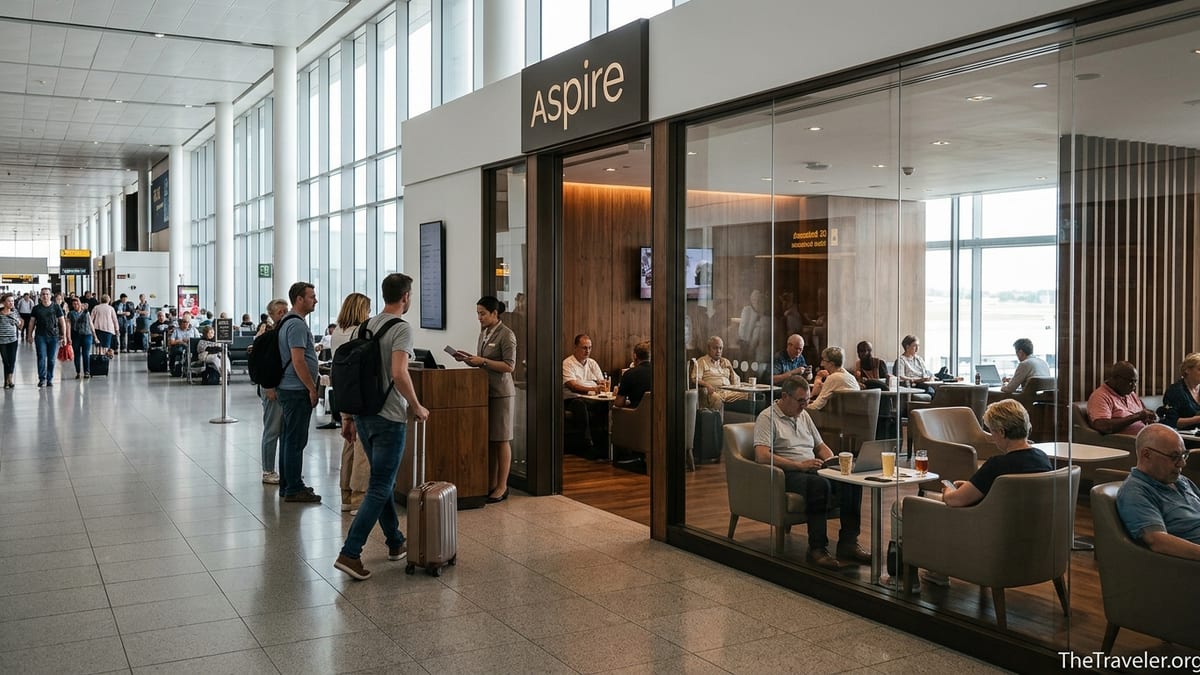
What Aspire Lounges Are and Where You Will Find Them
Aspire is the airport lounge brand operated by Swissport, a large global ground handling company. According to Swissport’s most recent company report, the Aspire network serves millions of guests a year across more than 60 lounges worldwide, with a strong concentration in the UK and mainland Europe. You will find Aspire lounges at airports such as London Heathrow Terminal 5, London Gatwick North and South, Manchester, Edinburgh, Zurich, Copenhagen and Johannesburg, as well as a scattering of locations in North America, the Middle East and Africa.
Most Aspire lounges are “independent” rather than airline-branded. That means they are not tied to a specific carrier like British Airways or Lufthansa and instead work with multiple airlines and third party access providers. In practice, you are likely to encounter Aspire whenever you hold a lounge card such as Priority Pass, DragonPass or LoungeKey, or when you search for paid day-pass lounges on your airport’s website.
The typical Aspire space offers a mix of seating areas, a buffet with hot and cold food, a staffed bar, coffee machines, Wi‑Fi and power outlets. In the UK, several locations such as Belfast City, Birmingham, Bristol, Gatwick and Manchester are part of Aspire’s “LoungeMiles” loyalty scheme, which rewards frequent visitors with points that can be redeemed for future lounge visits. While design and size vary by airport, the look is generally modern, businesslike and practical rather than ultra-luxurious.
Importantly, Aspire also operates the “Club Aspire” sub-brand at high-traffic airports like London Heathrow and London Gatwick. These lounges are often marketed as a slightly upgraded experience within the same overall network, with a bit more emphasis on a quieter environment and improved food compared with some older Aspire spaces.
How Much Aspire Lounge Access Costs in Practice
There are three main ways travellers pay for Aspire Lounge access: direct day passes, lounge membership cards and bundled access via premium credit cards or airline tickets. Each route has very different economics, and whether Aspire is worth it hinges heavily on how you get in and how often you fly.
If you buy access directly from Aspire or through your airport’s website, prices for a three hour visit typically fall in the range of about 30 to 45 US dollars or roughly 25 to 35 pounds in the UK, depending on the airport, time of day and how far in advance you book. For example, at London Gatwick South, cash walk-ins for lounges in the same cluster as Club Aspire often start from around 30 pounds for adults, with small discounts on advance bookings for off-peak slots. Families will usually pay a reduced rate for young children, while infants are often admitted free.
Many frequent travellers instead rely on a lounge membership such as Priority Pass or DragonPass. Priority Pass, for instance, sells a Standard Plus plan where you pay an annual fee and then receive a set number of complimentary visits, after which each additional visit is billed separately. Some travel writers have calculated that, if you use all your included visits, the effective cost per visit on such plans can drop to around 20 pounds or less. That can make Aspire good value if you travel through airports with these lounges several times a year.
A third common route is bundled access from a premium credit card. In the UK, cards like American Express Platinum or certain high-end Visa and Mastercard products include a Priority Pass or DragonPass membership, while in the United States, the Hilton Honors American Express Aspire card includes Priority Pass Select. In these cases the headline cost of the lounge visit feels like zero, but of course you are paying for the card itself through an annual fee. If you already hold one of these cards and travel several times yearly, walking into an Aspire Lounge is effectively a way to “use” a benefit you are already funding.
Real-World Examples: Heathrow, Gatwick and Beyond
To understand whether Aspire is worth it, it helps to look at concrete lounges travellers actually use. At London Heathrow Terminal 5, for example, Club Aspire operates one of the main independent lounges for passengers who are not flying in British Airways Club or First. It works with Priority Pass, DragonPass and some airline partners, and often charges a small pre-booking fee for those using membership cards during busy times. Travellers report that the lounge can be visually busy at peak hours, but it still offers a more controlled environment than the public departures hall, with hot food, self-service drinks and work-friendly seating.
At London Gatwick South, Club Aspire has become a quieter alternative to the better-known No1 Lounge. Travel reviewers note that this Club Aspire occupies part of a former Virgin Atlantic Clubhouse space and offers runway views of the British Airways apron, a buffet with hot and cold dishes and a staffed bar. The catch is its schedule. On many days it operates early in the morning and closes around early afternoon, so for evening departures you might instead opt for the neighbouring My Lounge or another partner lounge in the terminal.
Outside the UK, the Aspire brand appears in very different guises. Travellers passing through Copenhagen Airport have reviewed the Aspire lounge near the A gates as functional but unspectacular, a decent place to sit with a drink and a snack rather than a destination in itself. In Zurich, one Aspire-branded lounge has drawn mixed reviews, with some visitors rating it only slightly above the main terminal due to crowding and modest food, while others appreciate the ability to find a seat, plug in a laptop and get some work done between flights. In Johannesburg, by contrast, Aspire lounges have recently been praised by some Priority Pass users as among the better independent options at the airport.
These examples illustrate the central truth about Aspire: it is a network brand, not a single uniform experience. The Heathrow and Gatwick lounges can feel quite different from the Zurich or Copenhagen spaces, which in turn can differ again from newer outposts in Africa or the Middle East. Whether it is worth using on any given trip depends not just on the logo above the door, but on the specific location, your schedule and your expectations.
What You Actually Get Inside an Aspire Lounge
Most Aspire lounges follow a broadly similar template. You check in at a reception desk where staff verify your boarding pass and lounge entitlement, then enter a single large room divided into various seating zones. There are typically café-style tables and chairs near the buffet, softer armchairs with low tables for relaxation, and bar stool seating along counters with power outlets for working travellers. Large windows with runway or apron views are common in newer lounges, particularly at Gatwick, Heathrow and some European airports.
Food offering is usually centred on a self-service buffet. In the morning this might feature items like scrambled eggs, bacon or sausages, pastries, yoghurt, cereal and fruit. Later in the day you are more likely to see simple hot dishes such as pasta, curry or stew, along with salads, soup, bread and desserts. One recent review of Club Aspire Gatwick South described the food as “solid rather than spectacular” and suitable for a proper breakfast before a short European flight, but not at the level of an airline’s flagship business class lounge.
Drinks are where Aspire can deliver strong value for travellers who would otherwise buy beverages in the terminal. Standard alcoholic drinks such as beer, house wine and basic spirits are typically complimentary, although Champagne or premium sparkling wines may incur a separate charge. Soft drinks, juices, tea, coffee and still and sparkling water are usually self-service. In the UK, most lounges enforce a responsible drinking policy and remind guests that they may be refused service if they appear intoxicated or fail to follow staff instructions.
Other amenities tend to include Wi‑Fi, flight information screens, newspapers and magazines, and basic business services like printing or scanning at reception on request. Some locations add small extras such as quiet zones, shower rooms or family areas. At Gatwick, for instance, some travellers prefer Aspire and its sister lounges because they often feel calmer and more child-friendly than the busiest airline lounges. Overall, the experience is closer to a mid-range hotel club lounge than a five-star first class facility, with the main value being comfort and predictability rather than luxury.
How Aspire Access Works with Priority Pass, DragonPass and Airlines
Aspire works closely with major lounge membership schemes, but the precise rules can vary by airport and even by time of day. Priority Pass and DragonPass are the most common partners worldwide. In many Aspire locations, if you hold a Priority Pass or DragonPass membership that includes complimentary visits, you can simply present your card or digital app at the front desk, along with your same-day boarding pass, and gain entry subject to space.
At high-demand airports such as Heathrow and Gatwick, however, some lounges have moved towards mandatory pre-booking or small reservation fees for membership cardholders during peak times. For example, at Gatwick South, My Lounge currently requires a modest pre-booking fee for visits via Priority Pass or DragonPass, and Club Aspire can limit walk-in access when the lounge is busy. At Heathrow Terminal 5, travellers have reported being asked to pre-book a slot at Club Aspire and occasionally being turned away even with a booking when capacity was constrained, underscoring how demand can outstrip supply.
Airline partnerships add another layer. Aspire collaborates with a number of carriers and alliances that may direct premium cabin or elite status passengers to an Aspire lounge when the airline does not operate its own facility or when its own lounge is full. For instance, some Star Alliance and oneworld carriers departing from secondary terminals in Europe use Aspire as their default contract lounge. In that case, access is governed by your ticket or frequent flyer status rather than by whether you hold a membership card.
Finally, Aspire sells day passes directly and via resellers, which you can pre-purchase online. Even if you intend to rely on a membership card, it is worth checking the airport’s website or Aspire’s own portal before travel, as pre-booked guests are sometimes prioritized over walk-ins when space is tight. If you are connecting through a busy European hub on a Friday evening, the difference between a guaranteed pre-booked slot and a speculative walk-up with Priority Pass can be the difference between a calm seat with Wi‑Fi and a crowded gate area.
When an Aspire Lounge Is Worth It – And When It Is Not
From a practical standpoint, an Aspire lounge makes sense on trips where you would otherwise spend a meaningful amount on food and drink in the terminal, or where you especially value a quieter environment to work or rest. Suppose you are flying from London Gatwick to Spain on a low-cost carrier and facing a three-hour wait. Buying breakfast and a couple of drinks in the public concourse can easily cost 20 to 30 pounds per person at current airport prices. If an Aspire day pass is around 30 pounds and includes a hot breakfast, coffee and a beer or glass of wine, plus Wi‑Fi and comfortable seating, the numbers start to look reasonable.
By contrast, if you are on a very short layover, arriving at the airport close to departure time or simply do not expect to eat or drink much, Aspire is harder to justify as an out-of-pocket purchase. Spending 30 pounds to sit down with a single cup of coffee for 45 minutes will rarely feel like good value, especially in smaller airports where public seating is plentiful. In those situations, lounge access only makes sense if it is effectively free through a card benefit you already hold, and even then some travellers prefer to stay in the terminal if the lounge is crowded.
Another factor is the quality and crowding of the specific lounge. Online communities of frequent travellers often describe Aspire as “fine” but not exceptional, with some locations noticeably busier and more worn than others. At Heathrow Terminal 5, for example, some Priority Pass users have recently complained that the Club Aspire lounge feels packed, with limited food variety at peak times, while others consider it one of the better third-party options when compared to congested airline lounges in the same terminal. At Gatwick South, reviews of Club Aspire tend to be more positive during the morning window when it is open and less enthusiastic later in the day, when travellers must seek alternatives.
The tipping point often comes down to your expectations. If you are picturing a quiet, semi-private oasis with made-to-order dining and spa facilities, Aspire will disappoint. If you instead view it as a step up from the public concourse, with a guaranteed seat, power sockets, light meals and house drinks included, then even an average Aspire lounge can feel like a worthwhile part of your journey.
Tips to Get the Best Value from Aspire Lounges
There are several practical strategies that can help you get more from Aspire than the casual walk-up visitor. First, time your arrival. Most Aspire lounges limit stays to around three hours, and that is about the sweet spot. Arrive too early and you risk wasting part of your day sitting indoors when you could have been exploring the city or resting in your hotel. Arrive too late and you will not have enough time to eat, drink and decompress before boarding. Aim to enter roughly two and a half to three hours before departure on long-haul flights, and about two hours ahead for shorter European hops.
Second, make use of pre-booking where it is offered. At busy hubs like Gatwick and Heathrow, independently operated lounges that partner with Aspire, Priority Pass or DragonPass often reward pre-booked guests with guaranteed entry up to a certain time. The pre-booking fee, which might be in the single-digit pound range, can be worthwhile during holiday peaks when walk-up visitors are regularly turned away. Just be aware that pre-bookings may be non-refundable or difficult to change within 24 to 48 hours of your visit, so only book when your travel plans are reasonably firm.
Third, understand the food and drink rhythm. Breakfast service is often when Aspire shines, with hot items and fresh pastries replenished frequently. Later in the day, buffets can become more utilitarian, especially in very busy lounges where staff are stretched. If you know you will be in the lounge around lunchtime or early evening, manage expectations and plan to treat the buffet as a light meal rather than a full restaurant experience. Many travellers choose to have one substantial meal in the lounge and then skip buying food onboard shorter flights, which can further justify the cost of access.
Finally, consider how Aspire fits into your broader travel toolkit. If you hold multiple card benefits, you might have a choice between Aspire, airline lounges and other third-party options. In that case, it can be worth checking recent reviews for your specific airport before each trip and choosing accordingly. Some travellers, for instance, prefer dedicated airline lounges at Heathrow or JFK for their better food or quieter seating, using Aspire only at airports where it is clearly the superior or only realistic option.
The Takeaway
Aspire Lounges occupy a useful middle ground in the global lounge landscape. They are neither the most glamorous nor the cheapest spaces in most airports, but they offer a consistent baseline of comfort that can materially improve the pre-flight experience, especially at busy hubs. Whether Aspire is worth using for airport lounge access depends less on the brand name and more on your personal travel pattern, your expectations and how you gain entry.
If you already have lounge access bundled with a credit card or elite status, visiting an Aspire Lounge on trips where you have at least two hours to spare is usually an easy decision, provided the lounge at that airport is well-reviewed. If you are paying cash for a day pass, the calculus is more delicate. You will get the most value when you would otherwise spend heavily on food and drinks in the terminal, or when you particularly need a quiet workspace or rest area between flights.
In the end, Aspire is best viewed as a practical tool rather than a luxury indulgence. For the average holidaymaker flying out of Gatwick on an early-morning departure, or the business traveller connecting through Zurich with a few hours to kill, an Aspire lounge can turn dead time into something more productive and comfortable. Go in with realistic expectations, check the particulars of your chosen location, and you are more likely to come away feeling that your lounge access, whether paid or bundled, was money and time well spent.
FAQ
Q1. What is an Aspire Lounge and who operates it?
Aspire Lounges are independent airport lounges operated by Swissport. They partner with airlines, Priority Pass, DragonPass and other access schemes to provide pre-flight spaces with food, drinks, Wi‑Fi and seating.
Q2. How much does it typically cost to use an Aspire Lounge without a membership?
If you pay directly, a three hour day pass usually costs roughly the equivalent of 30 to 45 US dollars or around 25 to 35 pounds in the UK, depending on the airport, time of day and how far in advance you book.
Q3. Can I access Aspire Lounges with Priority Pass or DragonPass?
Yes. Most Aspire and Club Aspire lounges accept Priority Pass and DragonPass, subject to capacity. At busy airports such as London Heathrow and Gatwick, you may be asked to pre-book a slot or pay a small reservation fee, particularly at peak times.
Q4. Are Aspire Lounges better than airline lounges?
It depends on the specific airport. In some places, such as secondary terminals without strong airline facilities, Aspire can be the best available option. At major hubs with premium airline lounges, Aspire is usually a step down in terms of food variety and exclusivity but still an upgrade over the main terminal.
Q5. What food and drinks can I expect in an Aspire Lounge?
You can generally expect a self-service buffet with hot and cold items appropriate to the time of day, plus complimentary soft drinks, tea, coffee, beer, wine and basic spirits. Premium drinks such as Champagne may cost extra.
Q6. Is there a time limit on how long I can stay in an Aspire Lounge?
Most Aspire lounges limit visits to around three hours before your scheduled departure. Some locations are strict about this time limit, while others are more flexible when the lounge is quiet.
Q7. Do Aspire Lounges offer showers or quiet areas?
Facilities vary by airport. A few Aspire lounges provide showers and dedicated quiet or rest zones, while others focus mainly on seating, food, drinks and Wi‑Fi. It is worth checking the amenities list for your specific location before you travel.
Q8. Can families with children use Aspire Lounges?
Yes, families are generally welcome. Many Aspire lounges admit infants free of charge and offer reduced rates for children. Some locations have family-friendly seating or small play areas, although facilities are usually simpler than in specialist family lounges.
Q9. Is it necessary to pre-book an Aspire Lounge visit?
Pre-booking is not always required but can be very helpful at busy airports and during holiday periods. Pre-booked guests often have priority over walk-ins when space is limited, and some lounges require a paid reservation for entry via membership cards at peak times.
Q10. When is an Aspire Lounge not worth it?
An Aspire Lounge may not be worth it if you have less than an hour or so before boarding, if you will not eat or drink much, or if reviews suggest the specific lounge at your airport is consistently overcrowded and offers only marginal improvement over the public terminal.