


Aspire Lounges have quietly become one of the most recognizable independent airport lounge brands in Europe and beyond. Owned by Swissport, the network now spans dozens of airports, welcoming millions of travelers each year who want a calmer, more comfortable pre-flight experience without flying business class. Yet for many passengers, the details of how Aspire actually works in practice remain slightly mysterious. This guide breaks it down in concrete terms: who can get in, what it costs, what you can realistically expect inside, and how to get the best value at real-world airports.
Get the latest updates straight to your inbox!
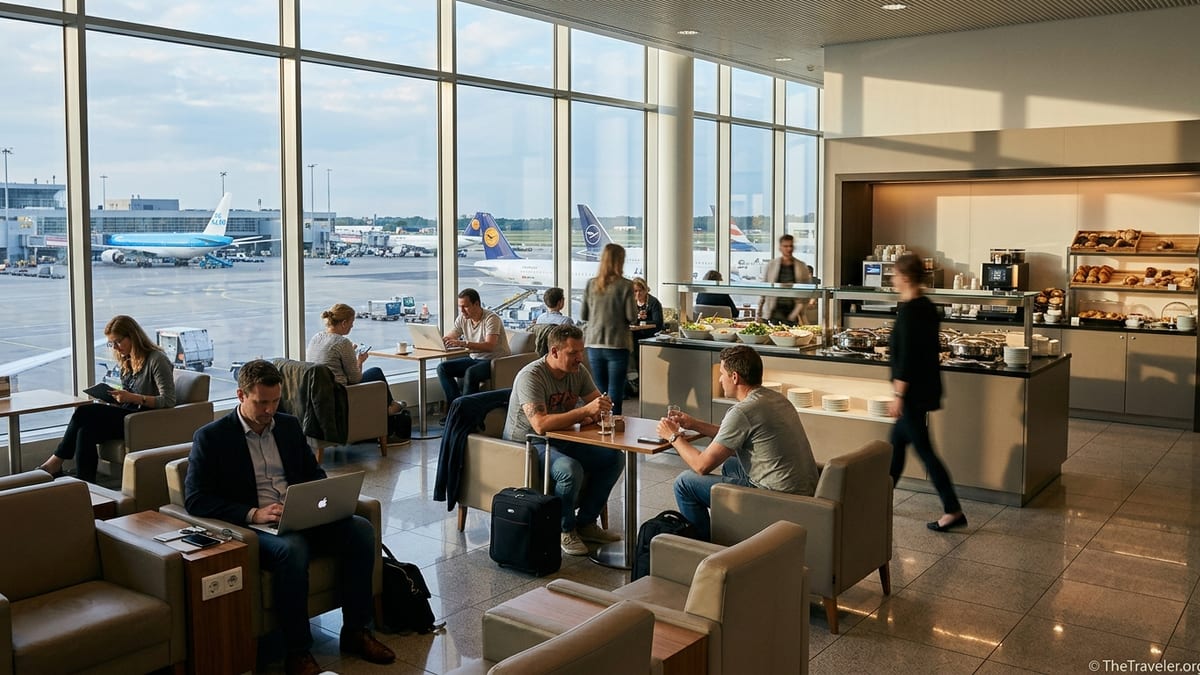
What Aspire Lounges Are and Where You’ll Find Them
Aspire is Swissport’s dedicated airport lounge brand, positioned as an independent alternative to airline-run spaces. Rather than catering only to one carrier or alliance, Aspire typically serves passengers from any airline and any cabin class, as long as they hold a valid same-day boarding pass and meet the lounge’s access rules. The concept is to bring something closer to a hotel-lobby feel into the terminal, with quieter seating, food, drinks and Wi-Fi bundled into a single entry price.
The network is especially strong across Europe, in hubs such as London Gatwick, Manchester, Amsterdam and Zurich, but it has expanded further afield to locations like Toronto, San Diego and Brisbane. In practice, Aspire often operates the only contract lounge in a given terminal. For example, at Brisbane Airport’s international terminal the Aspire Lounge near Gate 77 is one of the primary options for non-airline-elite travelers, selling three-hour entry passes around 55 Australian dollars. At mid-size European airports, Aspire may be the only branded lounge accessible for low-cost carriers and regional airlines that do not run their own clubs.
Because Aspire operates under the broader Swissport umbrella, it also partners behind the scenes with airlines that buy access for their premium passengers, and with large card and membership programs. That mix of customers means you will often see a blend of business travelers accessing the lounge via Priority Pass or a corporate credit card, leisure travelers who paid a one-off fee to prebook online, and airline-status passengers routed there because their carrier does not have a dedicated lounge at that airport.
Despite being part of a single brand, Aspire lounges can vary noticeably from airport to airport. A newer flagship in a major hub may feel airy and contemporary, with barista coffee and tarmac views, while an older space in a secondary terminal might be more compact with a simpler buffet. Understanding that variation is key to setting realistic expectations and judging whether an Aspire visit is worth the cost on a given trip.
How Access Works: Walk-in, Prebook and Memberships
Travelers generally access Aspire Lounges in three main ways: paying directly for a day pass (either at the door or in advance), entering through a lounge membership program such as Priority Pass or DragonPass, or being sent by an airline as a premium or elite passenger. Each method has its own rules and small print, and those details can change by airport and by time of day.
Direct paid access is the simplest to understand. With a same-day boarding pass and enough capacity in the lounge, you can usually pay at the door or show a prebooked confirmation from Aspire’s website or a third-party seller. Typical prices for Aspire day passes sit in roughly the 35 to 50 US dollar range at many European locations, depending on local costs and whether you book ahead or walk up. In markets like Australia, the price can be a little higher; at Brisbane, recent public information puts a three-hour pass around 55 Australian dollars, which buys you food, drinks, Wi-Fi and a comfortable seat away from the gate area.
Membership programs are the second major access route. Aspire has long partnered with schemes such as Priority Pass, DragonPass and LoungeKey, and some locations also welcome certain American Express cardholders. The mechanics are familiar: you show your digital or physical membership card at reception, it is swiped or scanned, and your visit is either complimentary or deducted from your annual quota depending on the terms of your card. For example, a traveler with a high-end credit card that includes an unlimited Priority Pass membership might use the Aspire Lounge at London Gatwick every time they fly, paying nothing extra at point of entry.
The final route is airline-directed access. In some airports, Aspire hosts premium passengers for specific carriers or alliances when those airlines do not run their own branded lounges. On a busy morning flight from a regional European airport, for instance, business class and elite-status passengers on several different airlines may all converge in the same Aspire Lounge with invitations or priority lists handled between the airline and Swissport behind the scenes. In these cases, the traveler never sees a separate lounge fee; access is baked into their ticket or status.
What You Get Inside: Facilities, Food and Time Limits
While each Aspire Lounge is unique, the core product is fairly consistent worldwide. Entry typically buys you a defined time window, often about three hours, in which you can use the lounge’s seating, Wi-Fi, power outlets, food and drink. At many locations, that includes a buffet with hot and cold items, a self-serve bar or staffed counter with alcoholic and soft drinks, and coffee machines. The idea is not luxury in the sense of a first-class airline lounge, but a quieter, more comfortable place to wait for your flight with enough sustenance to avoid buying a full meal in the terminal.
A standard example might be an Aspire Lounge at a major UK airport. After check-in, you find a mix of armchairs, café-style tables and bar seating, many with built-in power. Breakfast service could include pastries, cereal, yogurt, fruit and something hot like scrambled eggs or bacon, with juices and barista-style coffee machines available. Later in the day, the buffet might switch to soups, salads, pasta or rice dishes and small desserts. Alcoholic drinks are generally included, though some airports or times of day place limits or charge extra for premium spirits and Champagne.
Time limits are an important part of how Aspire works in practice. Many locations advertise a three-hour stay, and staff may monitor entry times more closely during peak periods. At a busy leisure airport before morning transatlantic departures, for example, you might be asked to show your boarding pass again if you linger beyond your allotted stay. In rare cases where space is very tight, lounges may temporarily stop accepting new guests from membership programs while still honoring prebookings or airline-invited passengers.
Facilities beyond food and seating tend to be functional rather than extravagant. Expect reliable Wi-Fi, work tables and often views of the apron or runway. Some lounges provide shower facilities, especially at long-haul hubs or where transfer traffic is significant, though there may be a small additional charge or limited availability. Smoking rooms are rare, with Copenhagen being one notable Aspire location that retains a dedicated smoking area, while most other lounges are entirely non-smoking in line with airport regulations.
Pricing in the Real World: What an Aspire Visit Actually Costs
Although Aspire does not publish a single global price list, recent public data and booking engines provide a clear sense of real-world costs. Across many European airports, an advance-booked Aspire day pass tends to land in the region of 35 to 45 US dollars per adult, with children often discounted. Walk-up prices can be a little higher, particularly in high-demand locations where capacity is precious. In North America and Australia, where airport costs are higher, you may see figures closer to the equivalent of 45 to 60 US dollars for a three-hour stay.
Take a practical example. A couple flying economy from London Gatwick on a Saturday morning for a week-long holiday could prebook the Aspire Lounge in their departure terminal. By booking several weeks ahead, they might pay something like 40 US dollars equivalent per person, covering breakfast, coffee and drinks while they wait. If the same couple waited to pay at the door during the summer travel rush, they might find the lounge fully booked or face a higher walk-in rate. At Brisbane, a solo backpacker on a long-haul flight might decide that spending about 55 Australian dollars for a few hours of food, drinks and a shower before an overnight flight is worth it compared with buying a separate meal and drinks in the terminal.
For passengers with membership schemes included in their credit cards, the marginal “cost” of visiting Aspire can feel like zero, though of course it is embedded in the annual fee. A US-based traveler with a card that includes a Priority Pass membership might use Aspire Lounges several times a year on trips through European airports, turning what would otherwise be gate seating and expensive airport cafés into a quieter, all-inclusive experience. In this scenario, the key decision is less about whether to pay a fee and more about whether the specific Aspire at that airport is good enough to be worth the detour and time.
It is also worth noting that prices can shift with inflation, airport charges and local demand. Lounge operators periodically adjust day pass fees, and third-party resellers may offer promotional discounts or packages that bundle lounge access with airport transfers or parking. Travelers who care about value should check current prices a week or two before departure rather than assuming last year’s rate still applies.
Capacity Controls, Peak Times and Why Access Is Sometimes Refused
One of the most misunderstood aspects of how Aspire Lounges work is capacity control. While brochures and apps often describe access via Priority Pass, DragonPass or other schemes as “guaranteed,” in reality all independent lounges operate under fire codes, seating limits and commercial agreements that allow them to restrict entry when the space is full. This is especially visible at airports and times where demand from airline-invited passengers spikes, such as early-morning departures or evening long-haul waves.
Real-world reports from travelers help illustrate the point. At some Aspire and related Swissport lounges in North America, Priority Pass members have occasionally been turned away during peak windows, with staff explaining that certain hours are reserved primarily for airline-contracted passengers or that membership-program access is paused until capacity frees up. Similar stories appear around European locations where large tour operator flights or alliance-partner airlines drive sudden surges of premium travelers. In those moments, having a membership card is not an absolute guarantee; the small print always notes that access is subject to availability.
Prebooking directly with Aspire often changes that equation. When you reserve a specific time slot in advance and pay a nonrefundable fee, the lounge plans for your arrival and generally honors the booking even at busy times, assuming you show up close to your slot. For example, a family flying from a crowded holiday airport in August might choose to prebook the Aspire Lounge to avoid the risk of being turned away with their children in tow. Meanwhile, a solo business traveler relying purely on a membership scheme might wisely have a backup plan in case a “no walk-ins” sign is posted upon arrival.
Understanding peak patterns at your particular airport helps manage expectations. In many European leisure gateways, early morning and late afternoon can be busiest as package flights cluster together. At major long-haul hubs, evenings before transatlantic or overnight flights often see the heaviest lounge demand. If you plan to rely on a membership scheme rather than a prepaid booking, arriving earlier in the day or outside those peak banks can improve your odds of breezing through the lounge doors.
Comparing Aspire to Airline Lounges and Other Independent Brands
From a traveler’s perspective, Aspire competes both with traditional airline lounges and with other independent brands such as Plaza Premium and No1 Lounges. The experience of walking into an Aspire Lounge as an economy passenger paying a one-off fee is often very different from entering an alliance-branded space as a business-class traveler, and expectations should be calibrated accordingly.
In terms of access flexibility, Aspire’s independent model is a strength. While airline lounges often restrict entry to their own premium passengers and elites, Aspire can welcome anyone with a valid boarding pass and a payment or membership method the lounge accepts. That makes Aspire particularly attractive to low-cost carrier passengers at airports where airlines like Ryanair, easyJet or Jet2 do not operate their own lounges. In these cases, Aspire might be the only practical way to enjoy lounge-style comfort before departure, short of having top-tier status with a partner airline that happens to contract space there.
On the other hand, amenities in Aspire Lounges are usually a step below the best airline-run business or first-class lounges. You are unlikely to find à la carte dining with restaurant-style menus, baristas pulling single-origin espresso shots to order, or extensive spa facilities. Instead, Aspire focuses on a reliable buffet, comfortable seating, solid Wi-Fi and a range of alcoholic and soft drinks included in the entry price. In practice, that is enough for many travelers: a quiet seat, power for devices, a plate of hot food and a glass of wine often represent a major upgrade from the public concourse.
Against other independent brands, Aspire’s strengths and weaknesses depend on the specific airport. At some locations, Aspire has invested heavily in refreshed interiors and improved food offerings to compete directly with modern Plaza Premium or No1 spaces. At others, especially older lounges awaiting refurbishment, passengers may find a more basic environment. Savvy travelers often consult recent reviews and photos for the exact lounge they plan to use, rather than assuming that the Aspire brand alone guarantees a certain uniform standard.
Practical Tips for Getting the Most Out of Aspire Lounges
Making Aspire work for you comes down to timing, research and matching expectations with reality. The first step is to confirm that there is an Aspire Lounge in the terminal you are actually flying from, as many large airports have multiple terminals with separate security areas. For instance, using an Aspire Lounge in an international terminal may be impossible if you are departing from a domestic-only concourse without allowing extra time to clear security twice, which is often impractical or prohibited.
Next, compare prebook prices with the expected cost of eating and drinking in the main terminal. If the lounge is charging the equivalent of 40 US dollars per person for a morning slot that includes a full breakfast, coffee and Wi-Fi, the math may work in your favor compared with buying separate items at terminal cafés. If you hold a card that includes a membership like Priority Pass, think of Aspire as a value-add that transforms your airport time, but remember that access is subject to capacity. Having a mental backup plan, such as a quiet gate area or a café with power outlets, can make a denied-entry situation less stressful.
Arriving at the lounge early within your allowed window usually pays off. You will have a better choice of seats, more relaxed time to eat and work, and less pressure around boarding. Keep an eye on time limits: if your booking is for three hours and you have a long layover, consider complementing the lounge stay with a walk around the terminal, perhaps returning closer to your departure if local rules allow reentry. Being courteous to staff, following house rules on noise and phone calls, and not treating the buffet as an all-day picnic helps keep the environment pleasant for everyone.
Finally, remember that Aspire is continually evolving. New lounges open as Swissport signs deals with additional airports, and existing spaces are refurbished or rebranded. A lounge that felt tired three years ago may have been refreshed with brighter interiors and upgraded food options, while another might be temporarily constrained by renovation works or staffing shortages. Checking fresh reviews and recent photos just a few days before your trip gives you the best sense of what Aspire at your destination looks and feels like right now.
FAQ
Q1. Do I need to fly business class to use an Aspire Lounge?
Not usually. Most Aspire Lounges are independent of any one airline and will admit economy passengers who pay a day pass fee, prebook online or use an eligible membership such as Priority Pass, as long as there is space and they hold a same-day boarding pass.
Q2. How long can I stay in an Aspire Lounge?
Most Aspire Lounges work on a time-limited model, typically around three hours per visit. Some locations may be more flexible during quiet periods, but at busy times staff are more likely to enforce the stated time limit to keep space available for new guests.
Q3. Is food and drink included in the Aspire Lounge entry price?
Yes, entry normally includes access to a self-service buffet and a selection of alcoholic and soft drinks. The exact range depends on the airport, and some lounges may charge extra for premium spirits or certain à la carte items, so it is wise to glance at the local menu on arrival.
Q4. Can Priority Pass or DragonPass members always get into Aspire Lounges?
Access for membership cards is always subject to capacity. In practice, most visits are accepted without issue, but during peak times some Aspire locations temporarily pause entry for membership schemes to avoid overcrowding, giving priority to prebooked guests and airline-invited passengers.
Q5. Is it cheaper to prebook an Aspire Lounge or pay at the door?
Prebooking is often slightly cheaper than walk-in prices and gives you more certainty, especially in busy holiday seasons. Walk-up guests can usually still be admitted if there is space, but they may pay a higher rate and risk being turned away when the lounge is full.
Q6. Are children allowed in Aspire Lounges?
Yes, children are generally welcome, and many Aspire Louges offer discounted rates for younger guests. However, there are usually expectations around noise and behavior, so parents should be prepared to supervise their children and keep them from disturbing other travelers.
Q7. Do Aspire Lounges have dress codes?
Most Aspire Lounges apply a relaxed smart-casual dress guideline rather than a strict formal code. Sportswear, beachwear and very worn clothing may be discouraged, but typical travel attire such as jeans, trainers and casual shirts is widely accepted.
Q8. Can I sleep in an Aspire Lounge during a long layover?
Aspire Lounges are designed for short stays, not overnight sleeping. While you can certainly rest or nap in a chair during your allotted time window, staff may ask you to remain reasonably upright and alert, and you will usually be expected to leave once your booked stay ends.
Q9. Do Aspire Lounges offer showers and other premium facilities?
Some, but not all, Aspire locations have showers or extra amenities such as quiet zones. Where showers are available, they may require a small extra fee or advance reservation. It is worth checking the specific lounge details for your airport before relying on these facilities.
Q10. Is an Aspire Lounge worth it for a short layover?
It depends on your priorities and the exact price. For a layover of under two hours, you may not have enough time to fully enjoy the food, drinks and calm environment, especially if you need to factor in walking time to the gate. For longer waits, Aspire can represent good value compared with buying separate meals and drinks in the main terminal.