


Airport lounges used to be an exclusive perk for business‑class road warriors. Today, walk‑up lounges like Aspire sit alongside global membership networks, premium credit‑card spaces and pay‑per‑use clubs. If you are planning your next trip and wondering whether to rely on Aspire Lounges or invest in a broader program such as Priority Pass or Plaza Premium, the right choice depends less on branding and more on your home airports, travel patterns and budget.
Get the latest updates straight to your inbox!
What Aspire Lounges Actually Offer
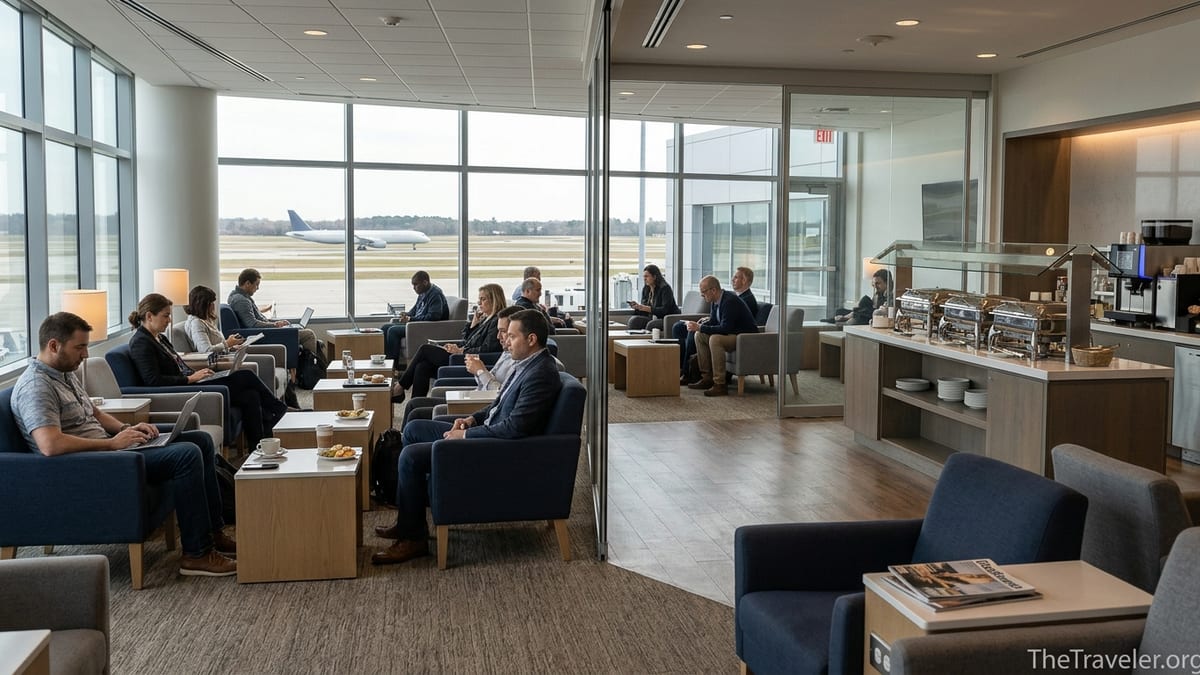
For many travelers, Aspire is the first “non‑airline” lounge brand they encounter. Operated by the Swissport group, Aspire Lounges appear in a mix of UK, European and a handful of other international airports. In practical terms, an Aspire lounge usually gives you a quiet(er) space with soft seating, Wi‑Fi, basic hot and cold buffet, a self‑serve bar where local rules allow, work tables with outlets and often a small kids’ corner. At London Heathrow Terminal 3, for example, the Aspire lounge typically offers breakfast items such as eggs, pastries and cereal in the morning and simple hot dishes around lunch and dinner time, plus beer, wine and house spirits included in the entry price.
Access to Aspire is flexible. You can often walk up and buy a day pass, pre‑book online for a discounted rate, or enter via a third‑party program like Priority Pass, DragonPass or through select airline contracts. At many UK airports, advance prices commonly fall in the 35 to 45 US dollar equivalent per person for a roughly three‑hour stay, while walk‑up rates are usually a bit higher. A public document used by Dallas Love Field as a benchmark lists Aspire day‑pass fees in the 45 to 50 dollar range in the United States, similar to other common‑use lounges at that airport.
Quality at Aspire is generally solid for a contract lounge but not luxury. Seating can feel tight at peak times, and the buffet is usually closer to “good pub food” than restaurant dining. Showers are not available in every location. If you are used to flagship airline lounges or premium credit‑card spaces, Aspire can feel basic. If you have only sat at crowded gate areas before, Aspire can feel like a major upgrade.
The key point is that Aspire is a brand of lounges, not a membership program that follows you everywhere. To decide whether Aspire alone is enough, you first need to understand how it fits into the larger lounge ecosystem.
How Aspire Connects To Priority Pass and Other Networks
Aspire does not live in its own bubble. Many Aspire locations partner with big lounge access networks such as Priority Pass, DragonPass and LoungeKey. That is why someone with a travel credit card can sometimes breeze into an Aspire lounge simply by tapping their membership card at reception. In the UK and mainland Europe, it is common to see Aspire listed as one of the main Priority Pass or LoungeKey options in a terminal that has no airline‑branded club.
Priority Pass remains the most widely known independent lounge program, with a network of more than 1,300 participating lounges and experiences worldwide as of 2025. Direct paid memberships are often quoted around 99 US dollars per year for the entry‑level “Standard” tier, which then charges a per‑visit fee, about 329 dollars per year for a “Standard Plus” plan with 10 included visits, and roughly 469 dollars per year for “Prestige,” which includes unlimited visits for the member. These prices can vary slightly by region and promotions, but they illustrate the scale of investment required if you buy Priority Pass outright rather than receiving it through a premium credit card.
Other networks are layered on top. LoungeKey is tied to certain Visa and Mastercard products and usually charges a fixed fee per visit that is often around the high‑20s in US dollars, billed automatically to the card. DragonPass, popular with some Asian and European banks, also sells bundled visit packs and yearly plans. In all three cases, Aspire lounges in many countries act as partner lounges where these membership cards are accepted.
This matters because when you choose a “program” you are often choosing a network, not a specific brand. A Priority Pass card might get you into Aspire at Amsterdam Schiphol, The Club at Dallas, a third‑party lounge in Lima and a restaurant credit at a US airport, all under one membership fee. Aspire is one piece of that puzzle rather than the whole picture.
Cost Comparisons: Aspire Day Pass vs Membership Programs
To decide between relying on Aspire and buying a broader lounge membership, it helps to run real numbers. Imagine a traveler based in Manchester who flies to Europe four times a year, generally via budget airlines that do not include lounge access. At Manchester Airport, an Aspire lounge day pass pre‑booked online might cost around 40 US dollars equivalent for a three‑hour stay. If that traveler uses the lounge once on departure on each of four trips, they will spend about 160 dollars per year and receive four lounge visits.
Now compare that to purchasing a Priority Pass Standard Plus membership directly. With recent pricing around 329 dollars per year including 10 free visits, each of those four lounge visits would effectively cost about 82 dollars if the traveler never used the remaining six. Even spreading the membership across eight visits in a year, perhaps two on each round trip, the per‑visit cost would be just over 41 dollars, similar to or slightly above the Aspire advance rate. The membership only becomes clearly cheaper per visit if the traveler is using lounges very frequently and in multiple airports.
On the other end of the spectrum, consider a frequent flyer based in New York who takes 20 or more international segments annually, with many connections. If they buy a 469 dollar Prestige membership and use lounges 25 times over the year, their average cost per visit is just under 19 dollars. At that point, paying 45 to 65 dollars for each walk‑up day pass at various lounges would be significantly more expensive overall, especially at hubs where day‑pass pricing for independent lounges tends to fall in the 40 to 90 dollar range.
What muddies the waters is credit‑card access. In the United States, a premium card such as an American Express Platinum or a high‑tier travel card from issuers like Chase or Capital One often includes a Priority Pass Select membership or other lounge benefits at no additional fee beyond the annual card charge. If you already hold one of these cards for reasons like travel credits or earning rewards, the incremental cost of lounge access might be effectively zero. In that case, buying single Aspire visits usually makes less sense except at airports where your included networks have no coverage.
Geography: Where Aspire Shines and Where Networks Win
Whether you should build your strategy around Aspire or another premium program depends heavily on where you actually fly. Aspire’s footprint is strongest in the United Kingdom and parts of western and central Europe, with locations in airports such as London Gatwick, London Heathrow, Manchester, Edinburgh, Amsterdam, Zurich and Geneva, among others. If your travel is mostly mid‑haul European trips from these hubs, Aspire will often be the only branded independent lounge in your terminal or at least one of a small handful.
In these markets, the decision is less about Aspire versus “something better” and more about whether you buy access visit by visit or through a network that includes Aspire. A traveler who only ever flies out of London Stansted twice a year might be perfectly happy to pre‑book Aspire each time. Someone who connects via multiple European hubs each month might instead value a Priority Pass membership that covers Aspire in some airports but also opens doors to partner lounges in others where Aspire has no presence.
Outside Europe, Aspire’s role becomes more occasional. In North America, for instance, independent lounges are a competitive mix of Aspire, The Club, Escape Lounges, Plaza Premium and proprietary bank spaces. A public summary used by Dallas Love Field to compare contracts lists sample advance or walk‑up pricing of 45 to 50 dollars for Aspire, around the mid‑40s for Escape Lounges and around 50 dollars for The Club, illustrating how similar these brands can be from a cost perspective. In such environments, choosing Aspire as your primary solution is only logical if your most common airports happen to host Aspire locations landside or in your regular terminal.
On long‑haul routes through Asia, the Middle East or Canada, Plaza Premium and other operators are often more visible than Aspire. In Hong Kong, Kuala Lumpur or Toronto, for example, Plaza Premium lounges may outnumber other independent facilities in a terminal and can be accessed through multiple channels: direct day passes, some bank cards, and as of 2025 renewed partnerships with networks like Priority Pass for many locations. For a US‑based traveler whose main international connection points are in these regions, it usually makes more sense to chase a program that partners with Plaza Premium, airline lounges and restaurant credits rather than one that relies only on Aspire.
Experience and Crowding: Aspire vs Premium Alternatives
Experience inside the lounge is as important as price and access rules. Aspire lounges usually offer a consistent mid‑range product: self‑serve buffet, a small bar, free Wi‑Fi and basic business facilities. Most are windowed spaces with airport views, though layouts are often constrained by older terminals. During morning departures and early evening banks, Aspire lounges can become crowded, especially where they accept several network programs plus walk‑ups. Some travelers report lines forming at peak times, with waitlists when capacity controls are enforced.
Priority Pass networks also face crowding issues because membership has expanded rapidly through credit‑card partnerships. In the United States, it is common to see Priority Pass partner lounges post “No Priority Pass at this time” signs when they reach capacity. Aspire lounges that accept Priority Pass are not immune; in fact, a busy Aspire at a popular hub can be one of the first to turn away network members during rush hours, serving only pre‑booked guests and airline‑contract passengers instead.
At the upper end of the spectrum, dedicated bank lounges and boutique concepts can feel noticeably calmer. Capital One Lounges in Dallas–Fort Worth and Denver, for example, emphasize high‑quality buffet and grab‑and‑go food, barista coffee, quiet rooms and family spaces, with access generally reserved for holders of specific Capital One cards and paid day‑pass guests. Published guidance from Capital One notes that general admission without an eligible card runs around 90 dollars at some locations, while certain cardholders can purchase discounted passes around 45 to 65 dollars. Their tighter access rules and higher general price points often translate to more space per guest compared with a busy contract lounge.
Plaza Premium’s newer lounges also try to differentiate on experience. At Dallas–Fort Worth, Plaza Premium operates a dual‑concept space in Terminal D with a more traditional lounge on one side and an upscale dining‑oriented “First” concept on the other, with entry fees above 100 dollars that include premium food and bar service. Similar upgrades are appearing in select hubs worldwide. These are not the right choice for everyone, but they illustrate that premium lounges increasingly aim to be restaurants and workspaces as much as waiting rooms. If your priority is high‑end dining, showers, quiet pods and views, Aspire may feel workmanlike compared with these top‑tier options.
Which Traveler Should Stick With Aspire Only?
Despite the competition, there are clear cases where relying on Aspire, without paying for a large membership program, is a sensible strategy. The first is the occasional leisure traveler based at an airport with a strong Aspire presence. Think of a family from Bristol or Edinburgh flying on holiday once or twice a year. They might pre‑book the Aspire lounge for 35 to 45 dollars equivalent per adult, arrive early, enjoy a hot breakfast and a drink, and feel the value was worthwhile. For them, spending several hundred dollars annually on a lounge network membership that might never be fully used simply does not add up.
A second profile is the traveler who already receives lounge access elsewhere and only needs Aspire as a fallback. For example, a US‑based consultant may hold a premium airline credit card that grants access to that carrier’s domestic lounges on same‑day flights and a travel card that includes Priority Pass Select for international trips. At most hubs they will choose airline or partner lounges at no incremental cost. On the occasional itinerary that starts from a regional UK airport where Aspire is the only facility, paying out of pocket for Aspire that day is easier than reshaping their entire lounge arsenal.
A third group includes corporate travelers whose companies reimburse individual lounge entries but do not cover premium personal cards or annual memberships. In these cases, submitting a 45 or 50 dollar Aspire receipt against a specific client trip is administratively cleaner than trying to justify a 300 to 500 dollar yearly lounge membership that blends professional and personal use. For consultants, auditors and project managers with strict travel policies, this “pay as needed” model often aligns better with compliance rules.
In all of these situations, Aspire becomes a practical, on‑demand comfort upgrade rather than the center of a traveler’s strategy. The key is to keep expectations aligned with the mid‑range nature of the product and to book ahead during peak seasons when capacity can be tight.
When a Broader Lounge Program Delivers Better Value
For many frequent travelers, especially those based in large global hubs, programs that span multiple brands usually deliver better long‑term value than buying standalone Aspire visits. A New York‑based digital nomad who works remotely and flies at least twice a month, often with connections, might easily clock 20 to 30 lounge visits per year. In that scenario, a 469 dollar Prestige‑tier Priority Pass membership works out to around 16 to 24 dollars per visit, assuming steady usage, and unlocks a mix of Aspire lounges, The Club, Escape Lounges, Plaza Premium partners in some regions and select airport restaurants that offer credits for meals.
Program flexibility can also matter more than brand loyalty. A traveler whose typical week involves a Monday flight from Chicago to Dallas, a Wednesday connection through Phoenix and a Friday return via Denver will encounter a patchwork of lounge brands: airline clubs in some terminals, Priority Pass partners in others, and perhaps Plaza Premium or Capital One spaces at yet another connection point. In this world, the ability to choose the best available option based on location, crowding and personal preference is more valuable than being tied emotionally to Aspire simply because it happens to operate in their home airport.
Another angle is guest access and family travel. Some premium credit cards that include Priority Pass or similar programs allow a cardholder to bring one or more guests at either no extra charge or at a fixed fee per person, commonly around 30 to 40 dollars. Compare that with booking separate Aspire day passes for each member of a family at walk‑up prices that might approach 50 dollars per adult in some US locations. If you frequently travel with a partner or children, the math quickly favors a card‑based or network membership structure, particularly when you can use the same benefit on multiple trips each year.
Finally, broader programs help when your routes change. If your job or personal life shifts and you start flying more to Asia or the Middle East, a network that includes partner lounges in Hong Kong, Doha, Dubai, Singapore and Tokyo will automatically adapt. Aspire‑only strategies offer little help at these hubs, whereas Plaza Premium and airline‑affiliated lounges accessed via Priority Pass, DragonPass or credit cards can fill the gap with no extra planning.
Practical Steps To Decide What Is Right For You
Making a smart choice between Aspire and other premium lounge solutions is easier if you treat it like a small budgeting exercise. Start with your last 12 months of flying, or your expected next 12 months if your situation is changing. Count how many separate departures and long connections you are likely to have where a lounge would meaningfully improve your experience. Exclude short hops where you arrive at the airport late, as you would not have time to enjoy lounge benefits.
Next, map the airports and terminals you use most often against known lounge brands. For a US‑based traveler, that might mean identifying whether your main airports are dominated by airline‑operated clubs, independent operators like Aspire, Escape and The Club, or bank spaces such as Capital One and Chase Sapphire lounges. For a Europe‑based traveler, it may mean looking at which terminals offer Aspire versus competitors, and which of those are in the networks of programs like Priority Pass or DragonPass. Many lounge and program websites have searchable maps where you can enter an airport code and see which lounges belong to which network.
Then, compare costs. Use realistic per‑visit prices: about 40 to 60 dollars for many independent lounge day passes in Europe and North America, higher for ultra‑premium concepts, and 300 to 500 dollars per year for common paid lounge memberships. If you already pay for a premium credit card, factor in the lounge benefit as part of its overall value rather than as a separate cost. Run two or three scenarios, such as “Pay for Aspire or other day passes as needed” versus “Buy a paid Priority Pass membership” versus “Rely on my existing credit‑card lounge access.” The best option will usually be the one where the total annual cost divided by likely lounge visits produces the lowest average cost per visit without forcing you into inconvenient routings.
Finally, think about the non‑financial aspects: Are you extremely sensitive to crowds and noise, in which case you might prioritize smaller or more exclusive lounges even at a higher price? Do you often need showers between overnight flights and client meetings, making facilities more important than buffet quality? Would you value restaurant‑style dining enough to pay extra for a concept like Plaza Premium First at hubs where it is available? These qualitative factors can push you toward or away from relying on Aspire alone.
The Takeaway
Choosing between Aspire Lounges and a broader premium lounge program is less about brand labels and more about matching products to your actual travel life. Aspire offers a dependable mid‑range experience at many UK and European airports and remains an excellent pay‑as‑you‑go upgrade for occasional travelers who simply want a snack, a drink and a quieter seat before boarding. For those who fly only a handful of times a year from airports where Aspire is the main independent option, buying individual Aspire visits can be a perfectly rational approach.
For frequent or geographically diverse travelers, however, a wider membership or credit‑card‑based program tends to win. Networks such as Priority Pass, DragonPass and card‑issuer lounge systems knit together Aspire with dozens of other brands, letting you move through a stitched‑together web of lounges in North America, Europe, Asia and beyond. When you are using lounges fifteen, twenty or thirty times a year, the effective per‑visit cost of a membership usually undercuts serial day passes at Aspire or any other single operator.
In the end, the smartest move is to audit your routes, count realistic lounge visits, understand which brands actually exist in the terminals you use and then compare a year of pay‑per‑use Aspire entries with the cost and coverage of broader programs. If your math and preferences point squarely at Aspire, book early during busy seasons and treat it as a welcome comfort upgrade. If they point instead to a network or premium card, enjoy the flexibility of drifting between Aspire and its rivals as your itinerary demands.
FAQ
Q1. Is it cheaper to use Aspire Lounges or buy a Priority Pass membership?
Infrequent travelers usually save money by paying for Aspire or other day passes only when they fly, while frequent travelers who use lounges 15 or more times a year often see lower average costs with a Priority Pass‑style membership or a premium credit card that bundles lounge access.
Q2. Can I access Aspire Lounges with Priority Pass or DragonPass?
Many Aspire locations partner with Priority Pass, DragonPass and similar networks, especially in the UK and Europe, but acceptance can vary by airport and over time, so it is wise to check your program’s lounge map before you travel.
Q3. How much does an Aspire Lounge day pass usually cost?
Advance online prices for Aspire often fall around the mid‑30s to mid‑40s in US dollars in Europe, while sample US benchmark data suggest typical day‑pass rates in the 45 to 50 dollar range, with walk‑up prices sometimes a little higher at busy airports.
Q4. Are Aspire Lounges considered premium compared with airline or bank lounges?
Aspire is generally positioned as a solid mid‑range contract lounge, offering better comfort than the public gate area but usually fewer amenities and less upscale food and design than top‑tier airline clubs, bank‑branded lounges or high‑end operators like some Plaza Premium First locations.
Q5. Do Aspire Lounges have showers and quiet work areas?
Some Aspire lounges include showers and dedicated quiet or business zones, particularly at larger international airports, but others offer only basic seating and buffet areas, so it is important to review the facilities for each specific lounge before counting on showers or private workspaces.
Q6. If I already have a premium credit card, should I still pay for Aspire?
If your card includes a network like Priority Pass or access to airline or bank lounges on your regular routes, you may not need to pay separately for Aspire except in airports where your included options are limited and Aspire is clearly the most convenient or only lounge available.
Q7. Are Aspire Lounges crowded?
Crowding at Aspire varies by airport and time of day, but like many contract lounges that accept multiple access programs, they can be very busy during morning and evening departure peaks and may occasionally limit or pause entry for walk‑up guests and some membership cards when at capacity.
Q8. What is the main advantage of a broader lounge program over just using Aspire?
A broader program typically covers many different brands and airports worldwide, giving you flexibility to choose among several lounges in each terminal and ensuring you still have options when you travel through airports where Aspire does not operate.
Q9. Is it worth buying a paid lounge membership if I only fly a few times a year?
Travelers who fly just once or twice a year rarely get full value from a several‑hundred‑dollar membership, and usually do better purchasing individual lounge visits at Aspire or comparable lounges on the specific trips where extra comfort matters most.
Q10. How can I decide quickly whether Aspire or another program is best for me?
List the airports and terminals you use most, estimate how many times a year you would realistically visit a lounge, look up the Aspire and other lounge options at those locations, then compare the total cost of paying for those visits individually with the annual fee for a Priority Pass‑type membership or a premium credit card that includes lounge access.