


Asunción is one of South America’s least visited capitals, yet it offers a revealing look at everyday Paraguayan life, riverfront sunsets, Guaraní-influenced culture and wallet-friendly prices. For first-time visitors willing to trade blockbuster sights for a slower, more local rhythm, the city can be a rewarding stop on a regional itinerary.
Get the latest updates straight to your inbox!
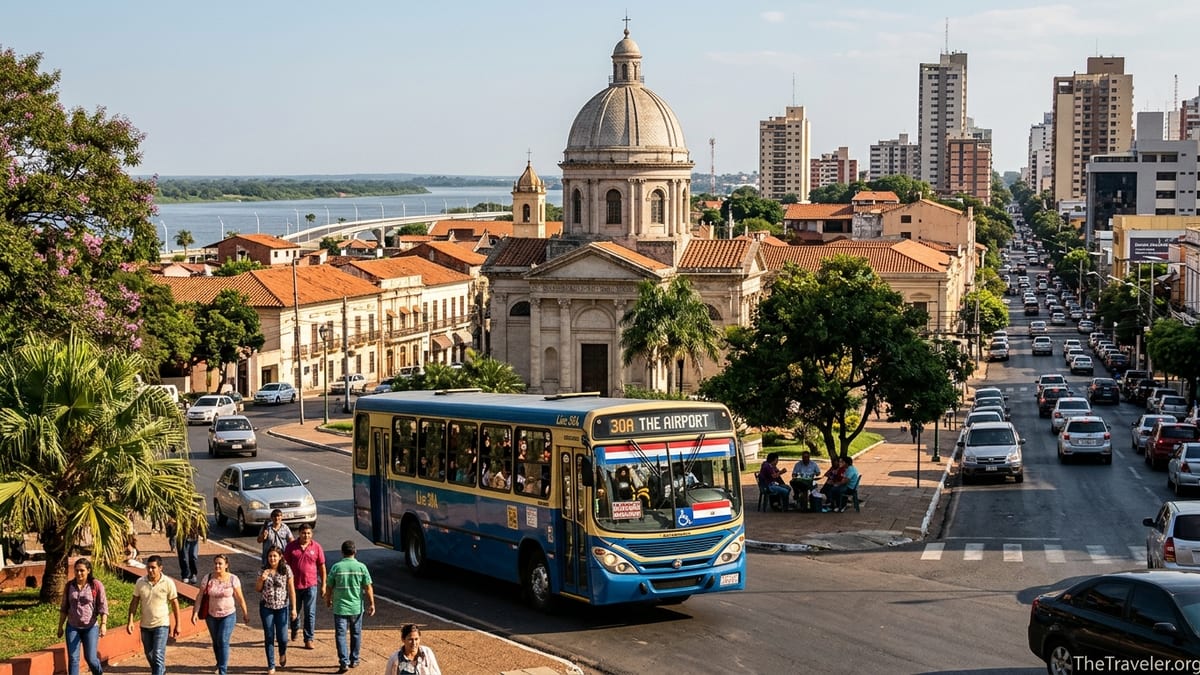
Essential Orientation: Where You Are and How the City Works
Asunción sits on the east bank of the Paraguay River in western Paraguay, facing the Argentine city of Clorinda across the water. The compact historic center rises just above the port, then suburbs spread inland toward Luque and the Silvio Pettirossi International Airport. Although the metropolitan area has well over two million people, the core still feels like a large provincial city rather than a dense megacity.
The climate is humid subtropical, with hot, sticky summers roughly from November to March and milder, drier conditions from May to August. Summer highs often climb above 35°C (95°F) with strong sun and high humidity, which makes shade and air conditioning important when planning midday activities. Heavy downpours can cause localized flooding and muddy streets, especially near low-lying riverbank neighborhoods, so carrying a small umbrella or light rain jacket is useful in the wet season.
Spanish and Guaraní share official status in Paraguay, and in Asunción you will hear a fluid mix known as jopara in markets, buses and casual conversation. Most people in hotels and better restaurants speak at least basic English, but in local shops, buses and markets you should not rely on it. The currency is the Paraguayan guaraní (PYG). In late 2026, 1 US dollar converts to roughly 7,300 to 7,500 guaraní, so a simple rule of thumb is that 75,000 guaraní is around 10 dollars.
For a first stay, most visitors spend two or three full days in Asunción itself, with an optional extra day for excursions to nearby lake towns. The historic center, Costanera riverfront and government quarter are walkable in one area. More modern commercial districts, like Villa Morra and Carmelitas, lie 5 to 7 kilometers east along avenues such as Mariscal López and España. Taxis and ride-hailing apps bridge the gap when the heat or distances make walking impractical.
Historic Heart: Landmarks, Plazas and Museums
Asunción’s colonial core runs roughly between the river and streets like Eligio Ayala and Colón. Here you find the key sights most first-time visitors cover in a single or split day. The Palacio de los López, also known as the Palacio de Gobierno or Palacio Presidencial, is the seat of the executive branch and the presidential residence. It dominates the riverfront with its palm-lined gardens, but access is restricted and current security conditions mean you should plan to admire it from outside the perimeter fence and from viewpoints on the Costanera rather than expecting to enter.
A short walk uphill from the palace brings you to the Panteón Nacional de los Héroes, a neoclassical domed mausoleum where national heroes are buried or commemorated. It stands on Plaza de los Héroes and is often guarded by ceremonial soldiers. Visitor access to the interior has varied in recent years; when open, entry is usually free or low-cost and visits are brief, often under 15 minutes. Before planning your day around going inside, check with your hotel or the city tourism office to confirm current opening hours. Surrounding streets lead toward Plaza de la Democracia, an open square used for events and demonstrations, which has seen recent political gatherings, so stay alert to any protests and follow local advice if crowds build.
For those interested in independence history, Casa de la Independencia is one of the most atmospheric stops. This low colonial house near the center is where Paraguayan independence conspirators met in the early 1800s. It typically operates as a small museum with guided or self-guided visits that take less than an hour. Before you go, verify that it is open, since several Asunción museums have had intermittent closures and updated schedules in the past few years. In the same area, the Cabildo cultural center (in the former Congress building) and nearby churches round out a walkable circuit through the old town.
Asunción has several worthwhile museums beyond the historic core. The Museo del Barro, in the eastern part of the city, is a favorite among locals and visitors who enjoy art and anthropology. Recent local cultural guides report that it has reopened after temporary closures, with modest entry fees and standard daytime hours, usually closing by early evening. Given that schedules can change, especially around holidays or special events, it is wise to confirm the latest hours with your accommodation or through local tourist information before setting out by taxi or ride app.
Riverside and Neighborhood Contrasts
The Costanera de Asunción is a modern riverfront avenue and linear park that runs along the Paraguay River, providing one of the city’s most pleasant public spaces. The northern section, near the port and Palacio de los López, has a broad promenade, bike lanes and space for food trucks, simple amusement rides and evening strolls. A newer southern extension, inaugurated in 2024, links the downtown area with Lambaré, creating a longer waterfront drive. For visitors, the most useful stretch remains the segment between the port and the roundabout at Avenida General Santos, where there are more people, vendors and informal security presence in the late afternoon and early evening.
Set slightly above the Costanera is Loma San Jerónimo, a hillside neighborhood that has undergone colorful revitalization. Narrow streets, stairways and bright facades make it a popular stop for photos and handicraft browsing. You will find small eateries, viewpoints over the river and occasional cultural events. It is generally more comfortable to visit during the day or in the late afternoon rather than at night, and many visitors choose to arrive and leave by taxi or ride app from the center instead of walking through the surrounding low-income areas after dark.
Asunción’s most noticeable contrast lies between the somewhat faded historic center and the polished, car-oriented commercial districts in the east. Villa Morra and Carmelitas, running along and around Avenida Mariscal López and Avenida España, feel like a different city. Here you find new shopping centers, mid- to high-end hotels, rooftop bars and international restaurant chains alongside Paraguayan eateries. Streets are better lit, sidewalks are mostly in better condition and there is more evening street life, especially around shopping malls and dining clusters.
These newer districts are where many business travelers, diplomats and wealthier locals live, shop and go out. For a visitor, they offer a convenient base with easy access to taxis, ride-hailing and a broad choice of cafes and restaurants. However, they lack the historic charm of the downtown plazas and port area, and walking from here to the old center is not practical in the heat. Most travelers end up using vehicles to shuttle between “modern” Asunción and the colonial core.
Where to Stay: Historic Center or Modern Districts
Choosing where to sleep is one of the most important decisions for first-time visitors. Staying in or near the historic center puts you within walking distance of Casa de la Independencia, the Panteón, the cathedral, the riverside and many government buildings. Older mid-range hotels and a few renovated boutique options around Calle Palma, Colón and Independencia Nacional can be good value, with simple rooms sometimes in the range of 35 to 60 US dollars per night, or about 260,000 to 450,000 guaraní, depending on season and standard.
The trade-off in the center is that the area has declined in recent decades and becomes relatively quiet at night. Many locals advise against walking aimlessly through the historic streets after dark, especially toward the riverbank slums such as the Bañados and Chacarita. If you choose this location, it is sensible to use taxis or ride apps for evening movements, keep valuables discreet and avoid poorly lit side streets. During the day, with offices open and more people on the streets, the center is more active and comfortable to explore on foot.
Villa Morra and Carmelitas, by contrast, are more oriented to modern services, shopping and nightlife. International hotel chains, newer apartment hotels and design-forward boutique properties cluster here, with typical nightly rates starting around 60 to 80 dollars (roughly 450,000 to 600,000 guaraní) and going higher for upscale brands or large suites. You gain easier access to diverse restaurants, safer-feeling streets at night, and better connections to shopping malls, coworking spaces and cafes, at the cost of needing a car for almost every sightseeing outing.
For a first-time tourist who wants to balance historic exploration with evening comfort, a practical compromise is to stay in Villa Morra or Carmelitas and plan two focused daytime trips into the historic center using taxis or ride apps. Those on a tight budget, or who want to be right among the colonial landmarks and do not mind a more worn urban environment, may prefer a central hotel close to Calle Palma, as long as they take nighttime precautions and accept some noise and older infrastructure.
Food, Markets and Everyday Culture
Paraguayan cuisine is hearty and rooted in maize, cassava and grilled meats, shaped by Guaraní and Spanish influences. Sopa paraguaya, perhaps the country’s most emblematic dish, is not a soup but a dense, savory corn cake baked with cheese, onions and sometimes bits of meat. It often appears as a side at traditional barbecue restaurants and is a reliable way to taste something distinctively Paraguayan. Mbejú is another staple, a chewy, cheese-filled cassava starch pancake cooked on a hot griddle, often eaten for breakfast or merienda with coffee or cocido.
Chipa, ring-shaped or small braided breads made from cassava flour, cheese and eggs, are sold by street vendors, bakeries and bus station stalls. You will likely encounter vendors carrying baskets of warm chipa onto intercity buses or shouting “chipa chipa” around major intersections. Buying a small bag for around 5,000 to 10,000 guaraní gives a quick, very local snack experience. Traditional barbecue, known simply as asado, features beef, pork and sausages grilled over wood embers, usually accompanied by salads, manioc and sopa paraguaya. In Asunción you will find both humble parrilladas with plastic chairs and more polished steak restaurants in Villa Morra and Carmelitas.
Tereré, Paraguay’s national drink, is cold-brewed yerba mate served in a guampa (cup) and sipped through a metal straw from a thermos carried everywhere. In plazas, riverfront parks and even office doorways, groups of friends and coworkers share a single gourd and take turns drinking. For visitors, joining locals for tereré is a key window into everyday life. Some cafes near the Costanera or in student areas prepare tereré for customers, but the most authentic experience is being invited to share by someone you meet. If that happens, follow their cue on how to hold the guampa and when to pass it back, and avoid treating the ritual as something exotic to photograph without permission.
To see daily commerce up close, head to Mercado 4, one of Asunción’s busiest markets, or walk along stretches of Calle Palma in the center where clothing, electronics and souvenir shops cluster. At Mercado 4, stalls sell everything from fresh fruit and vegetables to cheap household goods, flowers and street food. Crowding and pickpocketing risk mean you should keep only what you need in front pockets or a money belt and leave passports and excess cash in your hotel safe. In the historic center and neighborhoods like Loma San Jerónimo, you will also find artisans selling ao po’i embroidered textiles, leather goods and ceramic pieces that reflect rural traditions brought into the city.
Getting In, Getting Around and Language Challenges
Silvio Pettirossi International Airport (ASU) lies in the municipality of Luque, about 15 kilometers northeast of downtown Asunción. Travel time into the city is usually 30 to 45 minutes by road, depending on traffic and rain. The most straightforward option for first-time visitors is the official taxi desk just outside arrivals, where recent conference guidance and local transport sites put the approximate fixed fare to central Asunción in the range of 100,000 to 150,000 guaraní, roughly 14 to 20 dollars. Several hotels can arrange private transfers that may cost slightly more but add the reassurance of a driver waiting with a sign.
Ride-hailing apps such as Uber and Bolt operate in Asunción and are widely used by residents. Fares from the airport to central districts are often lower than official taxis, although pick-up rules at the terminal can shift, and you may need to walk to a designated pick-up area outside the main exit. For budget travelers, public transport exists but requires more effort. City bus line 30A connects the airport with central areas, reportedly for a fare of only a few thousand guaraní; however, it may not run late into the evening and often requires a reloadable transport card rather than cash. Some guides also note an electric E3 bus linking the airport roundabout with the port. For a first-time visitor arriving with luggage or at night, a taxi or ride app is generally the safer, more practical choice.
Within the city, dozens of bus lines crisscross Asunción and the surrounding metropolitan area. Fares on standard city buses are modest, often around 3,400 guaraní or less, but payment is increasingly handled via contactless cards. Bus stops can be informal, routes confusing and signage limited. Without at least basic Spanish, it can be challenging to confirm you are on the right service or to request a stop. Ride-hailing and conventional taxis therefore play a larger role for many short-stay visitors than in cities like Buenos Aires or Montevideo, where metro and train networks help structure movement.
For long-distance travel, Asunción’s main bus terminal is the hub for routes to cities around Paraguay and into neighboring countries. Air-conditioned long-distance buses connect Asunción with lake towns and cities like Encarnación or Ciudad del Este. If you plan a same-day return excursion, choose early departures and buy return tickets as soon as you arrive at your destination, since weekend and holiday buses can sell out. Roads between Asunción and nearby tourist towns are paved, but heavy rain can create delays and, occasionally, localized flooding.
Language can amplify these transport challenges. Outside higher-end hotels and some tourist-facing businesses, English is not common. When taking a taxi from the street, having your destination written in Spanish on your phone or on a card helps avoid confusion. For ride apps, double-check the pinned pick-up spot, since drivers may call to confirm, and calls are typically in Spanish. Installing an offline translation app and pre-downloading Spanish and Guaraní basics makes everyday interactions smoother, from ordering in small comedores to asking for directions.
Sample Itineraries and Nearby Excursions
With two full days, first-time visitors can see central Asunción’s main sights and still have time for riverfront sunsets and relaxed meals. On day one, base yourself around the historic center. After breakfast, walk from your hotel or take a short taxi ride to Plaza de la Democracia, then continue toward the Panteón Nacional de los Héroes, Casa de la Independencia, the cathedral and the Cabildo. Plan for short indoor visits interspersed with shaded breaks; summer heat in the middle of the day can be intense. Enjoy lunch at a simple downtown restaurant serving milanesa, empanadas or grilled meats for around 40,000 to 70,000 guaraní per person, then rest before heading to the Costanera for a late-afternoon walk and sunset over the Paraguay River. Return to your accommodation by taxi or ride app after dark.
On day two, focus on the contrast between historic and modern Asunción. In the morning, head to Loma San Jerónimo for views and crafts, arriving by taxi to avoid long uphill walks in the heat. Spend a couple of hours exploring, then continue by car to the Museo del Barro in the eastern part of the city. After taking in its collections, continue to Villa Morra or Carmelitas for a leisurely lunch at a parrilla or contemporary restaurant, where a main course with a drink might cost 60,000 to 100,000 guaraní. Spend the rest of the afternoon wandering modern shopping centers, working from a cafe or people-watching. In the evening, choose between a rooftop bar in Carmelitas, a quieter dinner near your hotel, or a cultural event if one is scheduled.
With a third day, consider a short excursion out of the city. A popular option is the Ypacaraí Lake region, which includes towns like Areguá and San Bernardino. Areguá, reached in roughly an hour by car from Asunción if traffic is light, is known for its ceramic workshops and a small historic center with views over the lake. San Bernardino, about another 15 minutes around the shore, has a stronger resort atmosphere in summer, with weekend nightlife, restaurants and beach clubs. Visiting both in one day is feasible with a hired car or private driver; public buses reach these towns but are slower and less predictable, making them a better choice for travelers comfortable in Spanish and flexible on timing.
If you prefer to avoid renting a car, some local agencies and hotels can arrange day trips with a driver that include Areguá, San Bernardino and viewpoints around Lake Ypacaraí. Costs vary depending on group size and season, but a rough range of 400,000 to 800,000 guaraní for a private full-day car and driver is common, excluding meals. For independent drivers with basic Spanish, negotiate clearly before departure and confirm whether fuel and waiting time are included. Outside Asunción, road quality is generally decent on main highways, but be mindful of speed bumps, occasional potholes and motorbikes sharing lanes.
Money, Weather, Etiquette and Safety
Asunción remains relatively affordable compared with many South American capitals. In late 2026, budget travelers who stay in simple guesthouses, eat in local comedores and rely on buses or shared rides can aim for 40 to 60 dollars per day, or roughly 300,000 to 450,000 guaraní, excluding flights. Mid-range visitors staying in comfortable hotels in Villa Morra or central Asunción, dining in mixed local and international restaurants, and using taxis and ride apps for most movements might spend 80 to 130 dollars daily, around 600,000 to 1,000,000 guaraní. Higher-end stays in international chains, with more taxis, shopping and guided excursions, will naturally cost more.
Cash remains important. ATMs are common in shopping centers, petrol stations and bank branches in central districts, but machines occasionally run out of cash or reject foreign cards. Withdrawing during business hours inside bank branches adds a layer of security. International credit and debit cards are widely accepted in supermarkets, malls, chain restaurants and mid- to high-end hotels, but smaller shops, street vendors, markets and many intercity buses are cash-only. Carry a mix of small bills for taxis and snacks, and keep larger denominations separate and secure.
The combination of heat and humidity shapes daily life. Residents often slow down or seek shade in the early afternoon, preferring outdoor activities in the early morning and late afternoon. For visitors, wearing light, breathable fabrics, using sunscreen, and drinking plenty of water or non-alcoholic drinks is essential. Joining locals for tereré in the shade of a plaza tree or under a gallery is as much a practical response to the climate as a cultural experience. A light rain jacket is useful in the wet season, but heavy cold-weather gear is rarely needed.
On etiquette, Paraguayans tend to be polite and reserved with strangers, with a strong emphasis on greetings. Saying “buen día,” “buenas tardes” or “buenas noches” when entering a small shop or elevator goes a long way. Dress codes are generally relaxed, but very revealing clothing may feel out of place in government buildings, churches or conservative neighborhoods. When photographing people in markets or traditional neighborhoods, always ask permission and avoid treating residents as attractions; focus instead on interactions, crafts and food.
Regarding safety, recent travel advisories from several governments encourage visitors to exercise increased caution in Paraguay because of crime, particularly in some border departments and urban areas. In Asunción, petty theft, bag snatching and opportunistic robbery can occur in crowded places, on public buses and in parts of the historic center, especially at night. Authorities and foreign ministries often highlight specific areas that merit extra attention, including the old downtown after dark, riverbank shantytowns like the Bañados, and crowded commercial areas such as Mercado 4. The practical takeaway is not to avoid the city altogether, but to take sensible measures: keep phones and cameras discreet, avoid walking alone on empty streets at night, and favor registered taxis or ride apps for nighttime transport.
Asunción Compared with Buenos Aires and Montevideo
For travelers planning a broader Southern Cone journey, Asunción often sits in the shadow of Buenos Aires and Montevideo. In terms of sightseeing variety, it cannot match the sheer number of museums, theaters, striking architecture and established tourist circuits in Argentina’s and Uruguay’s capitals. Buenos Aires offers grand boulevards, tango shows and barrios like San Telmo and La Boca that have been marketed to international visitors for decades. Montevideo adds beaches along the Río de la Plata, a well-developed rambla and a compact Ciudad Vieja with restored buildings and cultural venues.
Where Asunción stands out is in cost and authenticity. Everyday prices for meals, local transport and mid-range accommodation are usually lower than in Buenos Aires or Montevideo. A plate of grilled meat with sides that might cost the equivalent of 15 to 20 dollars in Montevideo can often be found for closer to 8 to 12 dollars in Asunción. Taxi rides across town tend to be significantly cheaper, and entrance fees for museums and cultural sites are modest or even symbolic. At the same time, tourist infrastructure is less developed, which means fewer organized tours in English, fewer signposted walking circuits and limited English-language cultural programming.
Transport ease is another key difference. Buenos Aires and Montevideo benefit from networks of buses, suburban trains and, in Buenos Aires, a subway system that makes it relatively straightforward for visitors with a transit card to navigate without taxis. Asunción relies heavily on buses and private cars. While intercity bus connections from Buenos Aires and Montevideo extend across their countries and into neighbors, Asunción’s airport has fewer direct international flights and some connections can be pricier or require longer layovers, which affects the city’s suitability as a regional air hub.
In terms of atmosphere, Asunción feels more like a large town than a big capital. Many visitors comment that they quickly start recognizing faces in cafes or along the Costanera, and that the pace is slower than in the bigger capitals. For some, this intimacy and lack of heavy tourism is exactly the appeal. For others who expect a long list of blockbuster attractions, top-tier museums and dense nightlife strips, Asunción can feel quiet. Being honest about this trade-off helps you decide whether it fits your travel style.
Who Should Include Asunción in Their Itinerary
Asunción rewards travelers who are curious about everyday culture, history and the spaces between South America’s more famous capitals. If you enjoy wandering local markets, sitting in shaded plazas watching life unfold, understanding how Guaraní language and traditions coexist with modern urban life, and you do not mind that some historic buildings are peeling or that sidewalks can be uneven, the city can provide two to three satisfying days of exploration. It is particularly appealing to budget-conscious travelers, overlanders and those interested in under-visited destinations.
On the other hand, travelers who prioritize iconic skylines, world-class museums on every corner, extensive metro systems and a packed calendar of international shows may find Asunción limited. Transport without Spanish involves more effort than in some neighboring capitals, and current political tensions, including periodic demonstrations in central Asunción, may disrupt movement around government plazas. While many visits pass without incident, the security situation is not risk-free, and petty crime is a reality that calls for standard urban precautions.
Ultimately, Asunción slots best into a regional itinerary as a contrasting stop alongside more polished destinations. Paired with Buenos Aires and Iguazú Falls, or with a loop through southern Brazil and northern Argentina, it offers a window into a different South American story, one shaped by Guaraní heritage, a smaller tourism industry and a strong sense of local routine. Arrive with realistic expectations, a few words of Spanish, and a willingness to move at the city’s unhurried pace, and you may find that Asunción’s understated charms linger in your memory long after more obvious highlights.