


More news on this day
Travelers moving through Athens International Airport on Tuesday faced extensive disruption, with publicly available flight-tracking data indicating 351 delays and three cancellations affecting a mix of domestic and international routes operated by Aegean Airlines, Sky Express, Ryanair, Lufthansa, Emirates and other carriers.
Get the latest news straight to your inbox!
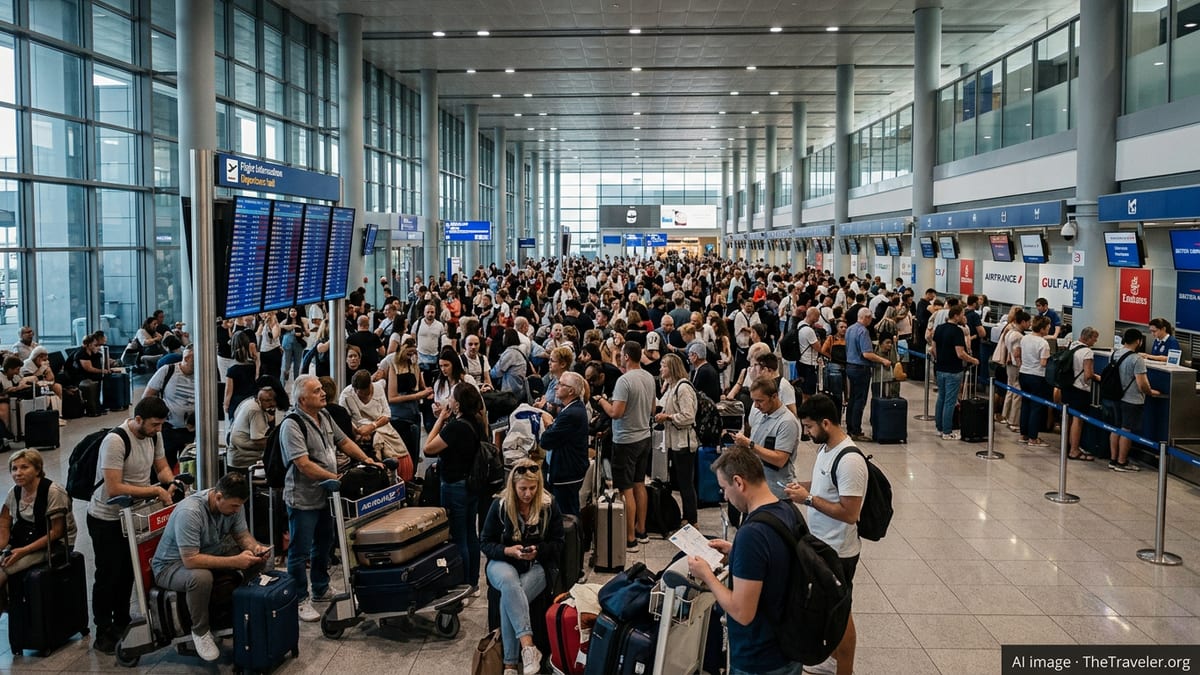
Widespread Delays Snarl Operations at Greece’s Busiest Hub
The disruption built steadily through the morning and early afternoon, as delay minutes accumulated across departures and arrivals to major European hubs, including London, Paris, Rome and Frankfurt, as well as a number of domestic island services. The knock-on effect left departure boards in the main terminal showing long sequences of late-running flights, with many pushed back by more than an hour.
Publicly available data from flight-tracking platforms and airport movement logs point to a pattern of rolling delays rather than a single, isolated failure. Short-haul European services and Greek domestic sectors were among the most heavily affected, but long-haul passengers connecting via Athens also experienced missed or at-risk connections as schedules unraveled.
Airlines adjusted rotation plans throughout the day, with aircraft and crews held up on incoming legs and subsequent departures pushed into later time slots. The three cancellations recorded at Athens added further pressure, as affected passengers were rebooked on already crowded services at the height of early-summer demand.
Key Carriers and Routes to London, Paris, Rome and Frankfurt Hit
Operations involving Aegean Airlines, the dominant carrier at Athens International Airport, were particularly exposed to the disruption, given its extensive network that links the Greek capital with both regional islands and major European cities. Delays on early domestic legs translated into late departures on onward services to hubs such as London, Paris, Rome and Frankfurt.
Low-cost operators including Ryanair and regional player Sky Express also recorded delays across a range of intra-European and domestic flights. Services on popular routes linking Athens with secondary airports in the United Kingdom, Italy and France were reported running behind schedule, complicating travel plans for leisure and business passengers at the outset of the peak tourism season.
Legacy carriers serving Athens, among them Lufthansa and Emirates, were drawn into the wider disruption through a combination of late-arriving feeder flights and constrained turn-around times on the ground. As delays stacked up, the impact extended beyond Greece to onward networks across Europe, the Middle East and North America, reflecting the role of Athens as a key regional gateway.
Structural Strains and Recent Technical Issues Provide Context
The latest episode comes against a backdrop of mounting pressure on Greek aviation infrastructure. Earlier in the year, published coverage highlighted a significant increase in flight disruptions across Greece in the opening months of 2026, coinciding with robust growth in passenger traffic and aircraft movements through Athens and regional airports.
Reports have also pointed to vulnerabilities within the country’s air traffic management systems. In January, a technical problem within the Athens Flight Information Region temporarily disrupted arrivals and departures nationwide, while separate commentary from aviation specialists and travel industry observers in recent months has underscored concerns about outdated systems and staffing constraints in Greek air traffic control.
More broadly, Athens has been cited in European aviation performance analyses as one of several hubs experiencing higher-than-average delay minutes per flight this spring. Rising traffic volumes, combined with earlier systems issues and the operational complexity of routing large numbers of seasonal services to island destinations, have contributed to a more fragile operating environment ahead of the core summer months.
Knock-On Effects for Passengers and Airlines Across Europe
The concentration of delays at Athens on Tuesday added to a wider pattern of aviation volatility across Europe in recent days, with data from travel intelligence providers showing elevated levels of late-running flights and cancellations at multiple hubs. Recent disruptions at airports such as Amsterdam, London and Paris have already left airlines juggling constrained resources as they move into the busiest part of the travel calendar.
For travelers, the operational challenges translated into long waits in terminal seating areas and at departure gates, as well as uncertainty around connection windows at onward hubs. Some passengers heading from Athens to long-haul destinations via European transfer points were forced to seek alternative routings or overnight accommodation when rebooking options on the same day became limited.
Airlines, for their part, faced additional costs linked to crew rescheduling, aircraft repositioning and passenger care obligations. Under European passenger rights rules, affected customers on qualifying flights may be eligible for assistance at the airport, reimbursement of certain out-of-pocket expenses and, in some circumstances, monetary compensation, depending on factors such as delay length, route distance and the underlying cause of the disruption.
Peak Summer Travel Season Tests Athens Airport Capacity
The incident underscores the degree to which Athens International Airport is entering the height of summer with little margin for operational error. Official traffic statistics for early 2026 show sustained growth in both domestic and international flights, reinforcing the capital’s role as the primary gateway to Greece’s rapidly expanding tourism sector.
With airlines continuing to upgauge capacity to meet record demand for Greek destinations, any constraint in air traffic control, ground handling or terminal operations can quickly propagate along the route network. Even a handful of delayed morning rotations can cascade throughout the day, amplifying disruption for passengers who may be traveling on tight itineraries that combine multiple flights and island connections.
Travel industry observers note that the current environment places a premium on contingency planning for anyone flying through Athens in the coming weeks. Longer connection windows, flexible booking conditions and real-time monitoring of flight status are increasingly seen as essential tools for mitigating the risk of extended delays as the airport and its airline partners work to stabilize operations during the peak summer surge.