


More news on this day
Flight disruptions continued to ripple across the United States on May 23 as Boston Logan International Airport reported 59 delayed departures and nine cancellations, snarling schedules for United Airlines, JetBlue, Delta Air Lines and other carriers on key domestic and transatlantic routes.
Get the latest news straight to your inbox!
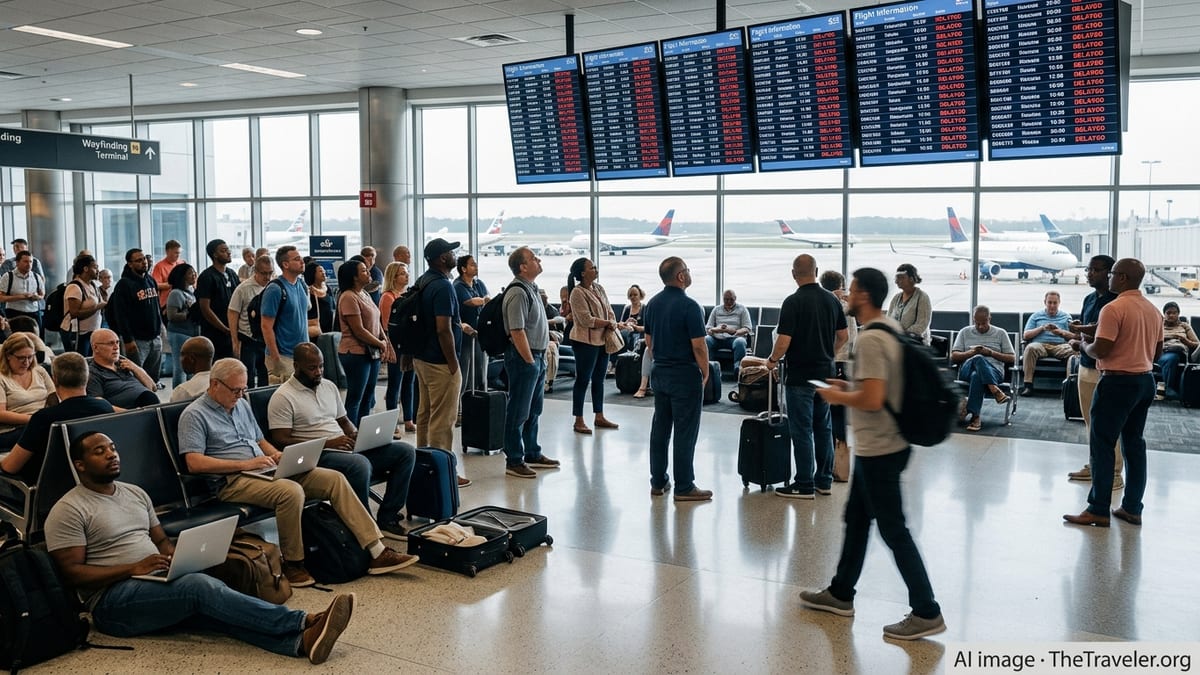
Delays Hit Major Domestic And Transatlantic Corridors
Publicly available tracking data for Boston Logan showed widespread schedule disruptions through the morning and midday periods, with delayed and canceled services affecting routes to hubs including Dallas Fort Worth, Chicago O'Hare and key European gateways such as London and Paris. The pattern added fresh strain to an already challenging spring for air travel in the Northeast, where weather and network congestion have repeatedly combined to slow operations.
Flights linking Boston with Dallas Fort Worth, a major connecting point for both business and leisure travelers, displayed rolling delays as the day progressed. Separate tracker data for the Boston to Dallas route listed a series of closely spaced departures on American Airlines and Delta Air Lines, underscoring how knock-on effects at one airport can cascade through a tightly packed schedule.
Transatlantic routes were not spared. JetBlue's Boston to Paris service appeared as scheduled in real-time monitoring, while London to Boston flights, including JetBlue's service from London Gatwick, showed a recent history of delays in prior weeks. The combination of time-sensitive overnight crossings and daytime returns left travelers facing uncertainty on both sides of the Atlantic as minor schedule changes in Boston translated into missed connections in Europe and beyond.
Chicago O'Hare services, shared by United, JetBlue, Delta and American, illustrated how congestion on one heavily traveled corridor can magnify passenger disruption. Data for recent Boston to Chicago operations showed dense clusters of departures across the morning hours, leaving little margin for recovery when earlier flights depart late or crews and aircraft arrive behind schedule.
JetBlue, United And Delta Shoulder Much Of The Impact
The concentration of disruptions at Boston Logan weighed particularly on JetBlue, United and Delta, three airlines that either maintain a strong presence at the airport or rely on it as a key spoke in their national and international networks. Publicly available route and status tools indicated that each carrier faced a mix of late departures and a smaller number of outright cancellations as they worked to keep aircraft and crews in position.
JetBlue, which operates a broad mix of domestic and transatlantic services from Boston, appeared especially exposed on longer-haul flights to Europe and the Caribbean. Tracking information showed scheduled services from Boston to Paris and Santo Domingo among the airline's operations for May 23, routes that can be vulnerable to even modest schedule shifts because of slot constraints and customs processing times at destination airports.
United and Delta, while somewhat less concentrated at Boston than JetBlue, still played central roles in the day's disruption profile. United's Boston to Chicago services illustrated how quickly delays can stack up on a key business corridor, while Delta's operations to hubs such as Atlanta and its codeshare presence on international routes highlighted the interdependence between US domestic legs and onward global travel.
The load was not confined to a single operator or alliance, suggesting that the disruption pattern reflected broader network stress rather than an isolated operational issue at one carrier. Passengers caught in the middle often faced a choice between accepting extended delays, rebooking on later flights, or attempting complex reroutes through alternative hubs with uncertain outcomes.
Weather, Congestion And Network Complexity Drive Ongoing Strain
Although no single cause fully explains the 59 delays and nine cancellations recorded at Boston Logan, industry data and prior episodes point to a familiar mix of contributing factors. Seasonal weather in the Northeast has regularly disrupted traffic flows into and out of Boston in recent months, and even on relatively clear days residual congestion can linger as airlines reposition aircraft and crews.
Air traffic control constraints, particularly in busy Northeast corridors around New York and Boston, can also trigger ground delays and flow restrictions that ripple through airline schedules. When departures from a hub such as Boston Logan are held or metered, aircraft may lose their designated slots into crowded airspace, forcing longer taxi times and holding patterns that compound delays.
Analysts frequently note that modern airline networks are finely tuned, with aircraft cycling through multiple legs per day across domestic and international routes. A morning delay on an early Boston departure can therefore affect an afternoon transatlantic crossing, a late-night return from Europe, and a following day's first bank of domestic flights. This interconnectedness often turns what might appear as modest local issues into system-wide challenges by the evening.
Historical data on delays and cancellations in the United States suggests that such patterns are not unusual, especially during periods of unsettled weather or peak travel demand. Government statistics and industry reports have long identified weather, airspace congestion and airline operational factors as the leading drivers behind late departures and cancellations.
Travelers Face Missed Connections And Tight Rebooking Options
For passengers at Boston Logan and at downline airports such as London, Paris and Dallas, the operational picture translated into missed connections, extended time in terminals and increasingly limited choices for same-day alternatives. As flights pushed back later than scheduled, travelers with onward legs often found that connecting options had already filled or departed.
On transatlantic services, even a delay of an hour or two can force passengers to overnight in an intermediate hub if their arrivals slip past immigration or customs processing windows, or if they lose access to final domestic segments departing late in the evening. This risk is particularly acute on routes linking Boston with major European gateways, where connecting banks are tightly choreographed around morning arrivals.
Domestic travelers connecting through Boston from or to cities such as Dallas and Chicago faced their own hurdles. When an early leg encounters a delay, rebooking onto later flights may be complicated by heavy loads heading into the weekend, leaving travelers stranded until the next day or forced to route through secondary hubs that add hours to their journeys.
Consumer advocates regularly advise passengers to build additional buffer time into itineraries involving Boston and other busy Northeast airports, particularly during seasons where weather volatility is high. They also note that travelers who monitor real-time flight status tools and airline apps may secure alternative options sooner than those who rely solely on information from departure boards inside the terminal.
Outlook: Continued Volatility As Summer Travel Ramps Up
The latest disruptions at Boston Logan arrived as airlines prepare for the traditional summer travel surge, a period that typically brings higher passenger volumes, tighter aircraft utilization and less flexibility to absorb irregular operations. Industry forecasts anticipate strong demand on both domestic and international routes in the coming months, which could make any future day of disruptions feel even more acute for travelers.
Recent patterns at Boston suggest that days with relatively modest weather challenges can still produce notable operational ripple effects across multiple carriers. That dynamic is likely to persist as airlines balance ambitious schedules with ongoing staffing and air traffic control constraints in the Northeast corridor.
Publicly available information from route trackers and previous news coverage indicates that carriers are continuing to adjust schedules, retire or reshuffle certain routes, and refine recovery playbooks learned from earlier disruptions this year. For passengers, however, the practical reality on days like May 23 remains one of cautious planning, close monitoring of flight status and an expectation that itineraries involving Boston, London, Paris, Dallas and other key nodes may not always run exactly as ticketed.
As US travel demand continues to rebound, Boston Logan's experience illustrates how even a single day's tally of 59 delays and nine cancellations can reverberate through airline networks, leaving crews, aircraft and passengers out of position far beyond New England's largest airport.