


More news on this day
Delta Air Lines is contending with a fresh wave of disruption, with flight-tracking data on May 23 indicating at least 13 cancellations and nearly 300 delays that are rippling through major markets including Atlanta, Boston, Orlando and Mexico City and creating another day of challenging conditions for travelers.
Get the latest news straight to your inbox!
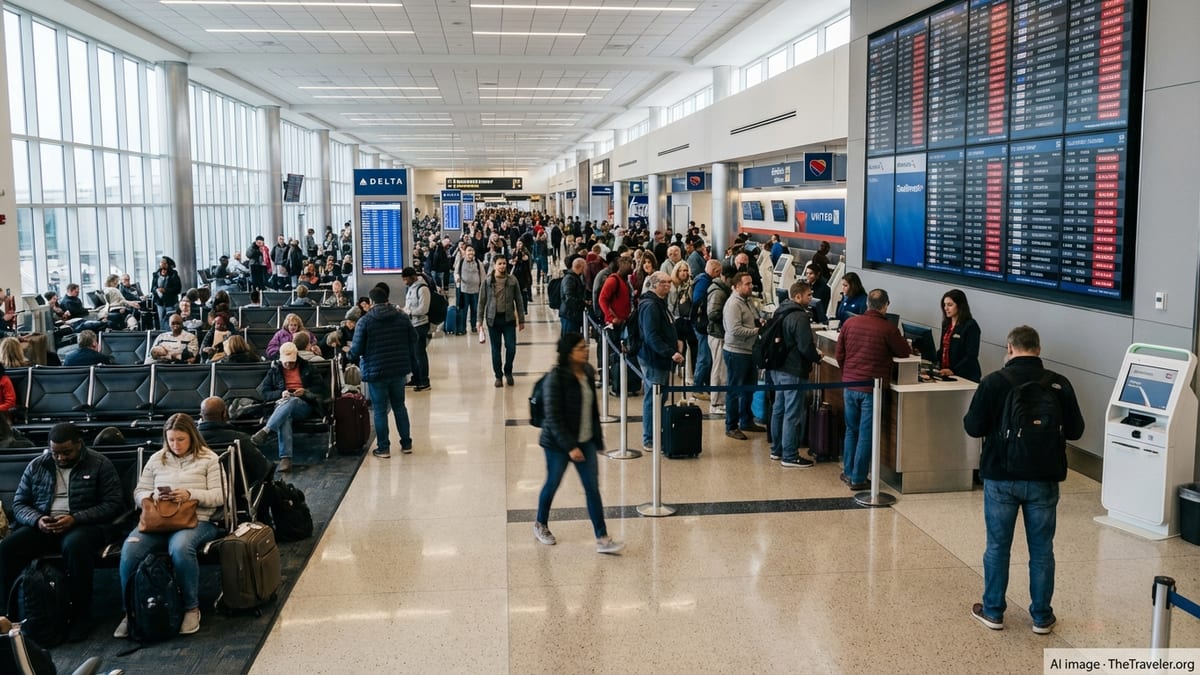
Latest Snapshot of Delta Cancellations and Delays
Publicly available airline-performance dashboards on May 23 show Delta’s operation again under pressure, with 13 flights cancelled and roughly 287 reporting delays by mid-day. While these figures represent a fraction of the carrier’s total daily schedule, they are significant enough to translate into missed connections, extended ground holds and rolling gate changes for passengers across its network.
The disruption is most visible at Delta’s largest hub in Atlanta, where heavy schedules and tight connection windows magnify even modest delays into broader network strains. Data for flights operating between Atlanta and Mexico City, for example, show late departures and extended arrival times, underscoring how schedule slippage at one major hub can cascade into international markets.
These latest numbers arrive in the context of a difficult spring for the carrier. In recent weeks, industry coverage and traveler reports have pointed to elevated same-day cancellations and operational bottlenecks across Delta’s system, even on days when competitors were functioning more smoothly. That backdrop is amplifying frustration among frequent flyers who have long viewed Delta as one of the more reliable U.S. carriers.
Although 13 cancellations in isolation might not signal a full-scale breakdown, the pairing of more than a quarter-thousand delays with those cancellations is enough to trigger localized gridlock at busy terminals, lengthen check-in and security lines, and strain ground-staff and customer-service resources.
Atlanta Hub Under Strain, With Knock-On Effects to Mexico City
Atlanta’s Hartsfield-Jackson International Airport remains the center of gravity for Delta’s global operation, and today’s disruption is once again concentrated there. Flight-status feeds for key international routes such as Atlanta to Mexico City show departures pushing back later than scheduled and arrivals drifting outside planned windows, reflecting how minor station-level issues can ripple outward from the hub.
In addition to weather patterns that periodically sweep across the Southeast, Atlanta’s sheer volume of connecting traffic makes it particularly vulnerable when Delta’s schedules tighten. A delay on one inbound aircraft can force a rolling series of pushbacks on onward departures, especially if crew schedules are operating with limited slack.
Operational bulletins and historical exception policies published by Delta highlight how thunderstorms, air-traffic flow programs and ground stops around Atlanta can quickly drive up same-day cancellations. While today’s 13 cancellations are spread across the network, Atlanta-facing routes appear heavily represented among the delayed flights, increasing the likelihood of missed connections for travelers bound for Latin American destinations such as Mexico City.
Travelers connecting through Atlanta on May 23 are being advised by publicly available guidance to monitor their itineraries closely via Delta’s app and online tools, where rebooking options and seat availability can update from minute to minute as the airline works through the backlog.
Boston and Orlando See Secondary Disruptions
Beyond Atlanta, the current wave of schedule problems is impacting Delta operations in Boston and Orlando, two airports that have also featured in prior disruption episodes this year. Recent weather systems across the Northeast and Florida, combined with sustained leisure demand, have periodically strained gate, crew and runway capacity at both airports.
In Boston, earlier operational challenges tied to winter and late-season storms have left lingering sensitivity in the schedule. Public exception-policy archives and earlier disruption summaries show that Boston has repeatedly appeared on lists of airports receiving special waivers, rebooking flexibility and other measures during weather-driven events in 2026. Even when conditions are relatively stable, the knock-on effects of delays at other hubs can push Boston departures off schedule.
Orlando, meanwhile, continues to be one of the most crowded leisure markets in the United States, with dense afternoon and evening departure banks. Industry commentary and traveler accounts from recent weeks describe a pattern where severe weather systems north of Florida, particularly around Jacksonville airspace, have restricted traffic flows in and out of Orlando and other central Florida airports, causing rolling delays. Delta’s current tally of delayed flights appears to reflect that vulnerability again, with Florida routes often among the first to feel the impact when the network tightens.
The combined effect in Boston and Orlando is a day of uncertainty for families and vacationers, many of whom rely on single daily nonstops or tightly timed connections. Even relatively short delays can force overnight stays or missed cruise and theme-park departures when alternatives are limited.
Mexico City Routes Illustrate International Ripple Effects
Mexico City, one of Delta’s key international destinations from the United States, is also absorbing some of the volatility. Real-time route trackers for Atlanta to Mexico City on May 23 show schedule slippage, with at least one flight operating behind its planned departure time and running late into the evening arrival bank.
International routes are particularly sensitive to upstream disruption because they often operate with fewer daily frequencies and more complex aircraft and crew rotations. A single delayed departure out of Atlanta can jeopardize an entire day’s pattern, including return segments and onward connections on partners. That can leave travelers in Mexico City with fewer immediate options if a later flight cancels or misconnects.
Industry analyses of Delta’s 2026 schedule note that the airline has been expanding and refining its transborder and transatlantic offerings, which increases both opportunities and operational complexity. When irregular operations arise, the carrier must balance the need to protect long-haul and international services with the competing goal of maintaining reliability on domestic feeders from cities like Boston and Orlando.
For passengers booked on Mexico City flights today, publicly available guidance suggests frequent checks of flight status and consideration of earlier departures where feasible, since later itineraries are more vulnerable if disruption deepens into the evening.
What Travelers Can Expect and How to Navigate the Disruption
Delta’s customer-information pages describe a range of tools for managing delays and cancellations, including automatic rebooking for significantly disrupted itineraries, same-day flight changes via the Fly Delta app, and the option to request refunds when flights meet the carrier’s thresholds for cancellation or substantial schedule change. Those resources are likely to be tested throughout May 23 as the airline works to process impacted customers from the 13 cancellations and 287 delays reported so far.
Travel-industry guidance for days like today typically emphasizes self-service options as the fastest path to a solution. Using the airline’s app or website to seek earlier or alternative routings often proves more efficient than queuing at airport counters, particularly at congested hubs such as Atlanta and busy leisure stations like Orlando.
Passengers are also being urged by consumer advocates and travel experts in recent coverage to document their disruption, including keeping boarding passes, receipts and screenshots of delay notifications. Such records can be important later when seeking reimbursement for out-of-pocket expenses such as hotels or meals, particularly in regions where consumer-protection rules are stronger for international itineraries.
With Delta’s operation again under scrutiny, today’s pattern of 13 cancellations and nearly 300 delays underscores the fragile balance of U.S. airline networks during peak months. For travelers moving through Atlanta, Boston, Orlando and Mexico City, the day is shaping up as another test of patience, planning and flexibility as the carrier works to stabilize its schedules.